
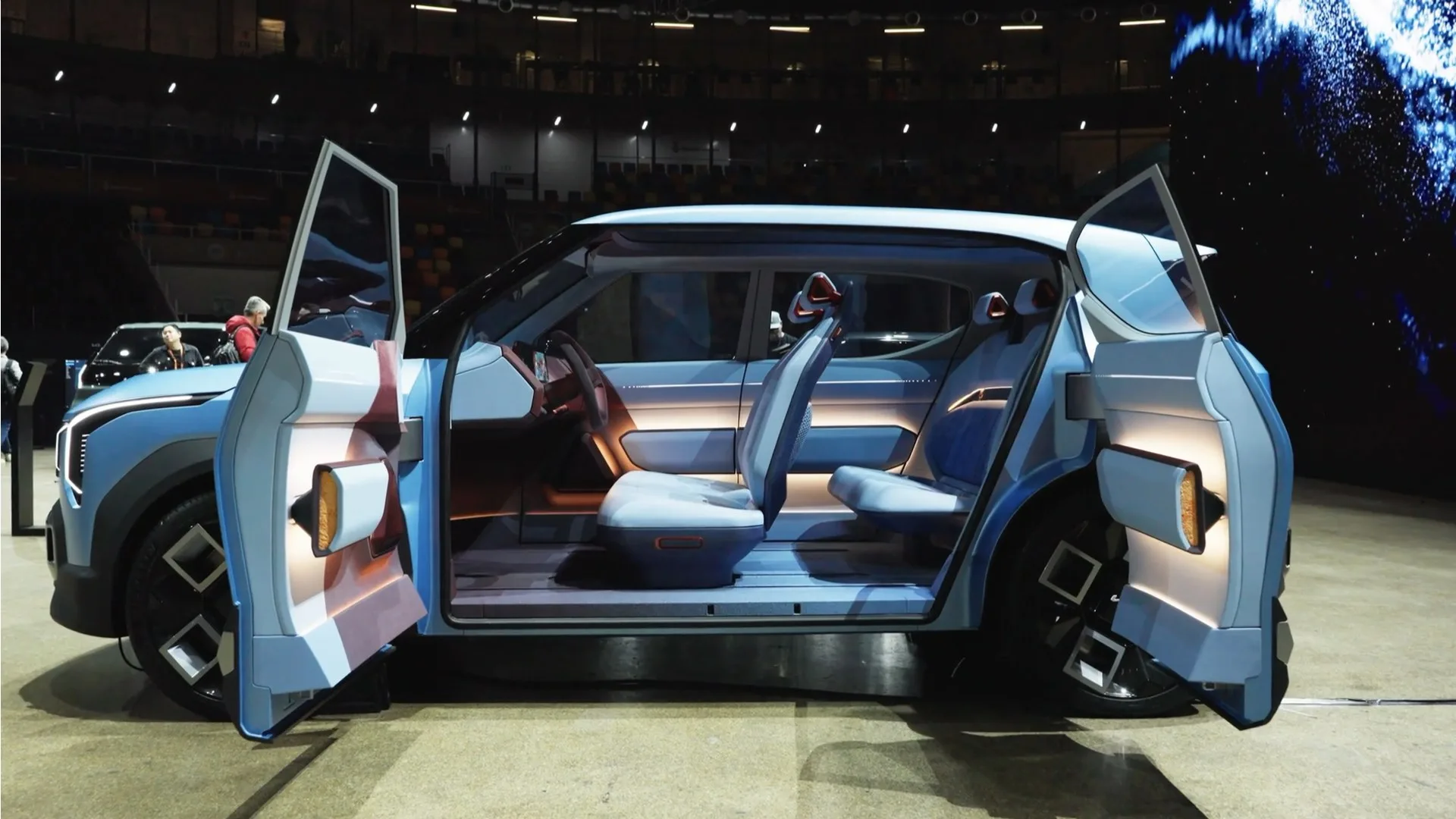
Five ways to make mycelium Kia's own
From October 2022 to February 2023 we tested five routes on the same material: natural dyes, laser engraving, grown 3D patterns, paints and protective coatings. Every test followed a written protocol, every sample was shot the same way, and every result was documented so Kia's designers could compare them side by side.
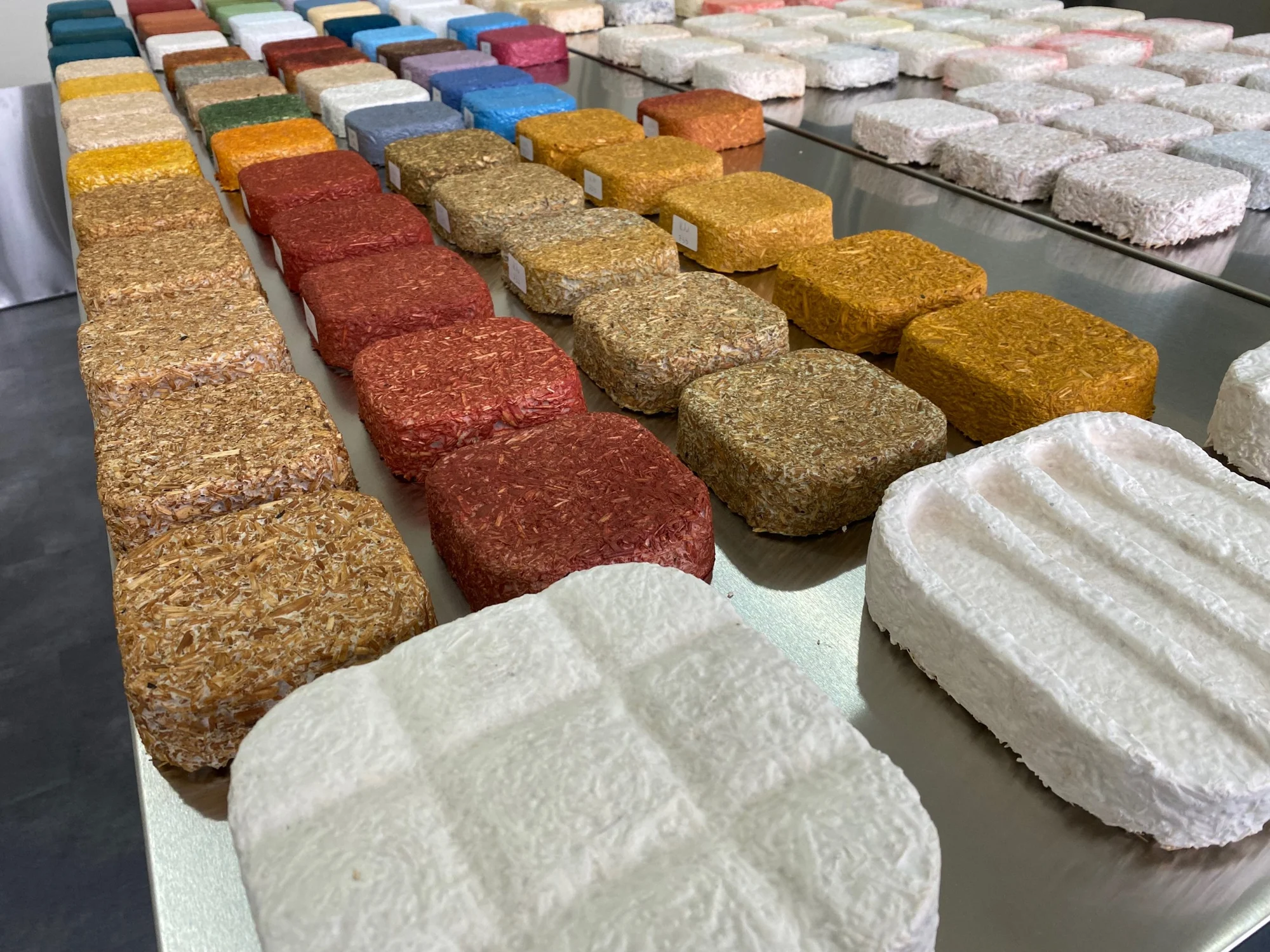
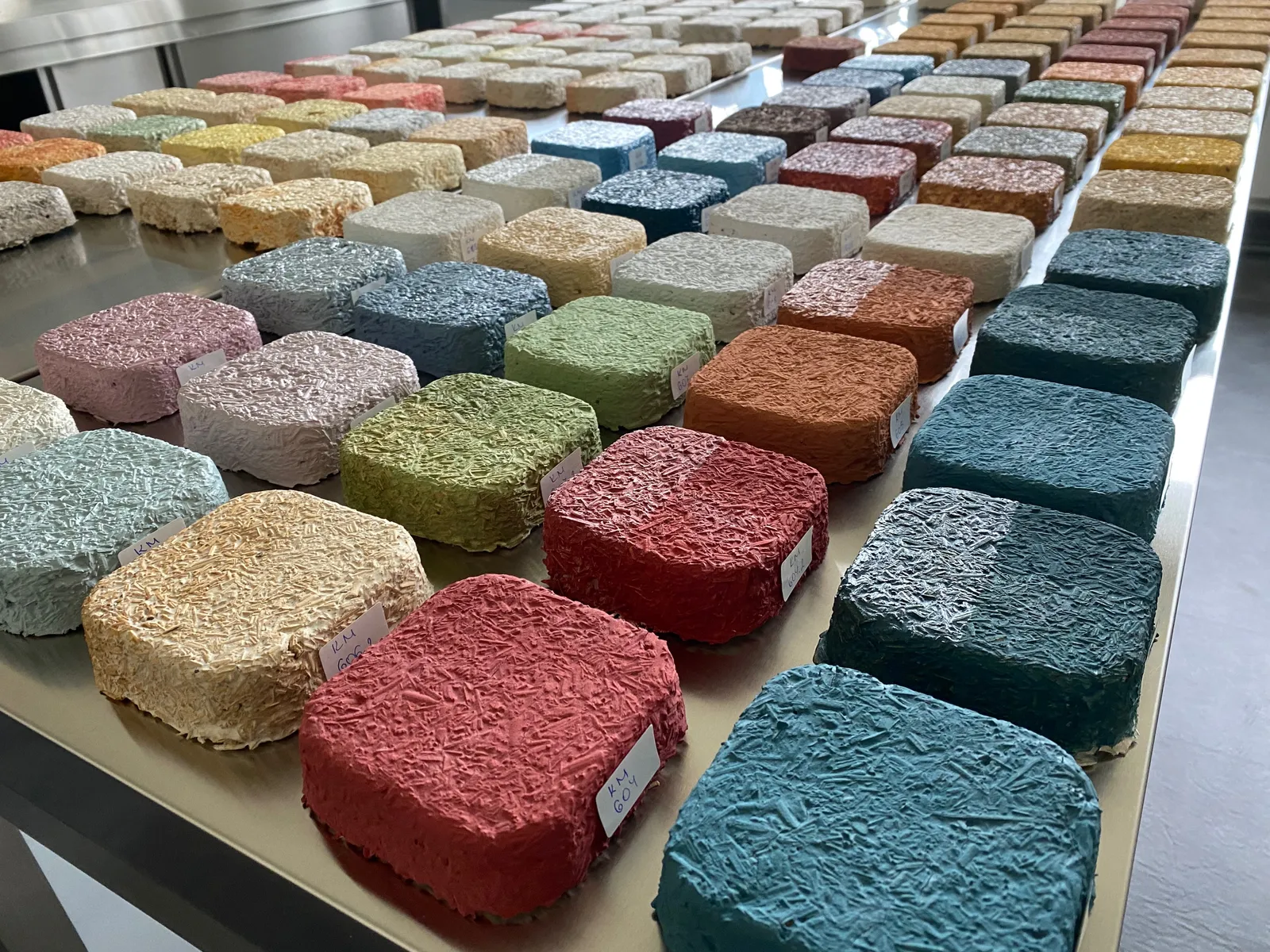
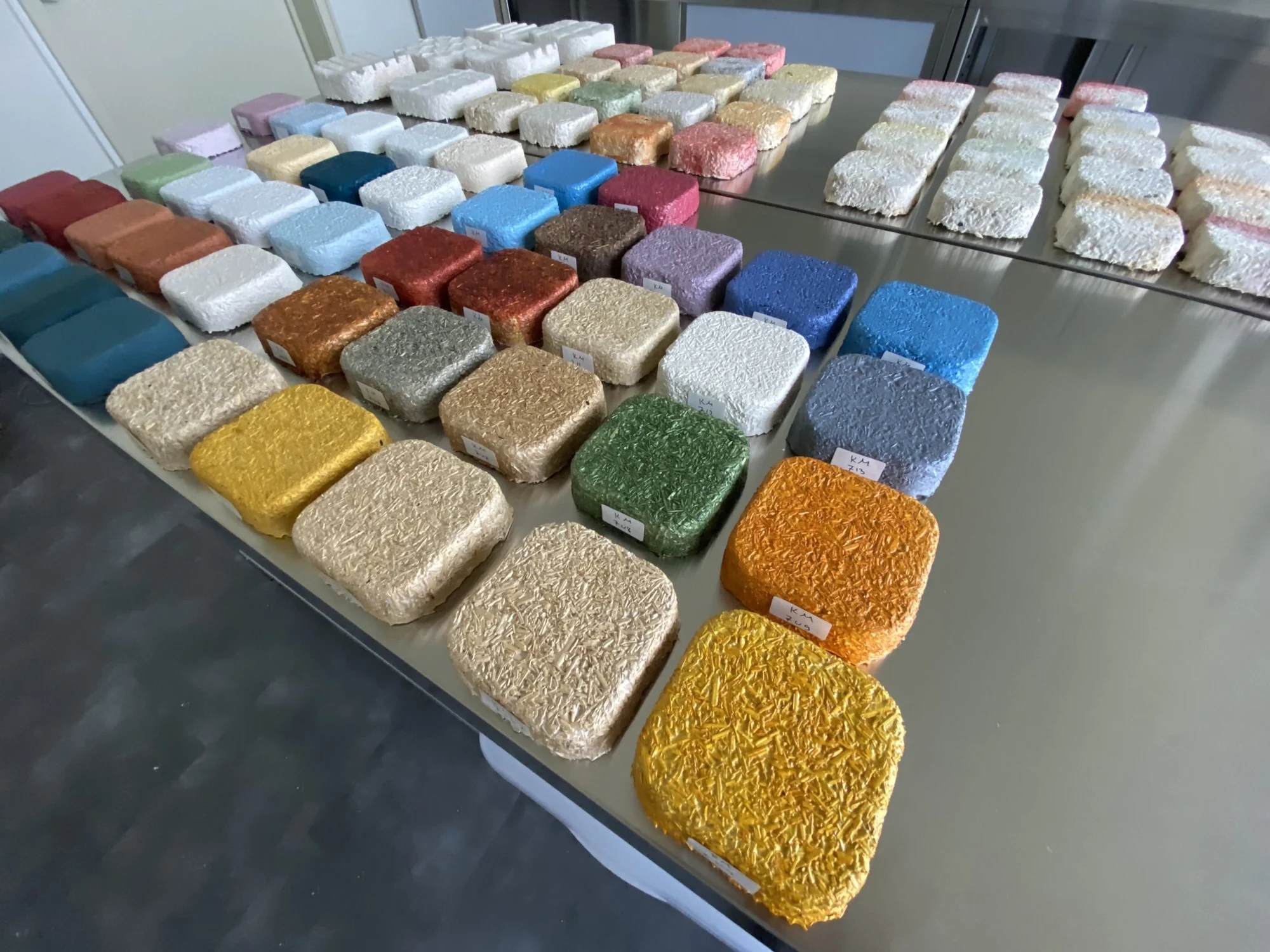
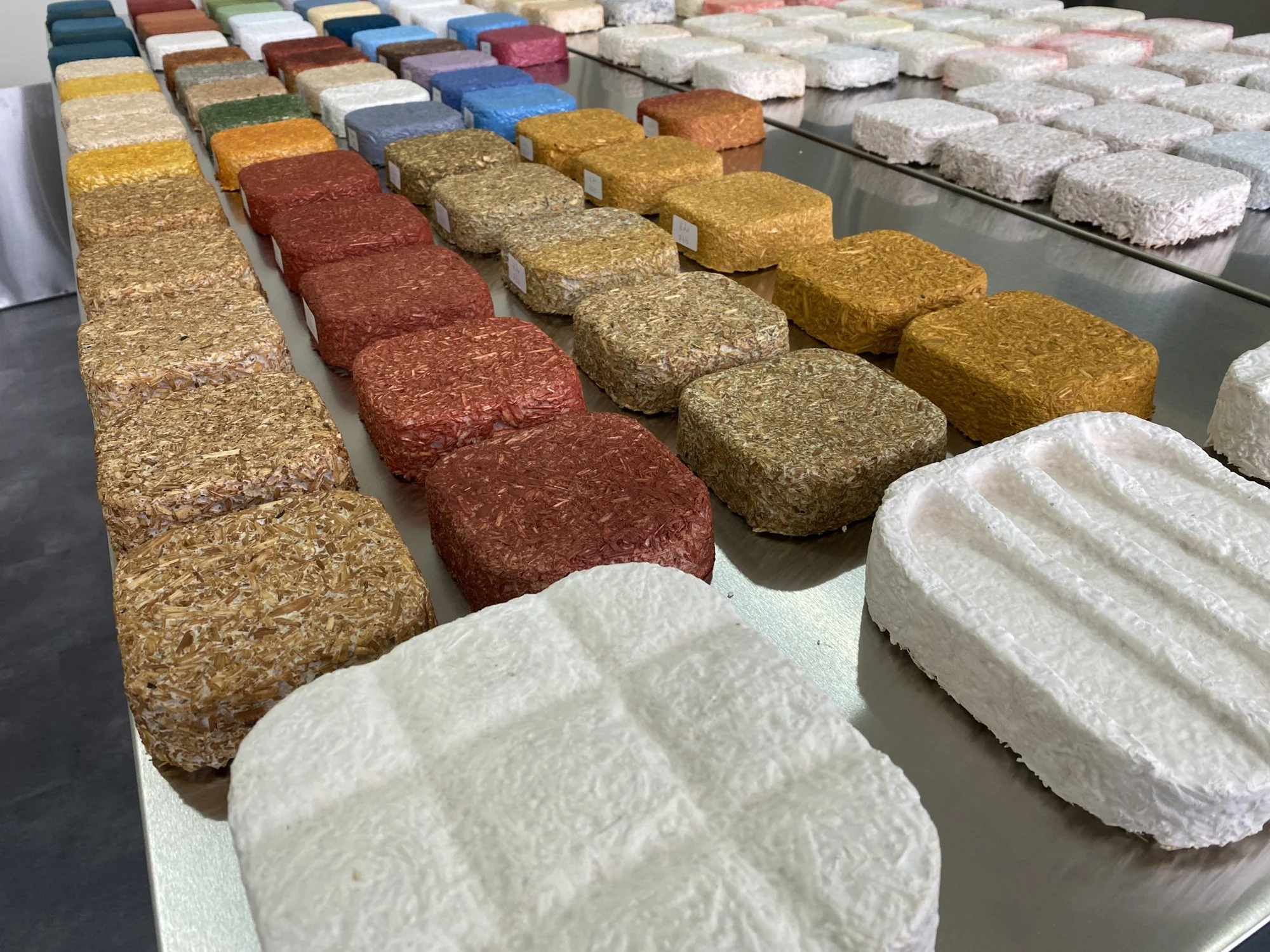
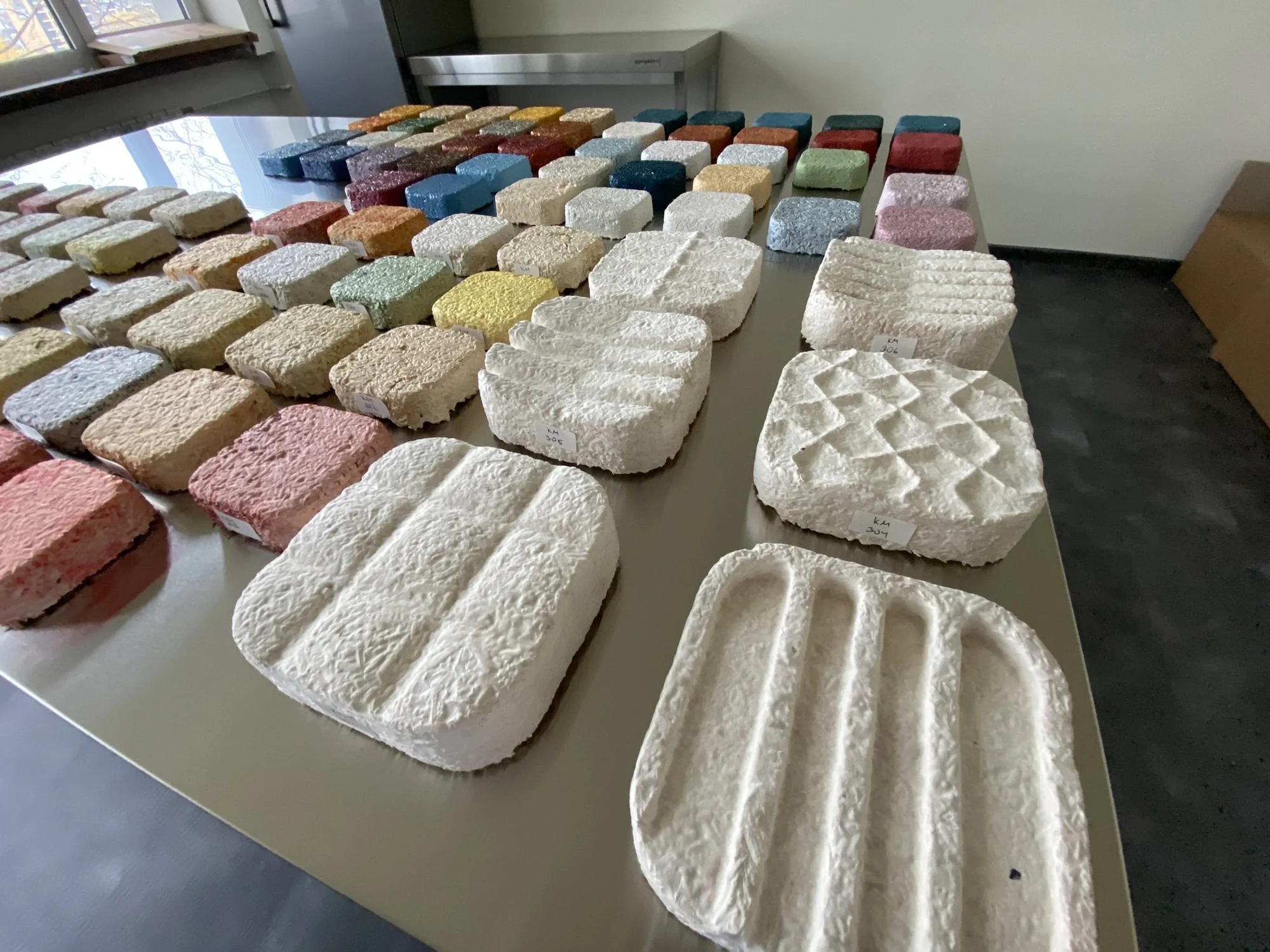
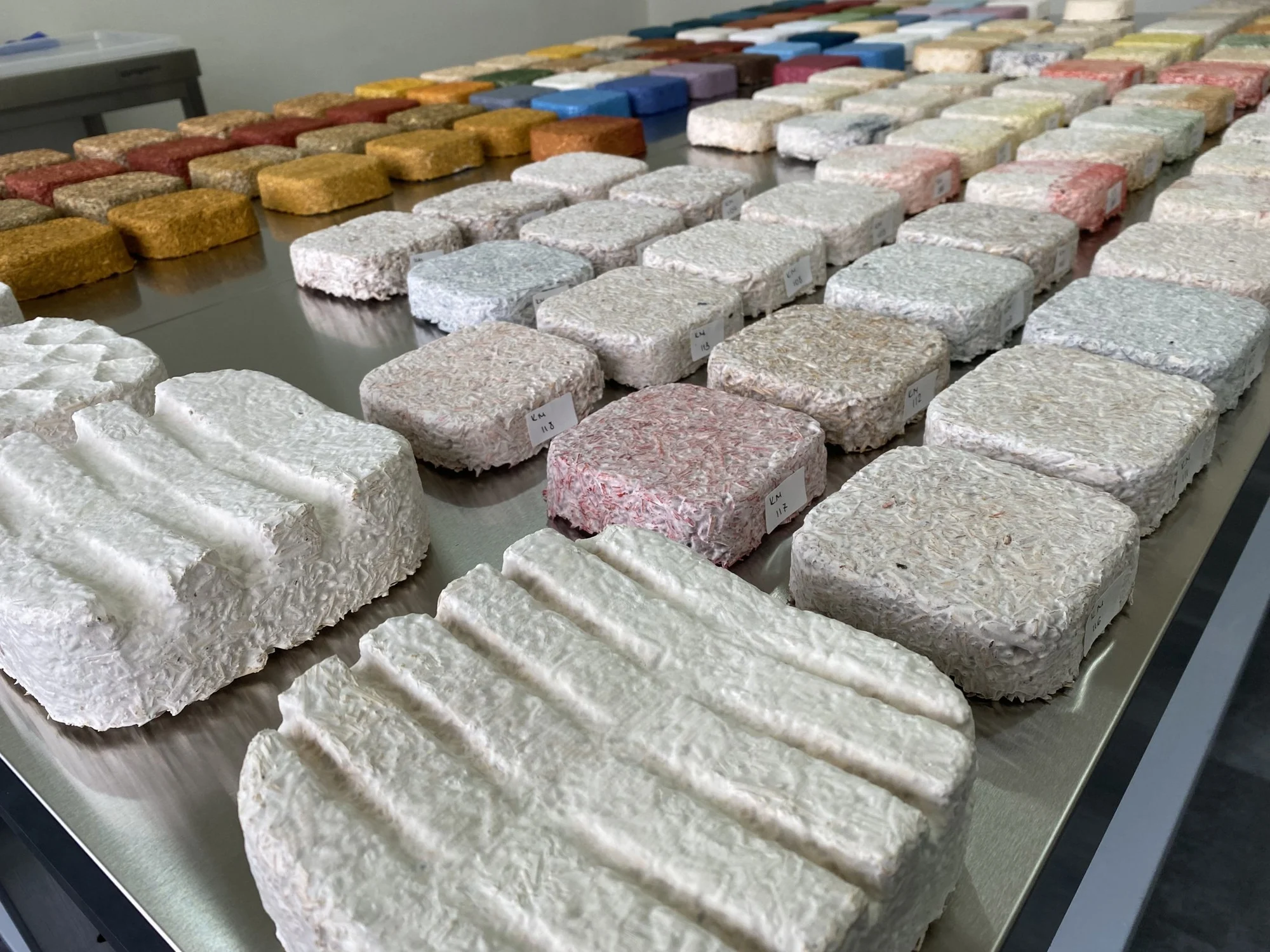
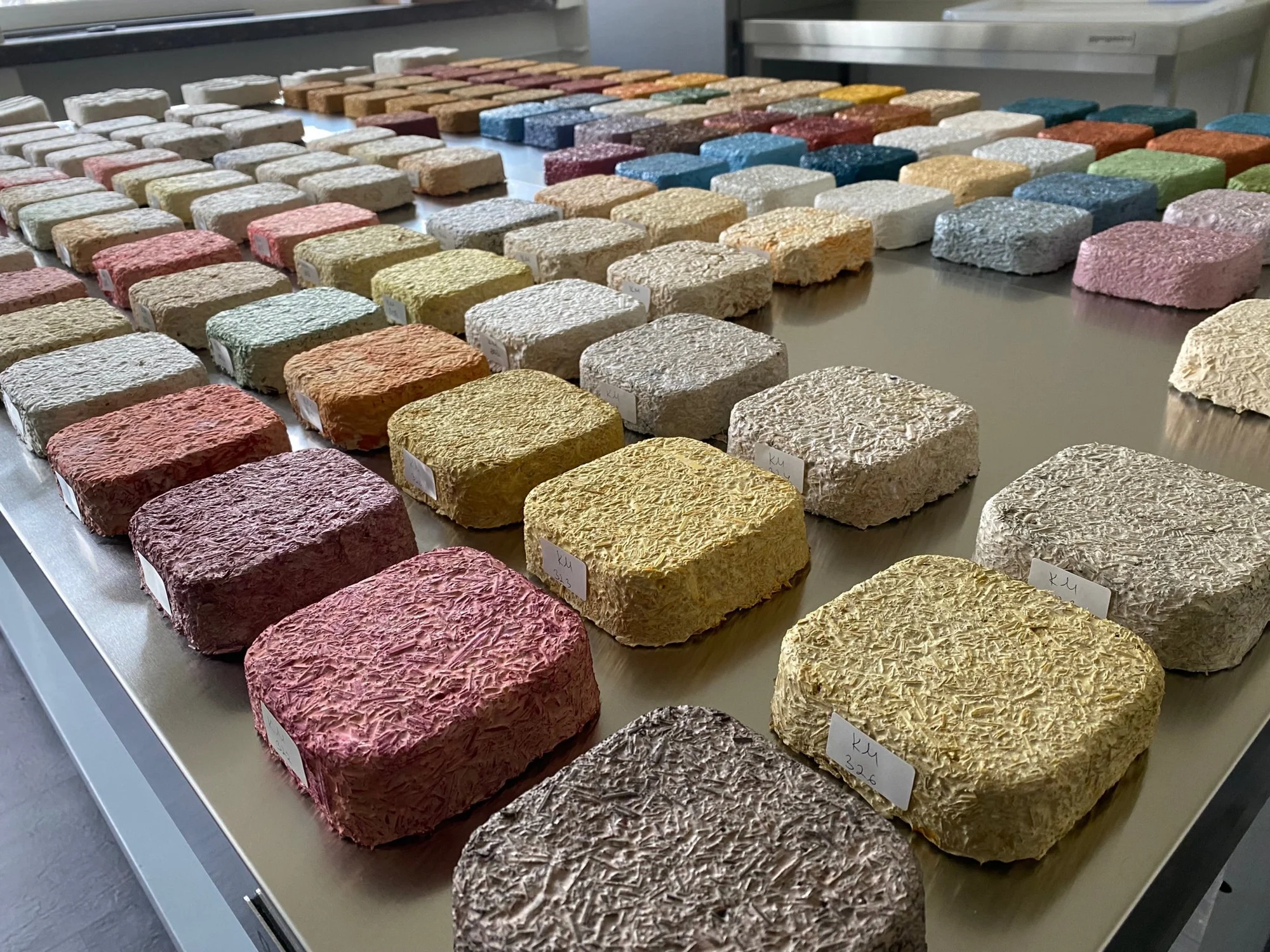
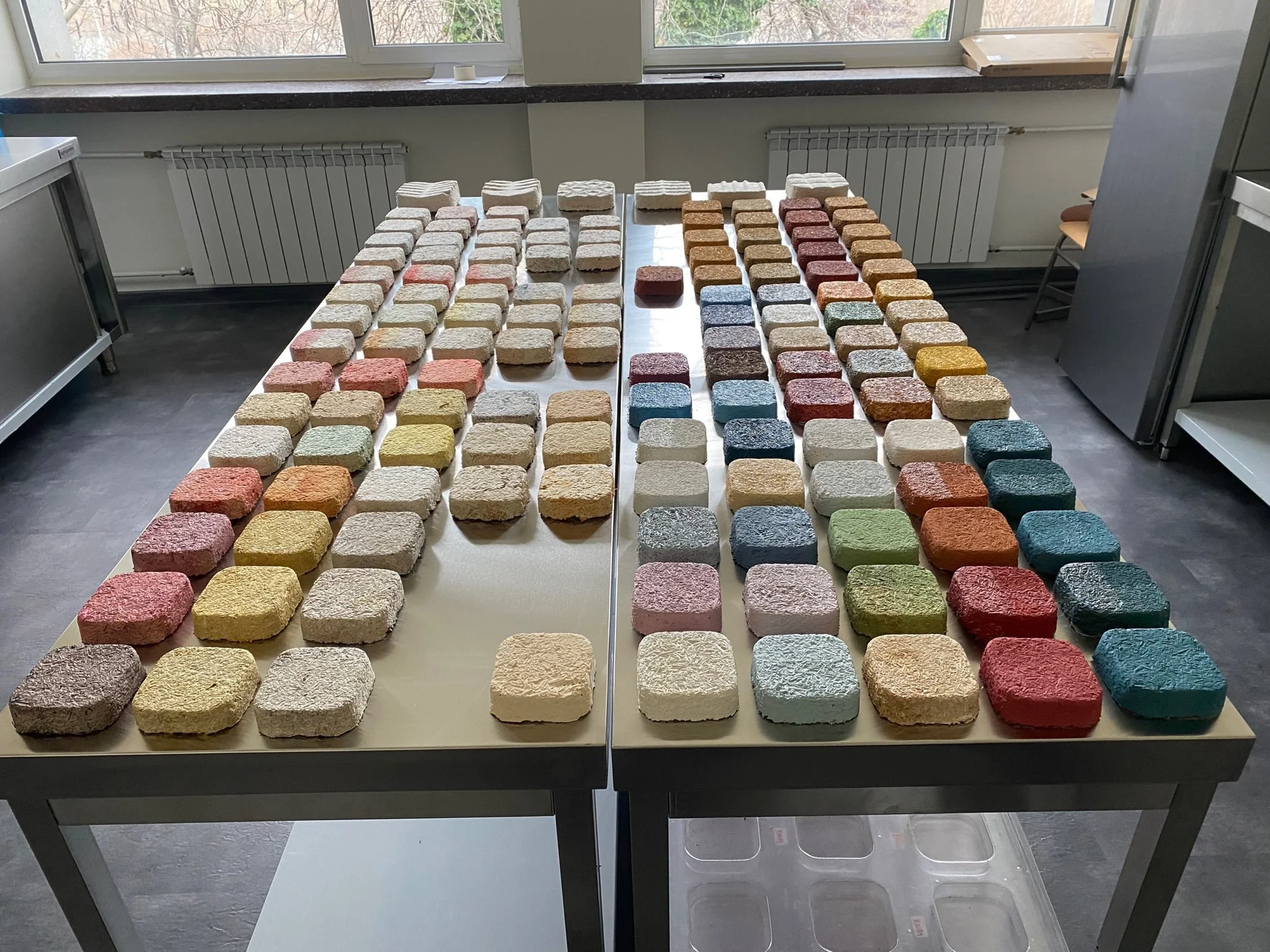
One table, every finishMore than 180 samples, all on the same base material.
Natural dyes
63 dye samples in four methods. The difference between them is when the colour goes in.
Same material, same moulds, same three stages. Only the moment the colour goes in changes.
We did not use one sample per result. Each sample was dipped part of the way, twice after the first growth and twice after the second, for two different times. Where the dips cross you get eight zones on one sample, and the untouched corner doubles as a gradient test. Eight results per sample, each one next to its neighbour for comparison.
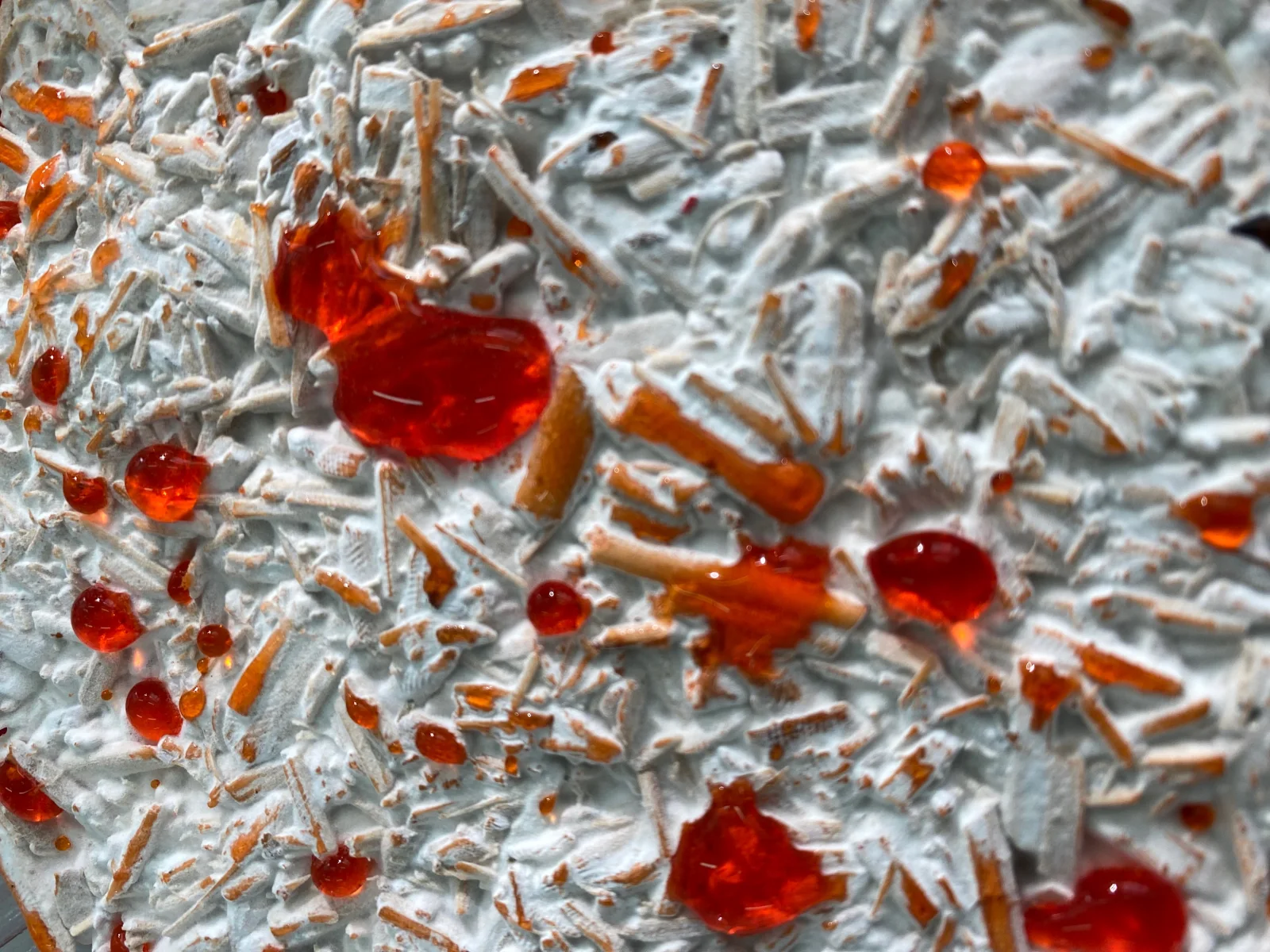
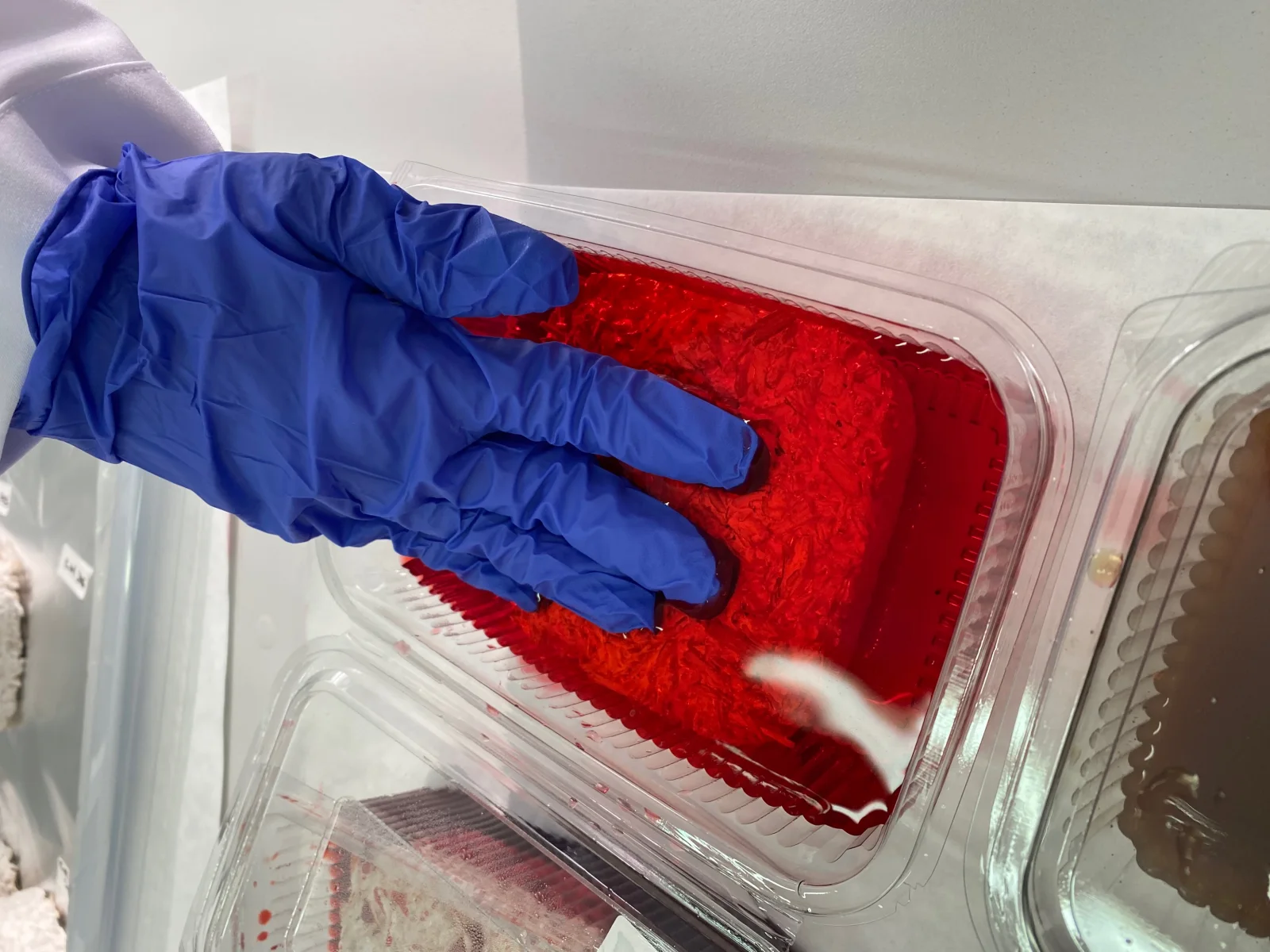
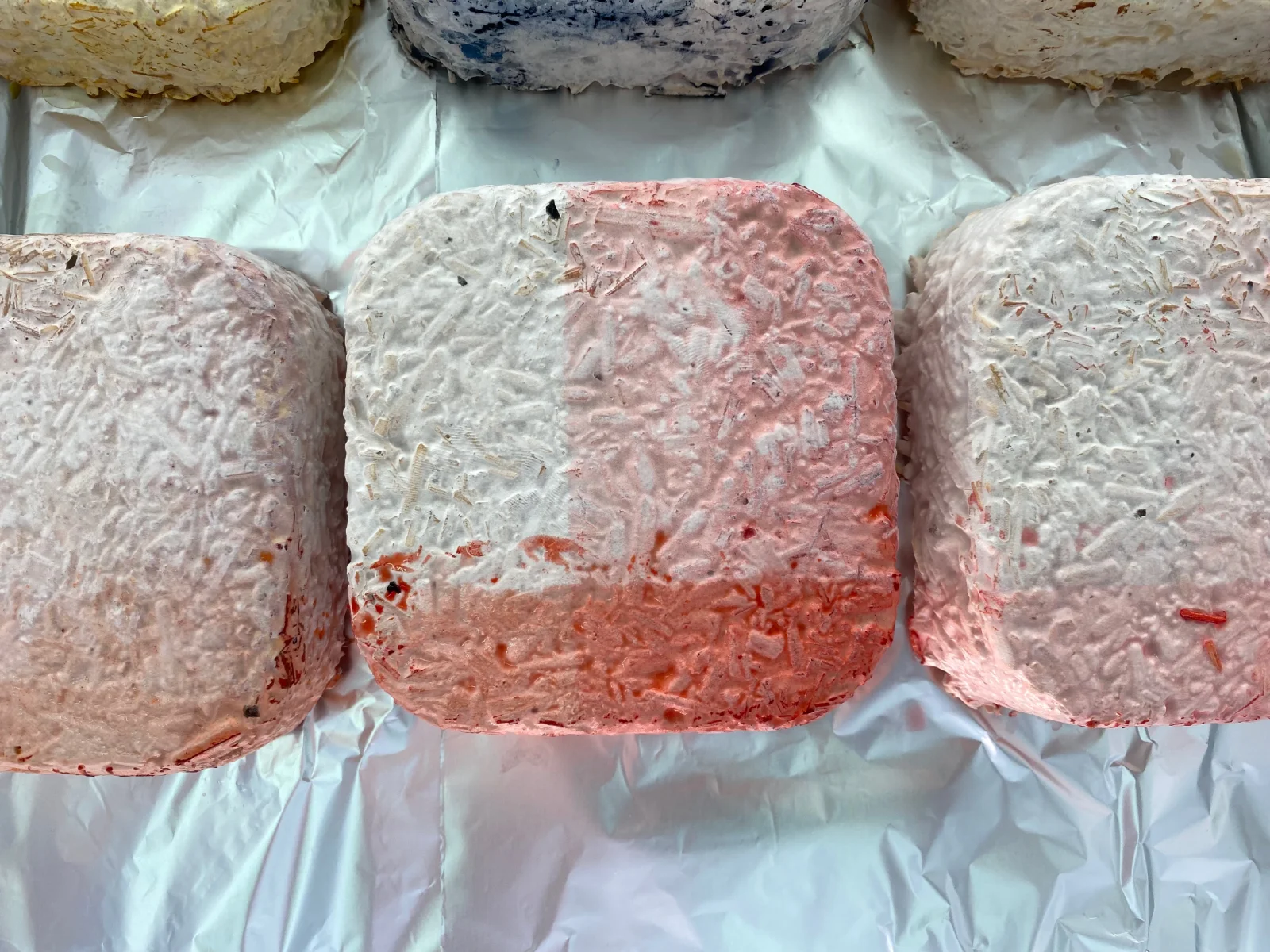
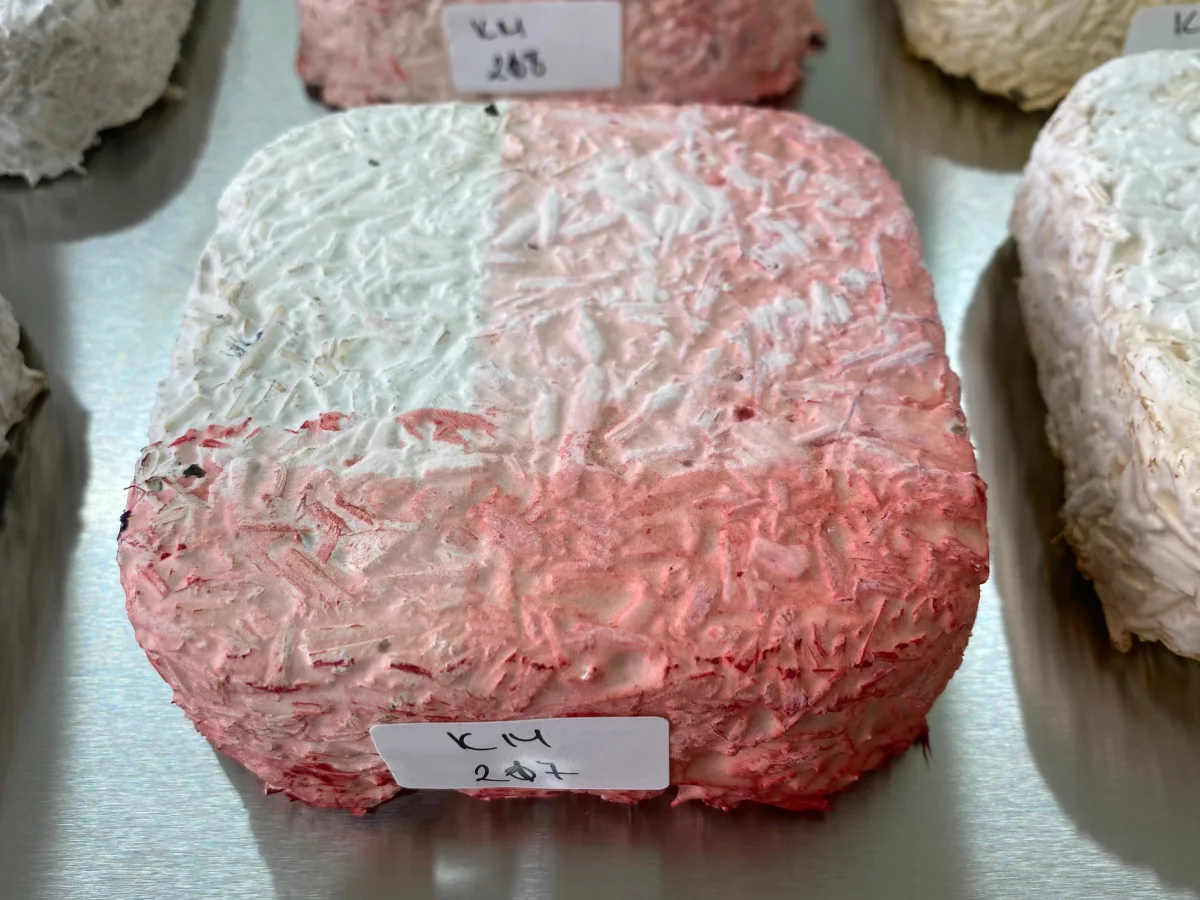
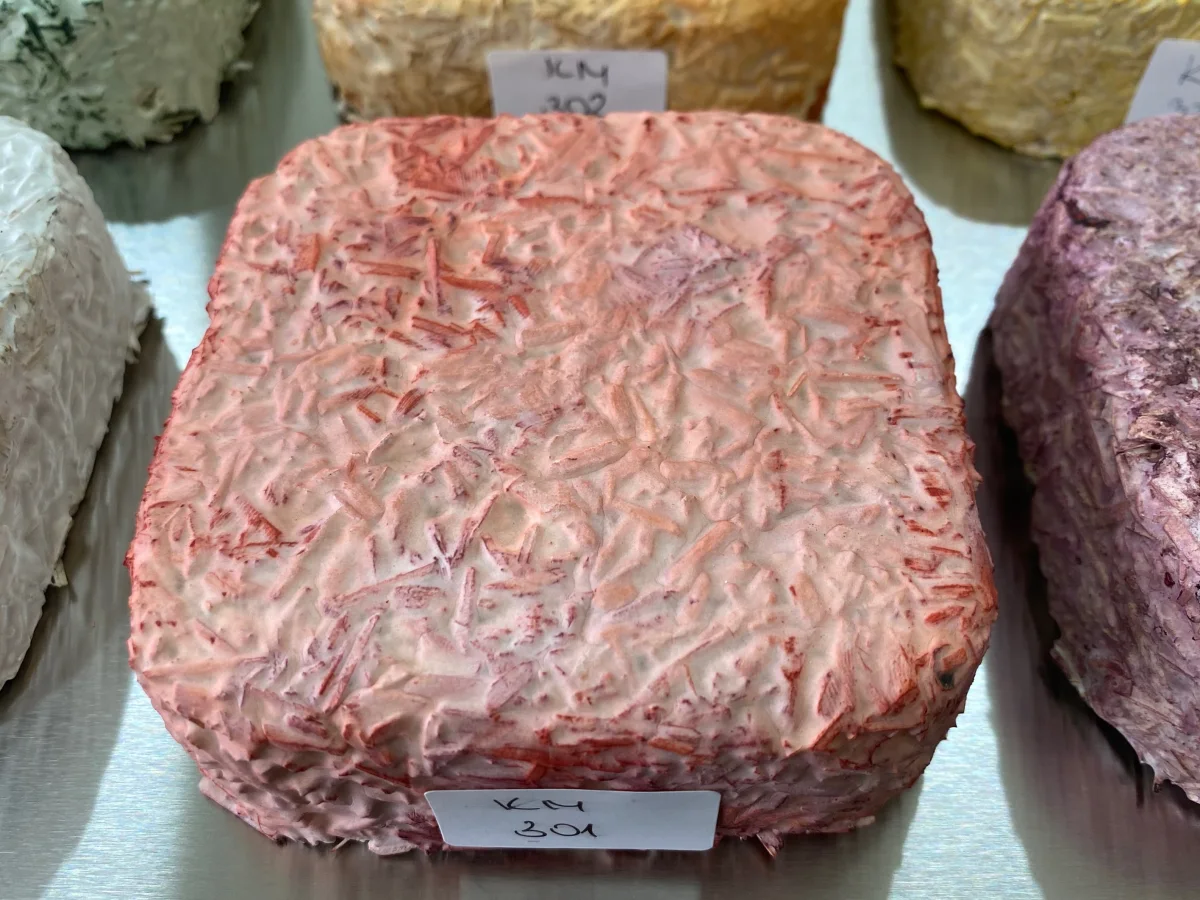
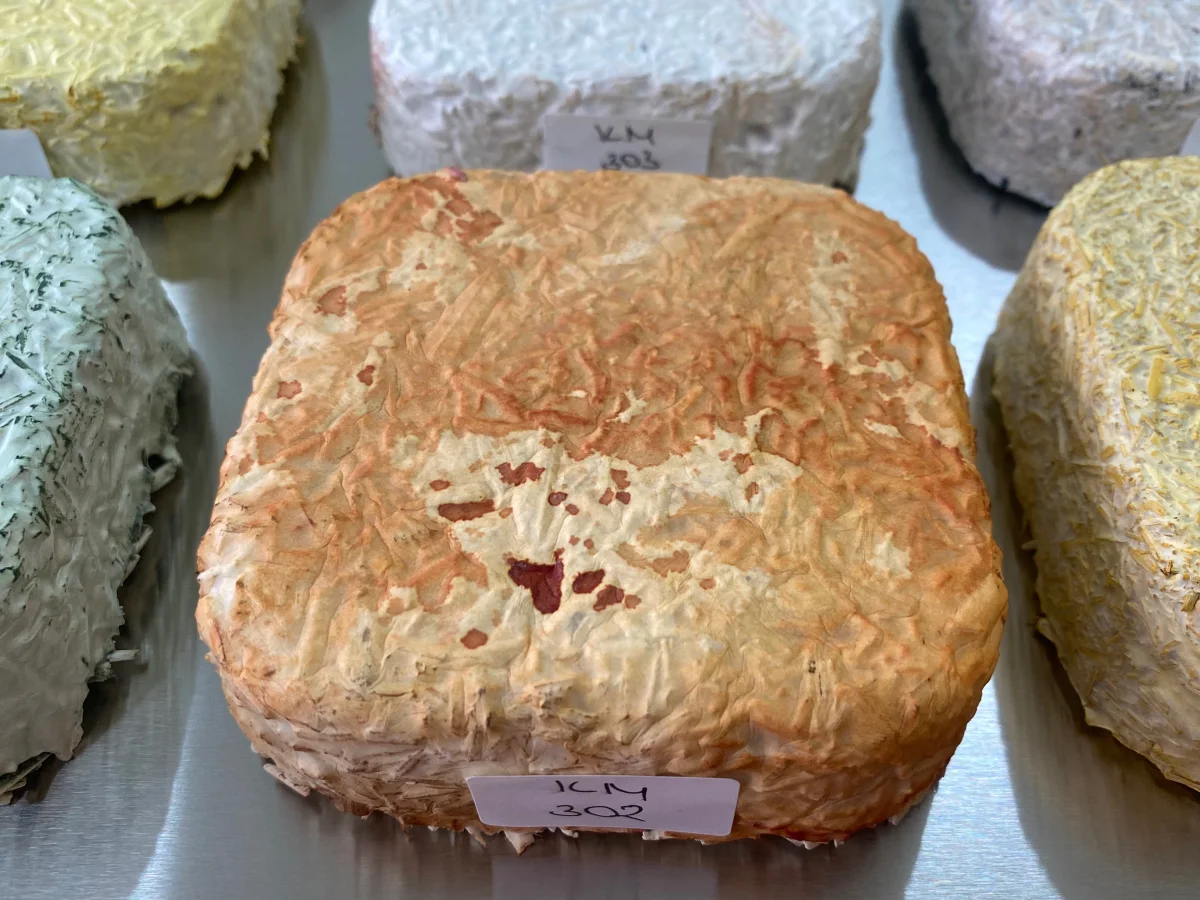
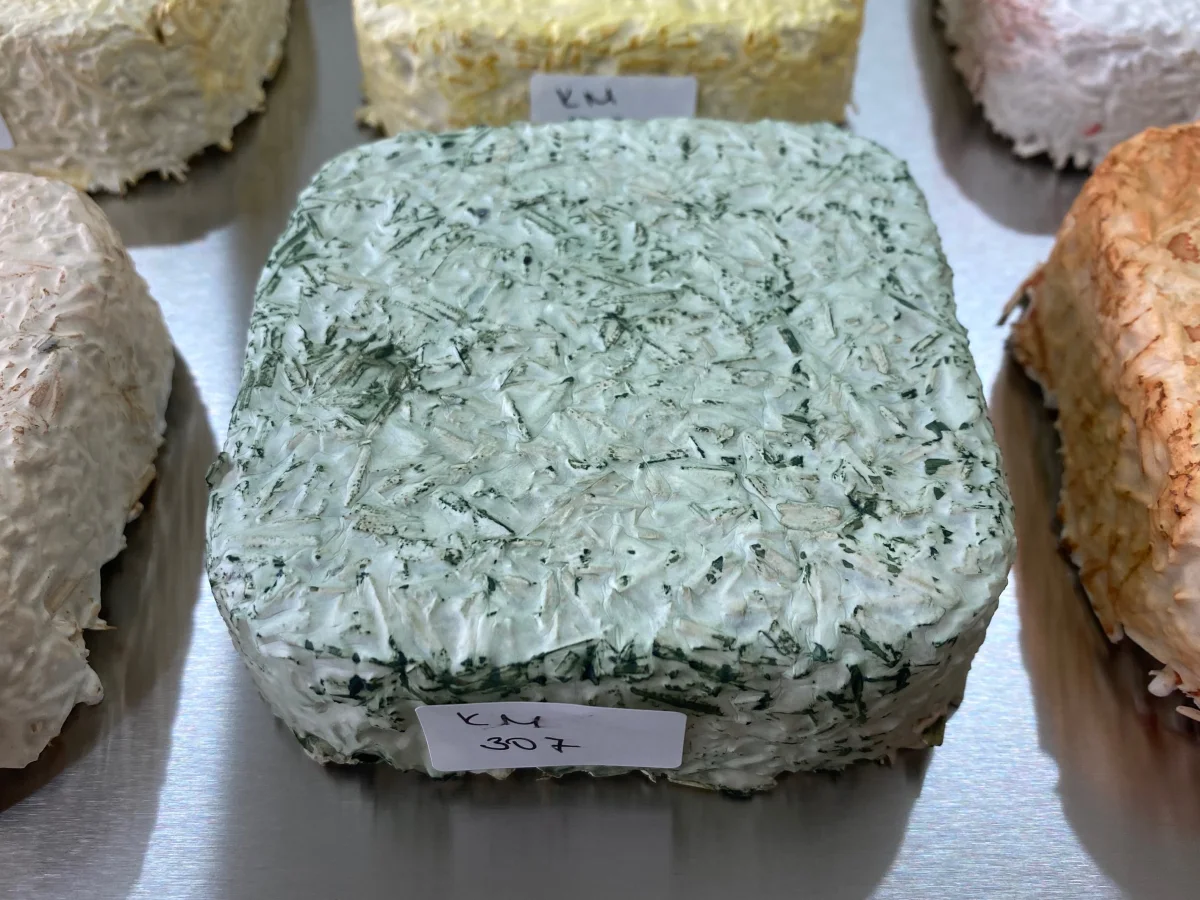
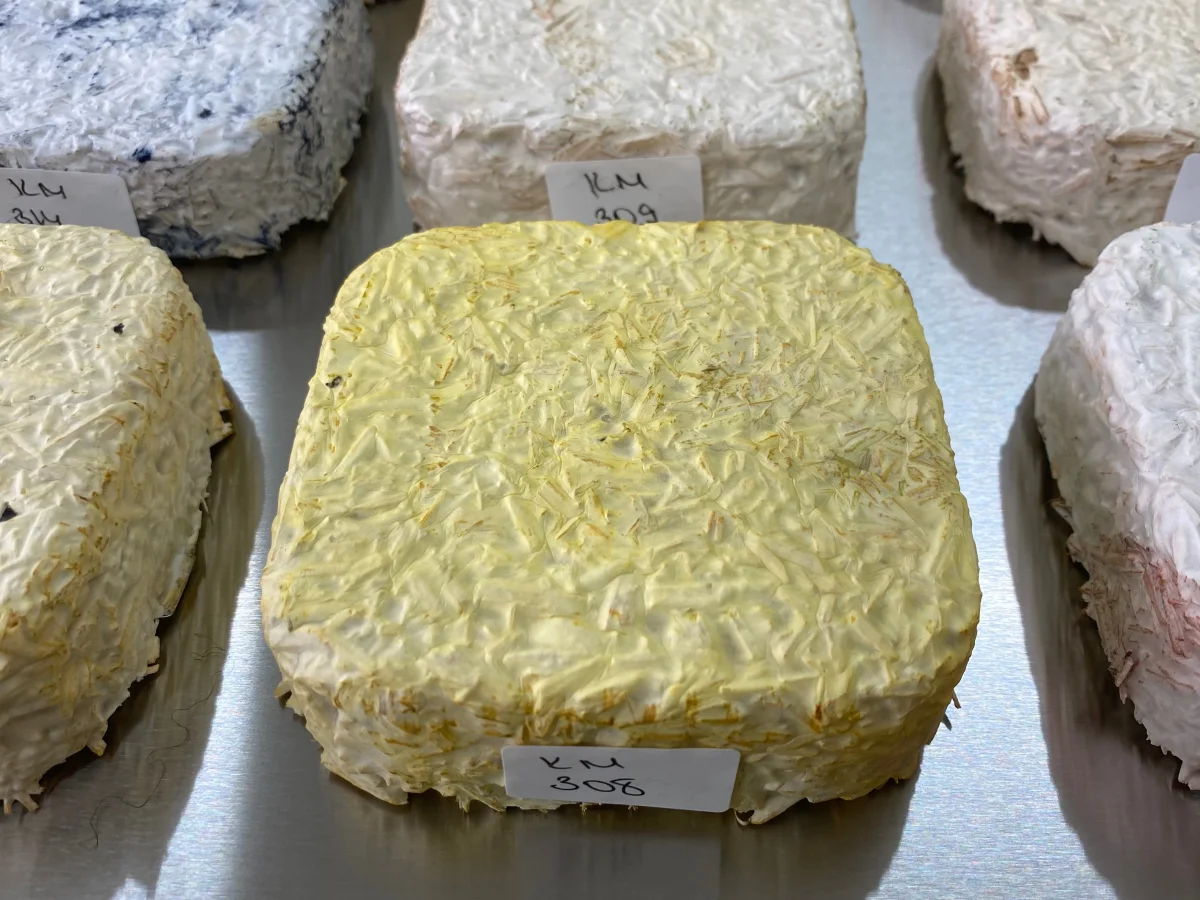
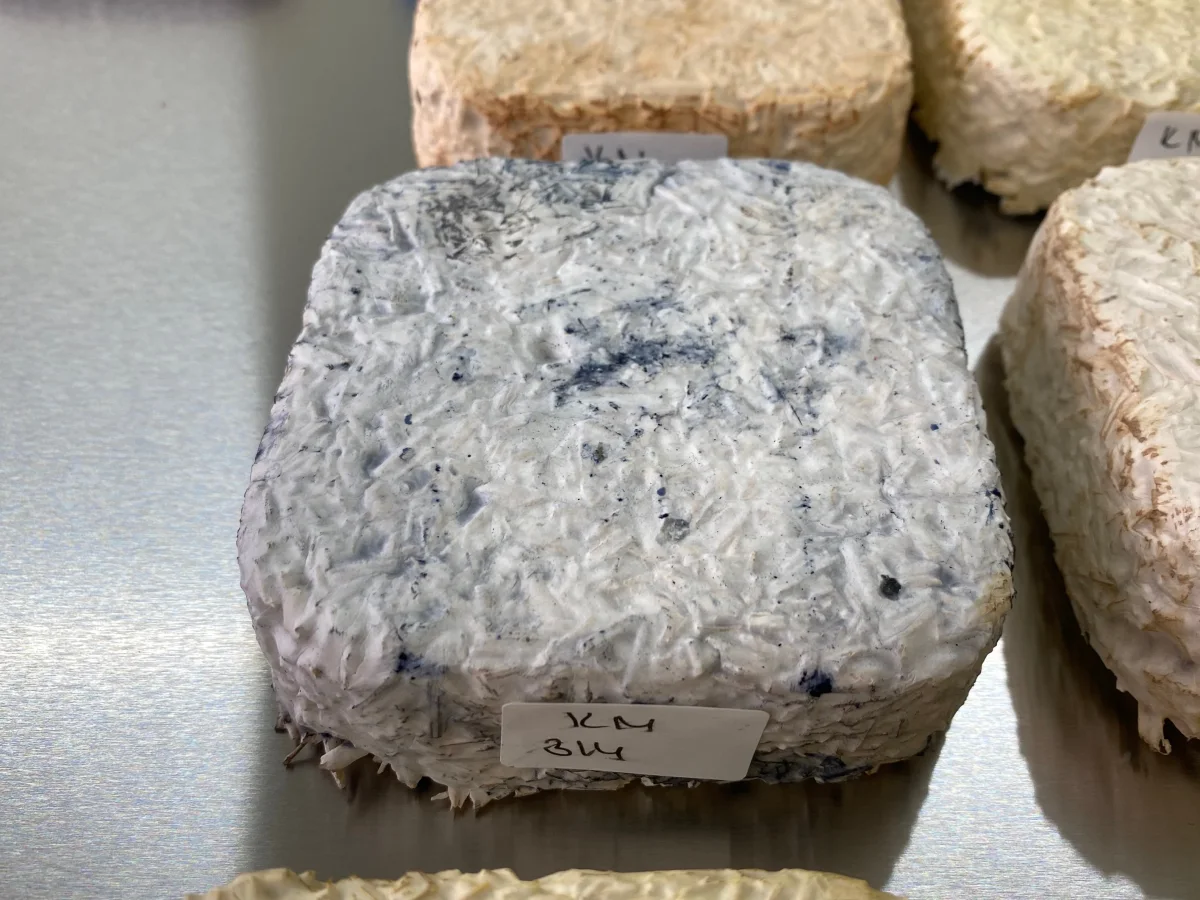
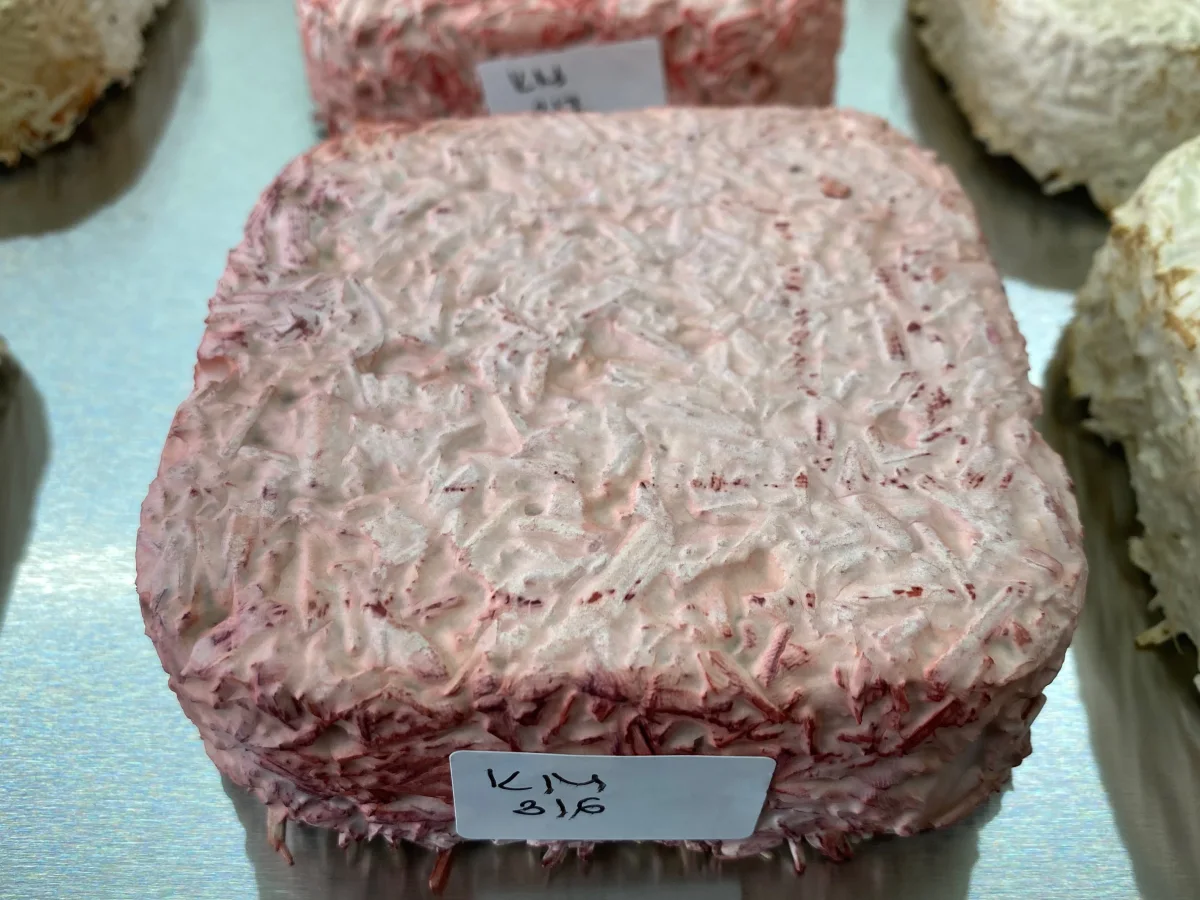
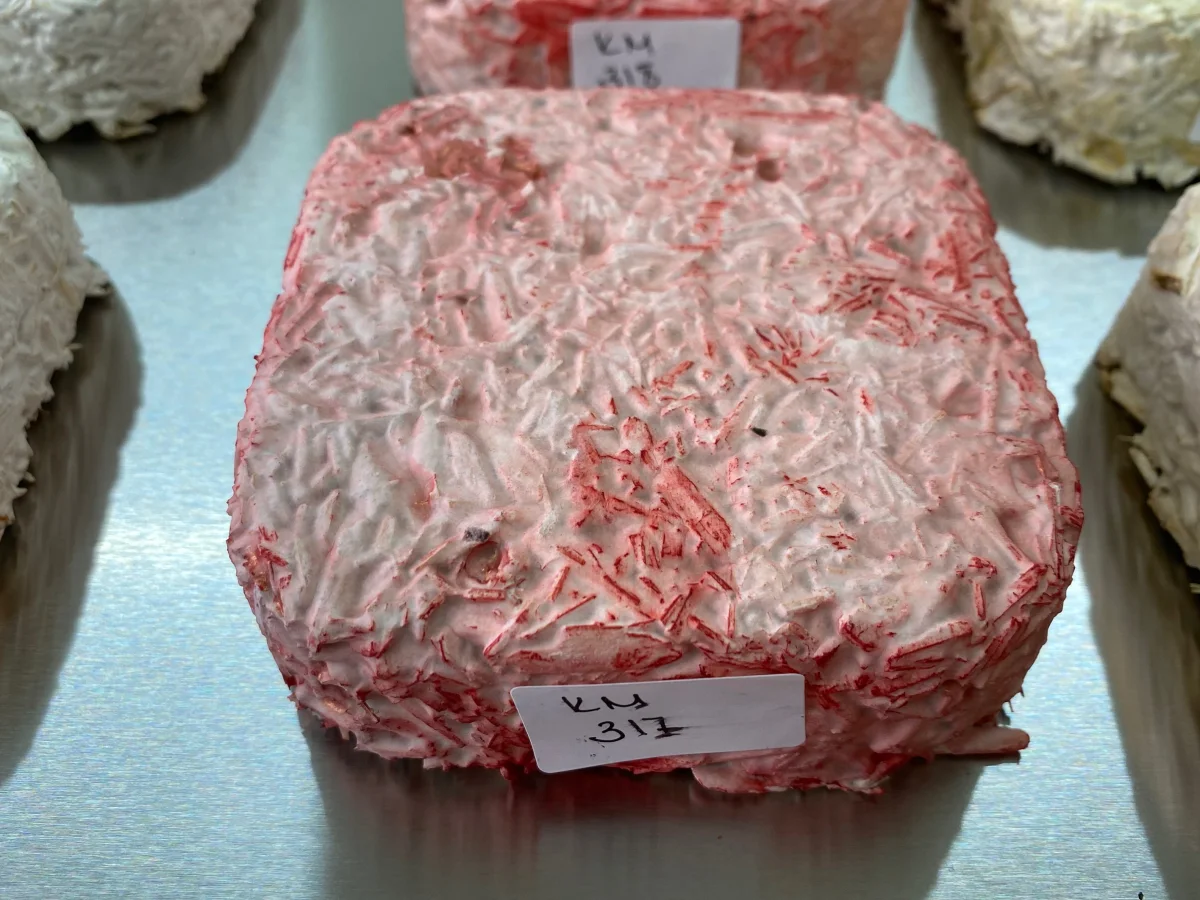
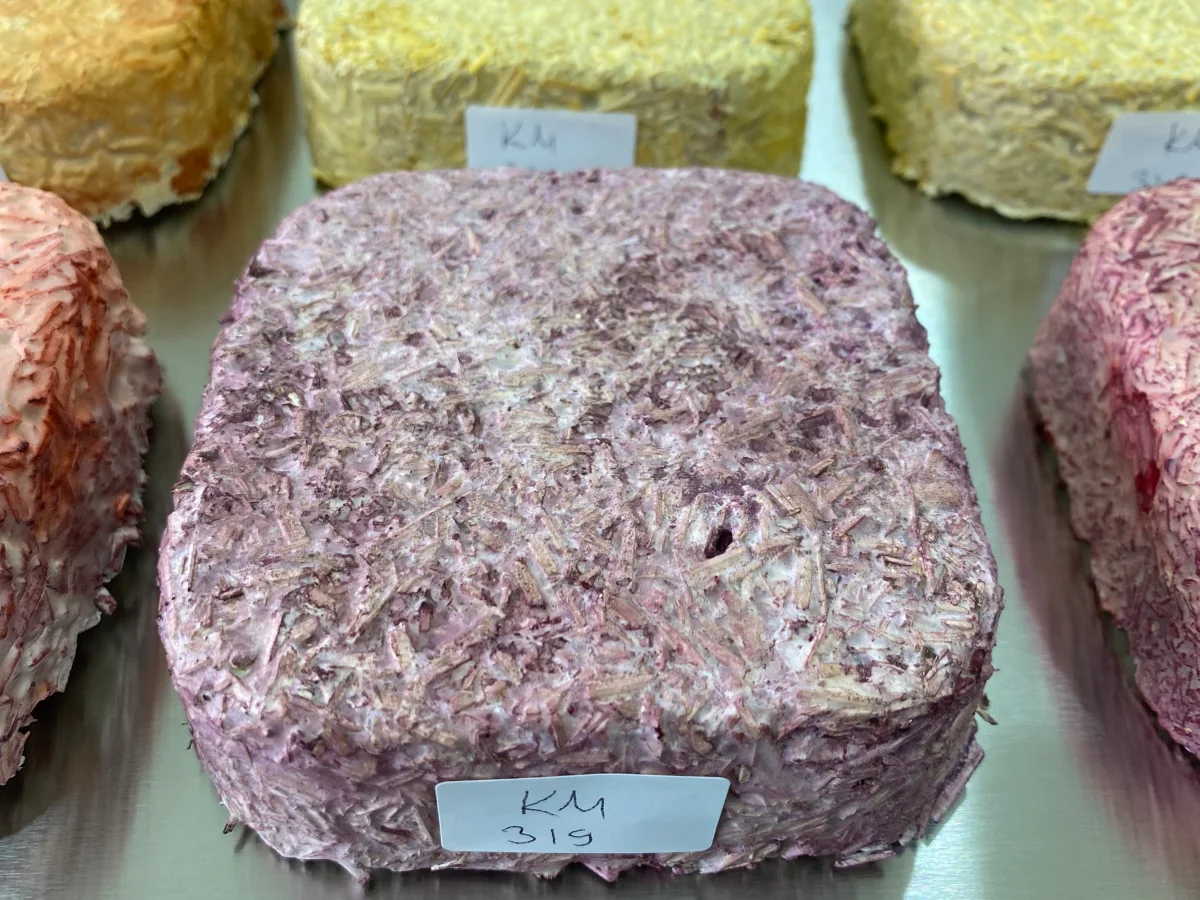
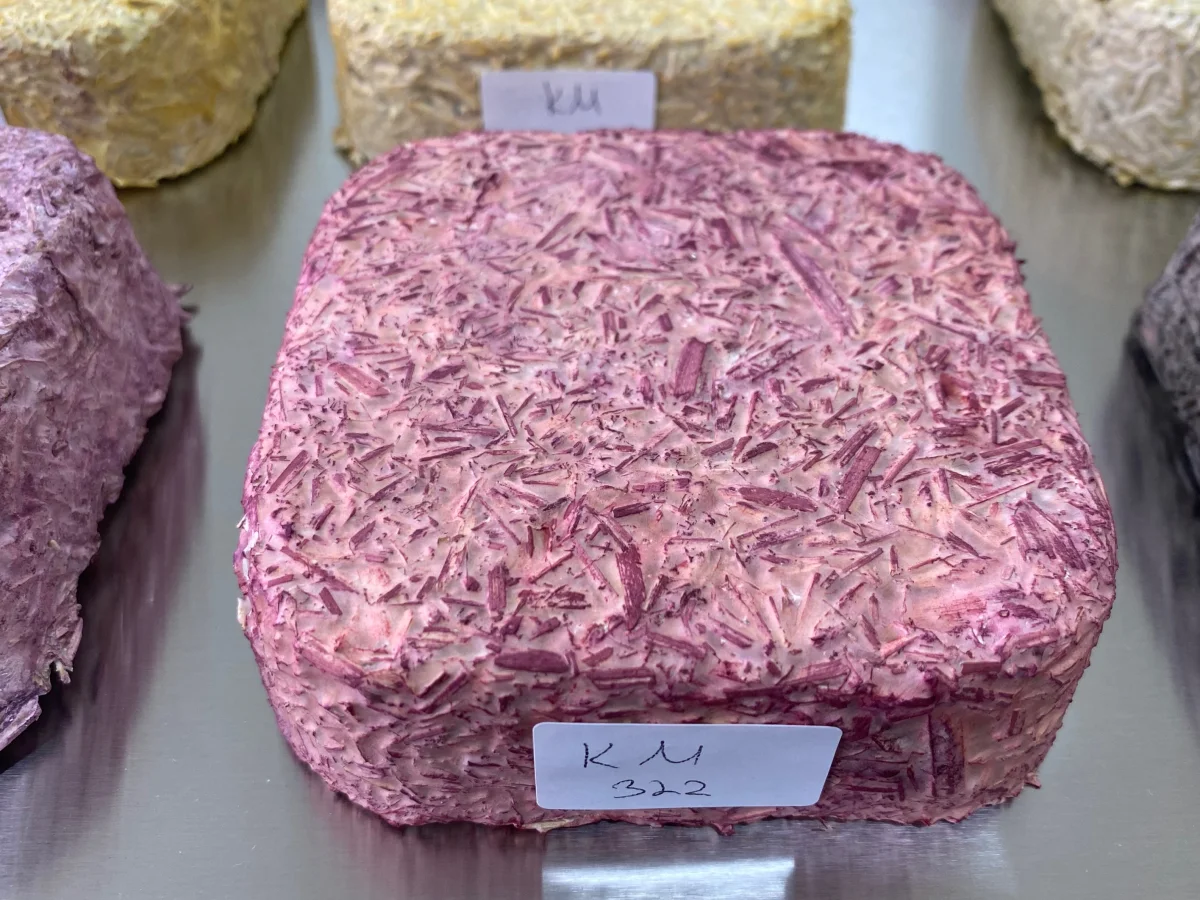
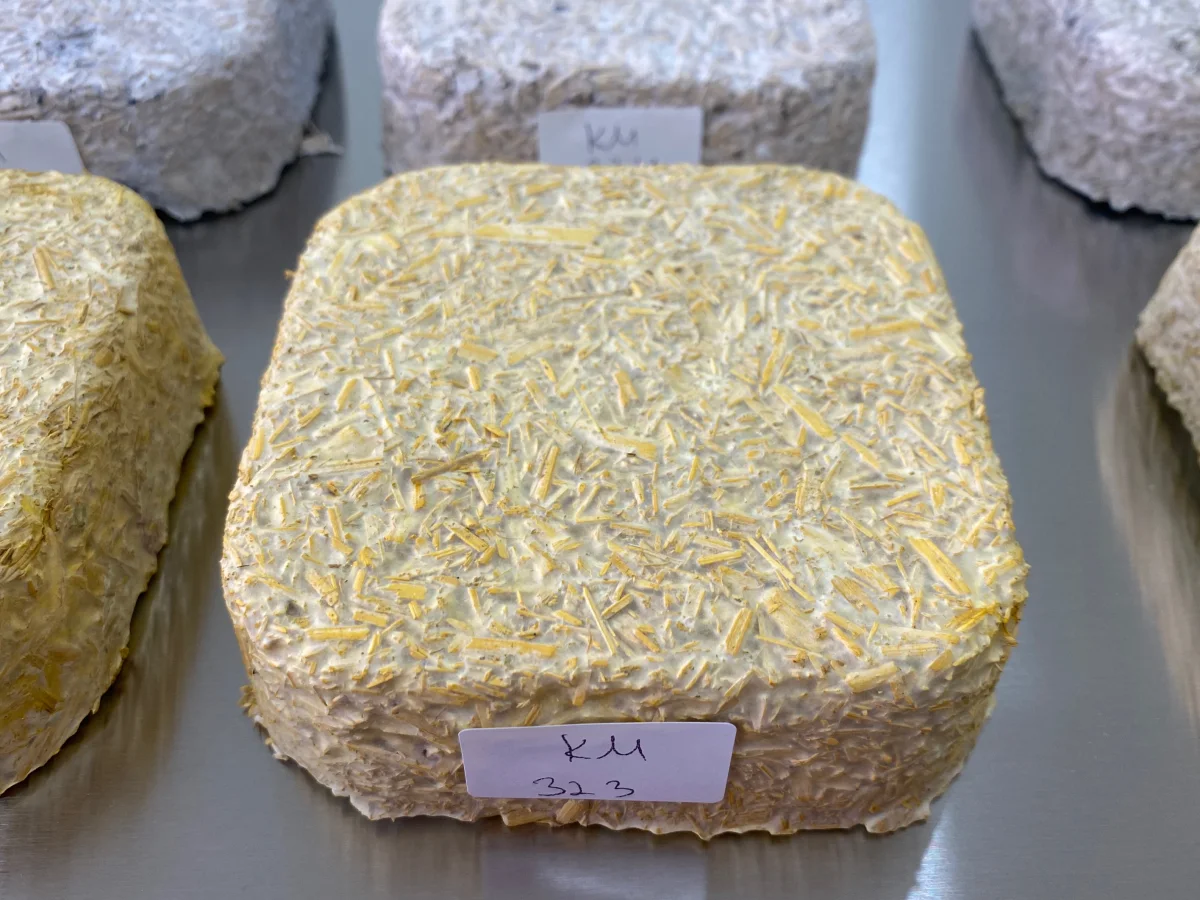
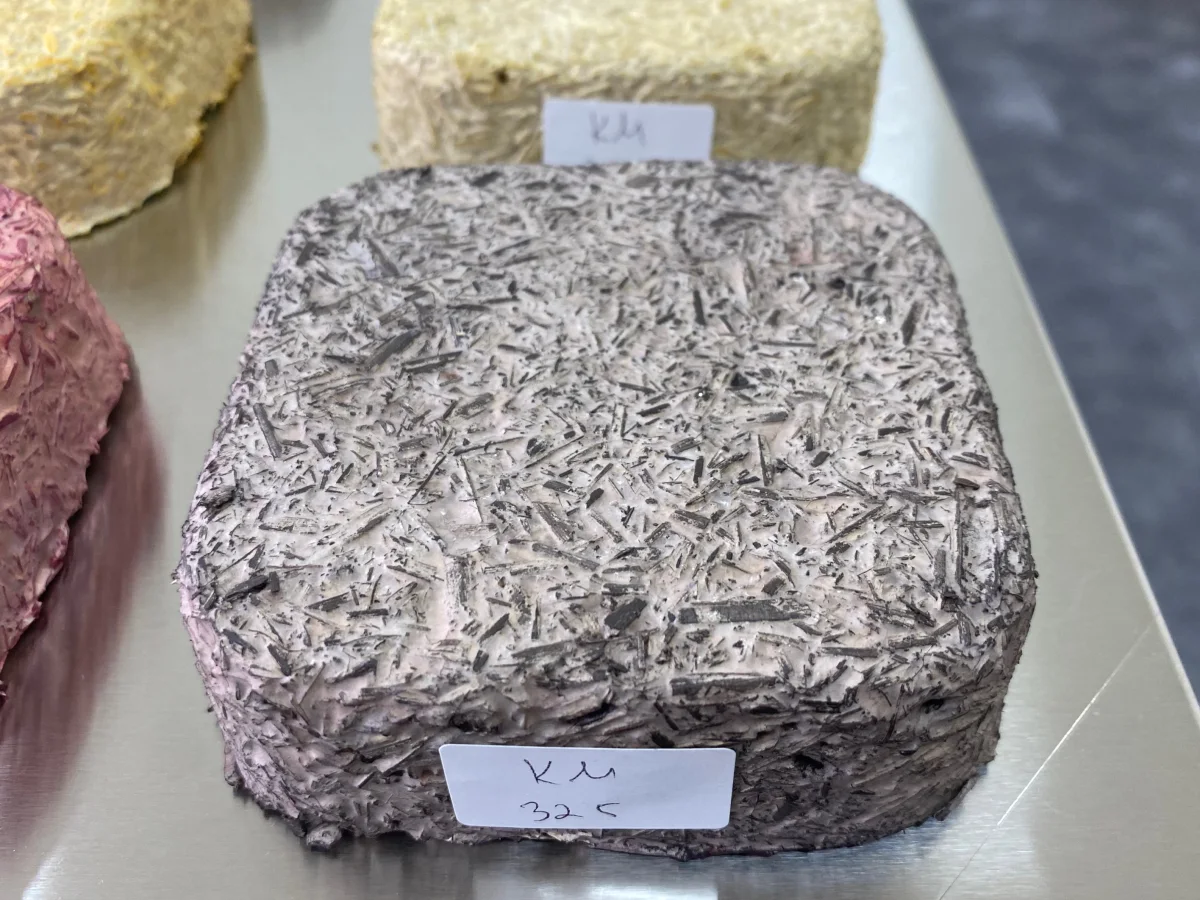
Twelve dye finishesSame base material, same light, same angle.
- Colour added before the last growth phase fades, because the fresh mycelium skin grows over it.
- Colour added after growing comes out stronger and more even.
- Excess dye left on the surface dries into watercolour-like stains. Sometimes that is a flaw, sometimes it is the look.
Laser engraving
Graphics and textures burned into the grown skin. Up close, the engraving follows every fibre of the material.
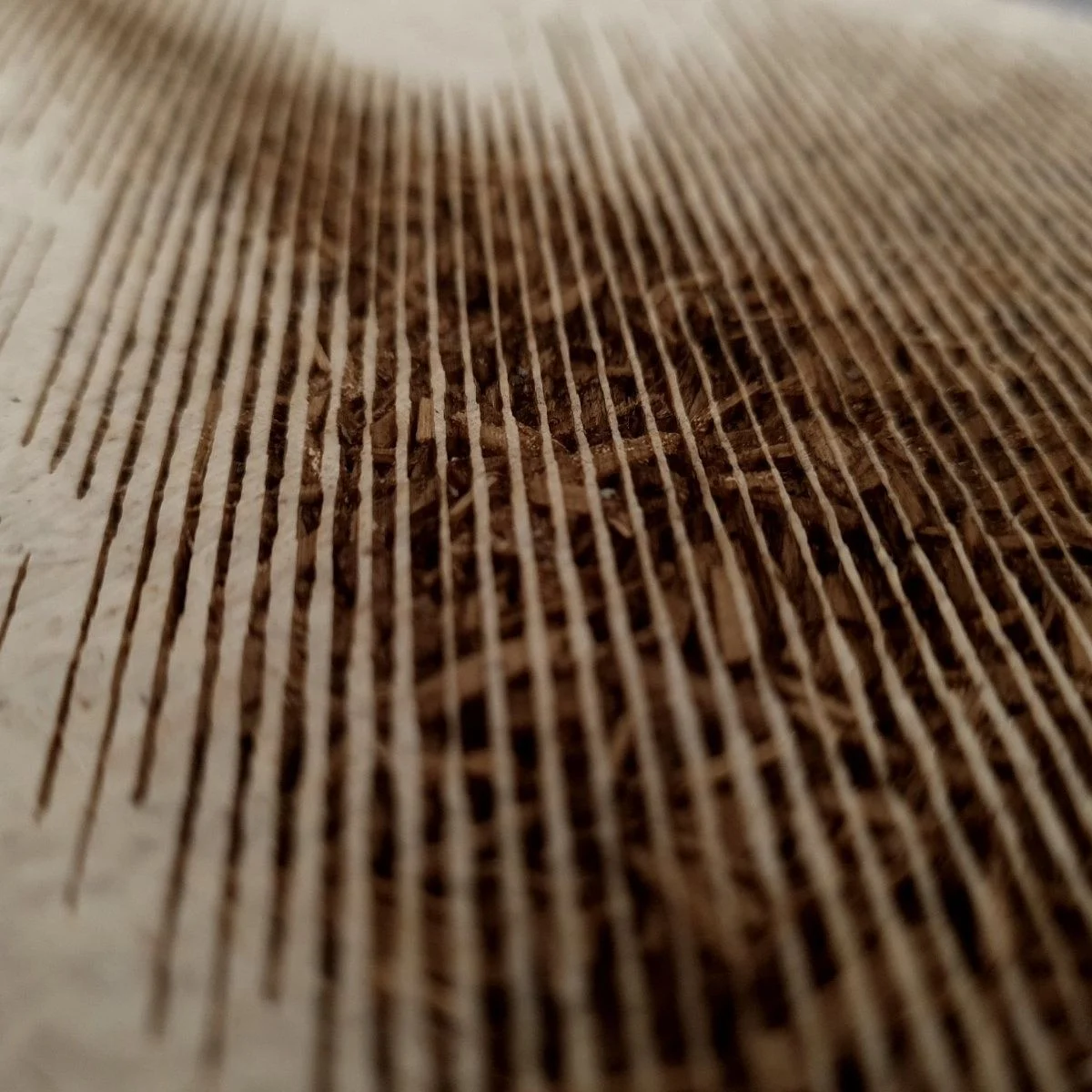
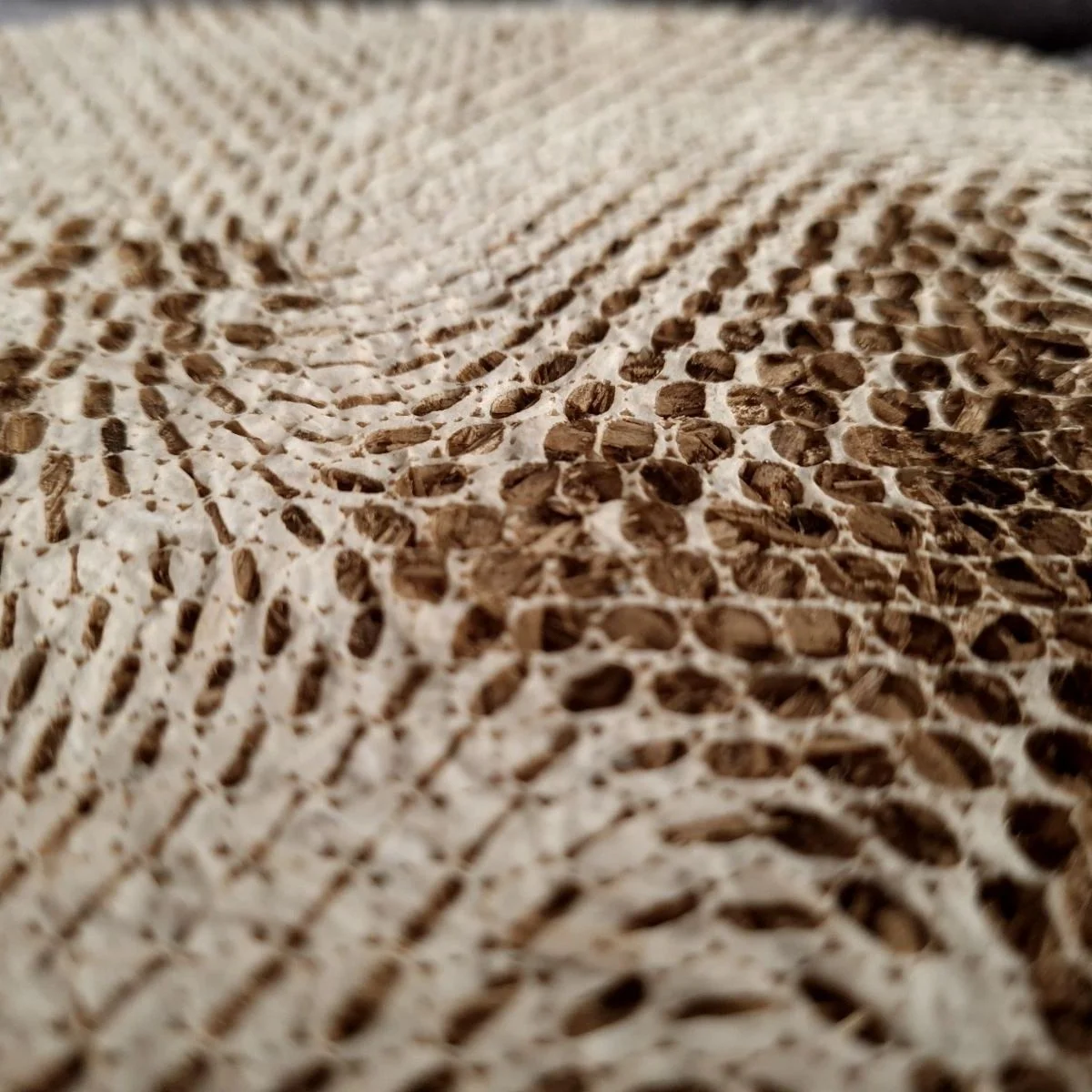
- 01Area fillsPower, speed, line spacing and focus changed one at a time.
- 02LinesPower, speed and focus for clean single lines.
- 03Lines, refinedPower and speed narrowed down.
- 04Kia's patternsGraphics from the brief, engraved with the best settings.
- 05RepeatThe best results run again to confirm them.
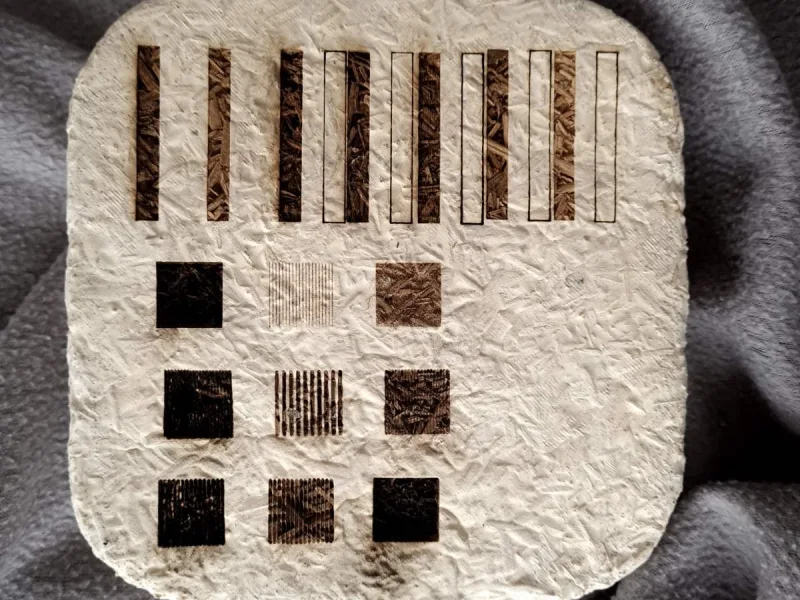
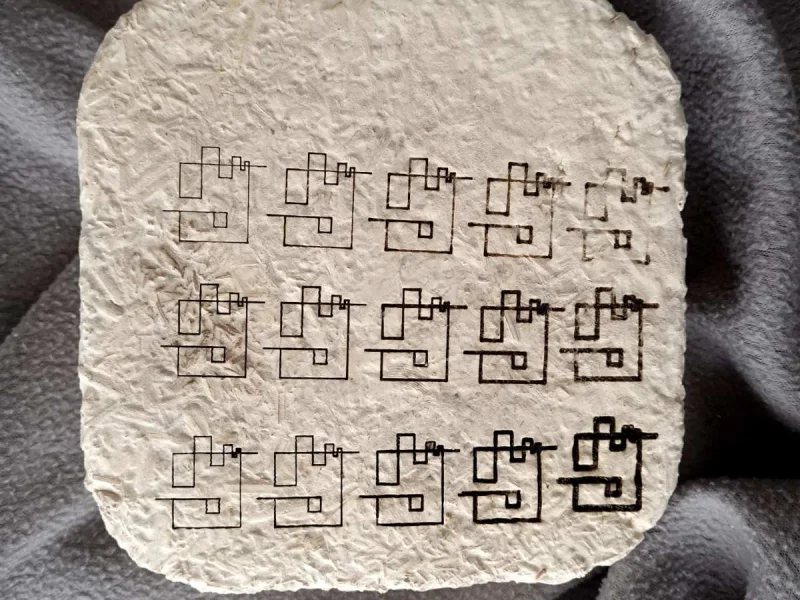
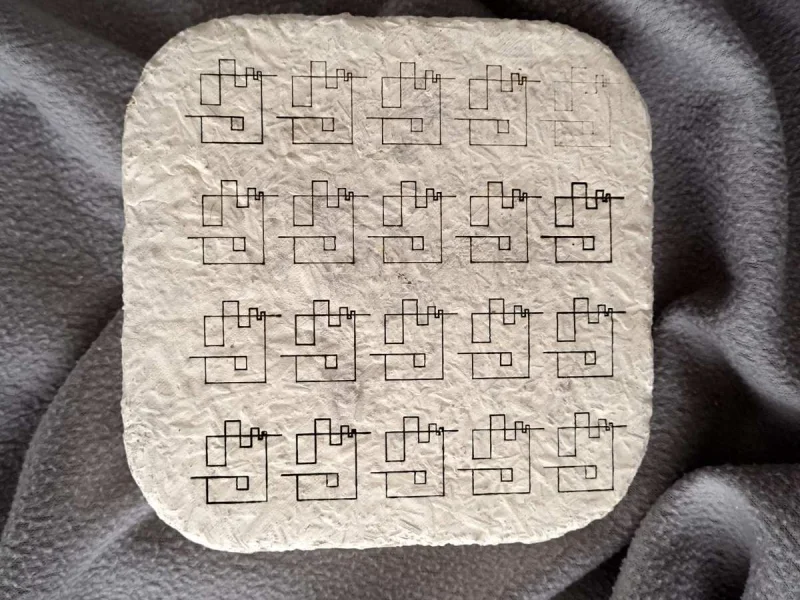
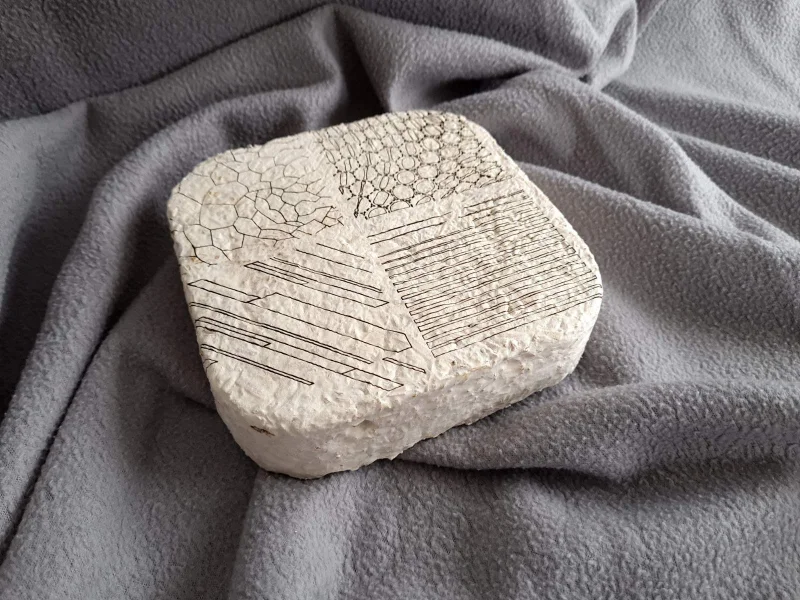
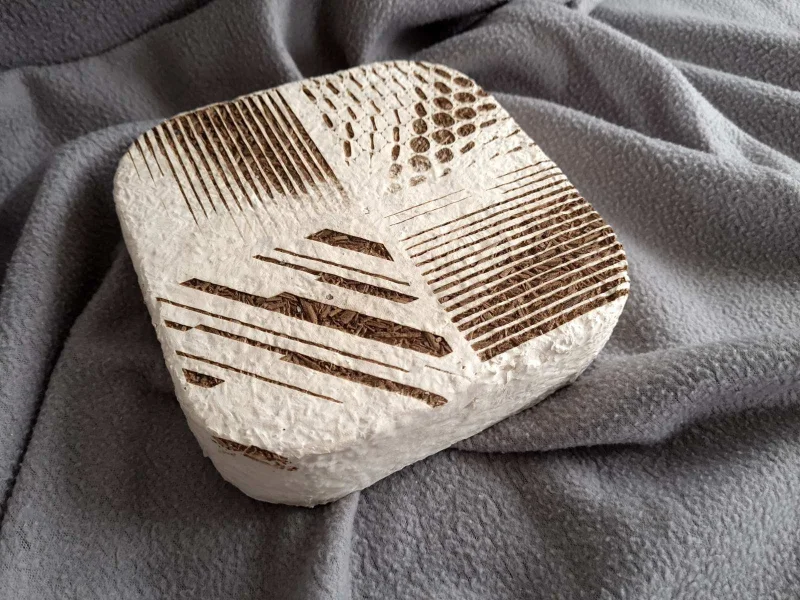
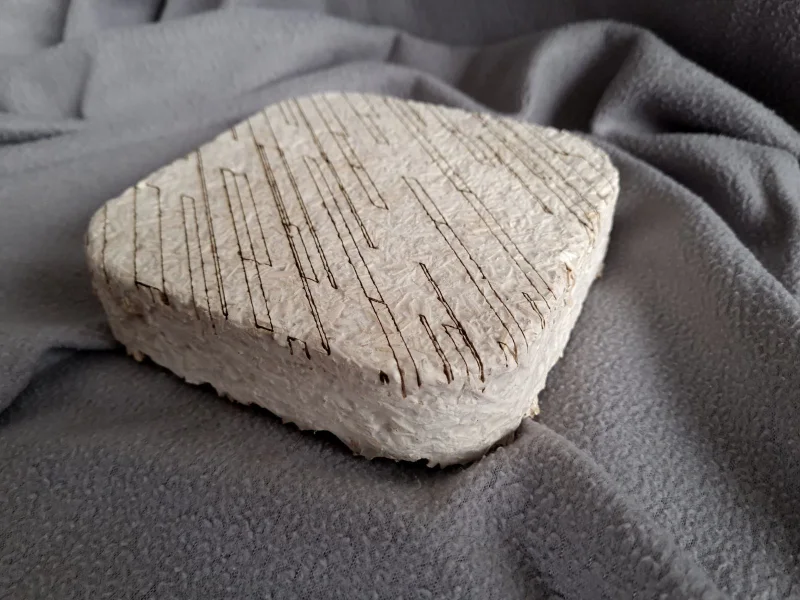
The test platesWhat we used to find the settings.
Grown 3D patterns
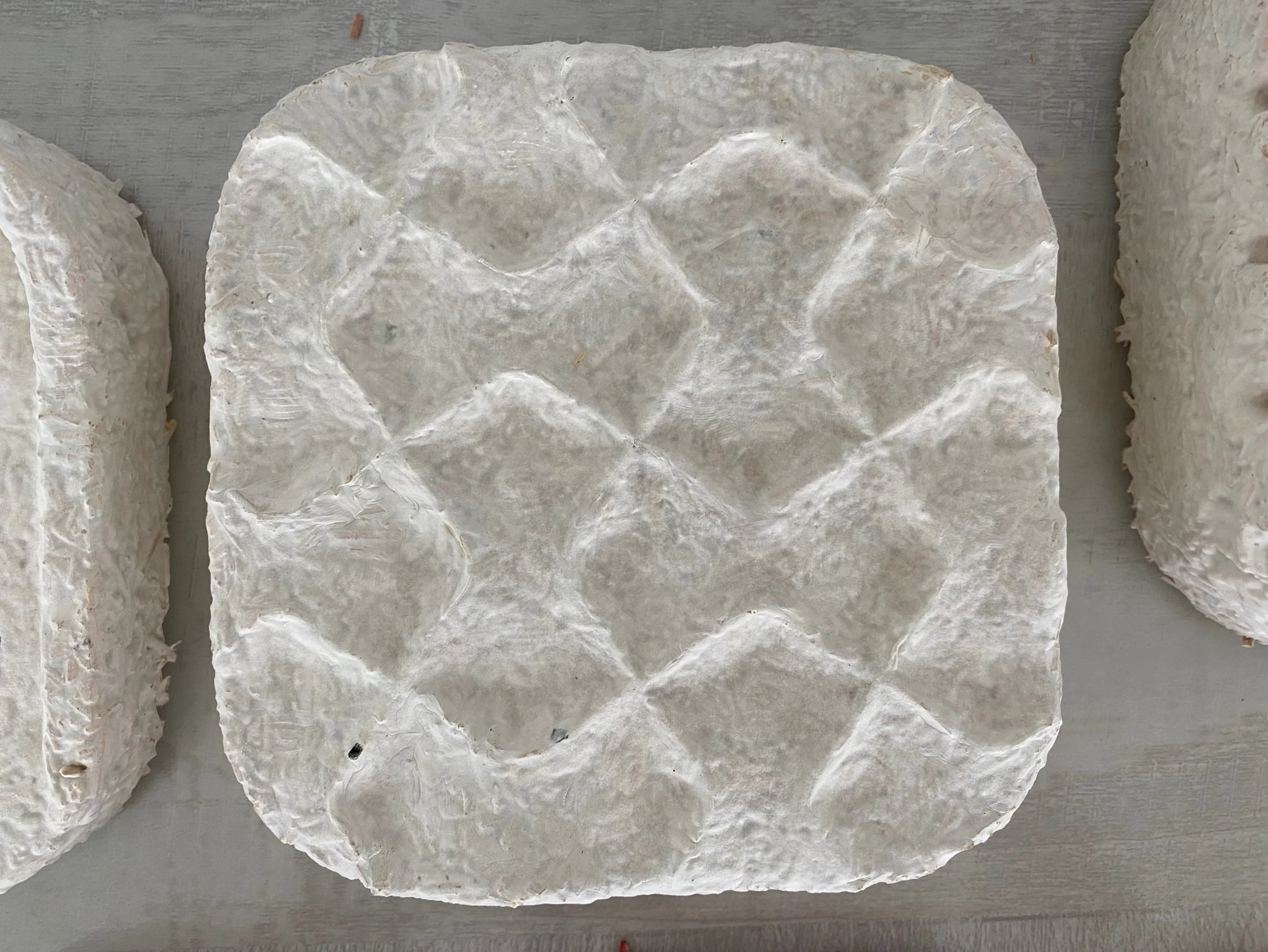
Anyone can grow a pattern in mycelium. What makes these useful is that each one pushes a different design rule to its limit: channel depth, rib height, spacing, sharp facets against soft curves. Growing them showed us what we can build again and again, and where the material stops following the mould.
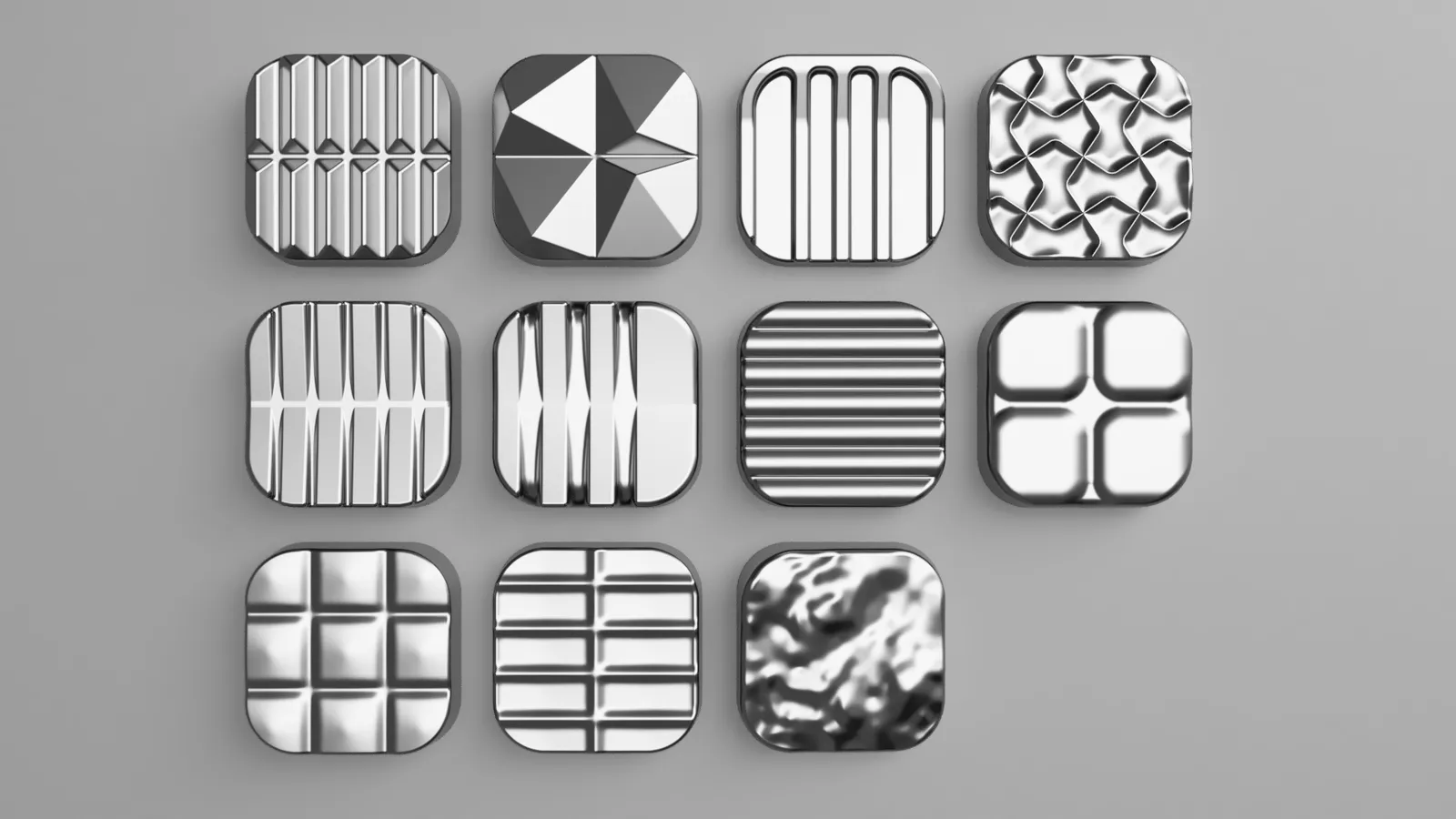
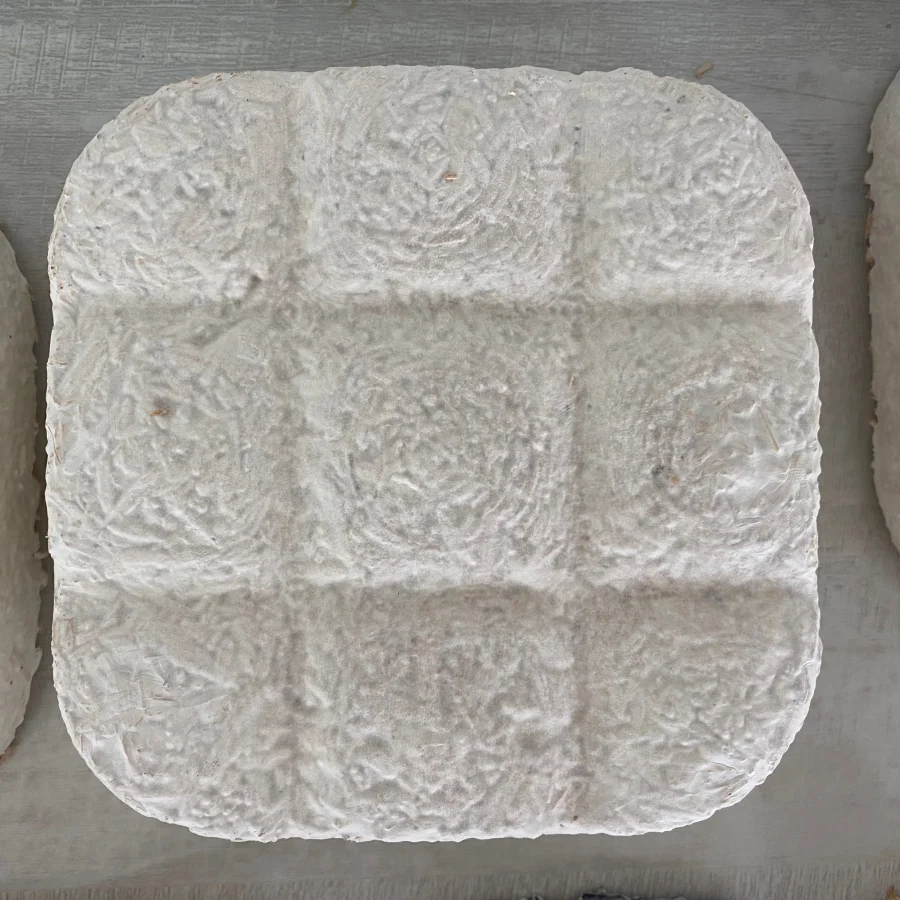
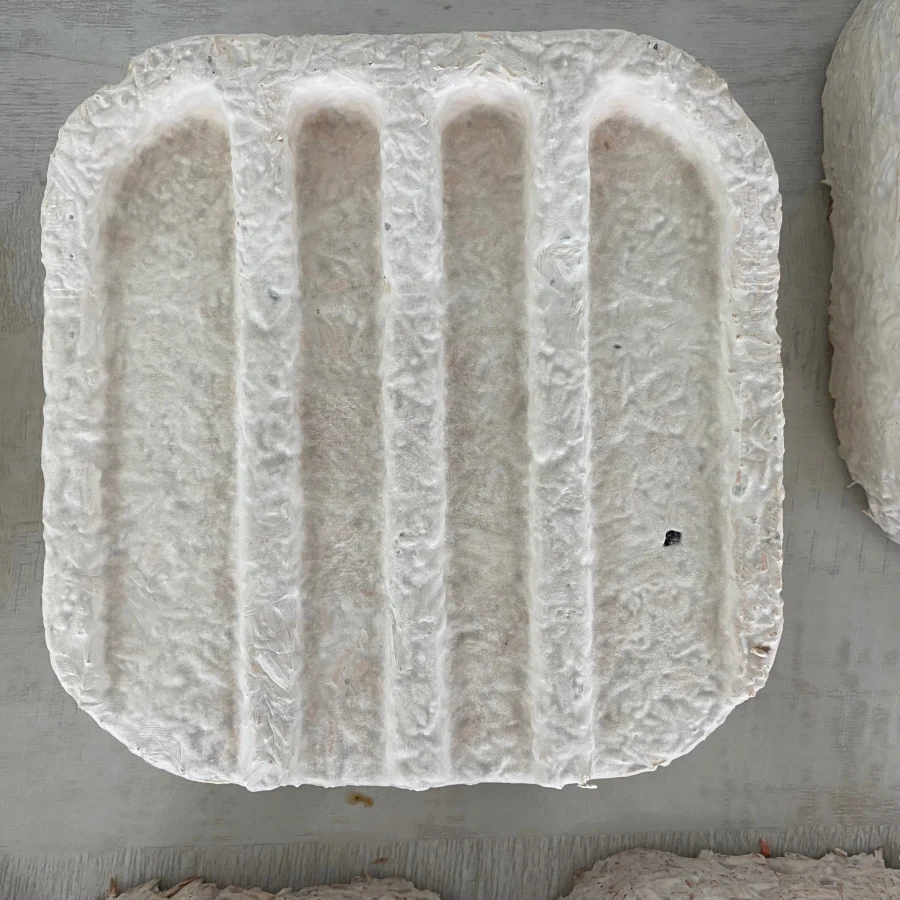
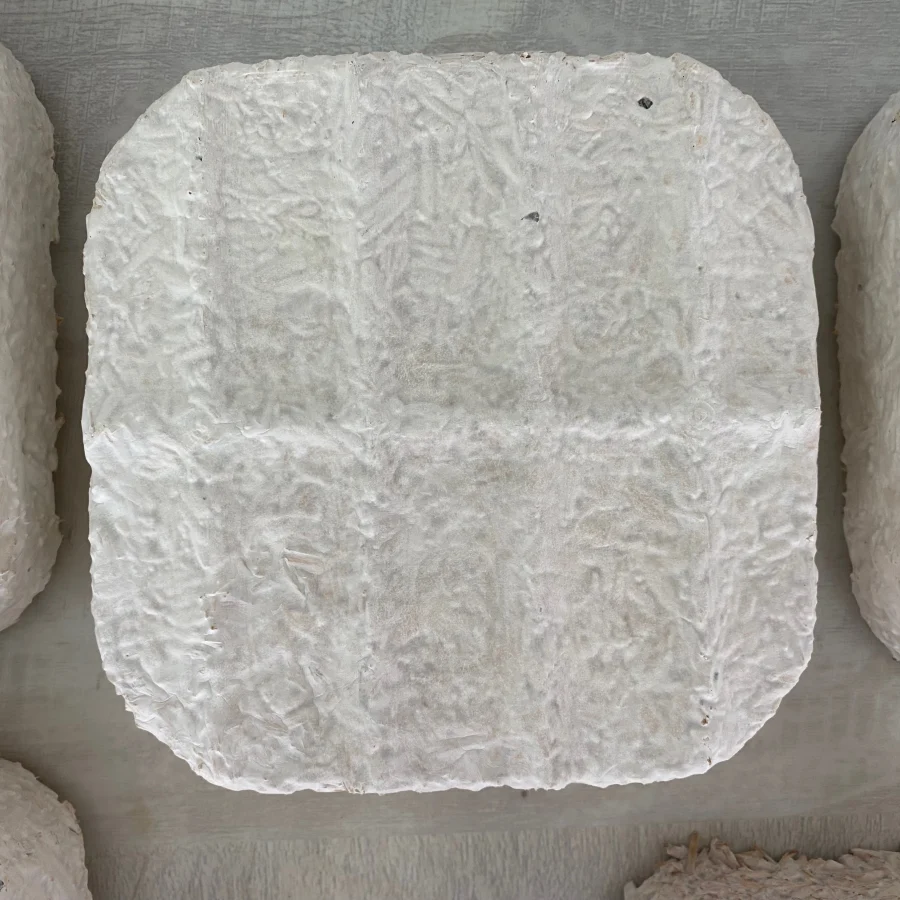
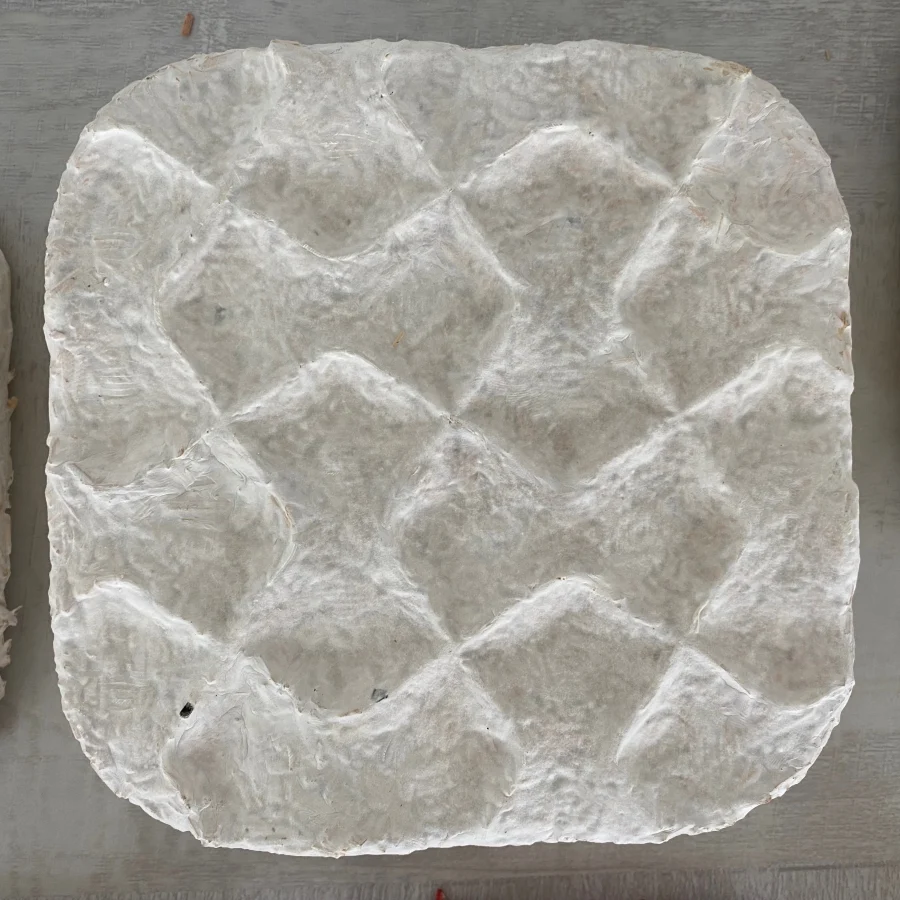
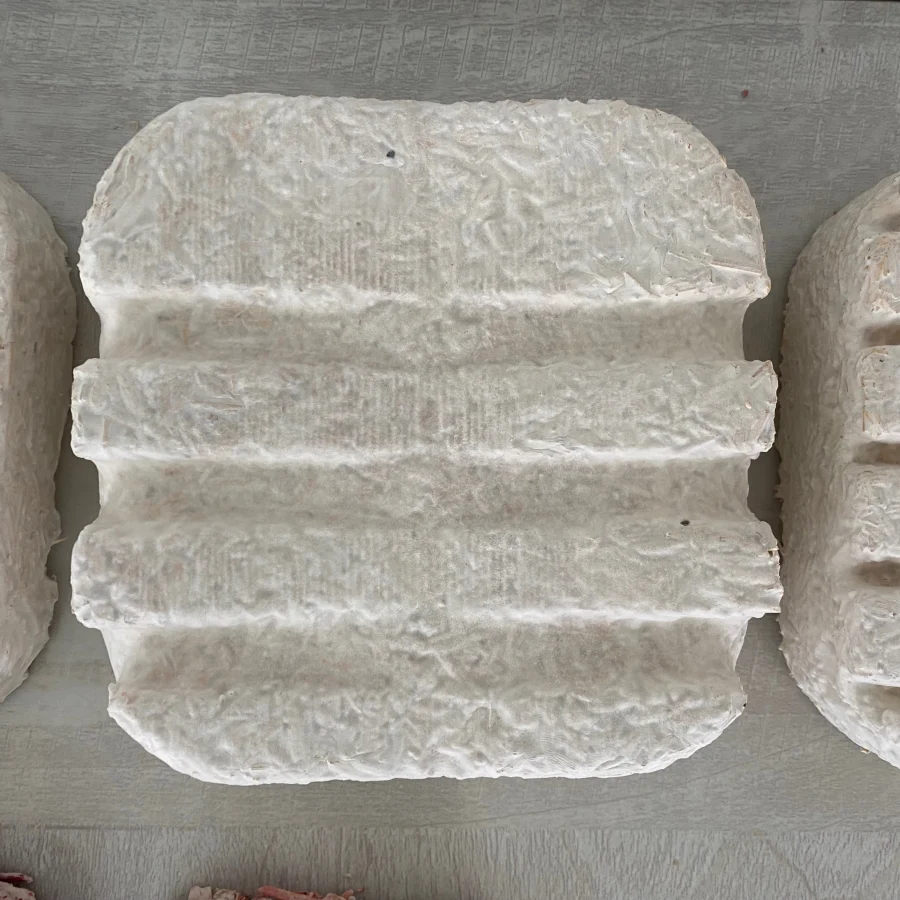
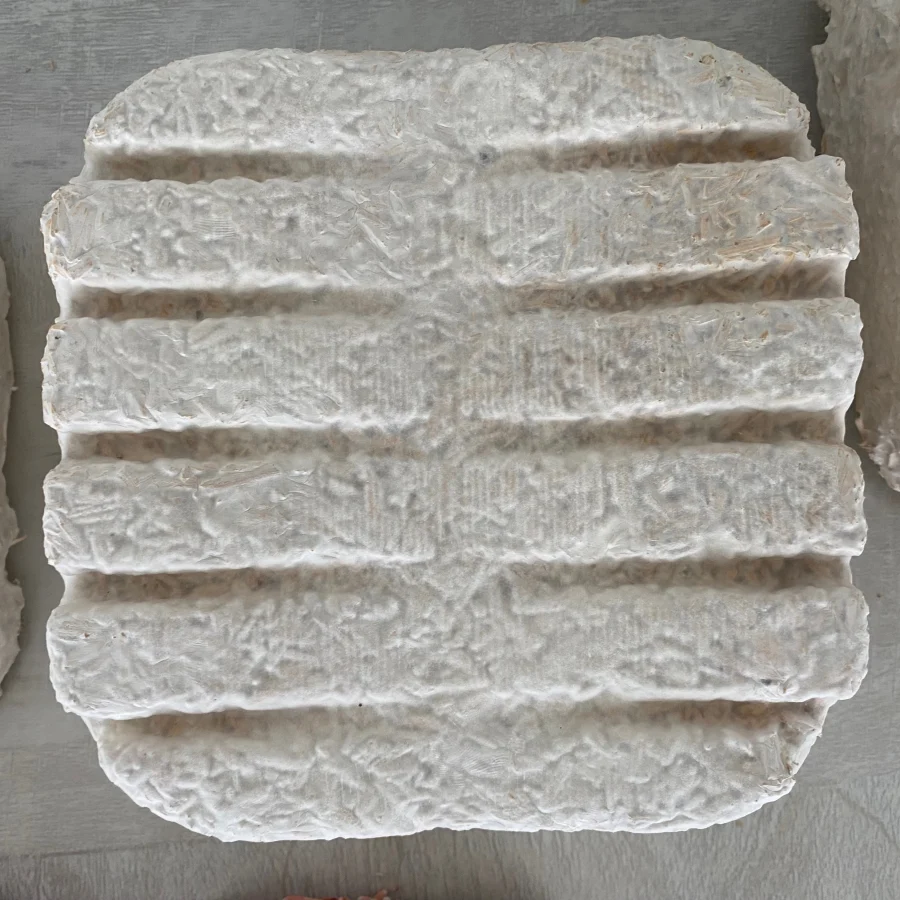
Six patterns, six rulesGrown in one piece, straight out of the mould, no machining.
Paints
29 paint samples. We picked paints that can be bought at scale, carry real sustainability claims, survive inside and outside a car, and are made for porous surfaces like wood.
- 01ShortlistScalable, sustainable, interior and exterior grade, made for porous surfaces.
- 02Brush every one25 paints and 42 coatings.
- 03Spray the best4 paints and 2 coatings.
- 04CompareSide by side, same light, same angle.
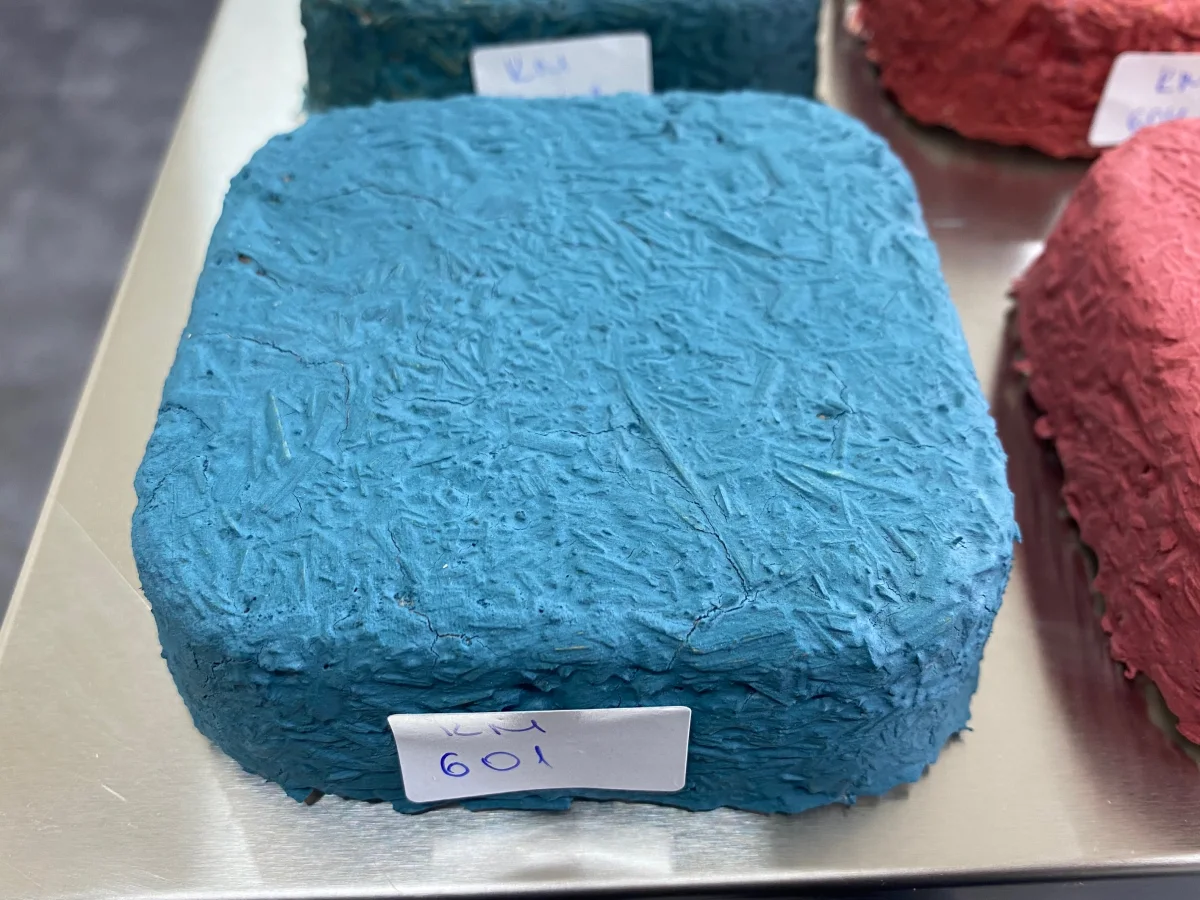
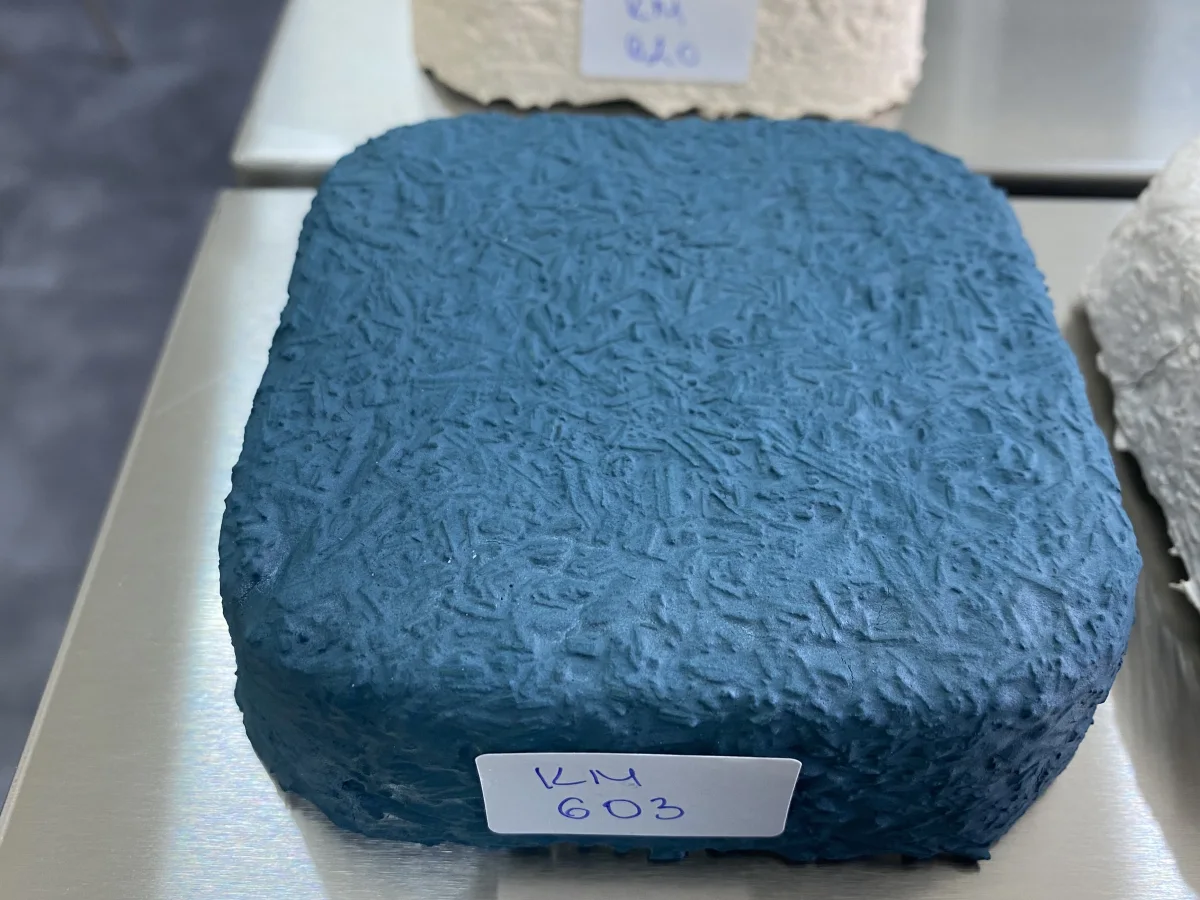
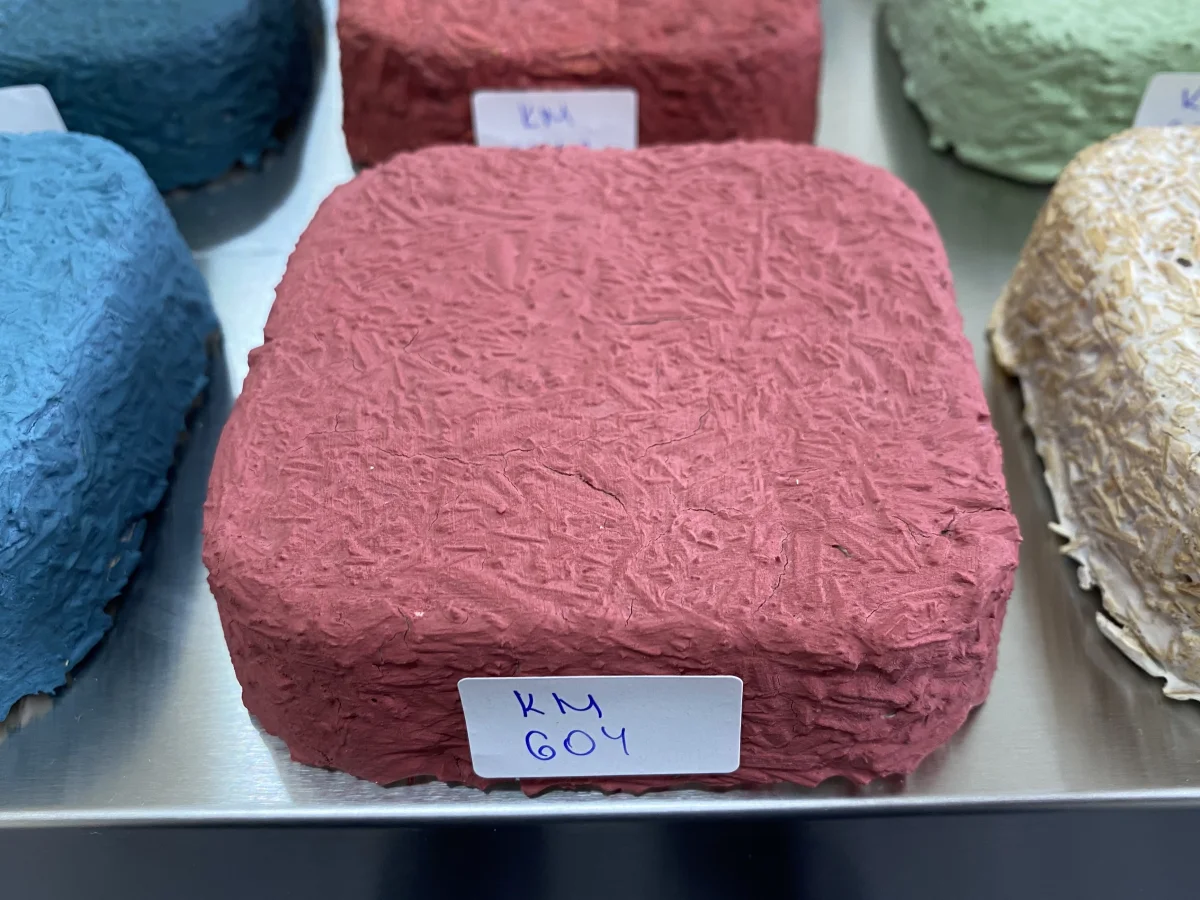
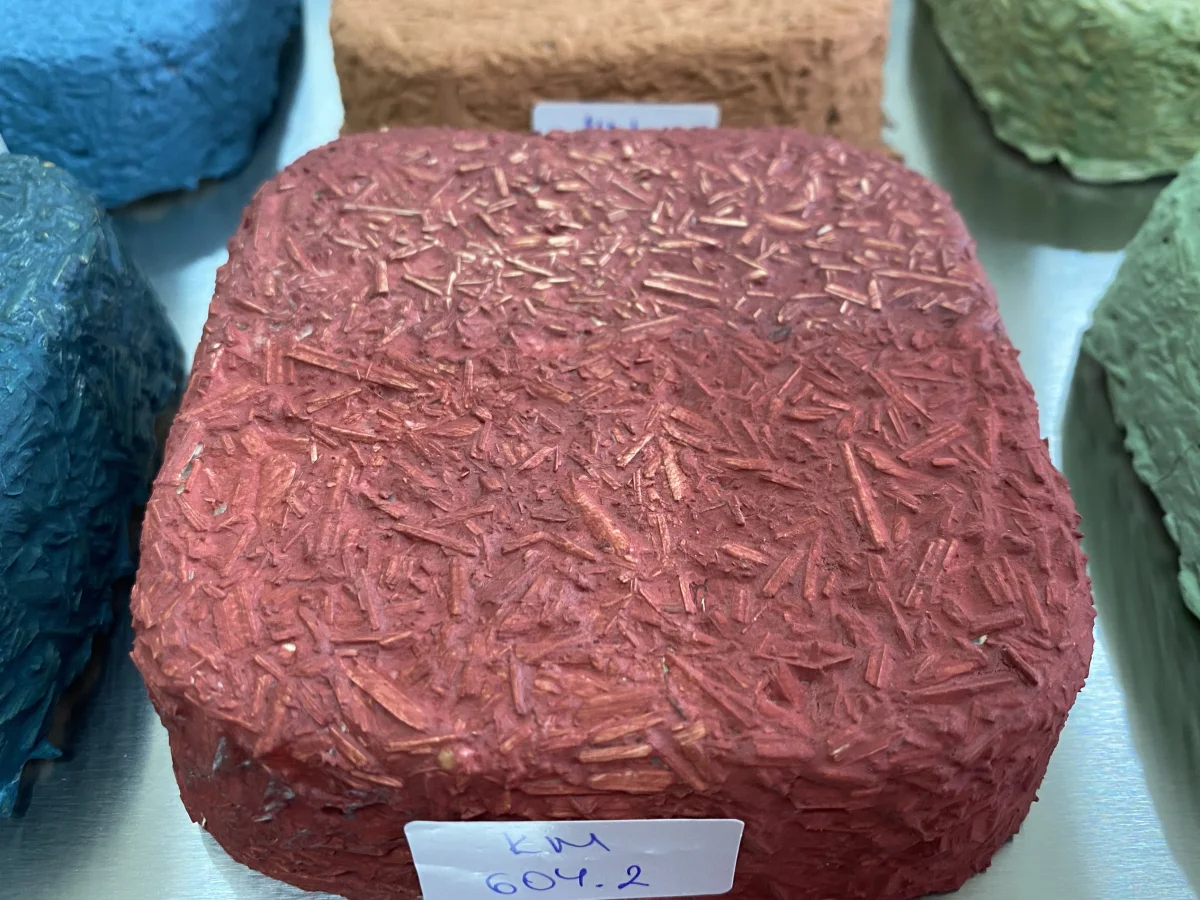
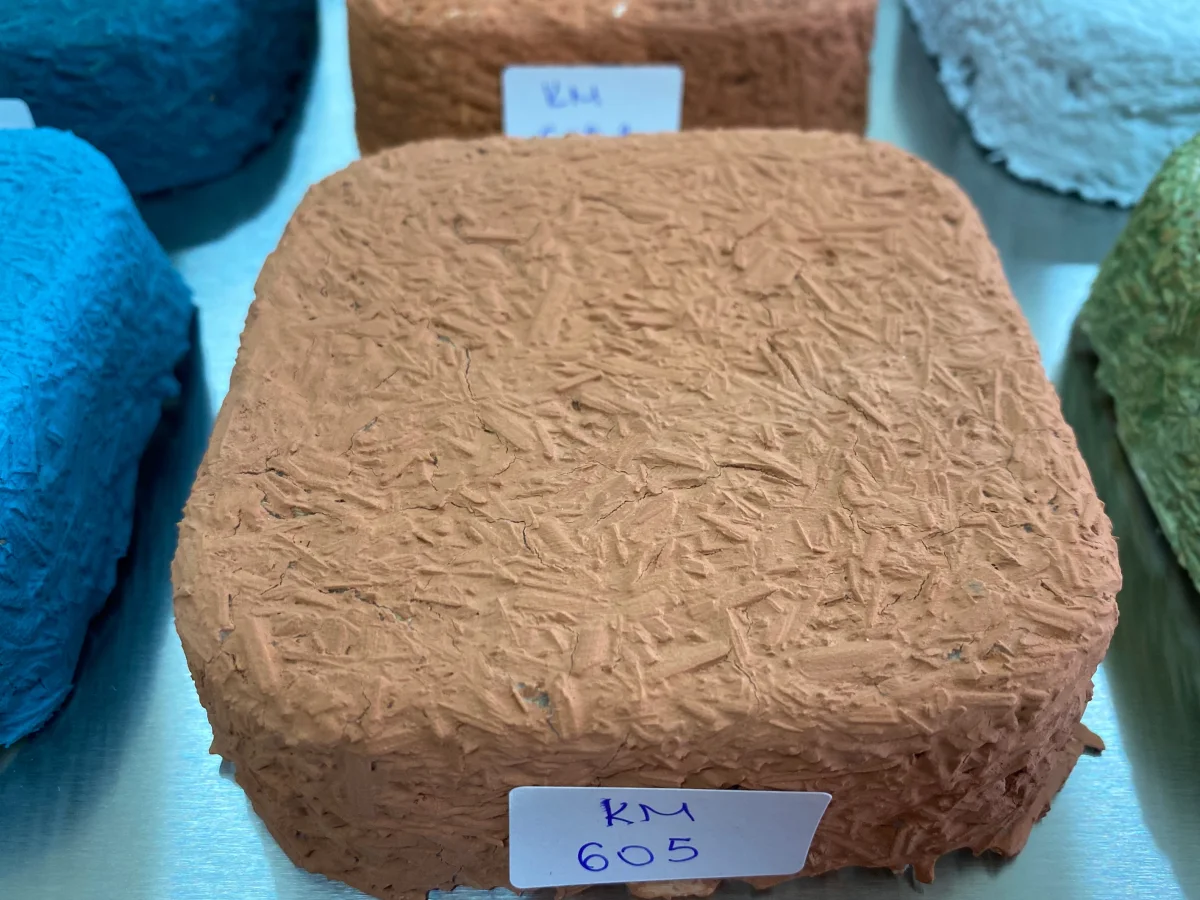
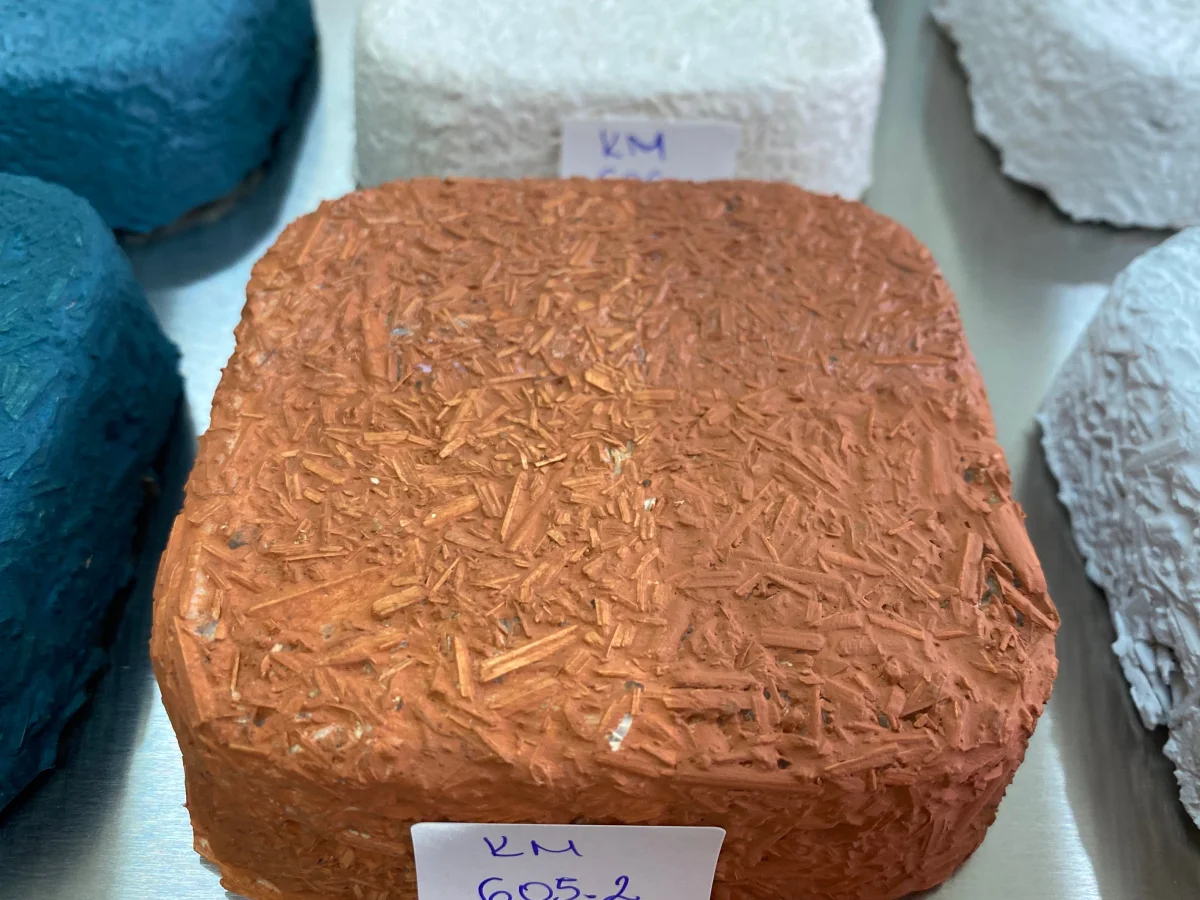
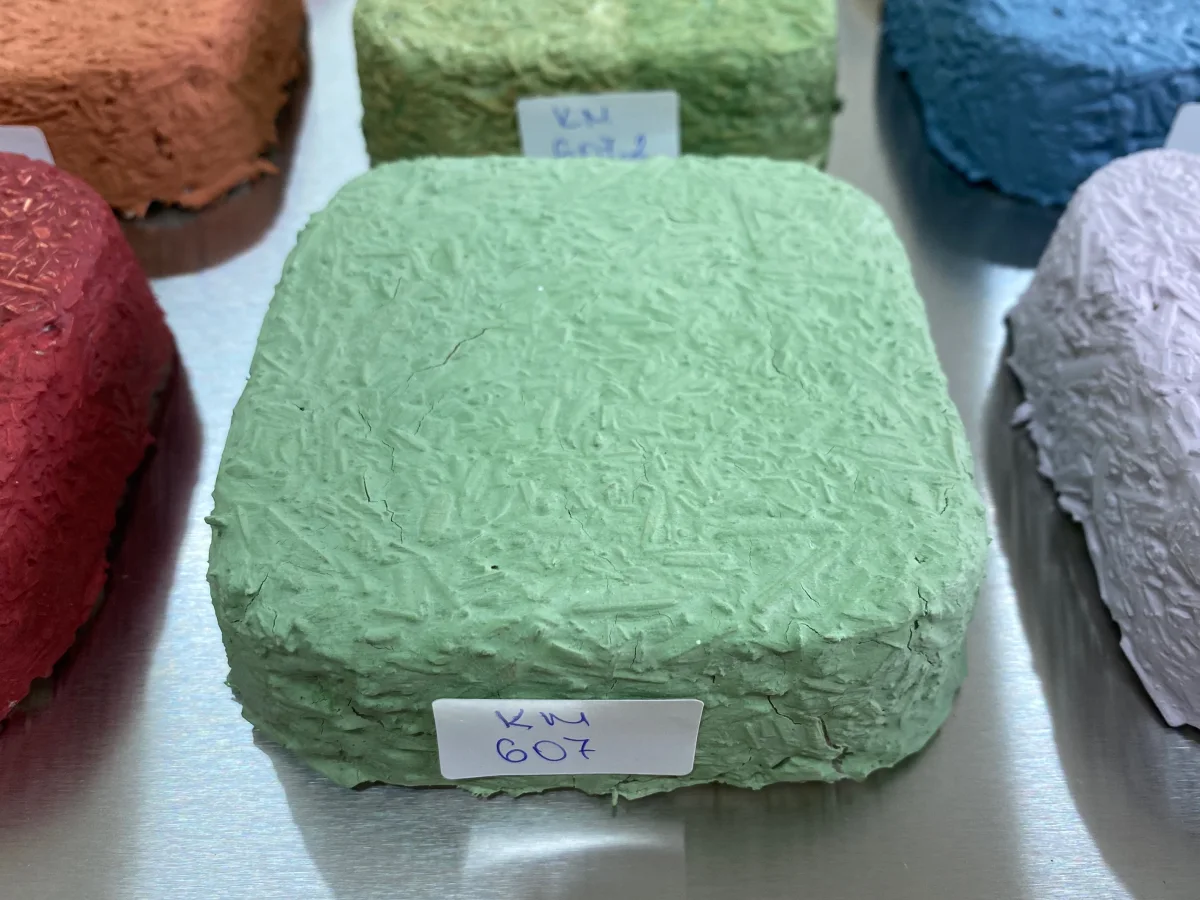
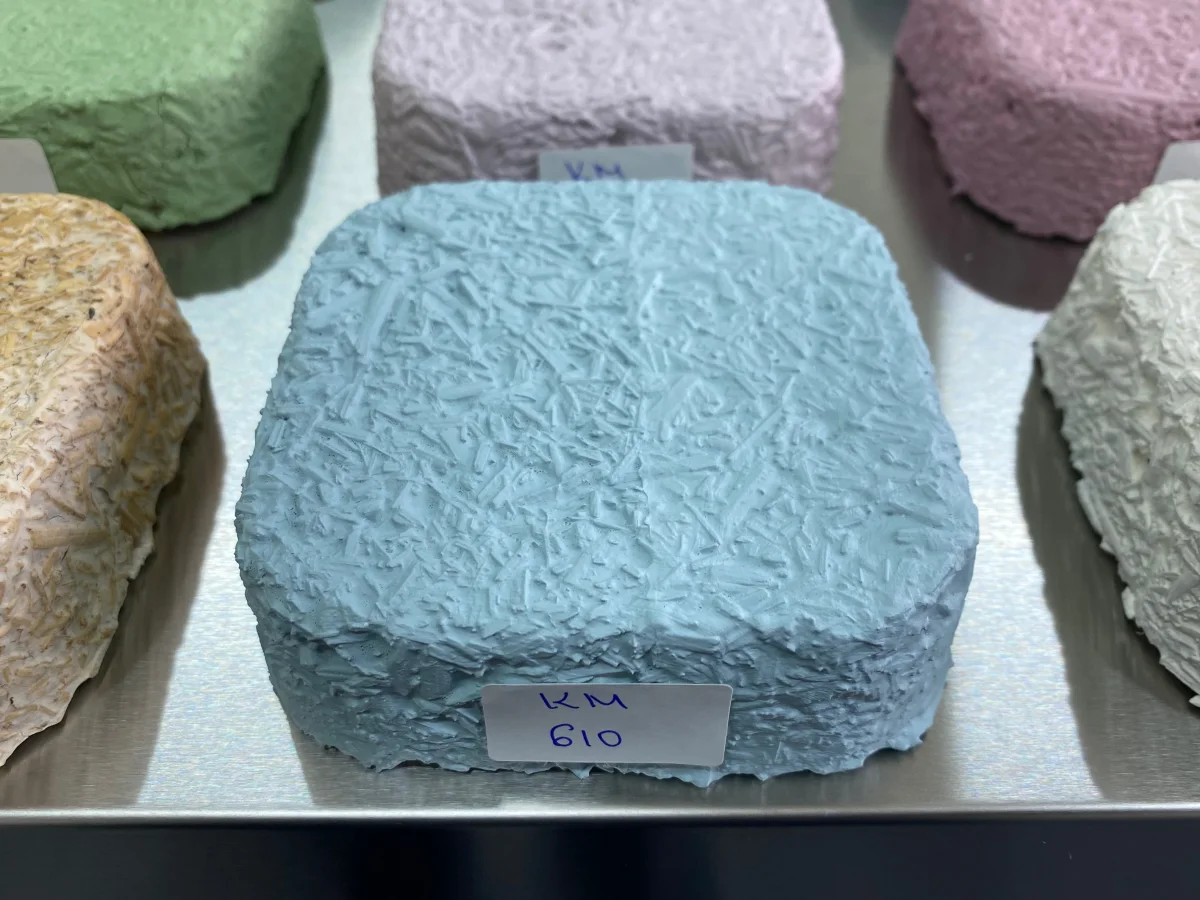
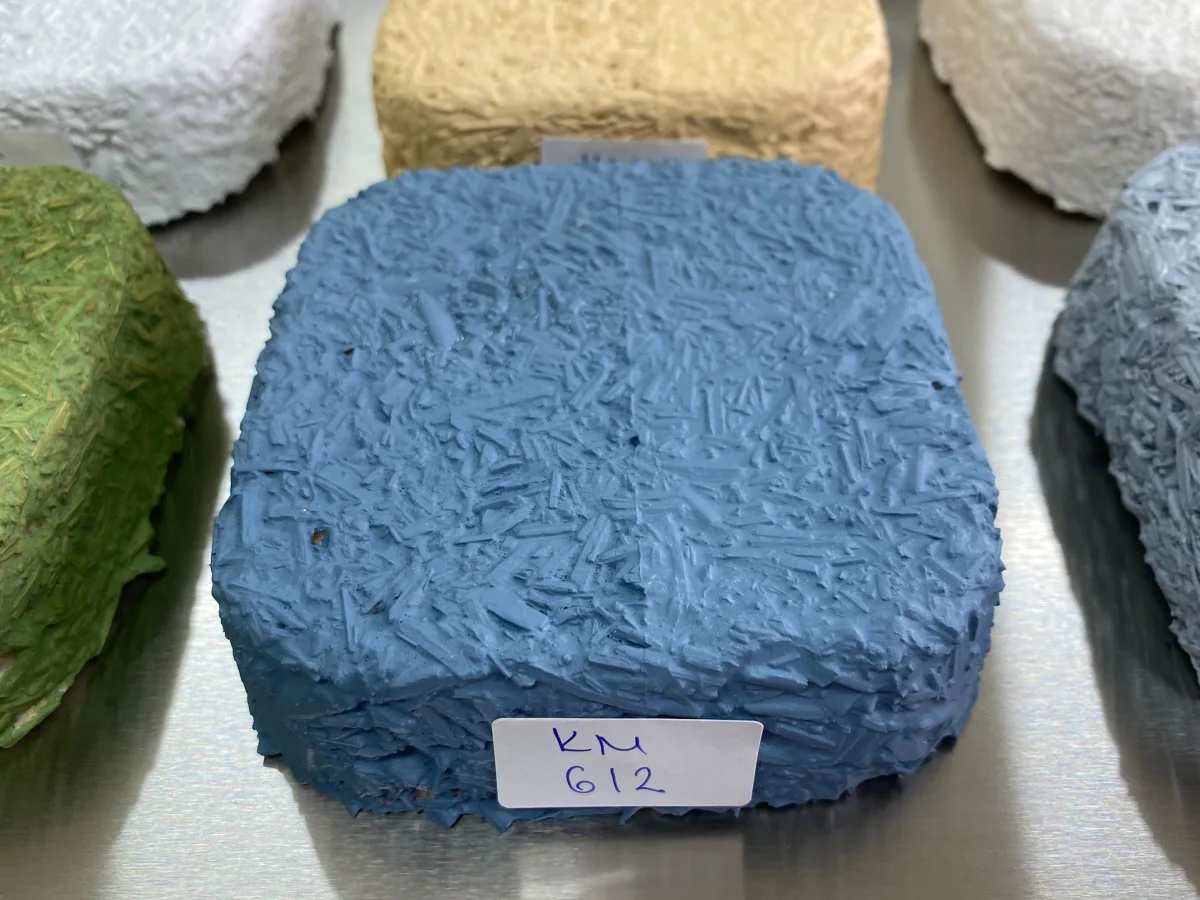
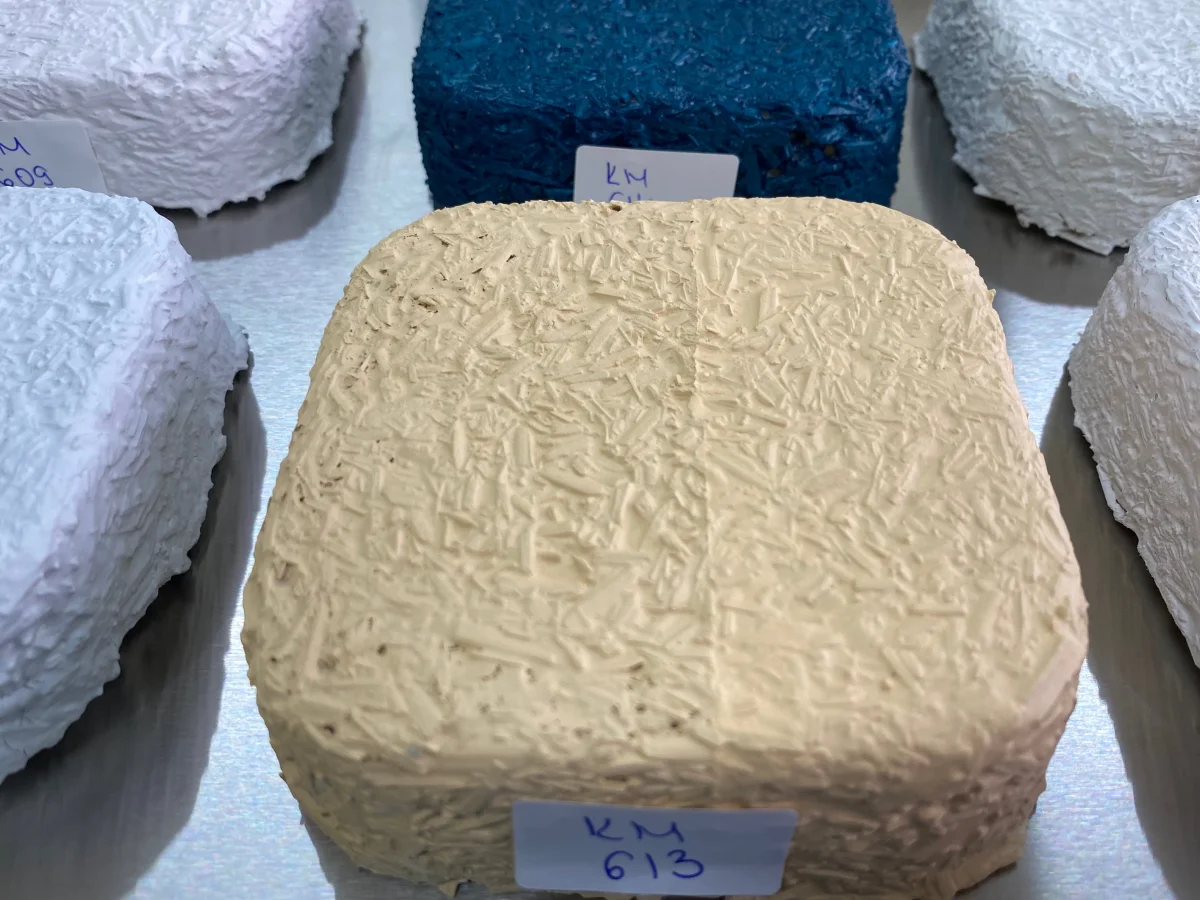
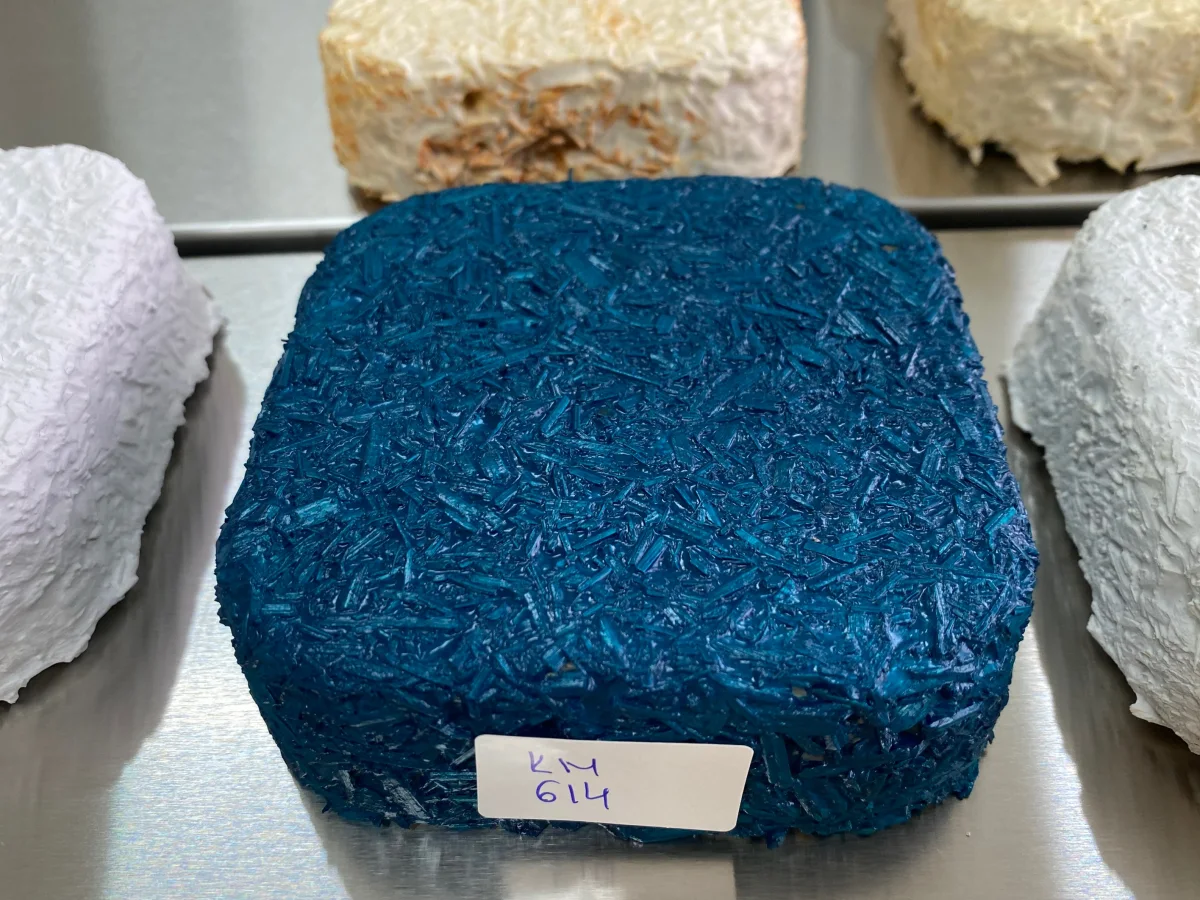
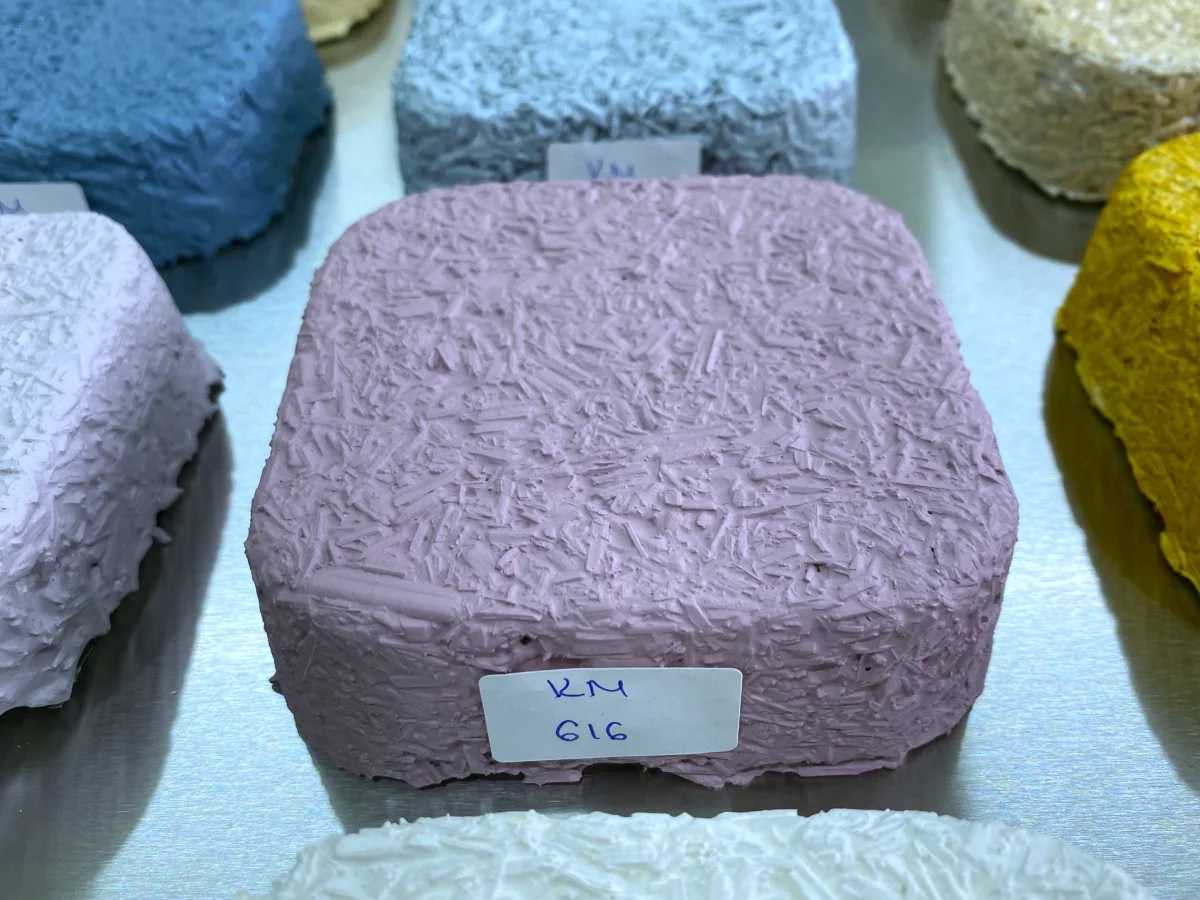
Twelve painted finishesSame base material, same light, same angle.
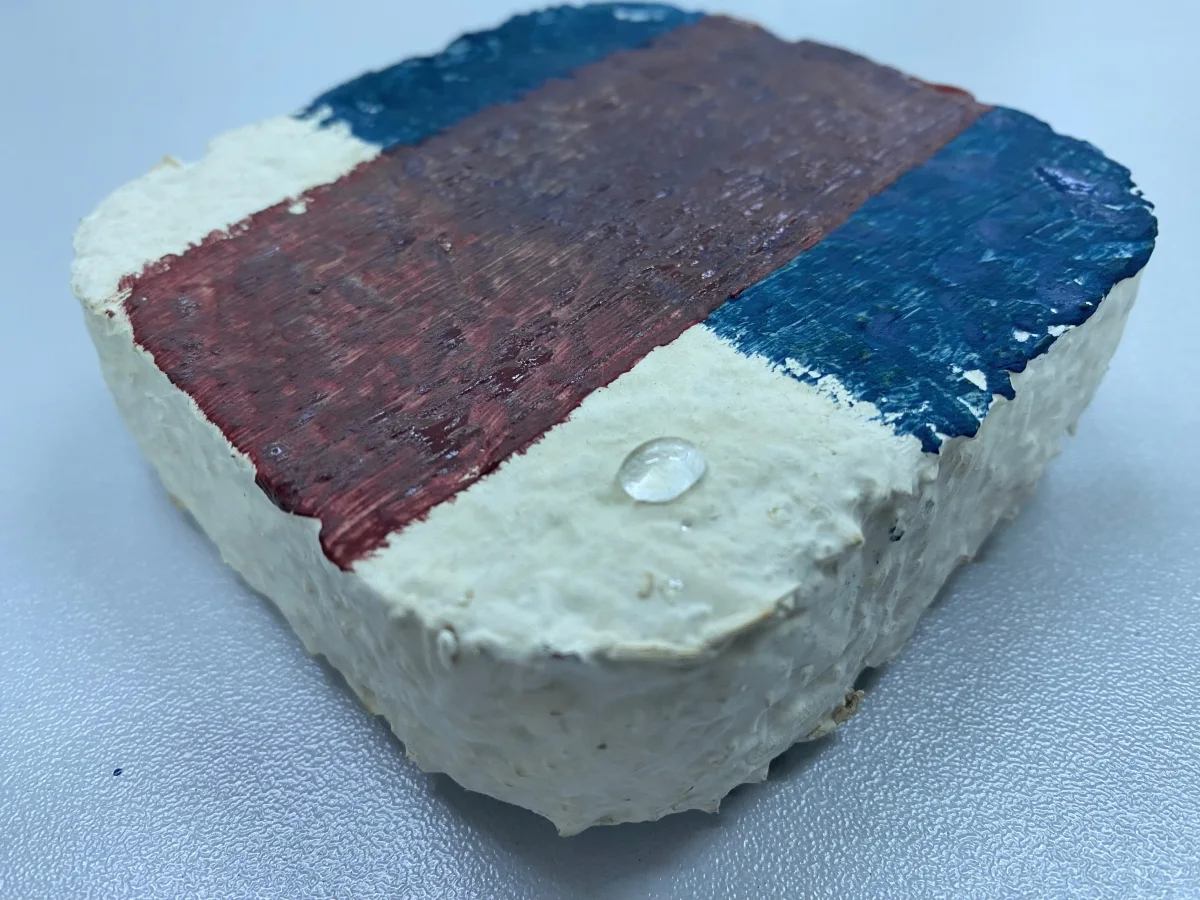
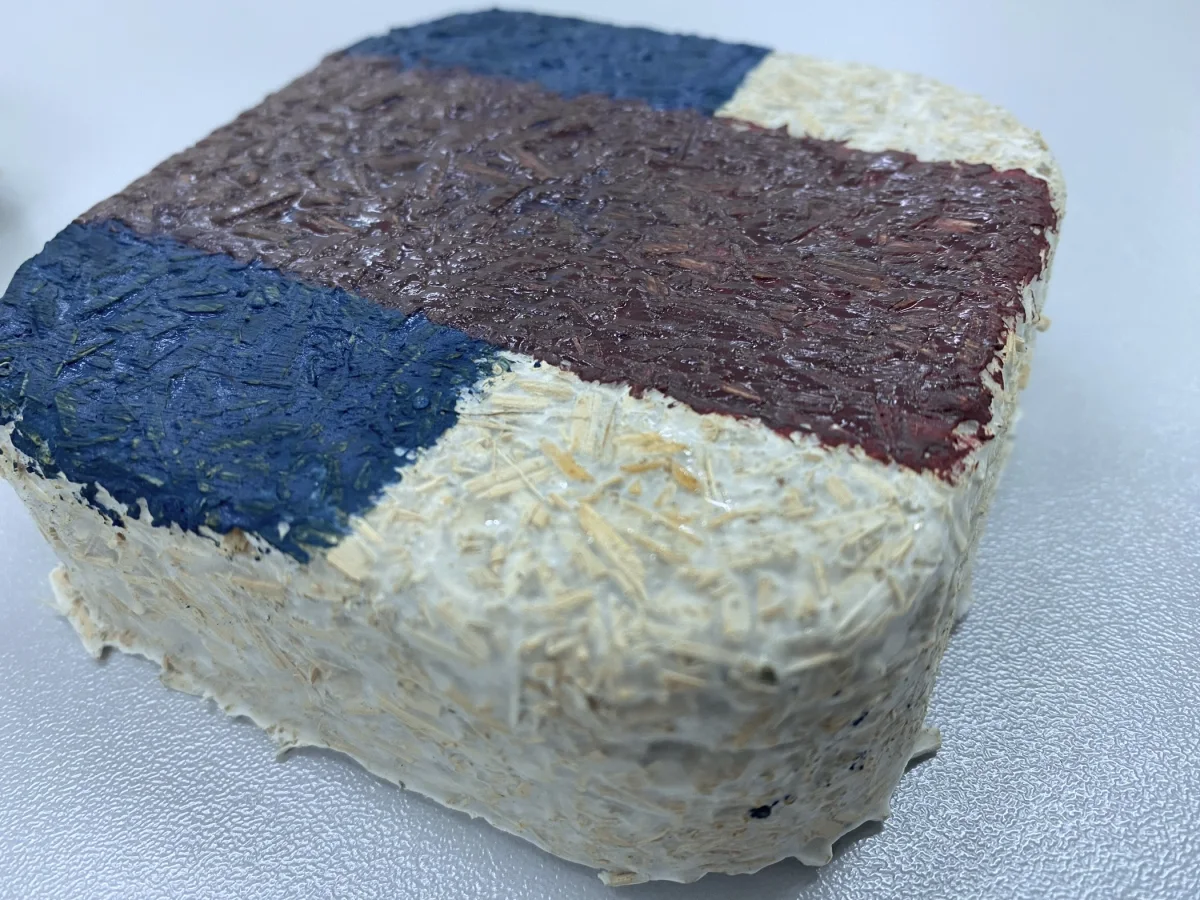
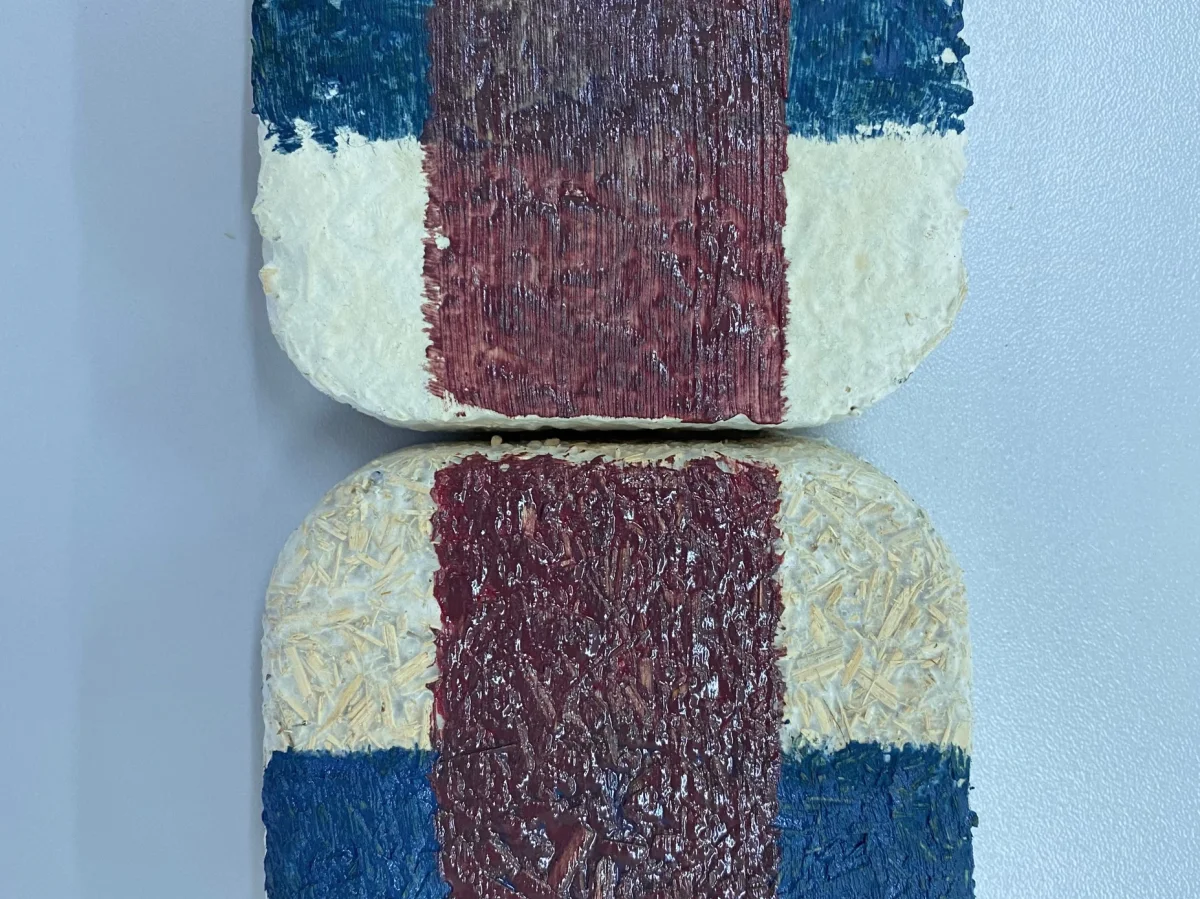
Two finishes on one sample
Most samples carry more than one test. Half gets one coat, half gets two, and a finish runs across the other way, so every sample answers several questions at once.
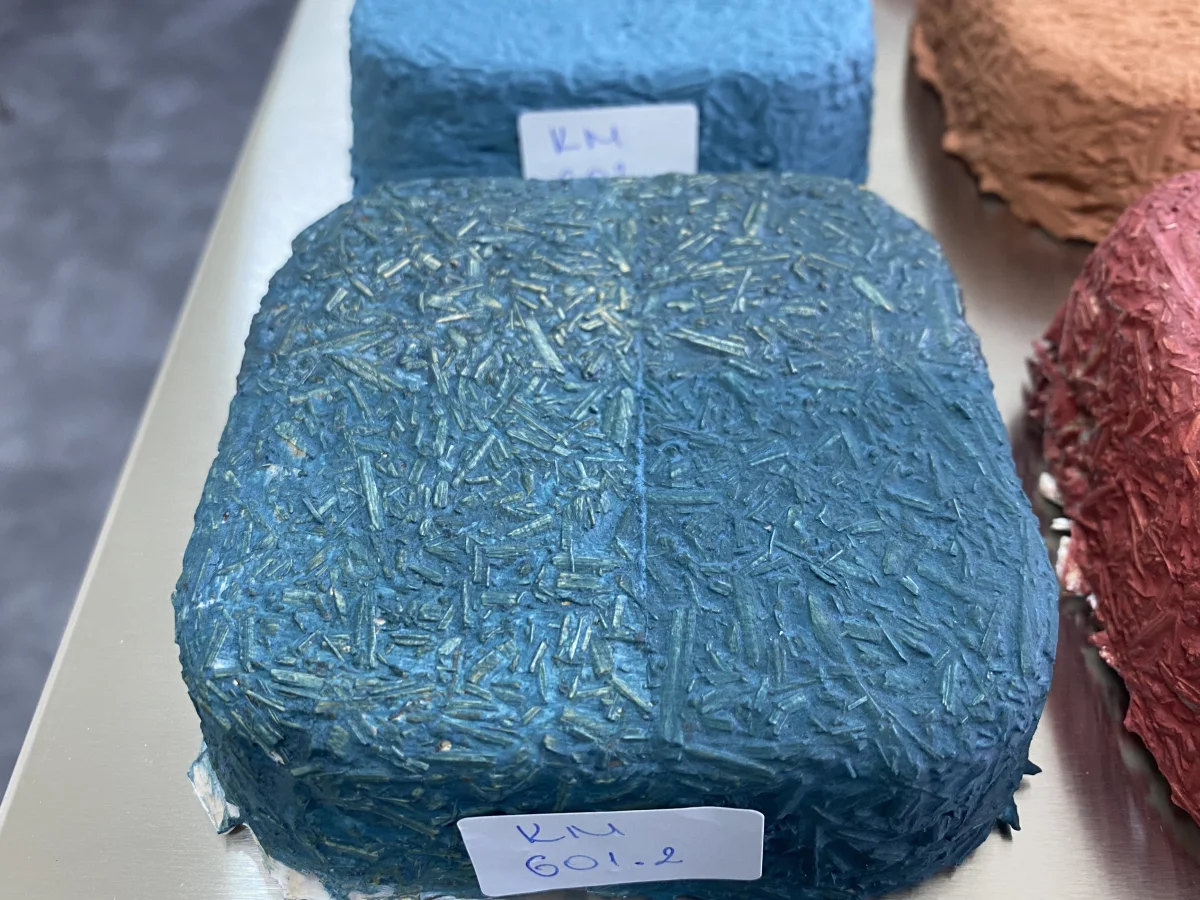
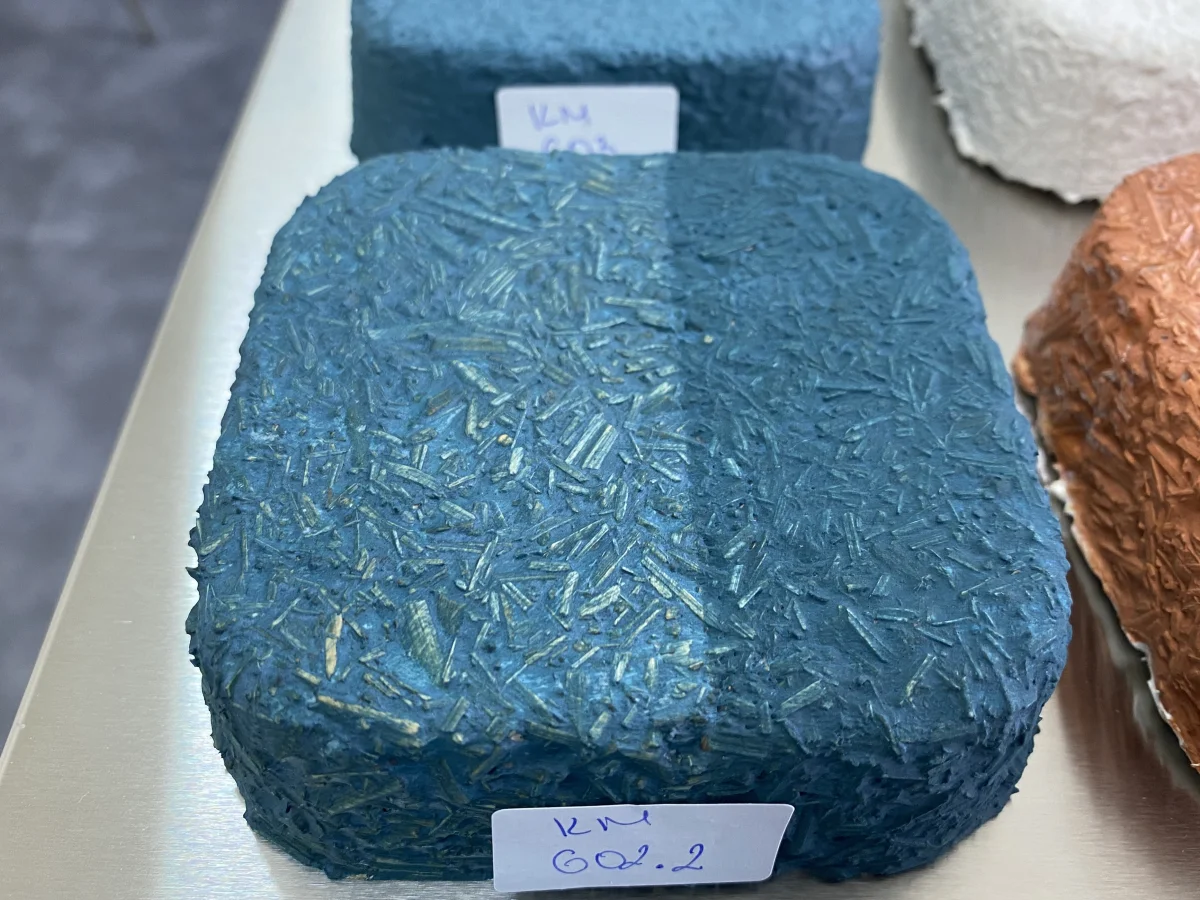
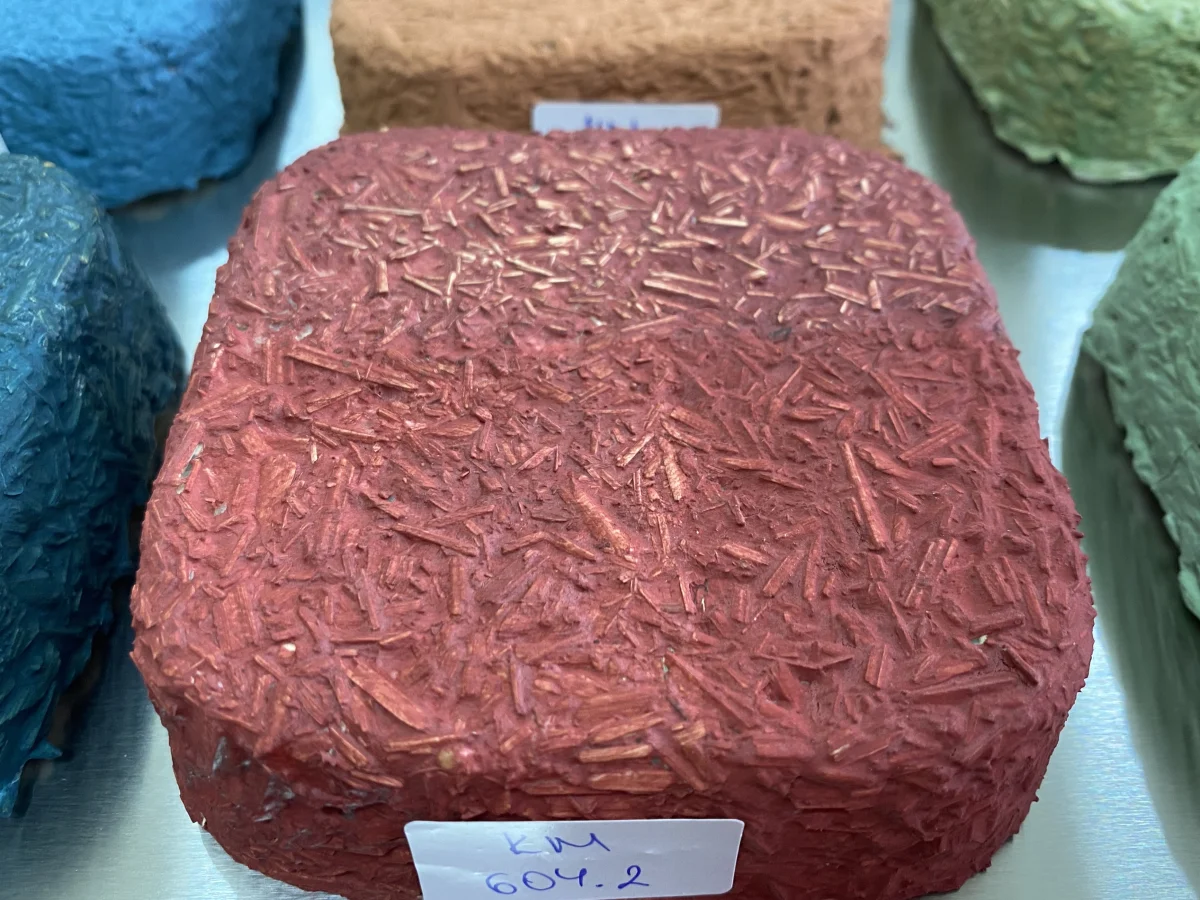
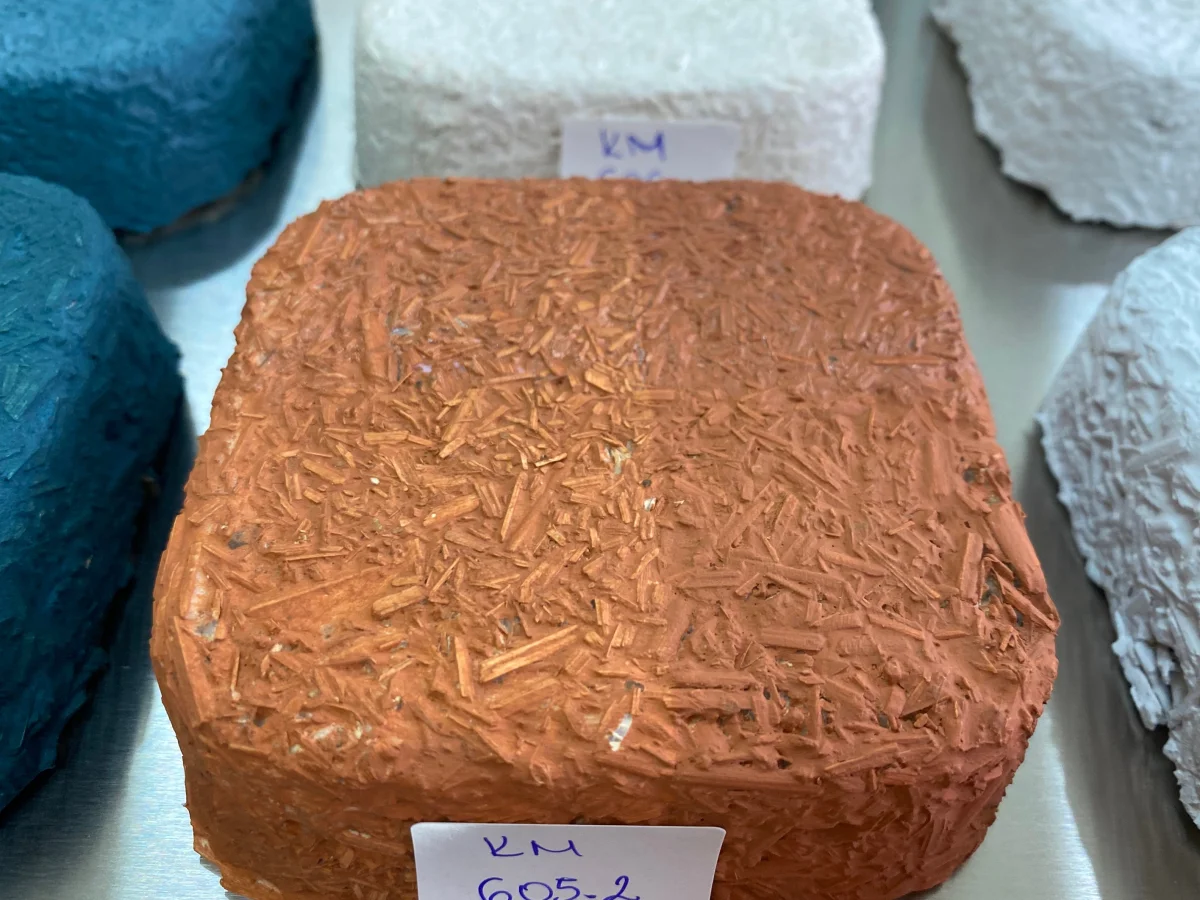
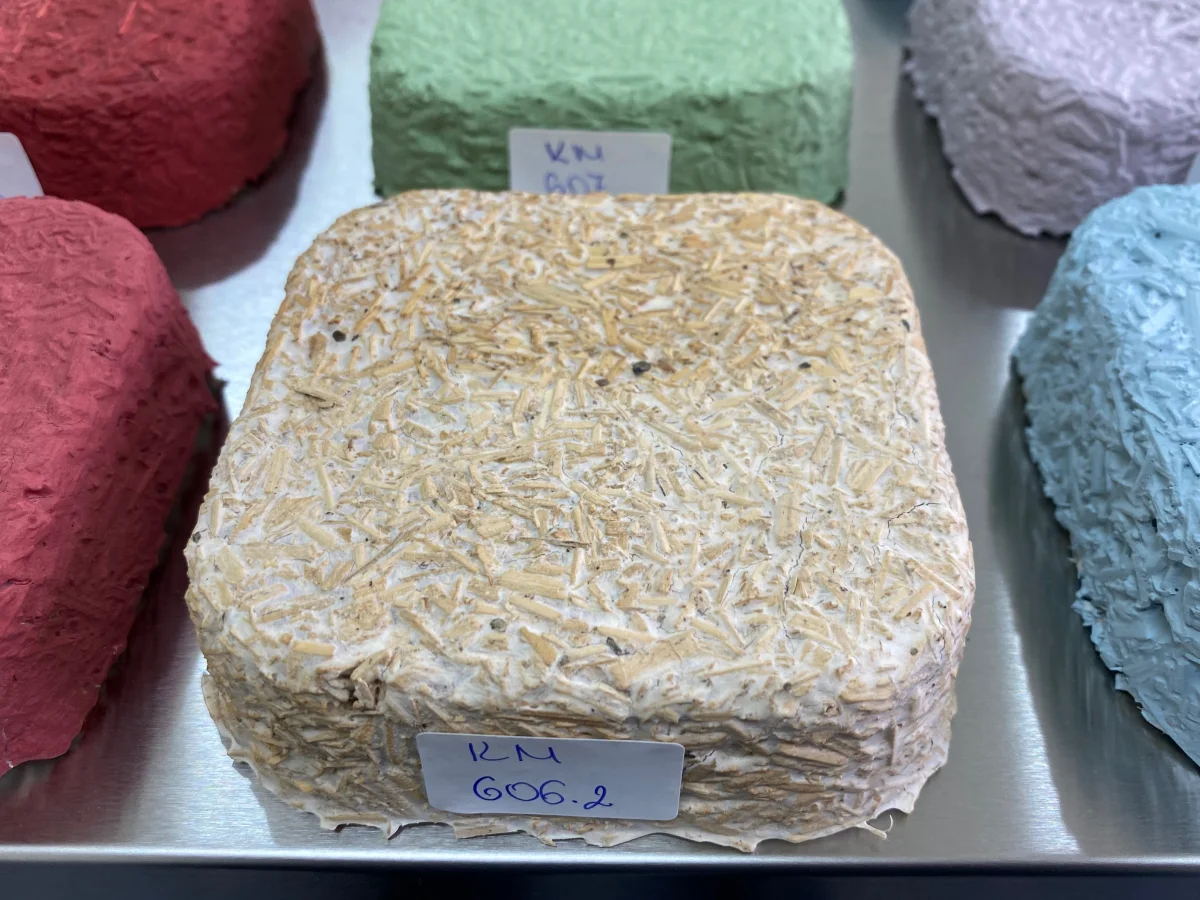
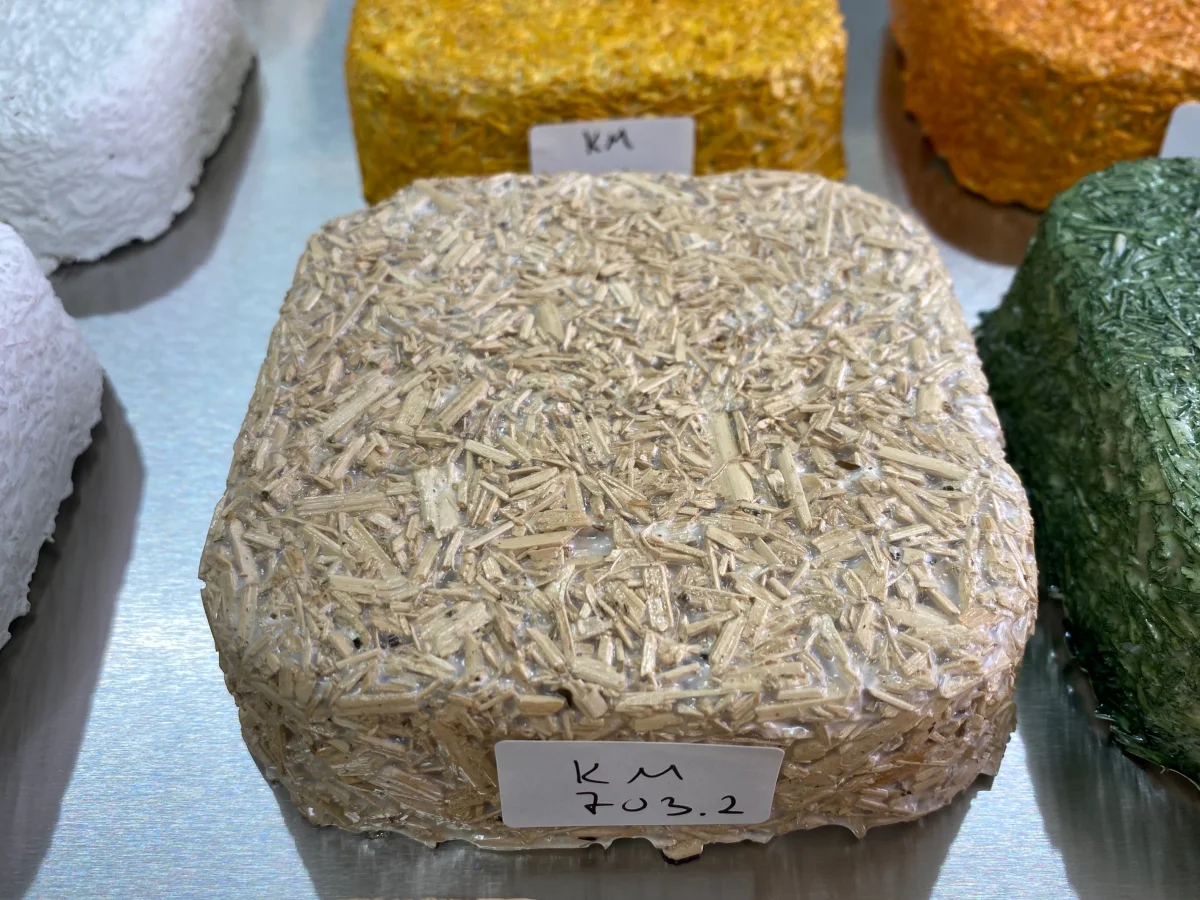
- How much skin you grow decides how well paint holds. Less skin means better adhesion.
- A primer improves adhesion on this kind of porous surface.
- Some natural paints crack as they dry on mycelium. Slowing down the drying fixed it.
Brush or spray
The same paint can look like two different finishes depending on how it goes on.
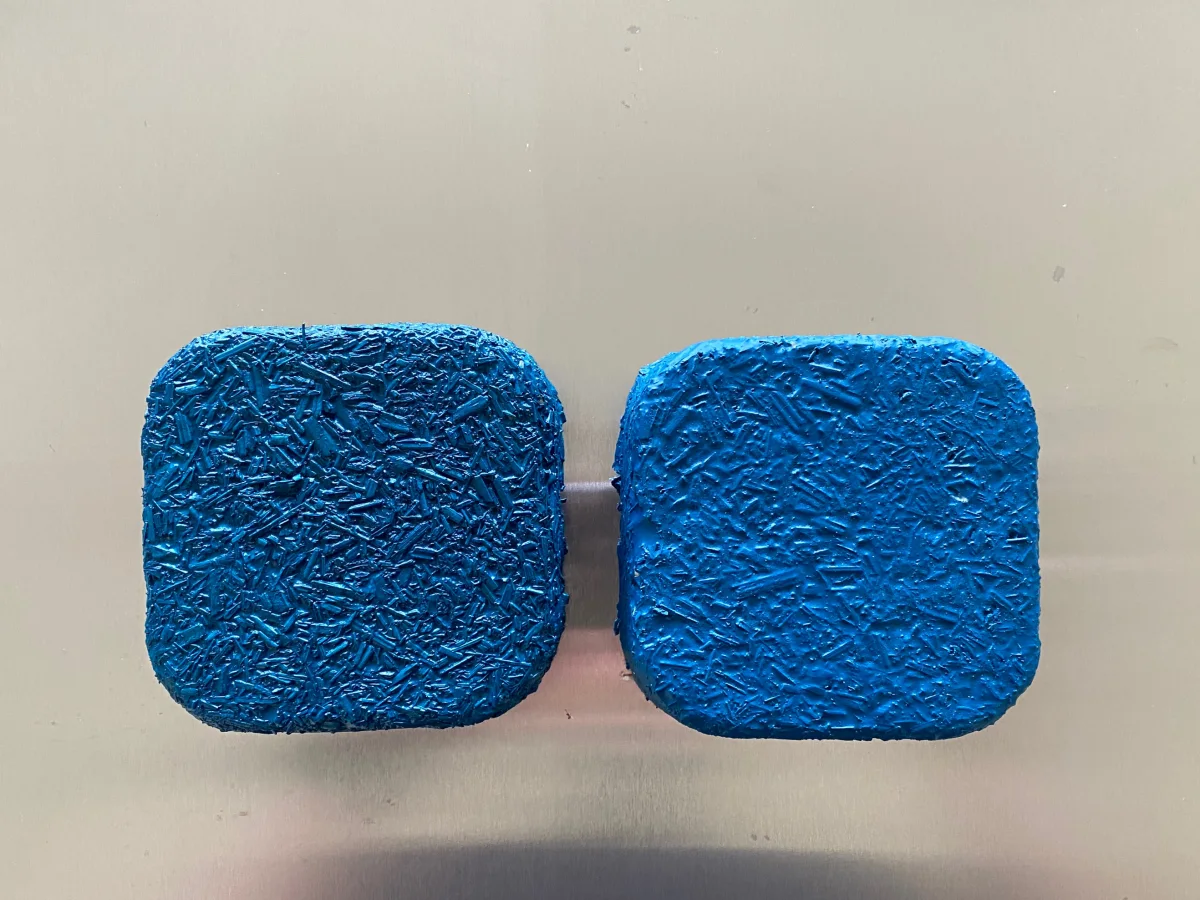
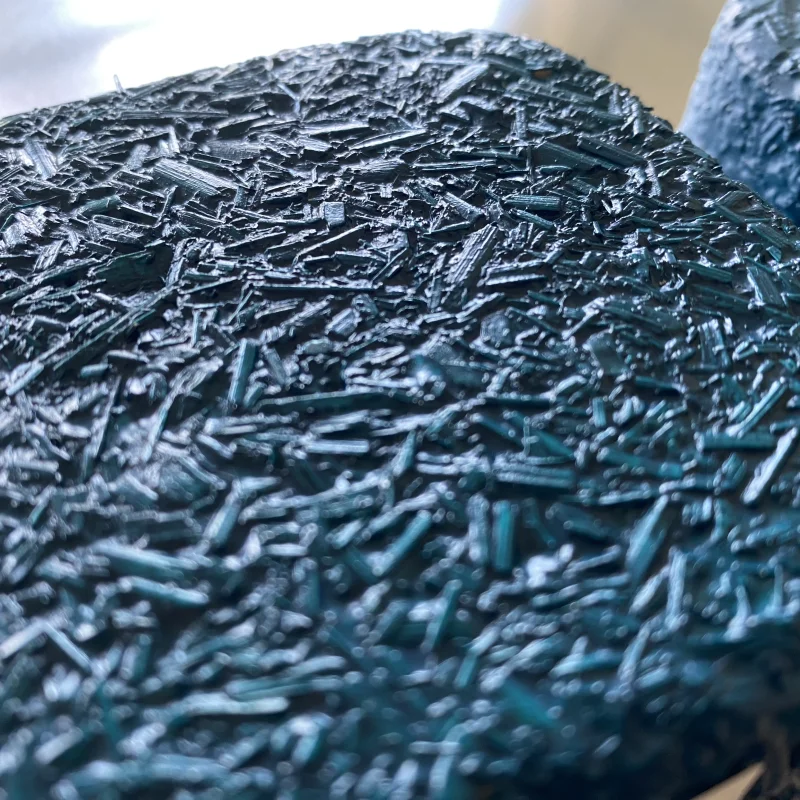
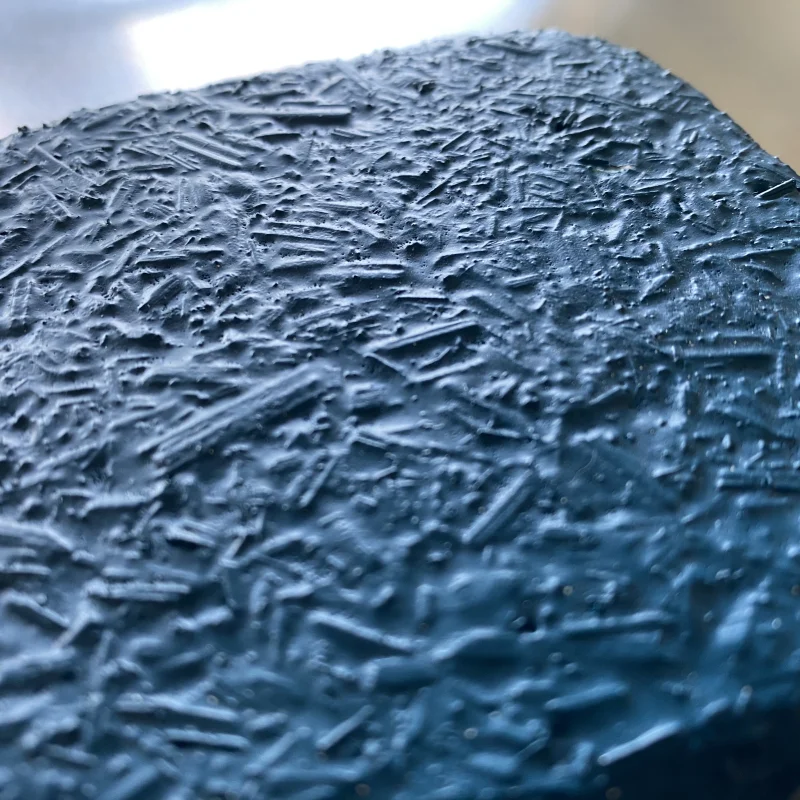
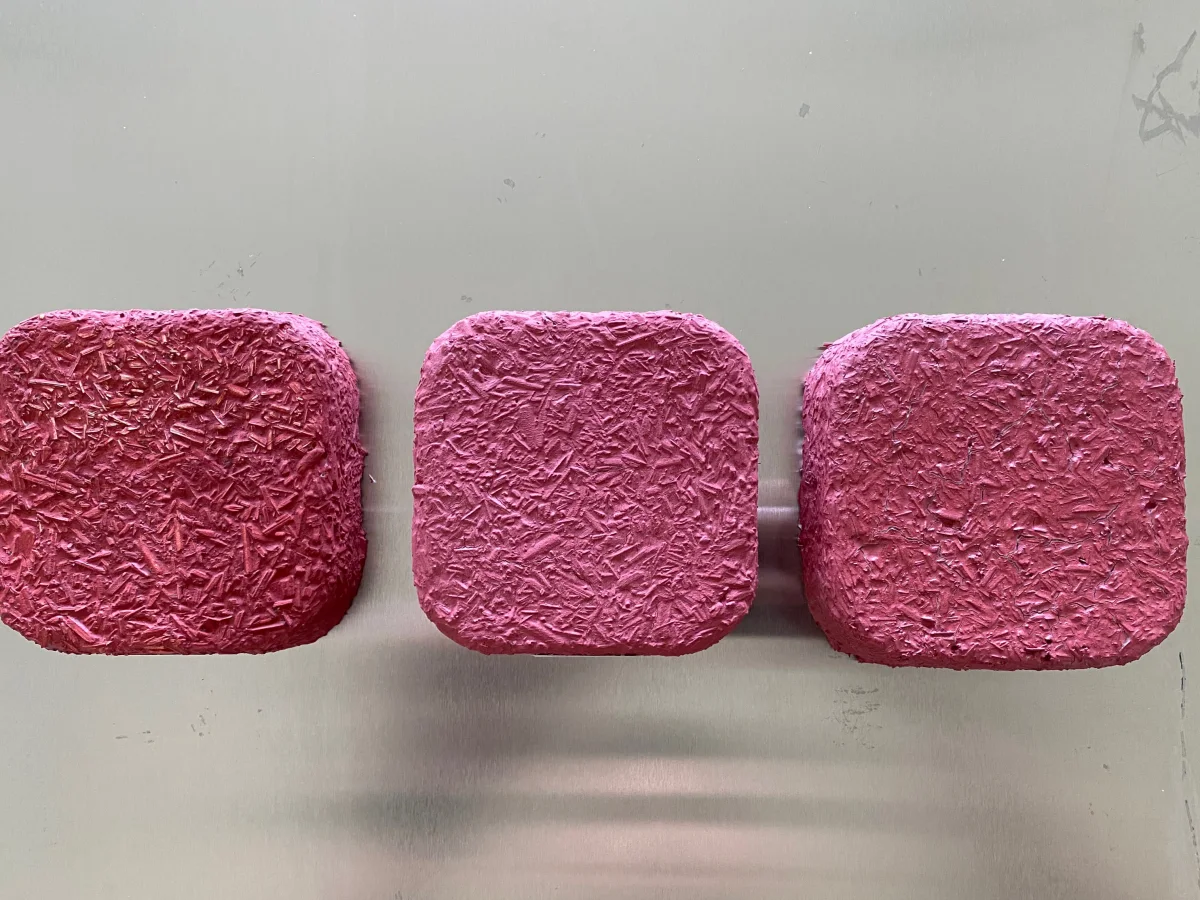
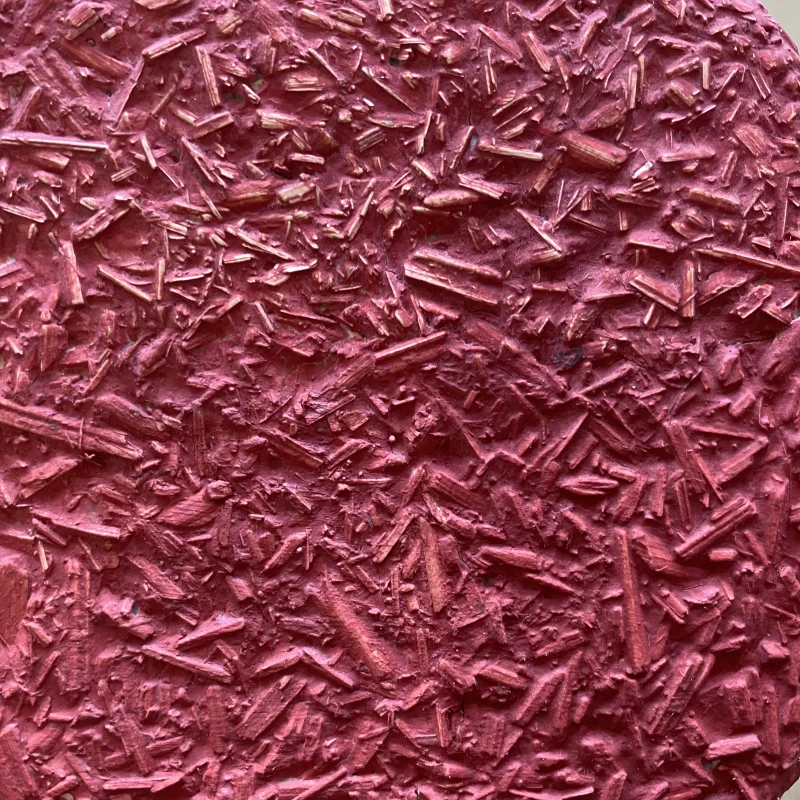
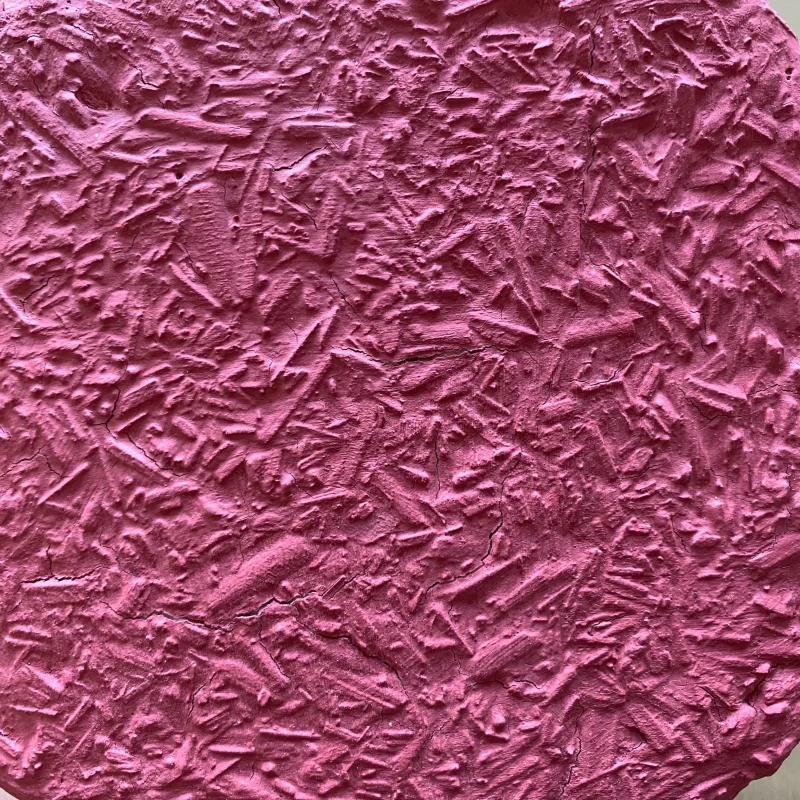
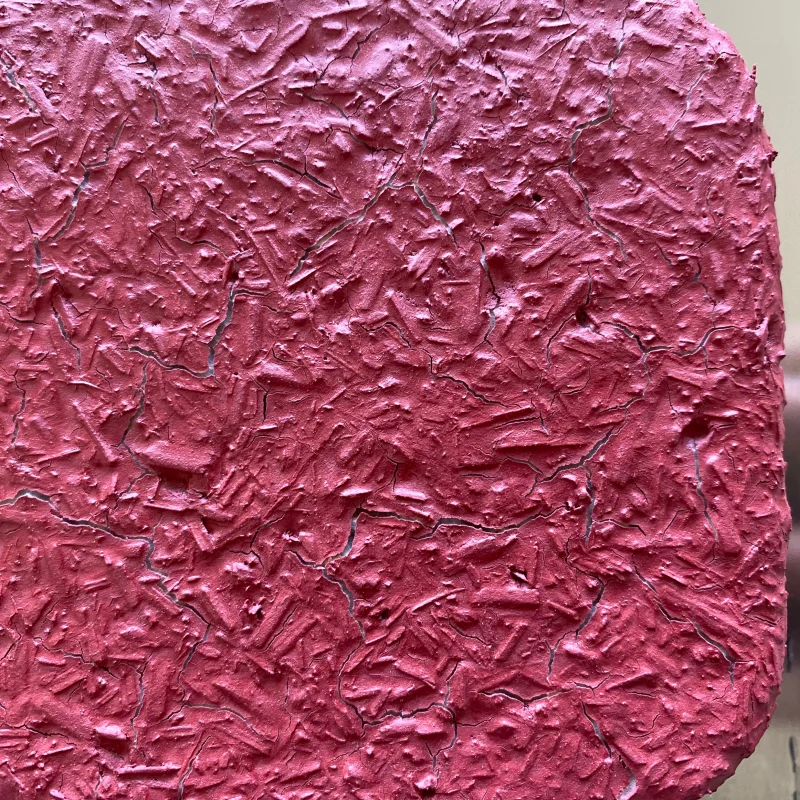
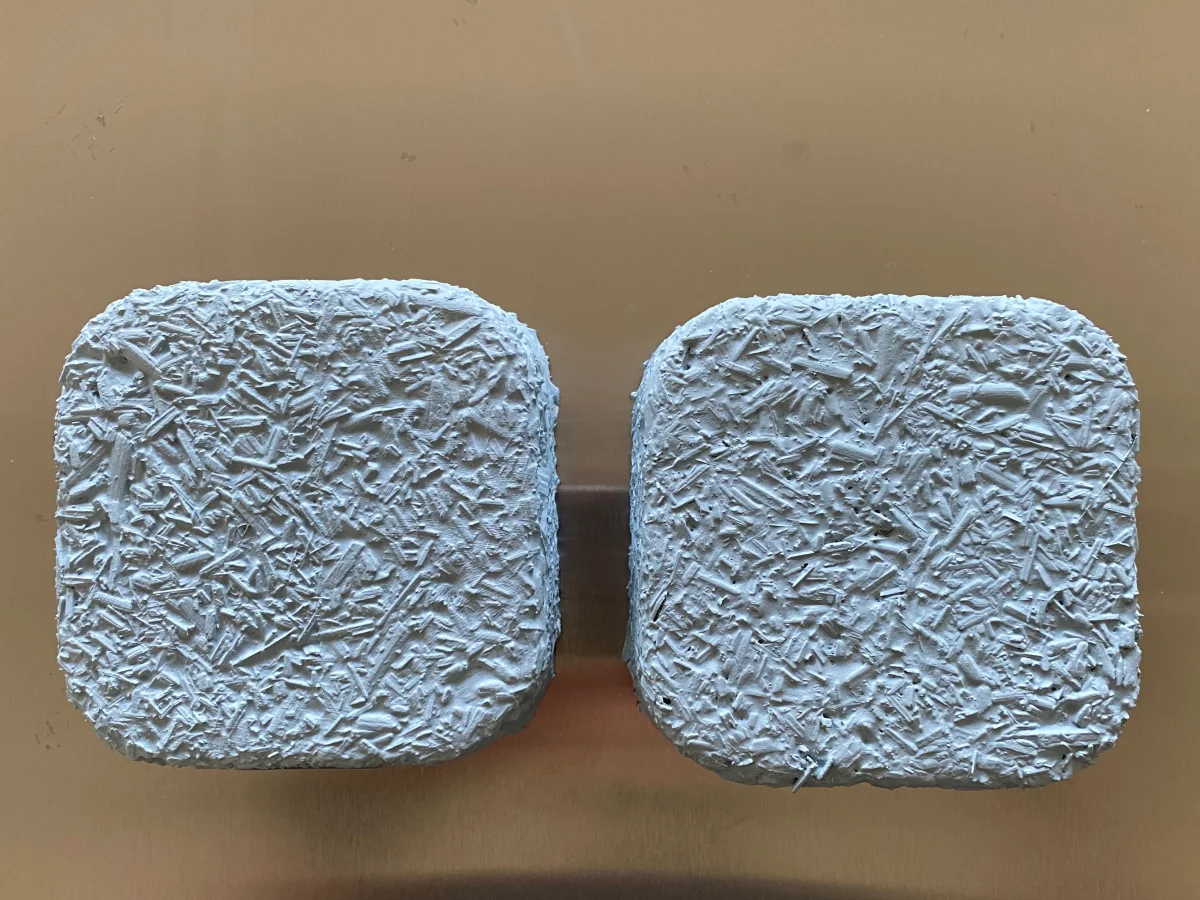
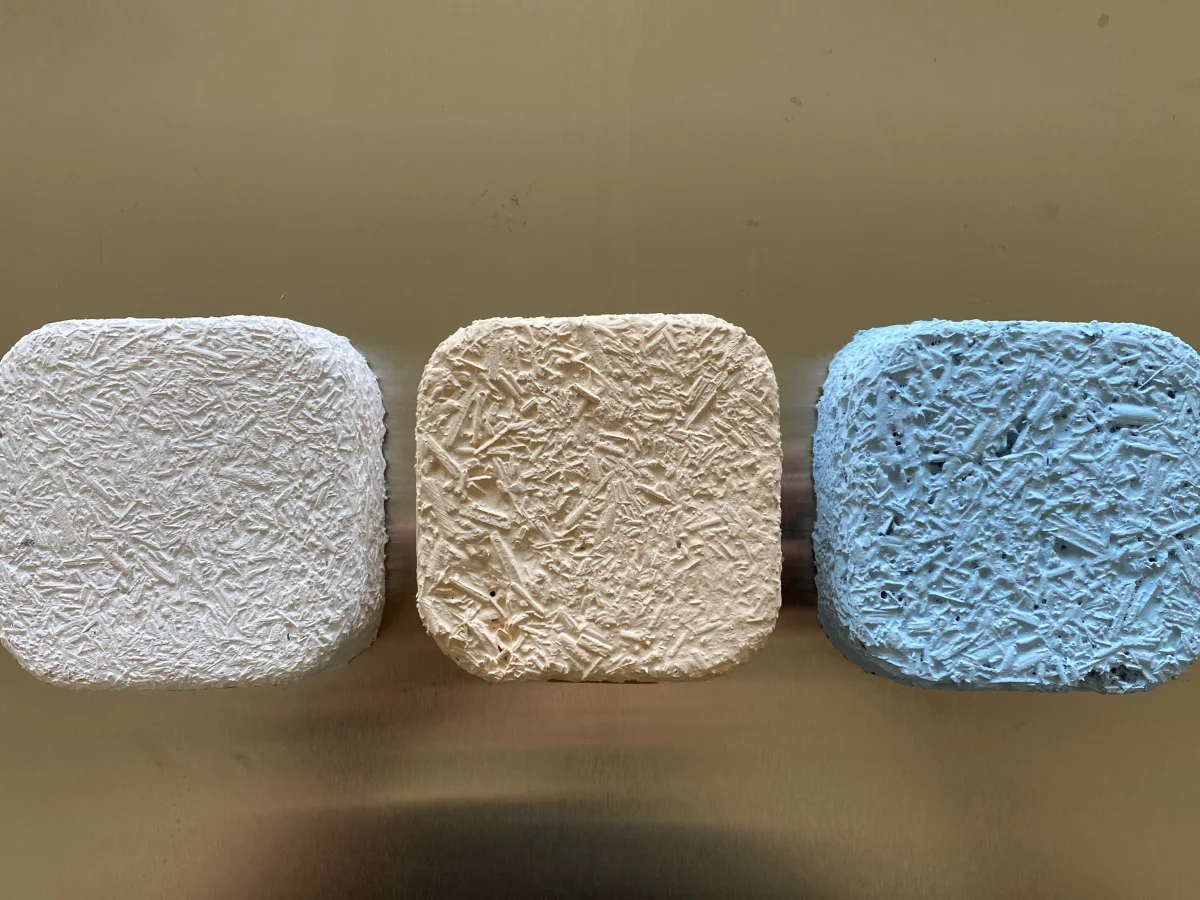
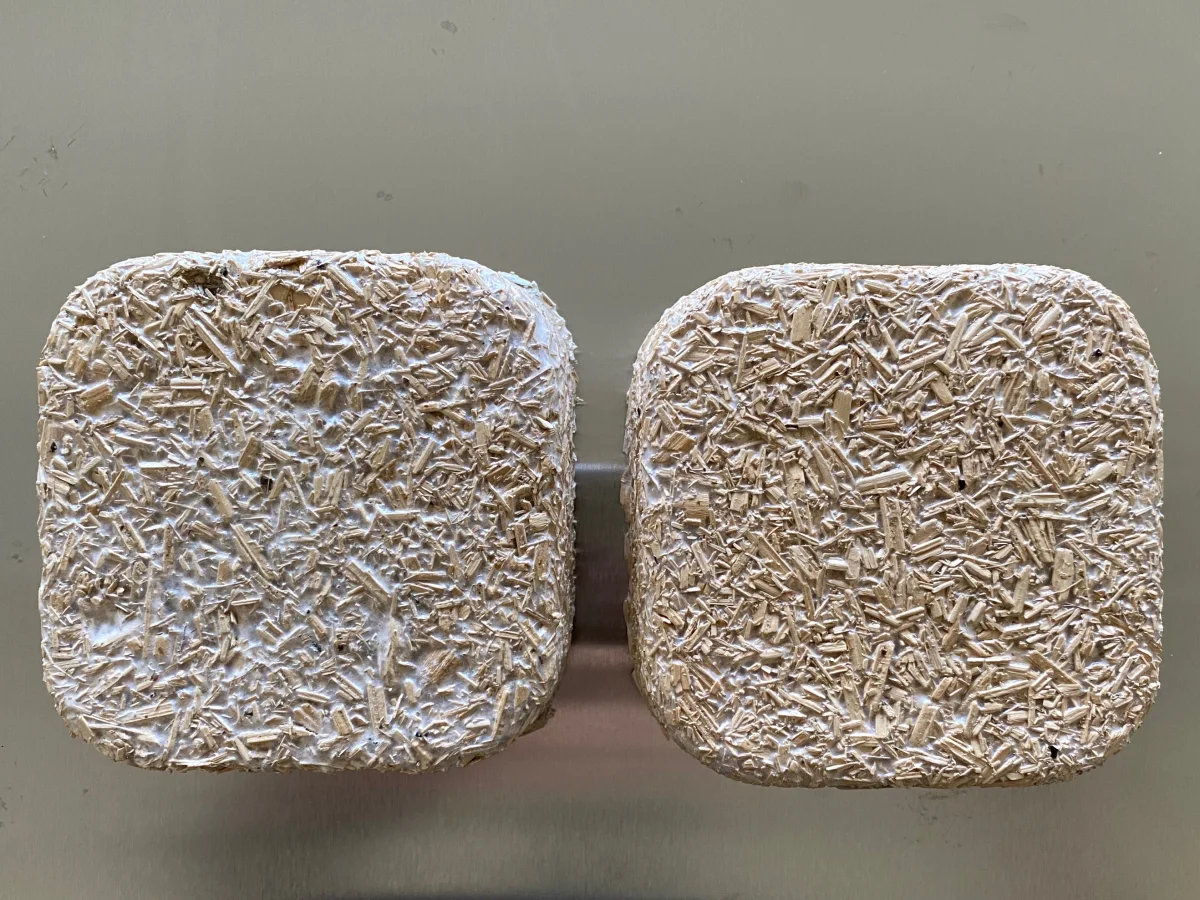
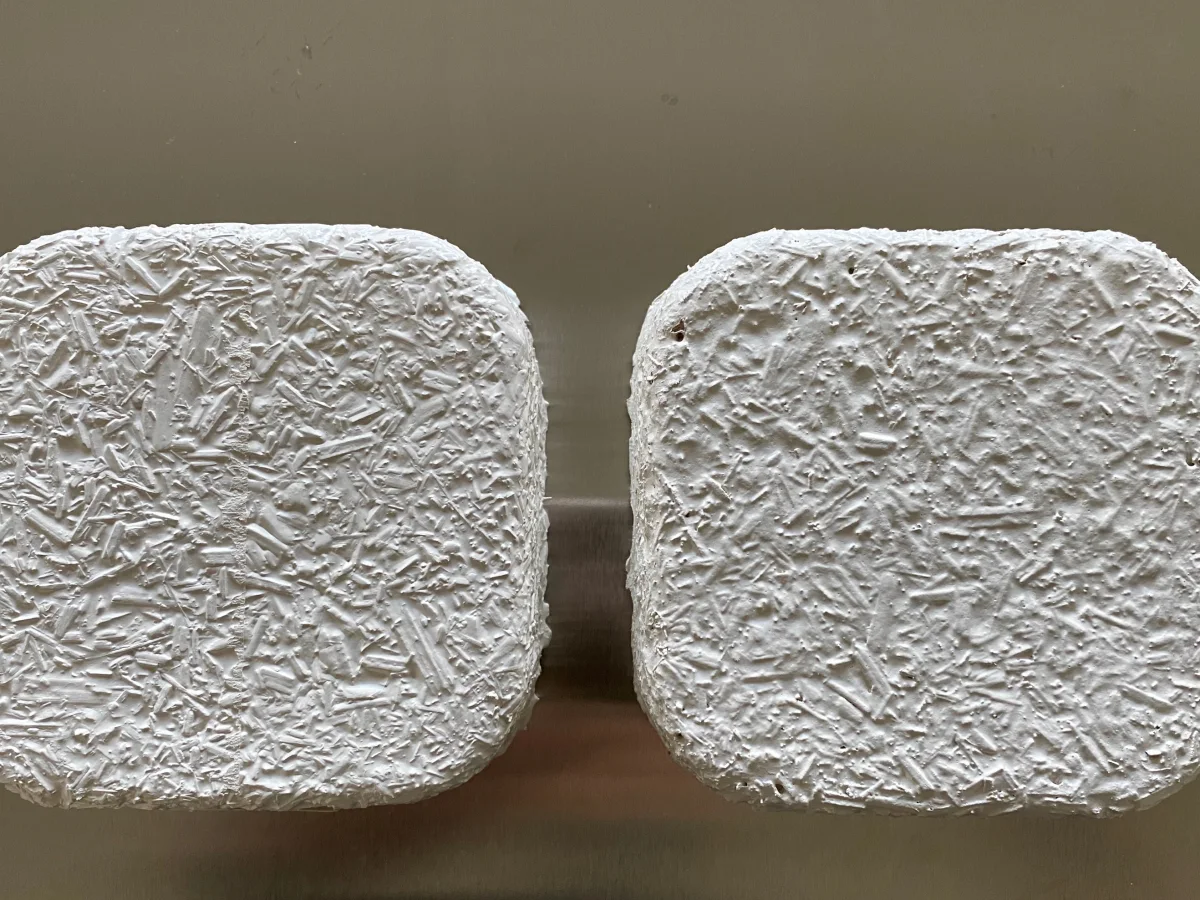
More comparisonsPaints and coatings, brushed next to a sprayed control.
- Every paint we shortlisted can be sprayed, which matters once you move from samples to production.
- Brushing gives a natural look with more sheen and lets the fibres show.
- Spraying gives an even, matte colour, but can leave small dots where paint collects.
- A brushed coating gives stronger protection. A sprayed one looks more uniform.
Protective coatings
44 coating samples: clear lacquers, stains and oils, many of them tinted.
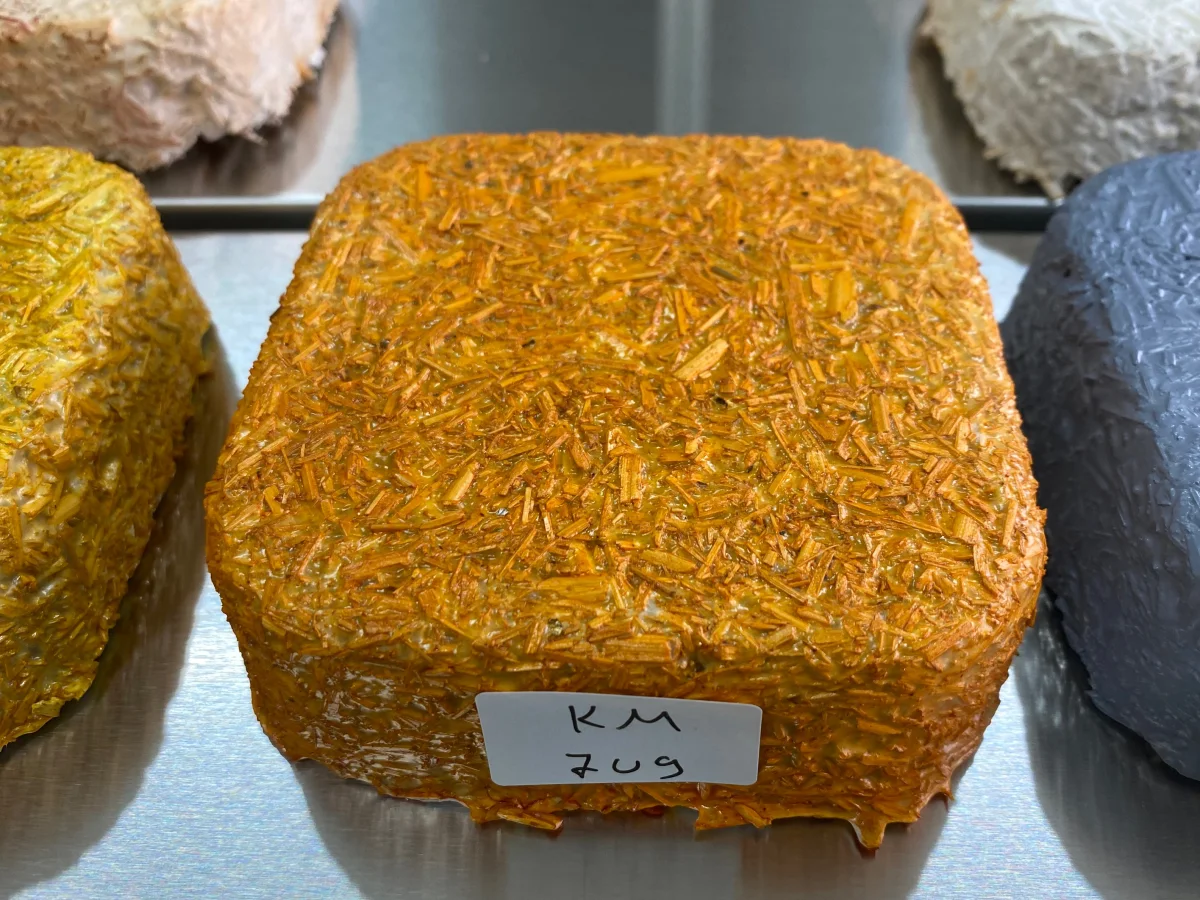
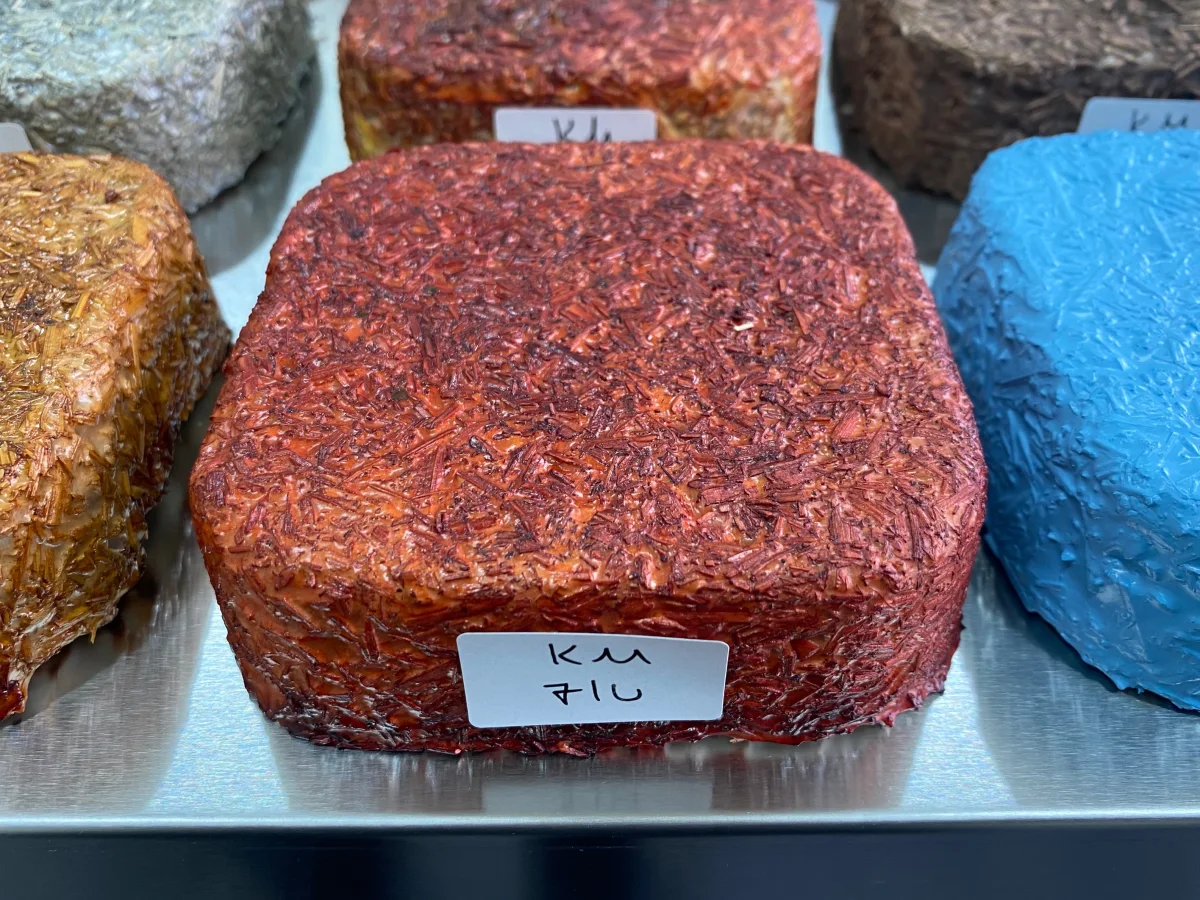
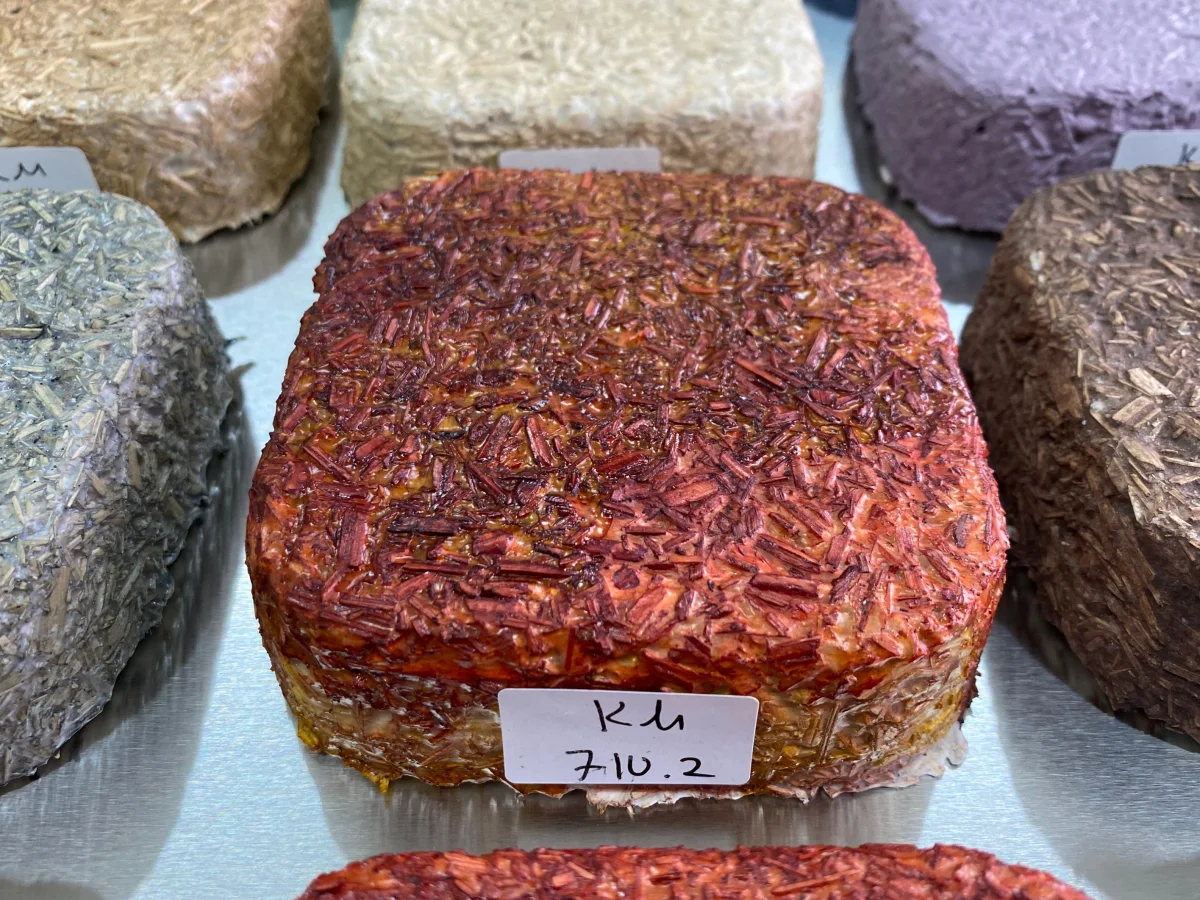
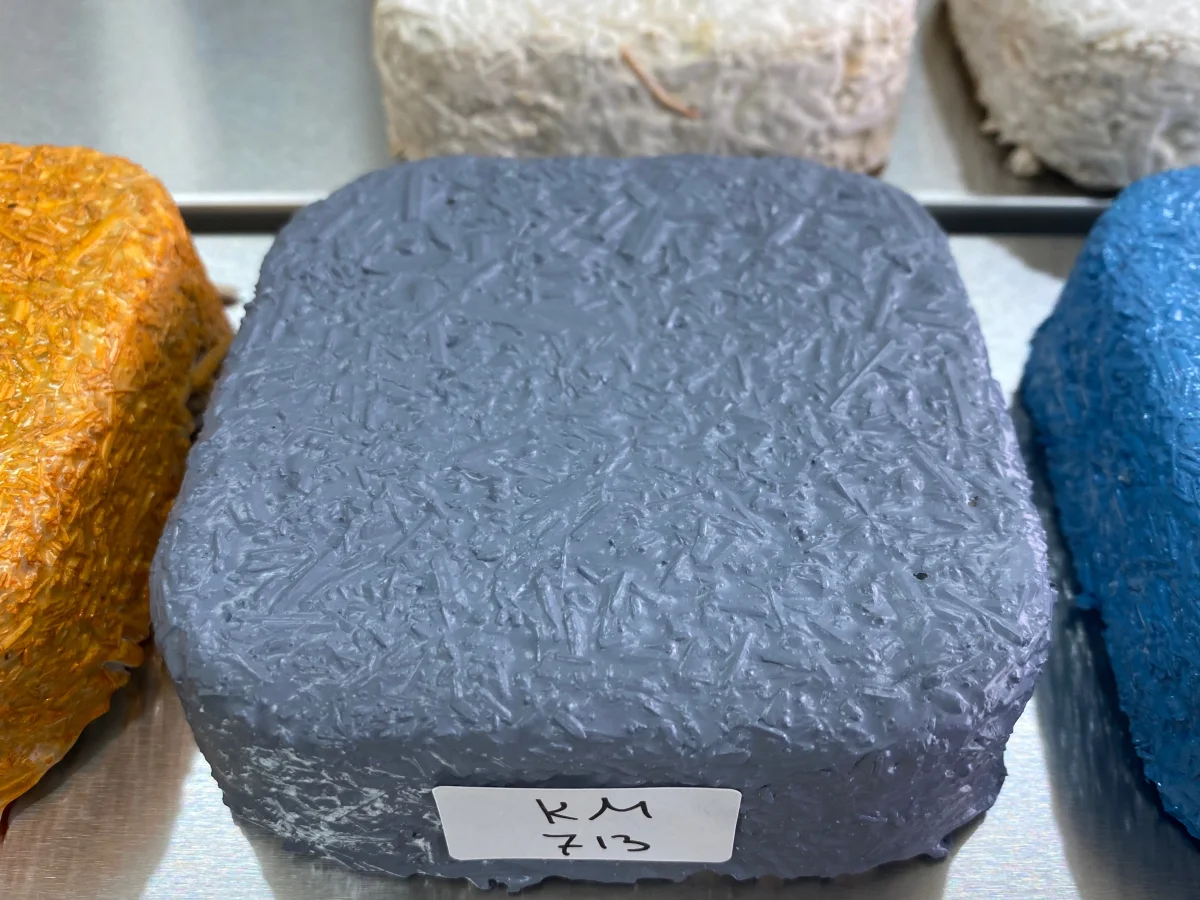
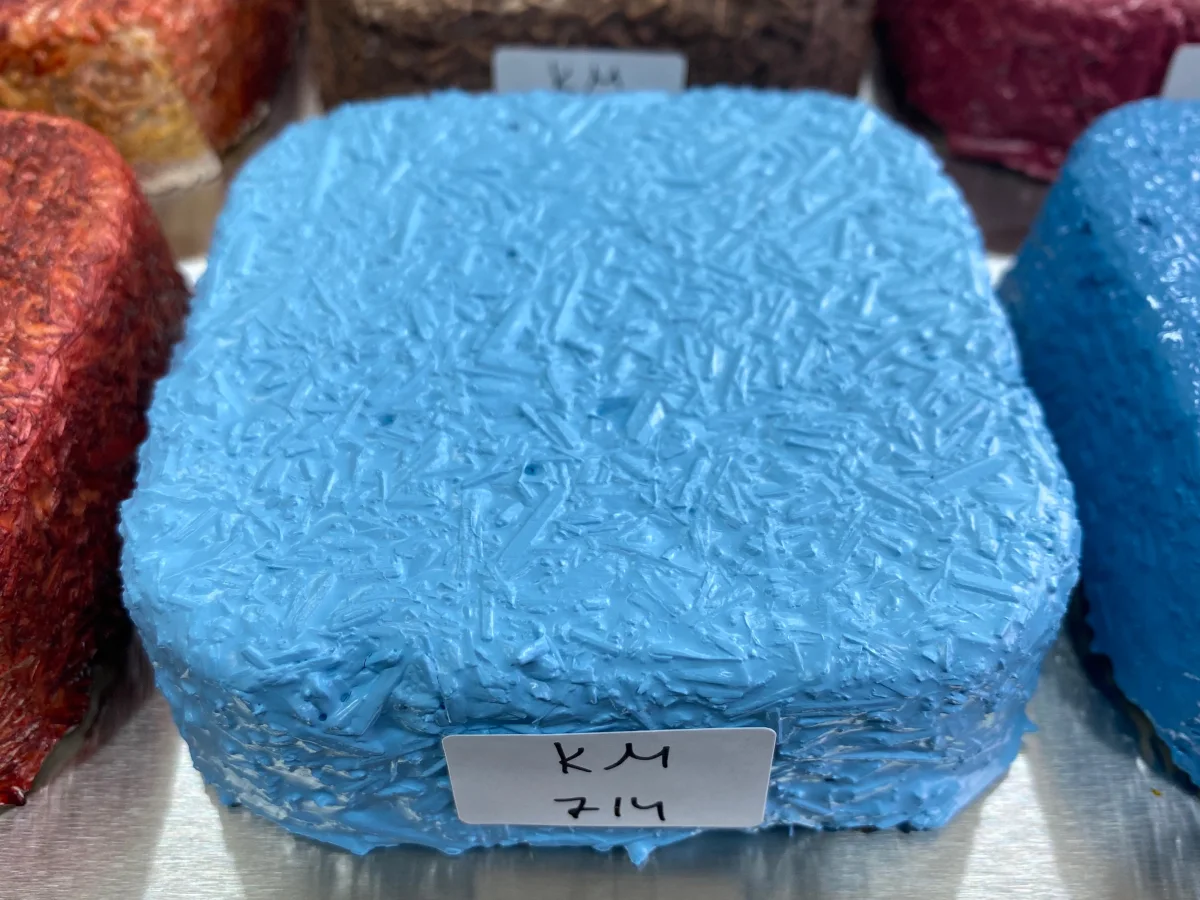
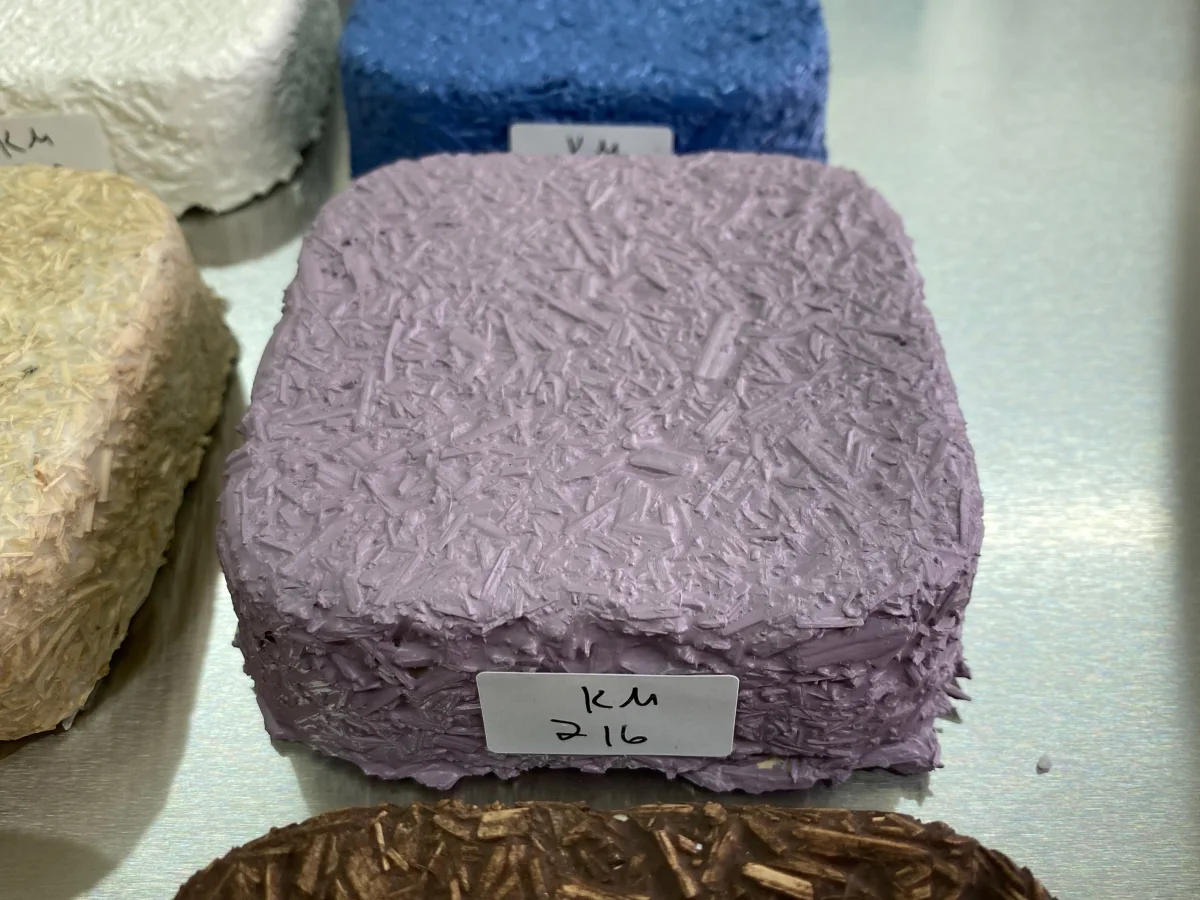
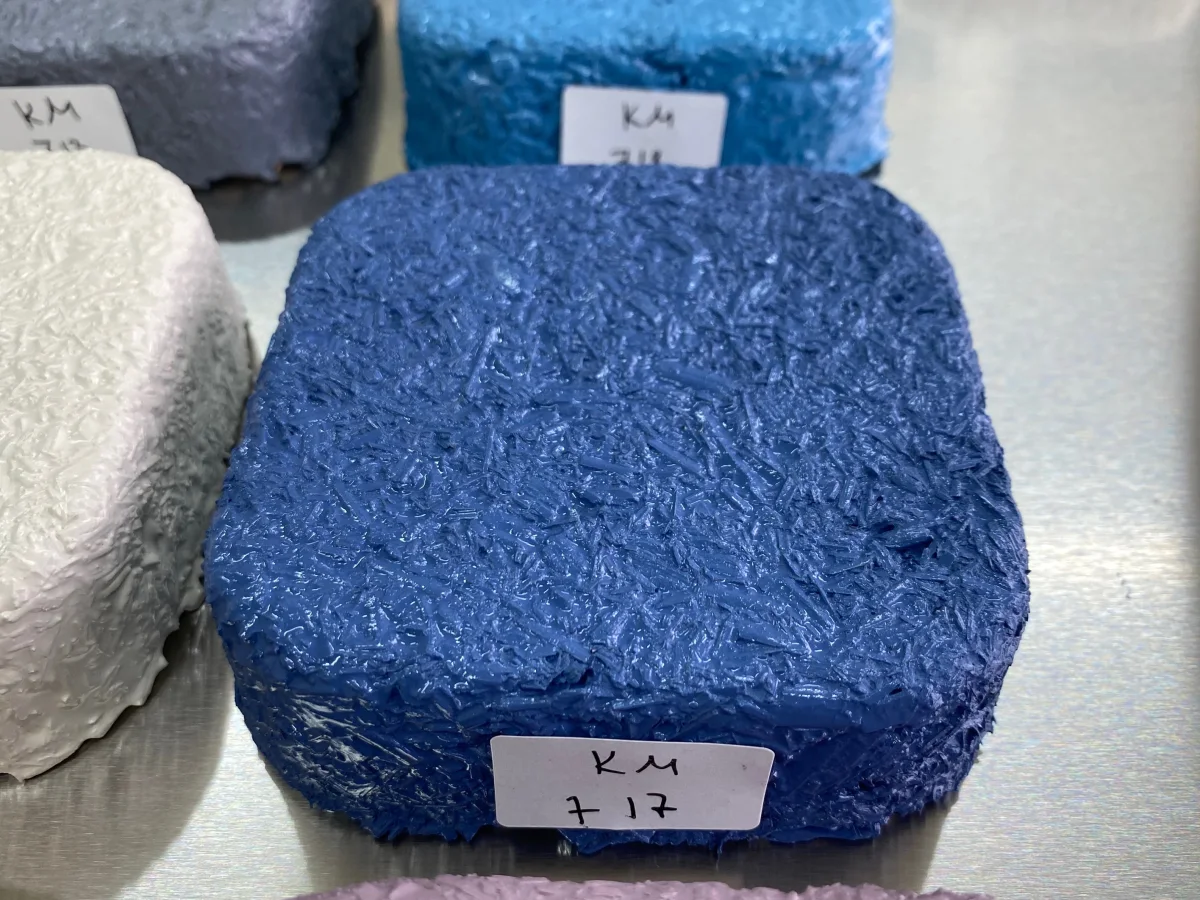
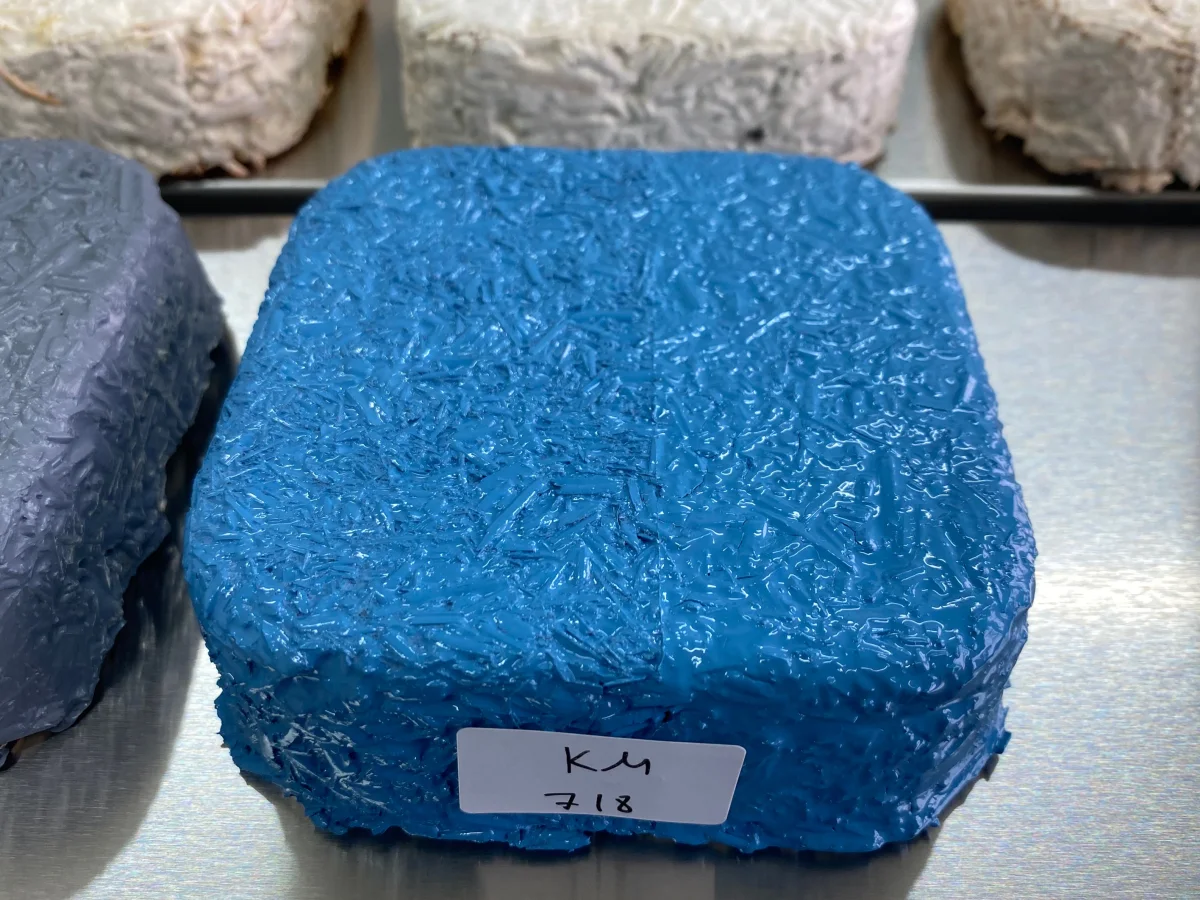
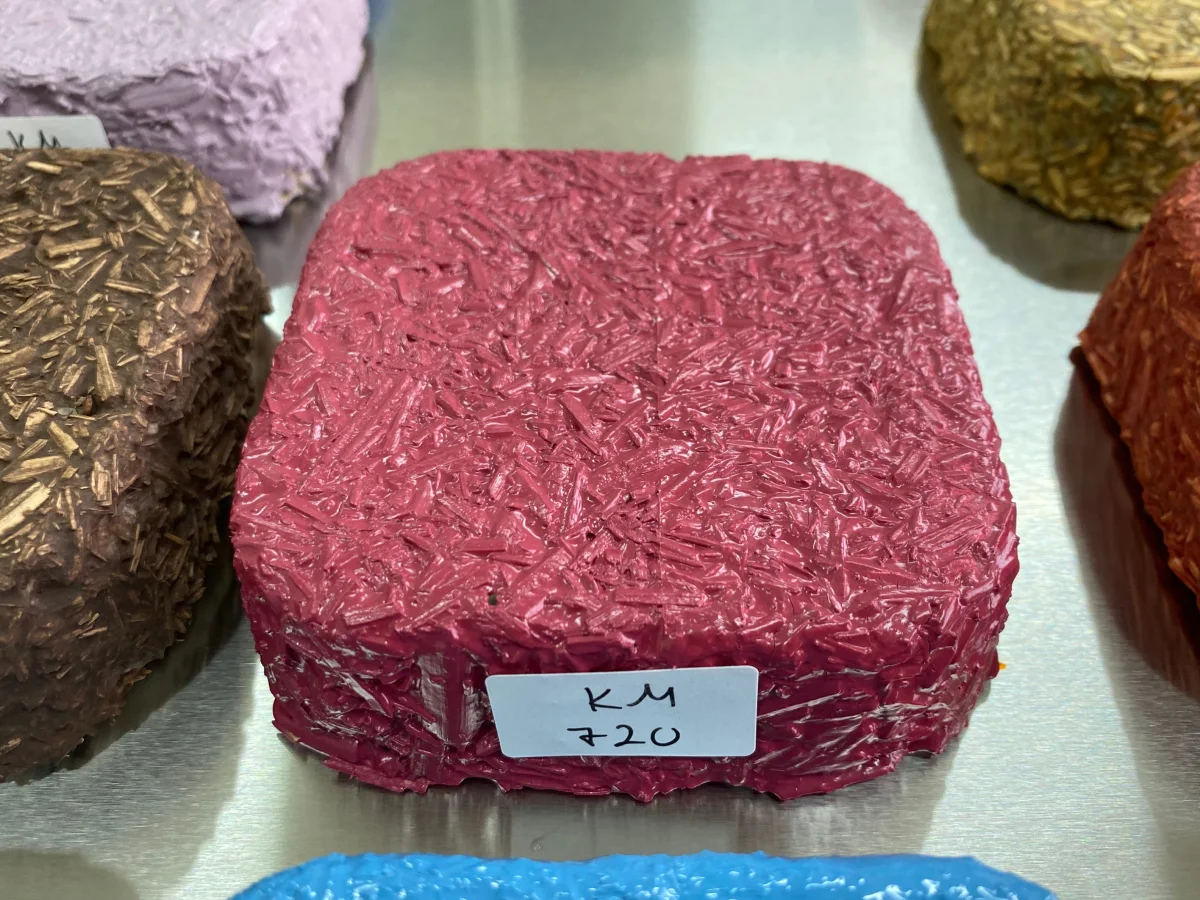
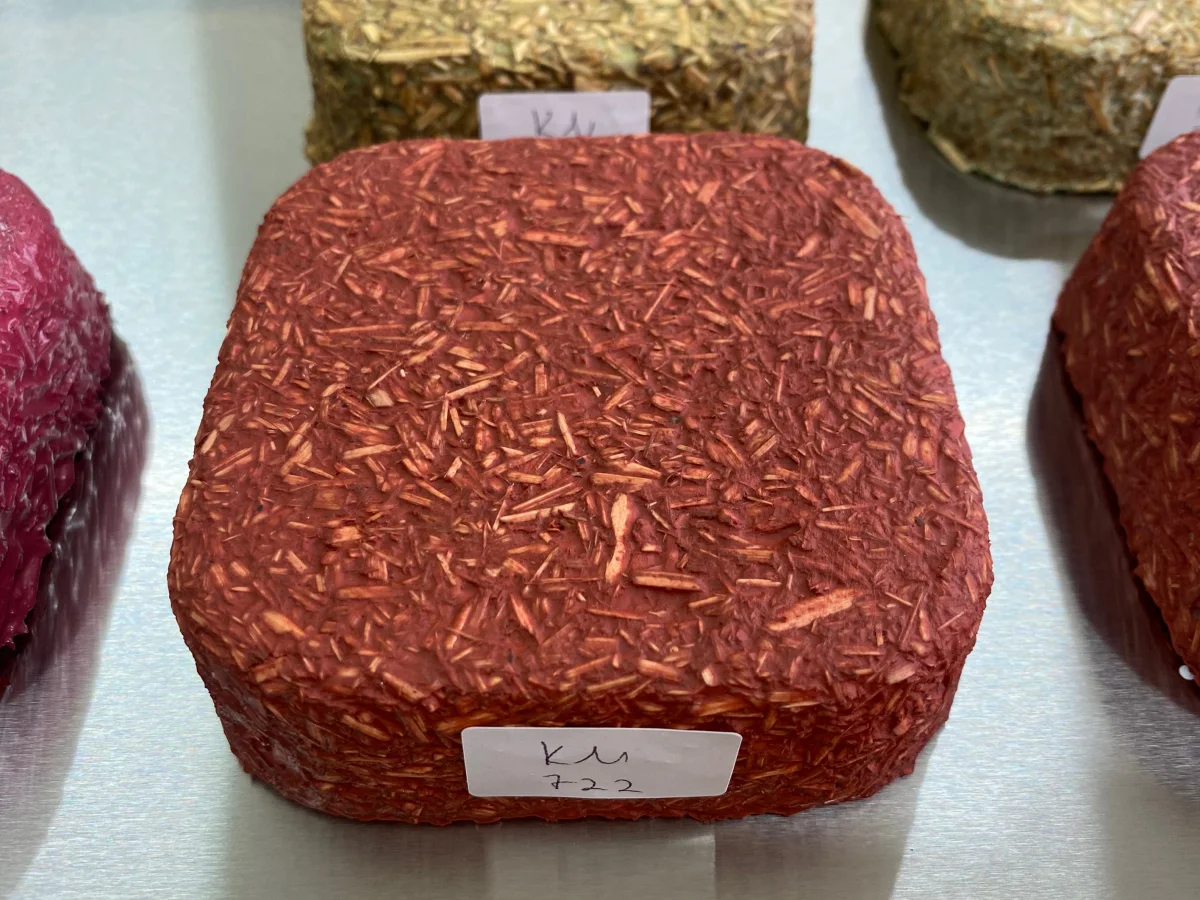
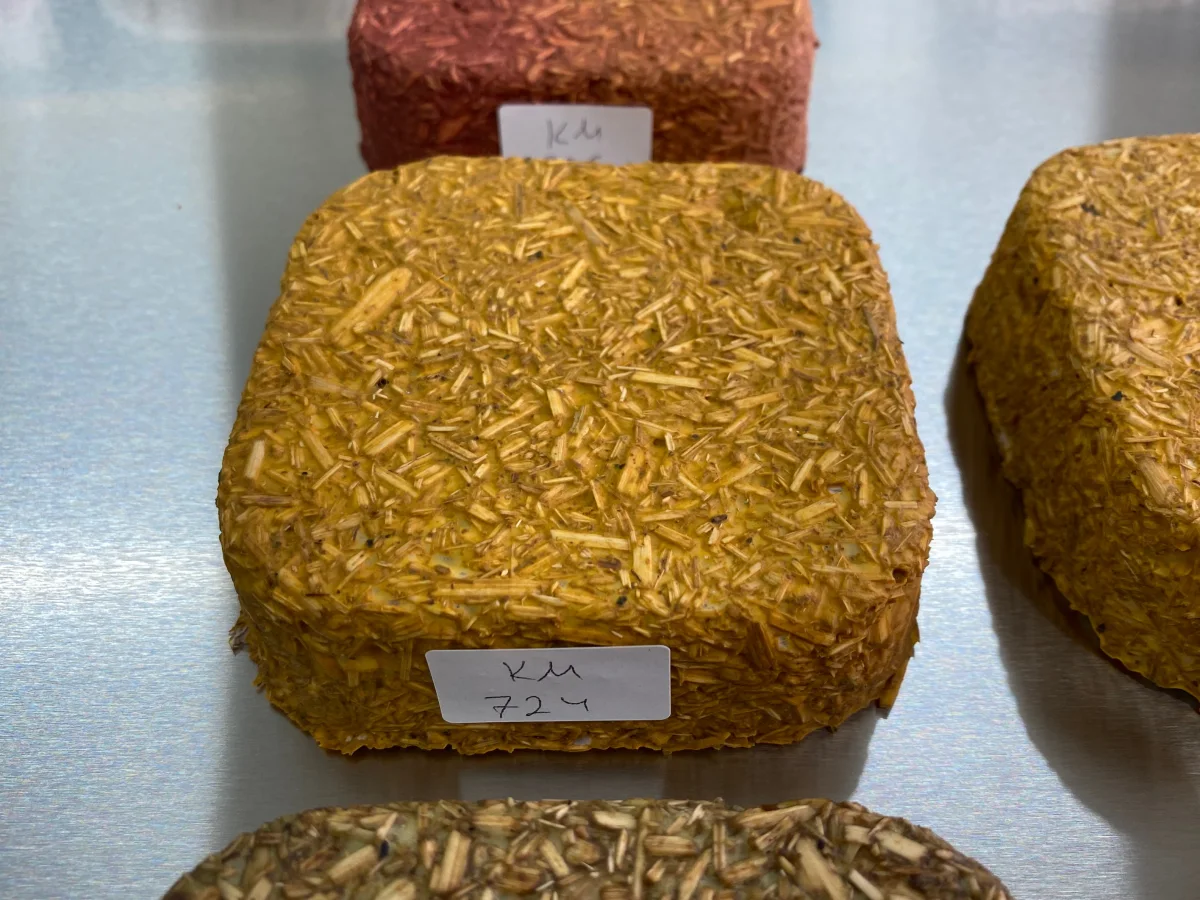
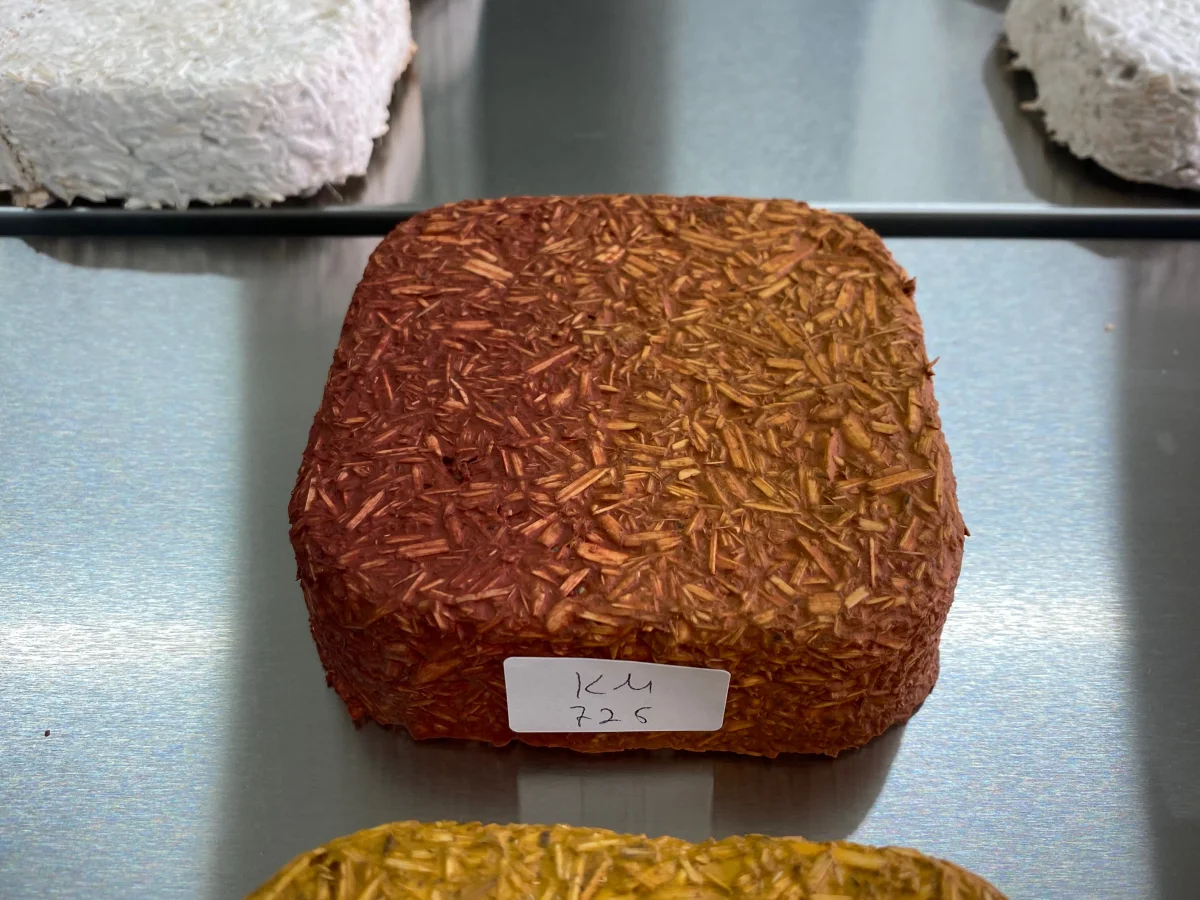
Twelve coated finishesSame base material, same light, same angle.
| Type | Applying | Curing | What we saw |
|---|---|---|---|
| Stains | Easy | Fast | Colour only. Needs a protective topcoat. |
| Varnishes | Easy | Normal | Smooth, coloured finish, stops flaking. |
| Lacquers | Easy to hard, builds coat by coat | Normal | Smooth to almost rubbery. Good protection. |
| Oils with hardener | Very easy | Normal | Hard shell, soft to the touch. Almost no flaking. |
| Natural oils | Very easy | Very slow | Hard but coarse. Some flaking under friction. |
No product names. The type tells you where to look, the testing tells you what works.
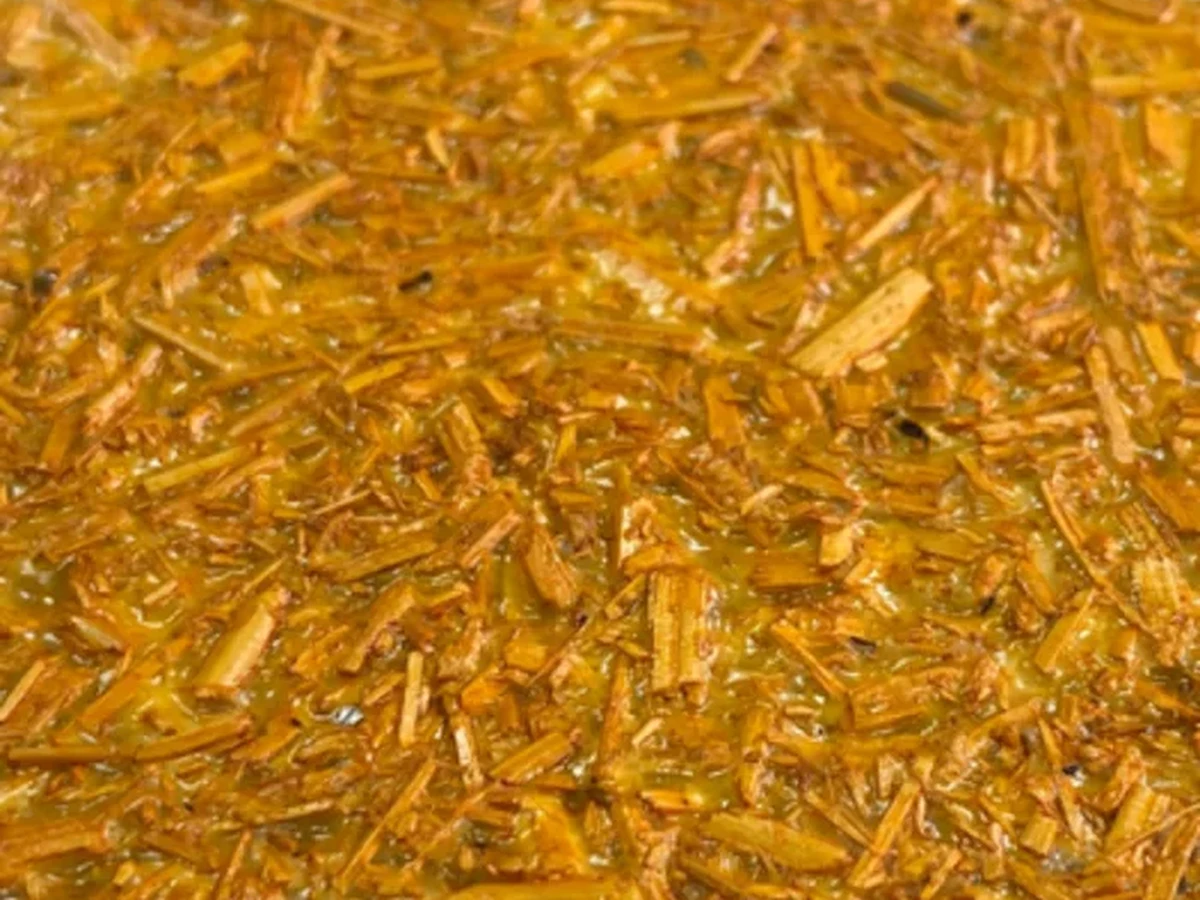
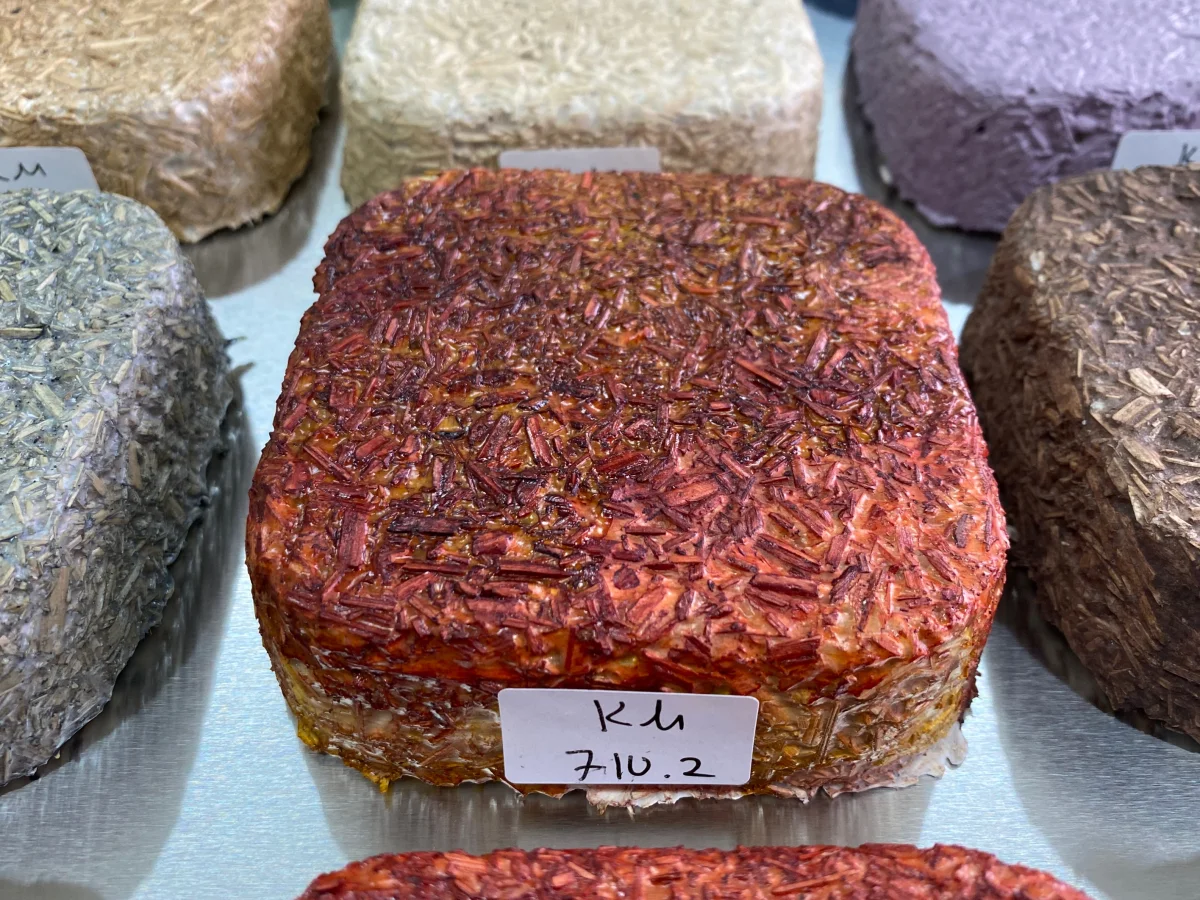
- Coatings can carry colour. Some only take dyes, others only take pigments, and matching the two is what makes tinting work.
- Blending colours inside one coating gives gradients across a single part.
- Oils with a hardener leave a hard shell that is soft to the touch and almost stop flaking. Natural oils are just as easy to apply but take far longer to cure.
- A clear coat protects the part and keeps the plant fibres visible.
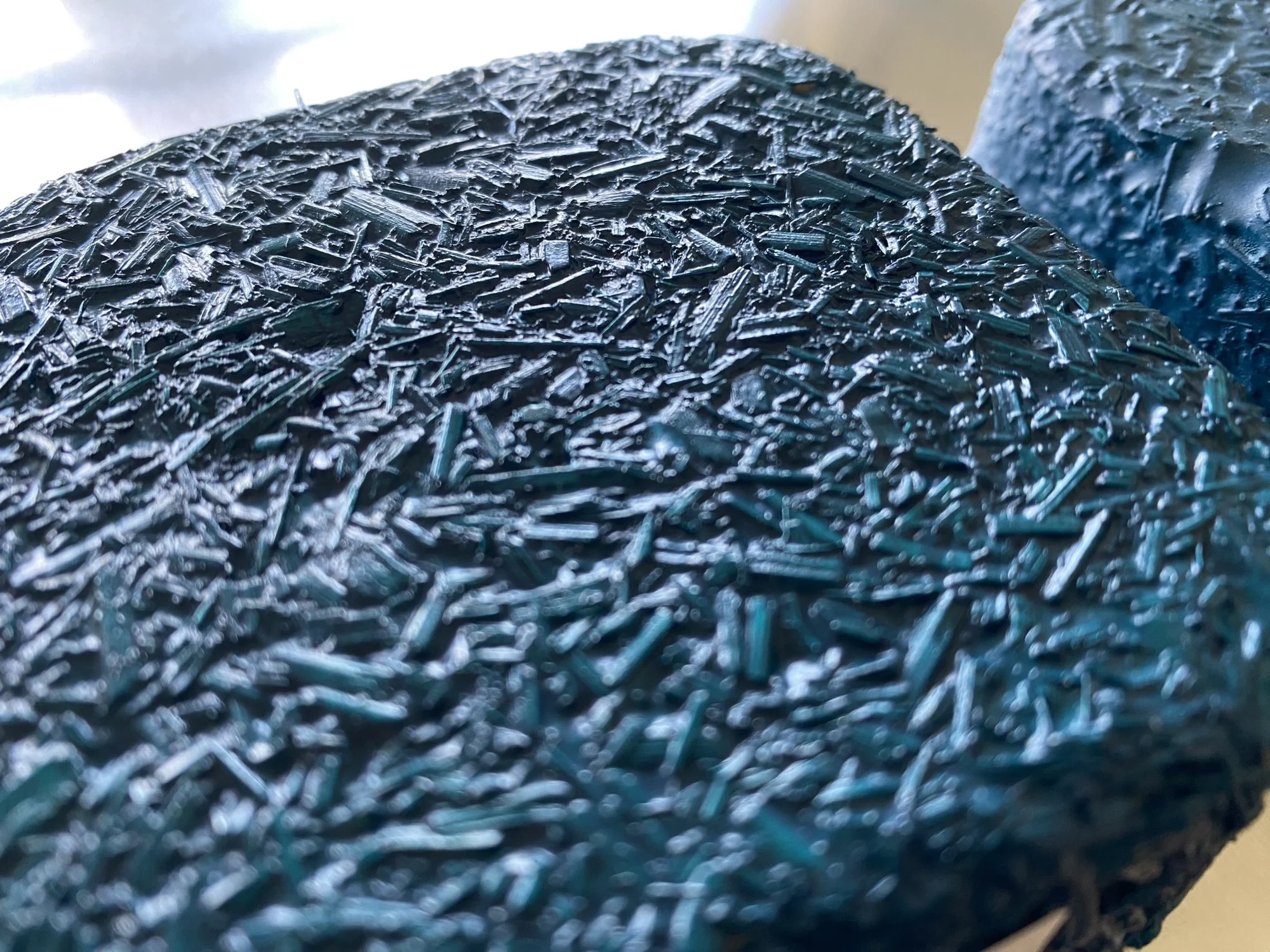
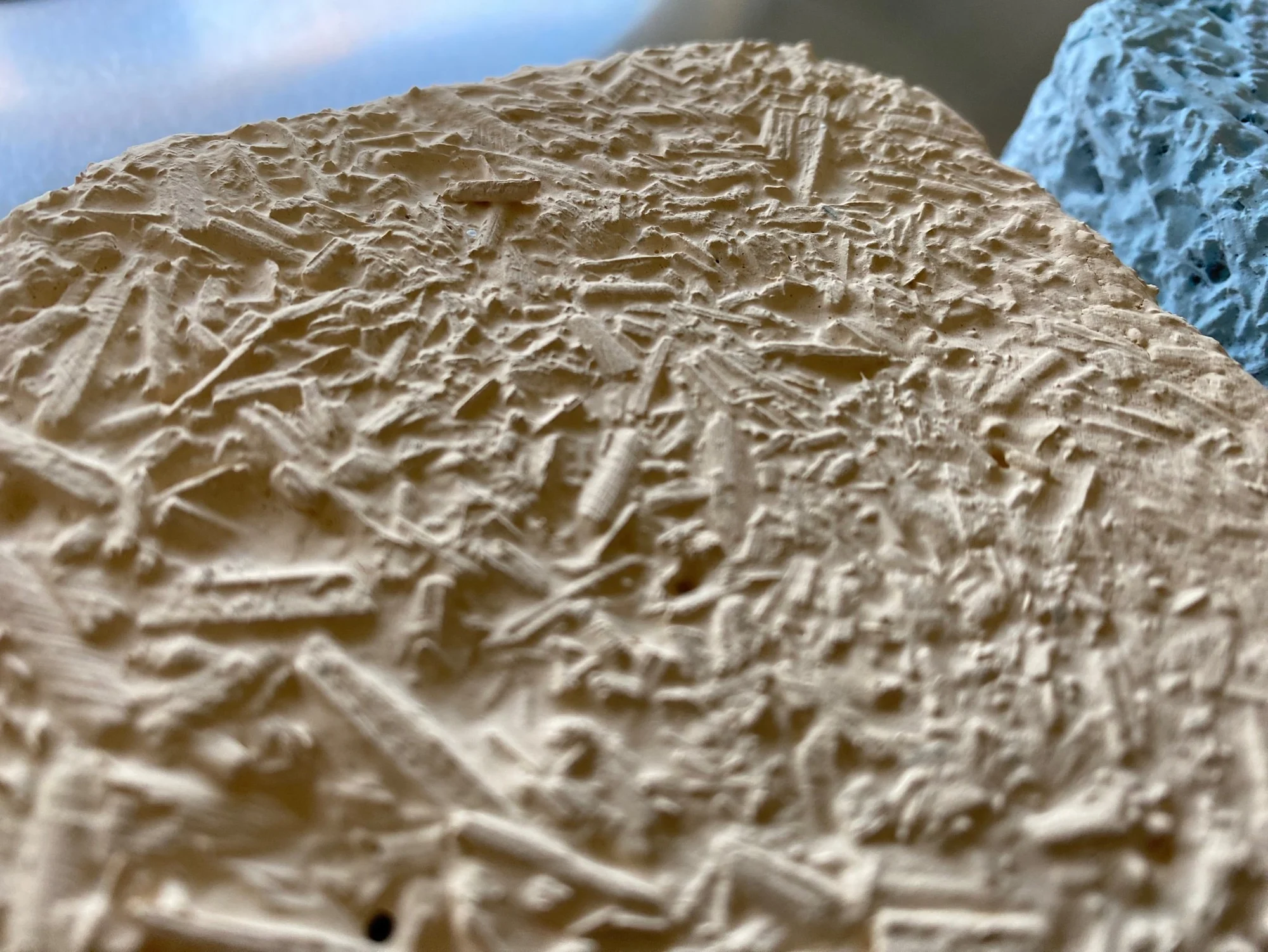
Up close
The part people stop at.
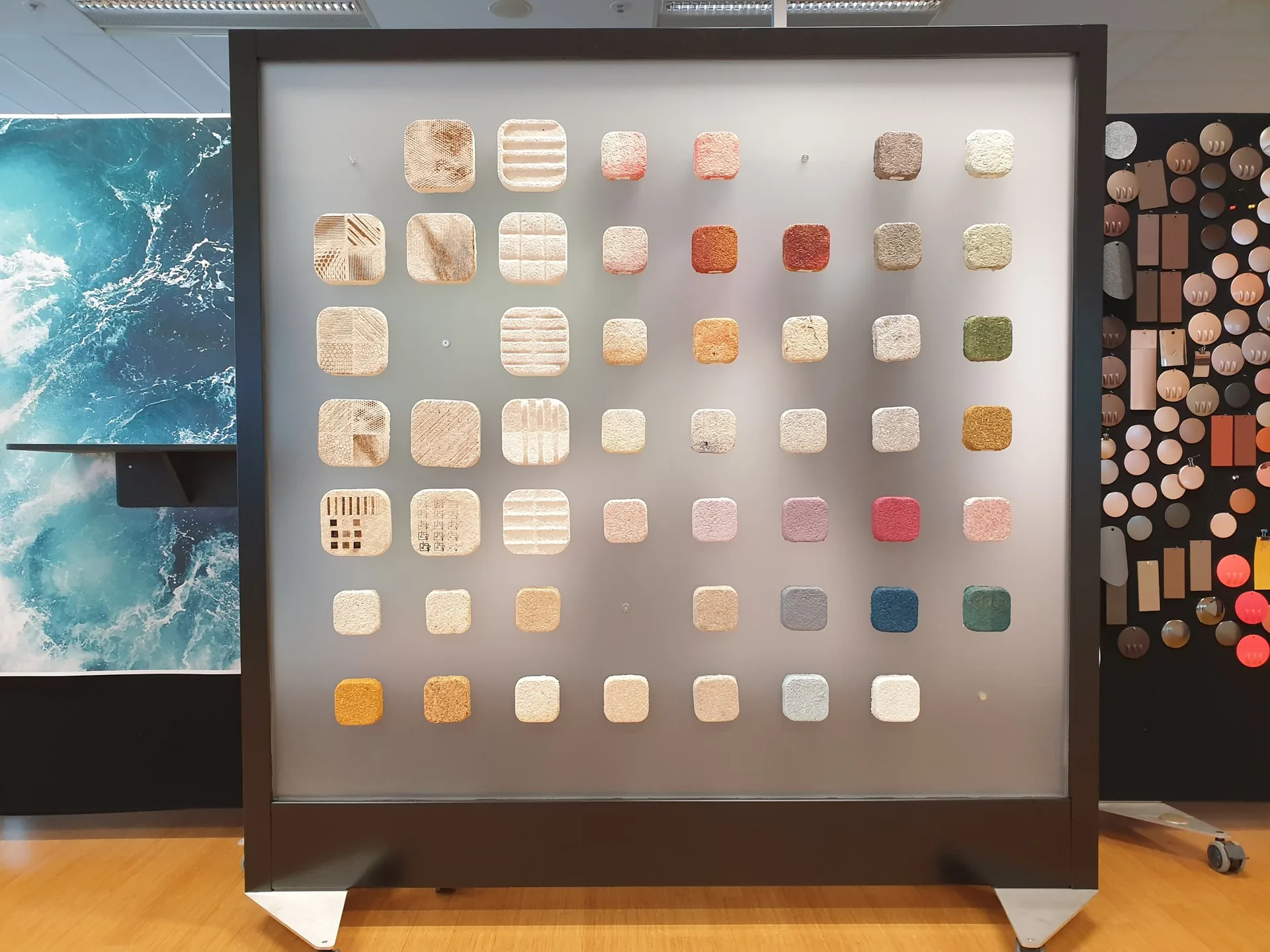
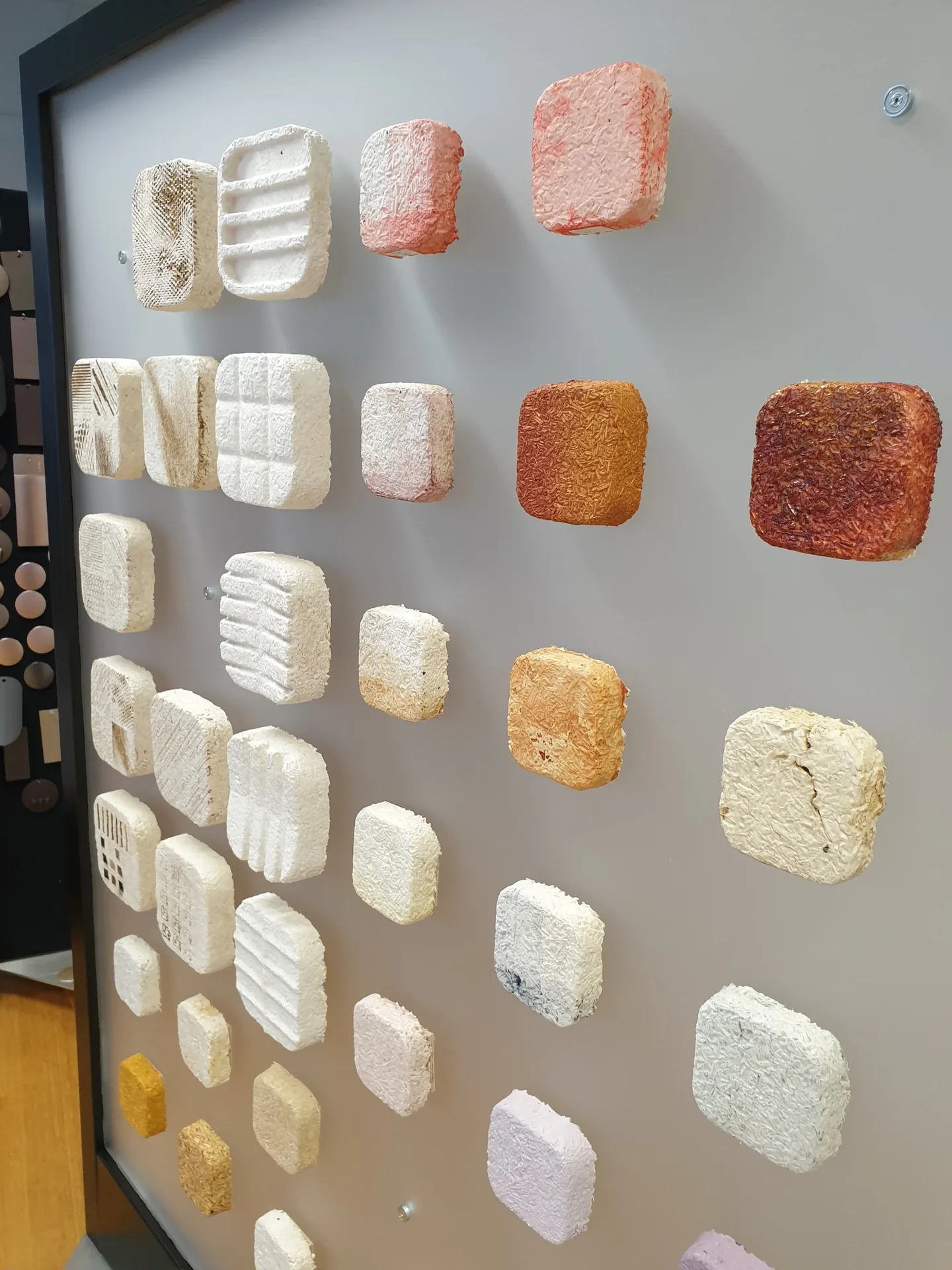
After seeing the wall, Kia's Head of Design asked to take the material into a show car.
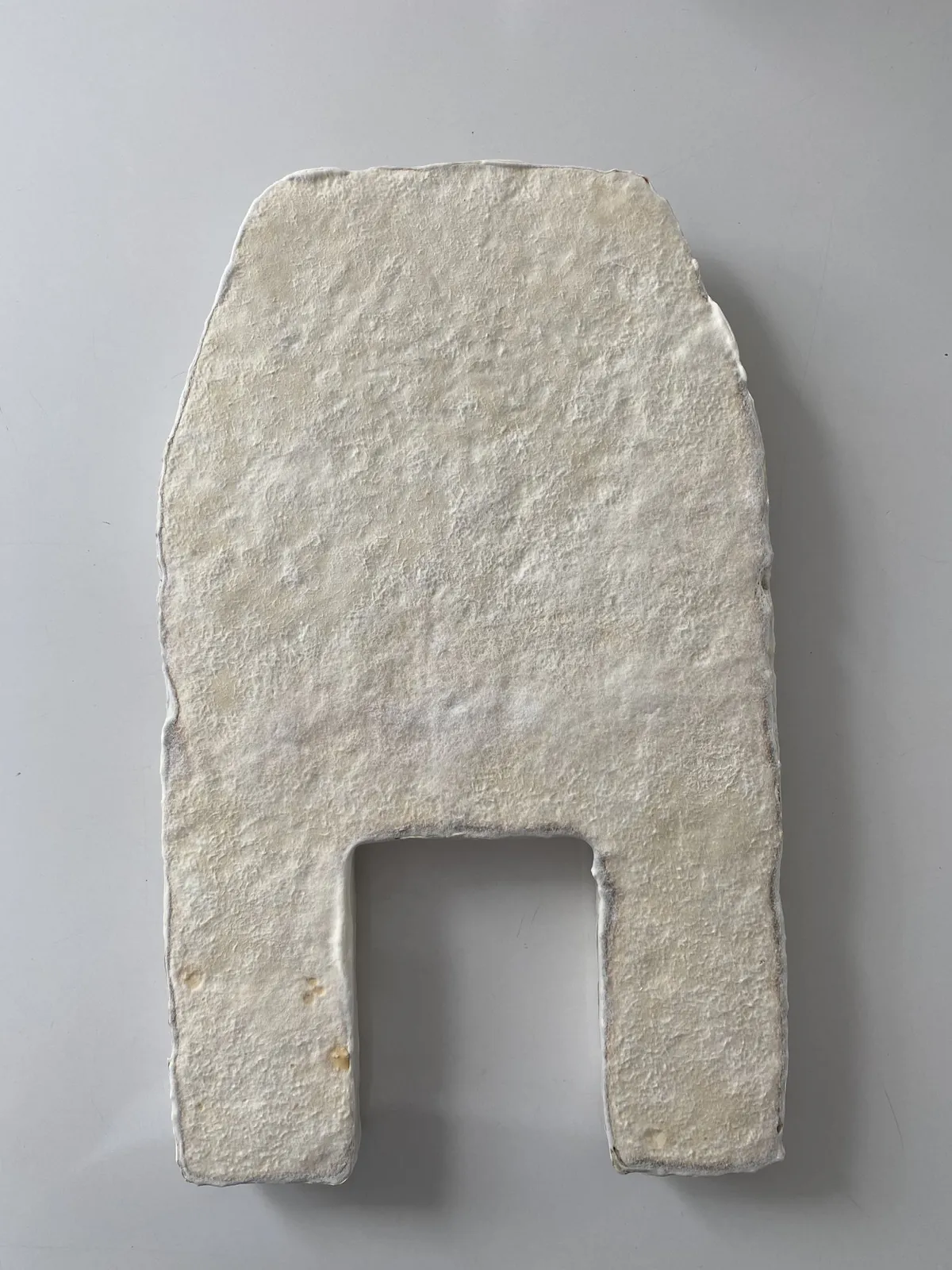
A visible mycelium part in the centre console
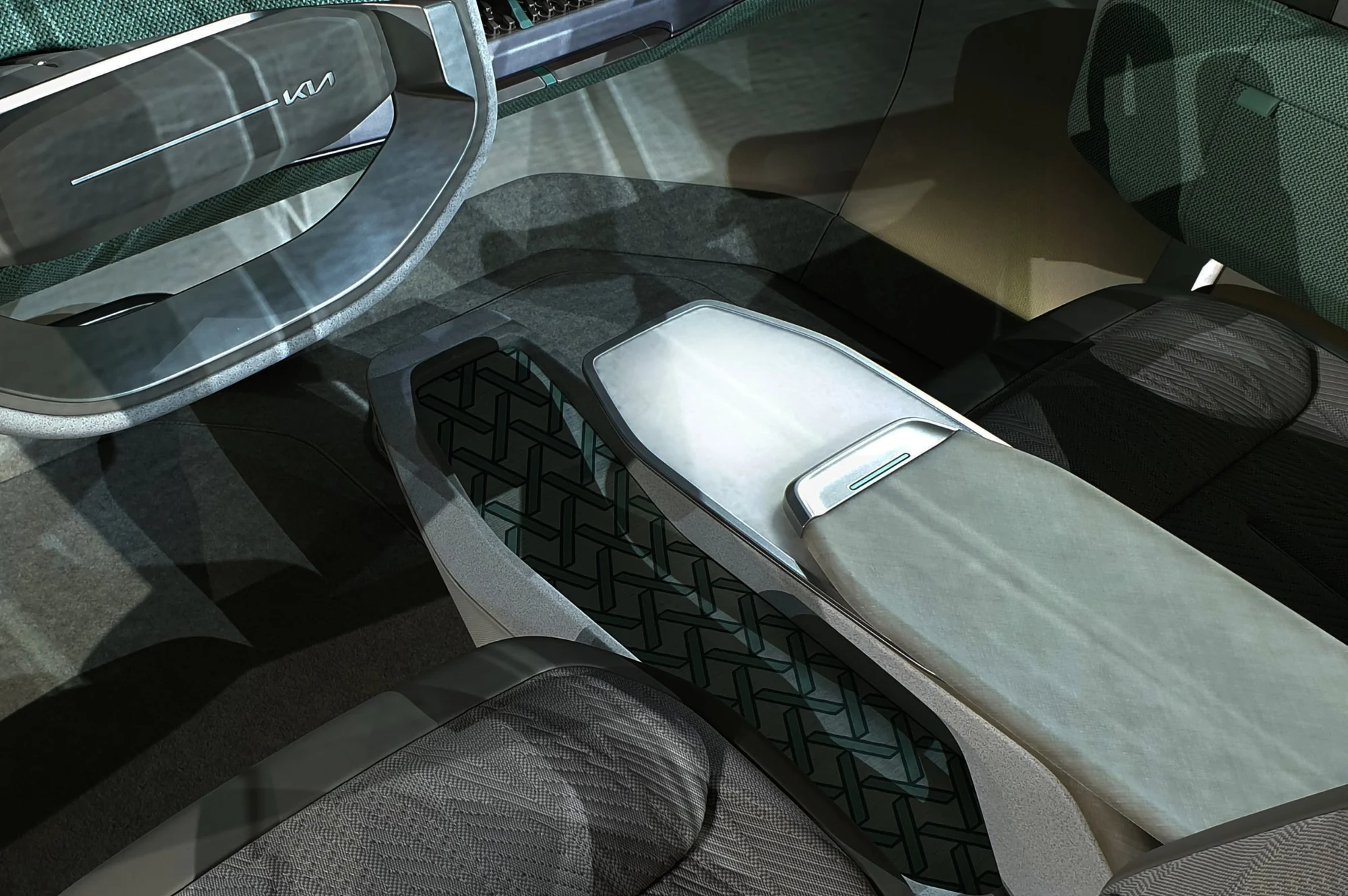
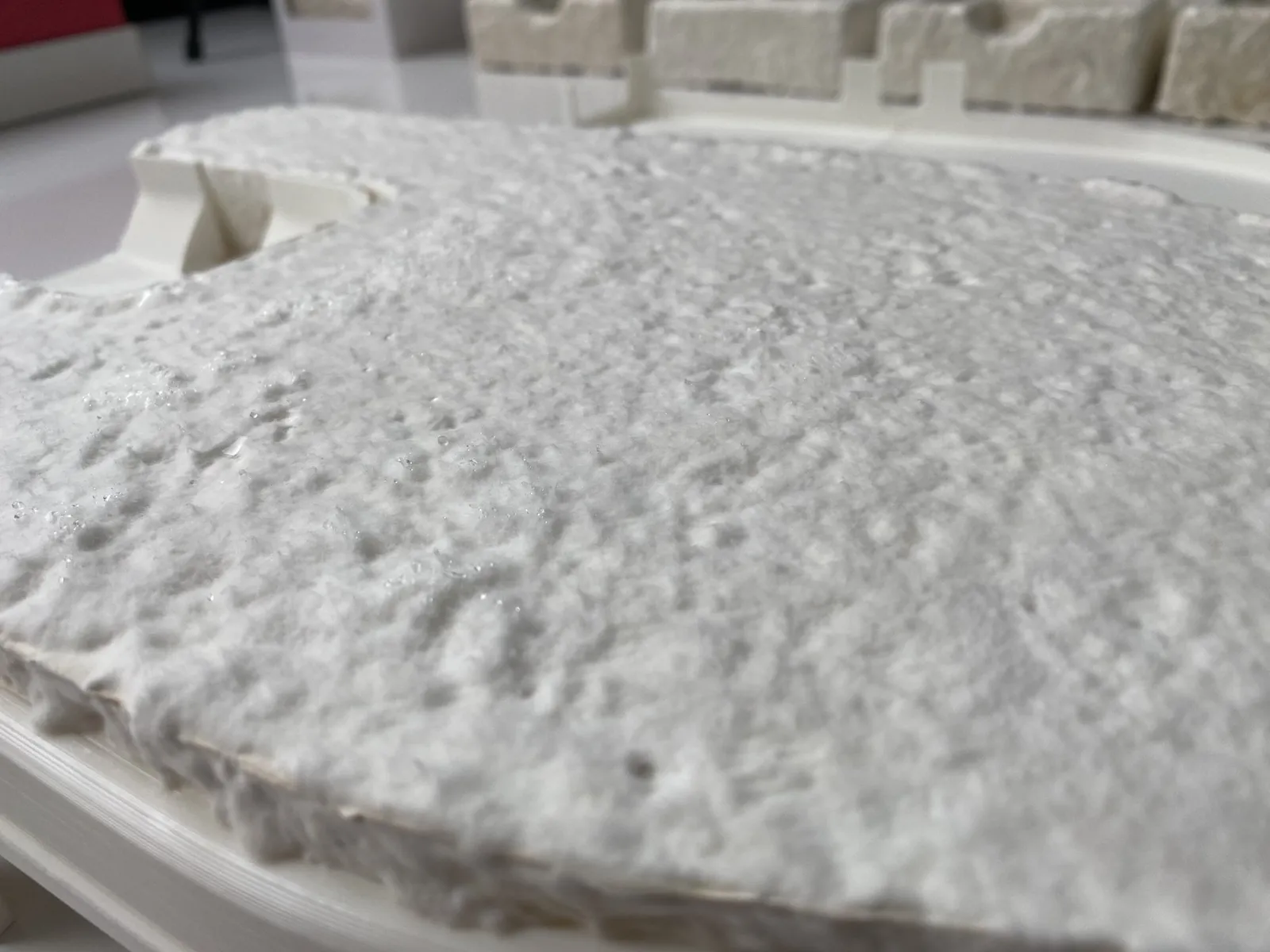
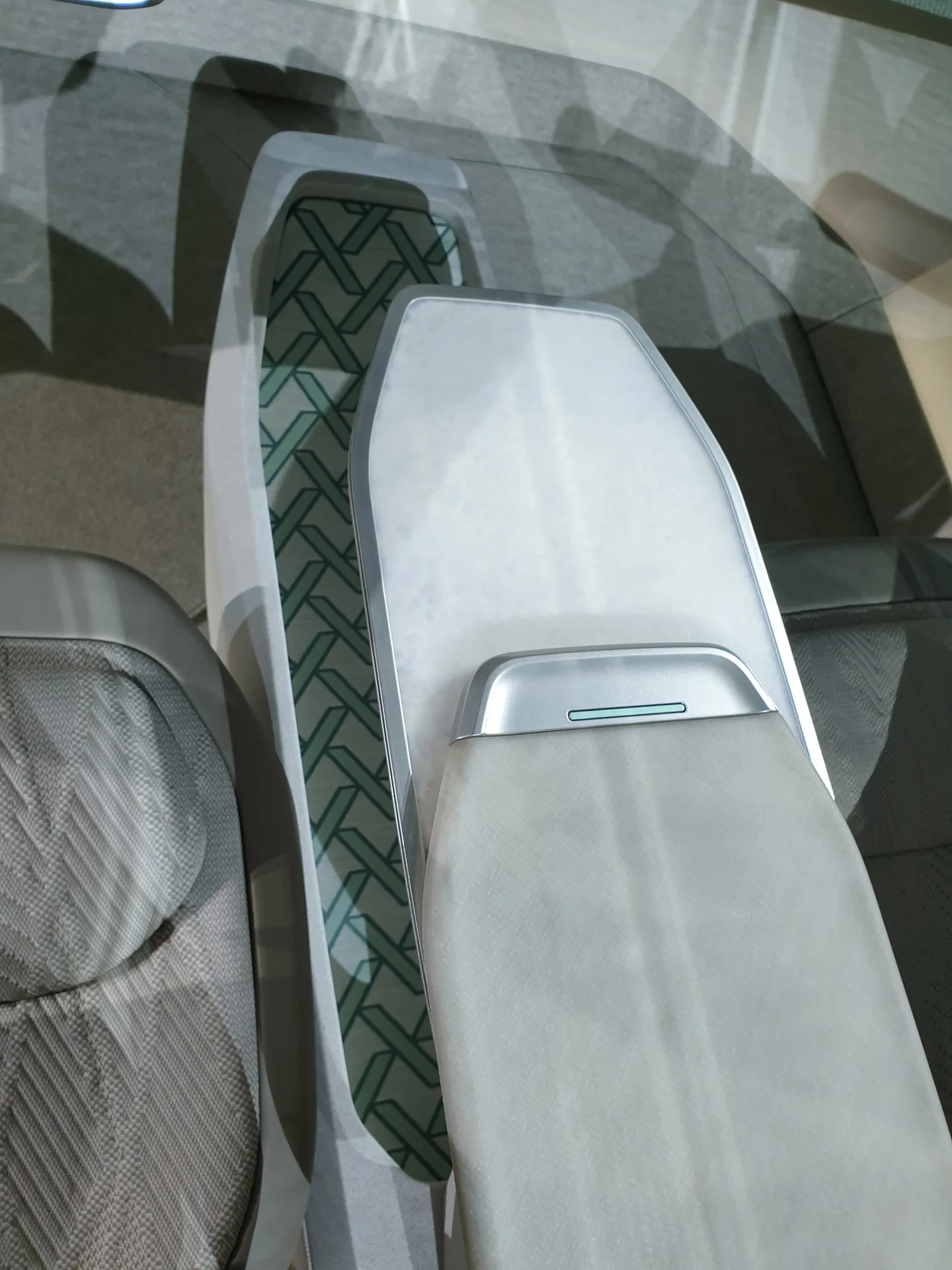
The first show car was the Concept EV3. Our part became the sliding table in the centre console: 26 mm thick, white, smooth to the touch, with the plant particles still visible.
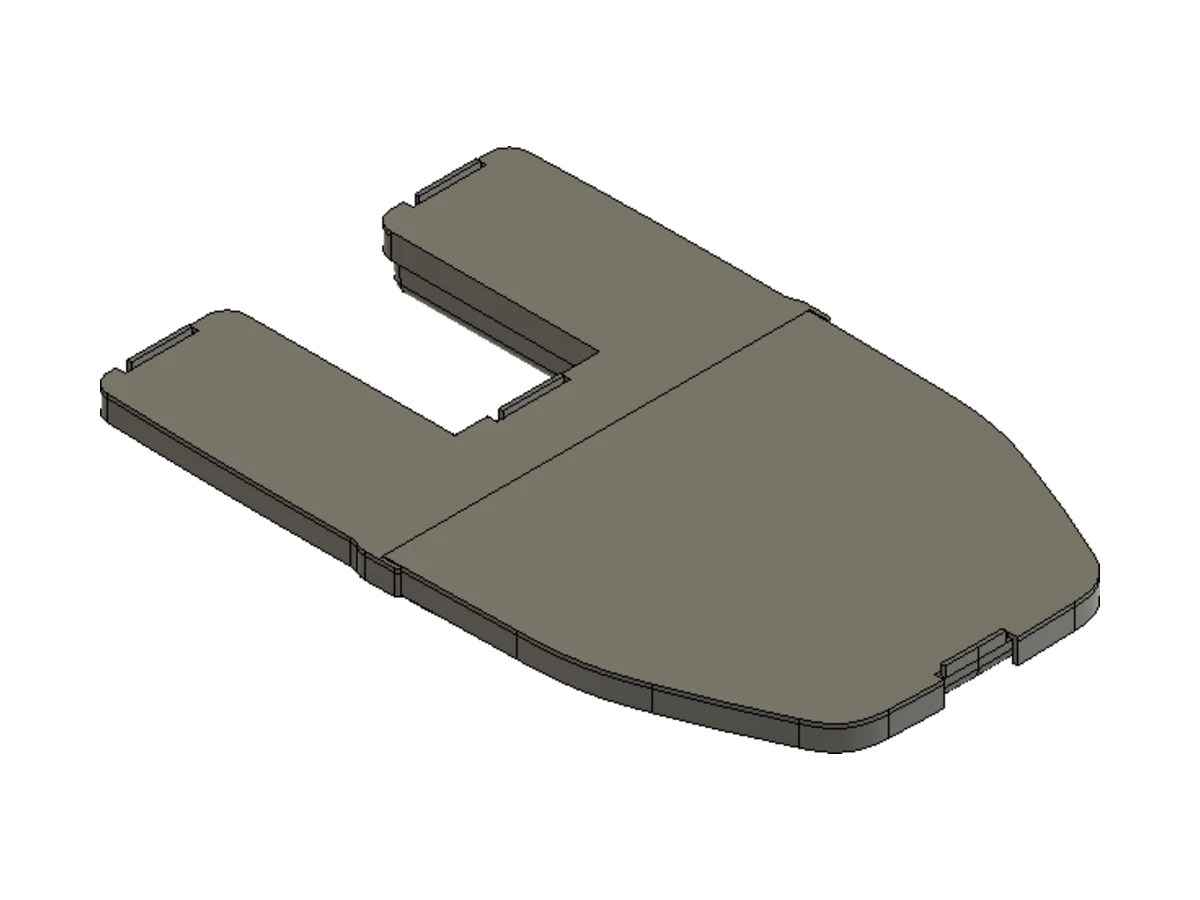
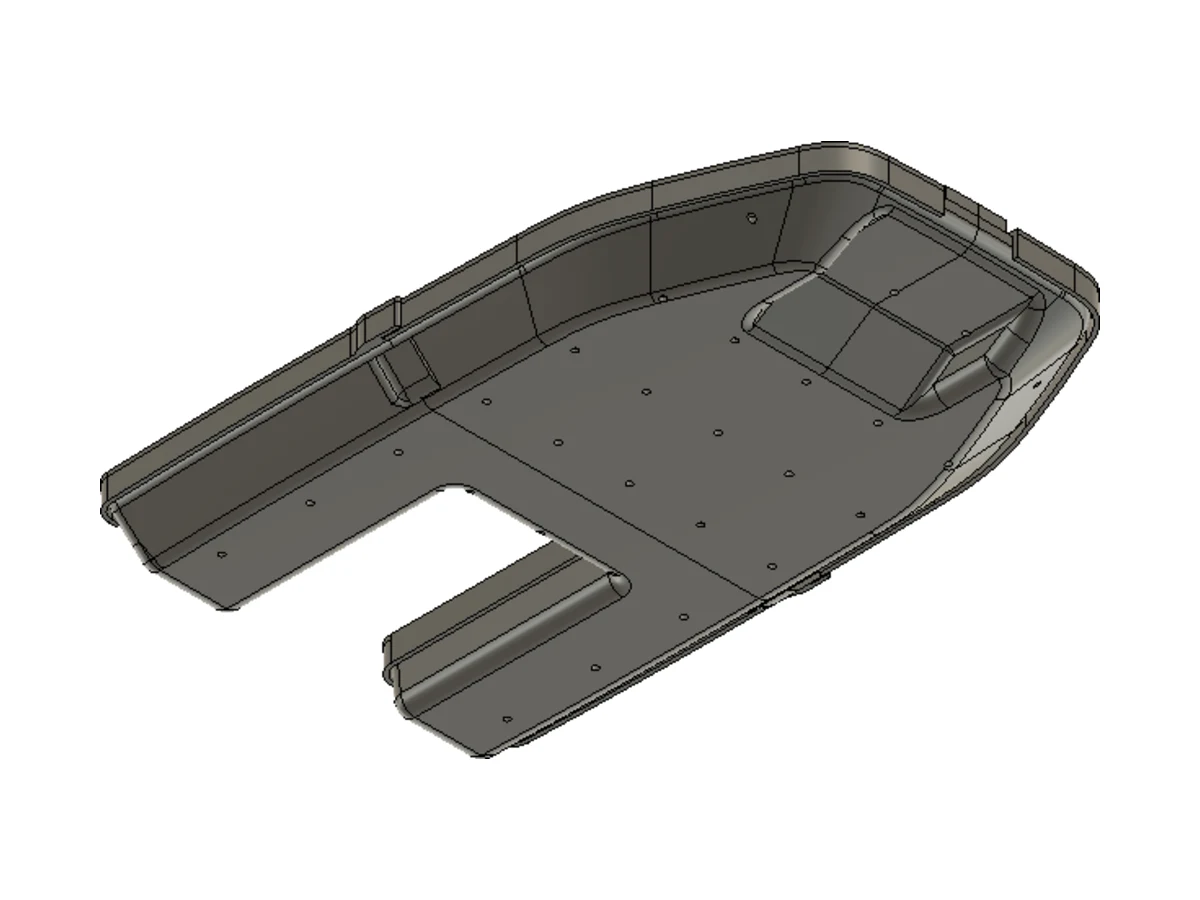
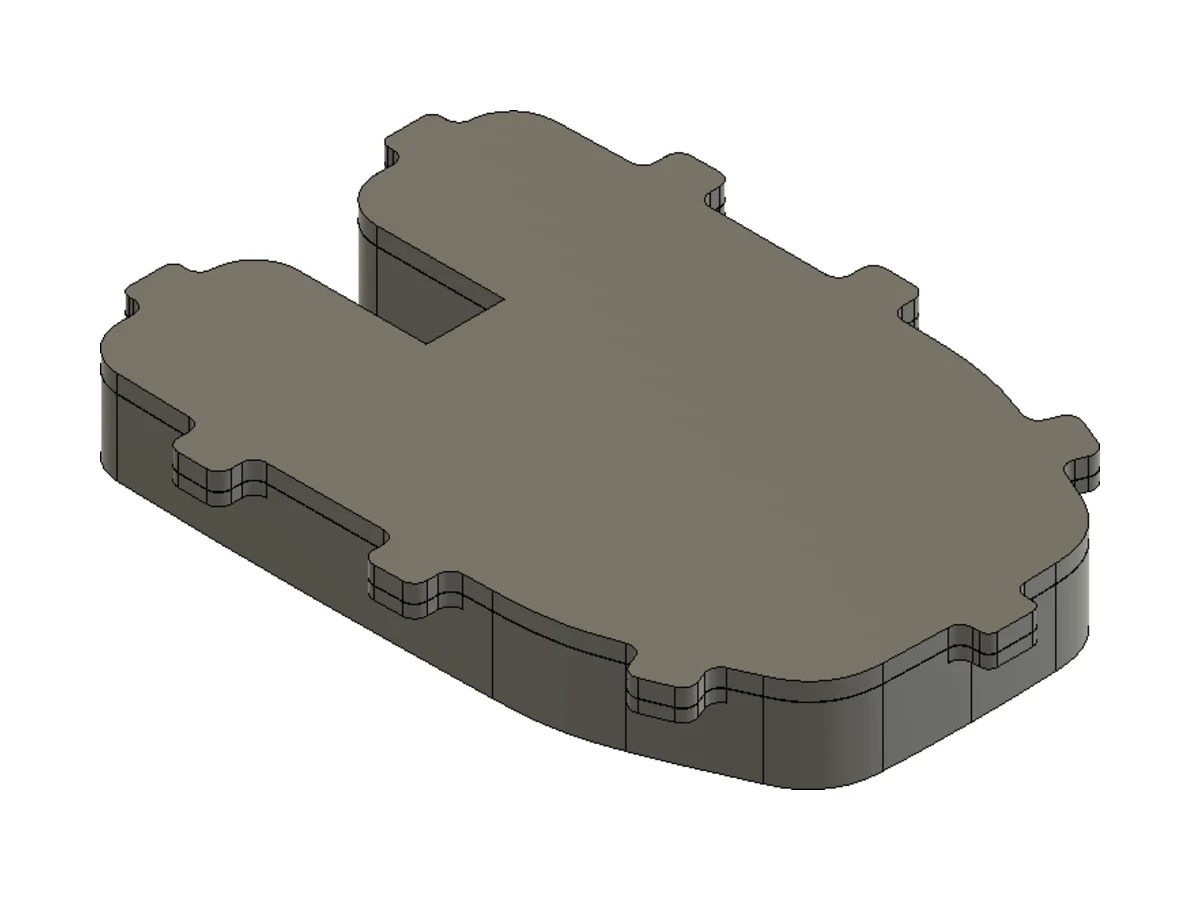
Designing the moulds
Each mould starts in CAD from Kia's 3D data. The first version taught us what the part needed. The second one is more complex, and that is what made the final parts possible.
In the show car
Photos of the real car at Kia EV Day, October 2023.
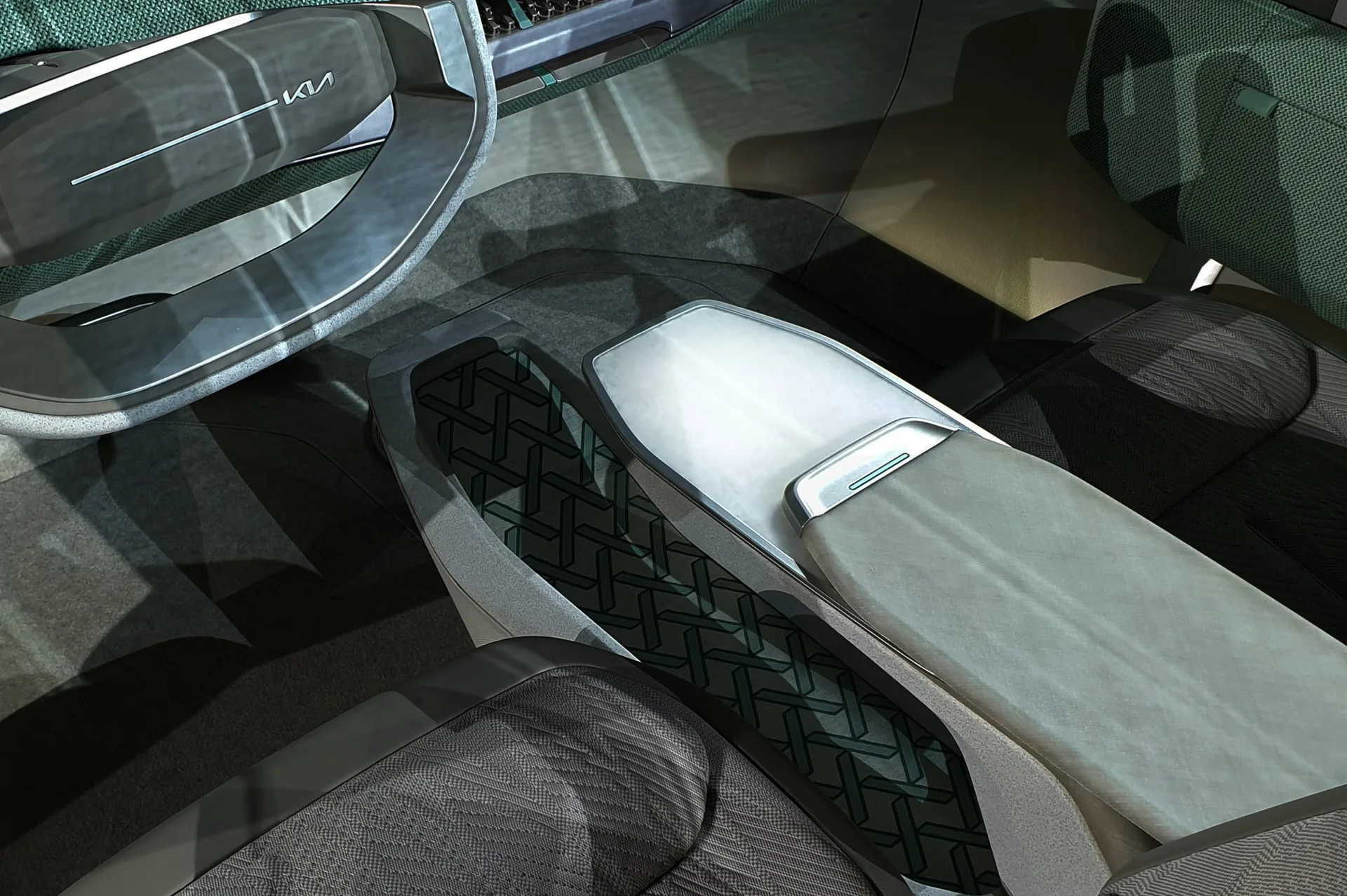
Kia's renders
How Kia presented the car.
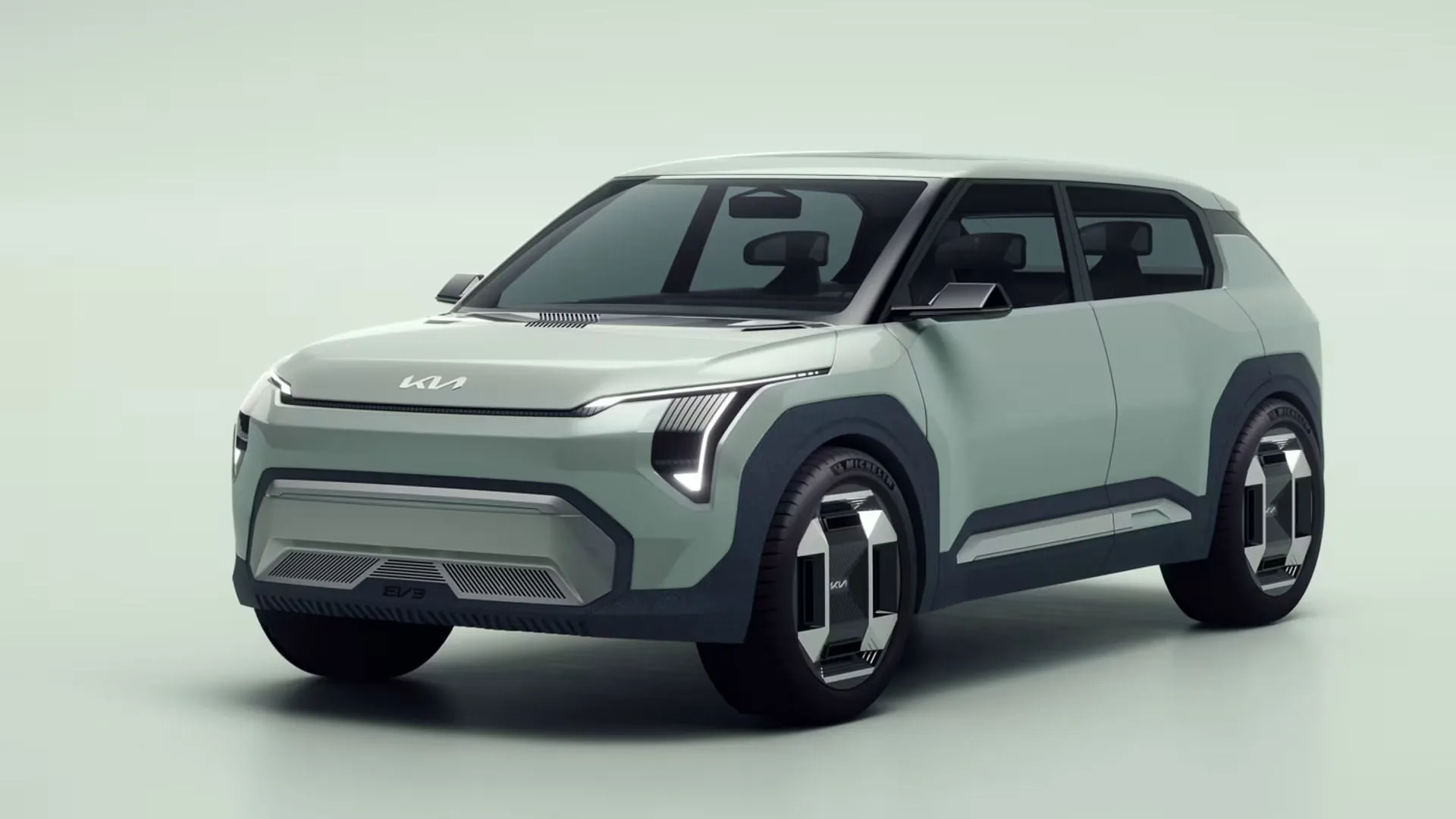
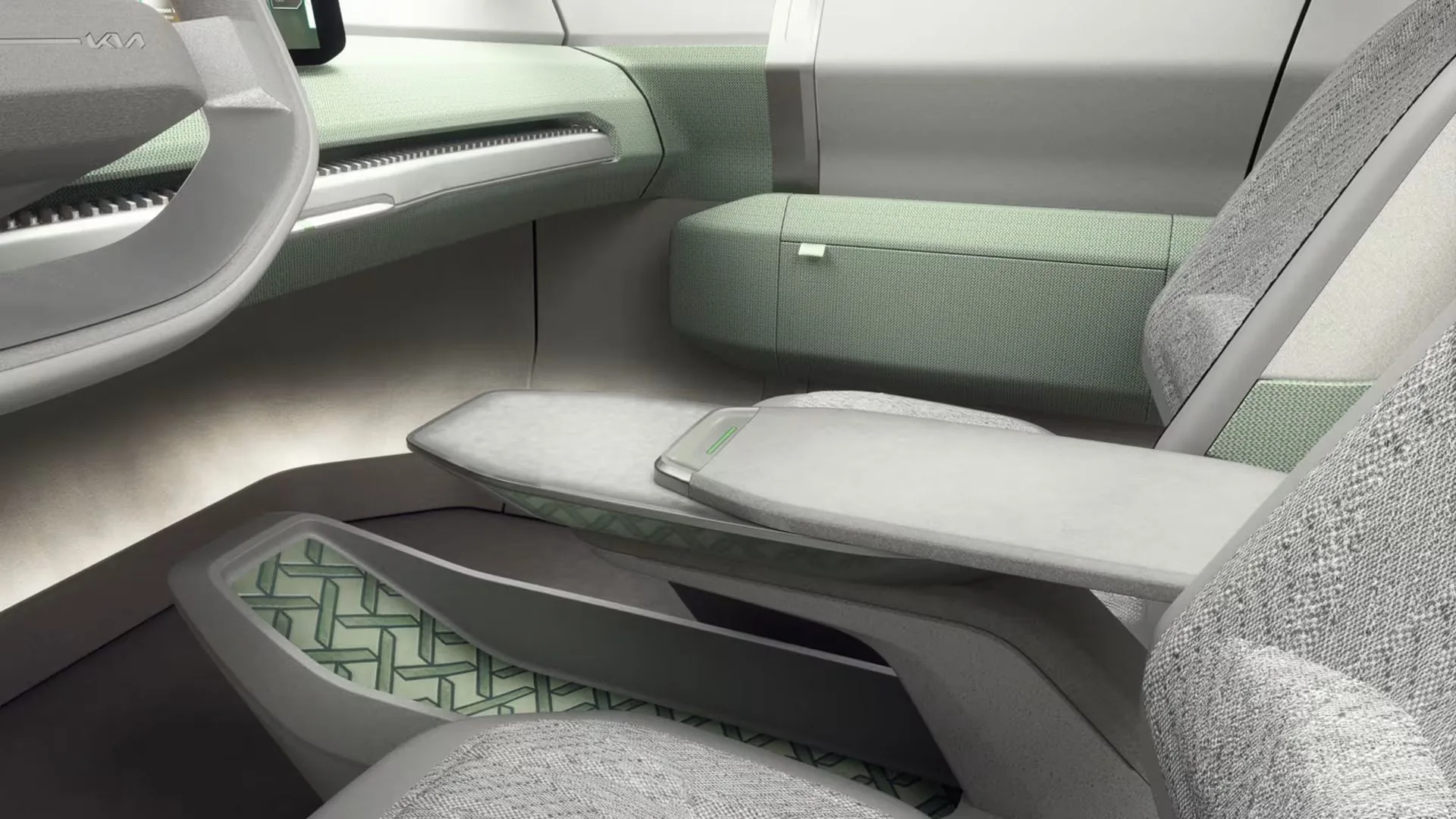
Kia revealed the Concept EV3 at Kia EV Day in Korea on 12 October 2023, with our part in the centre console table.
Coloured mycelium in the doors
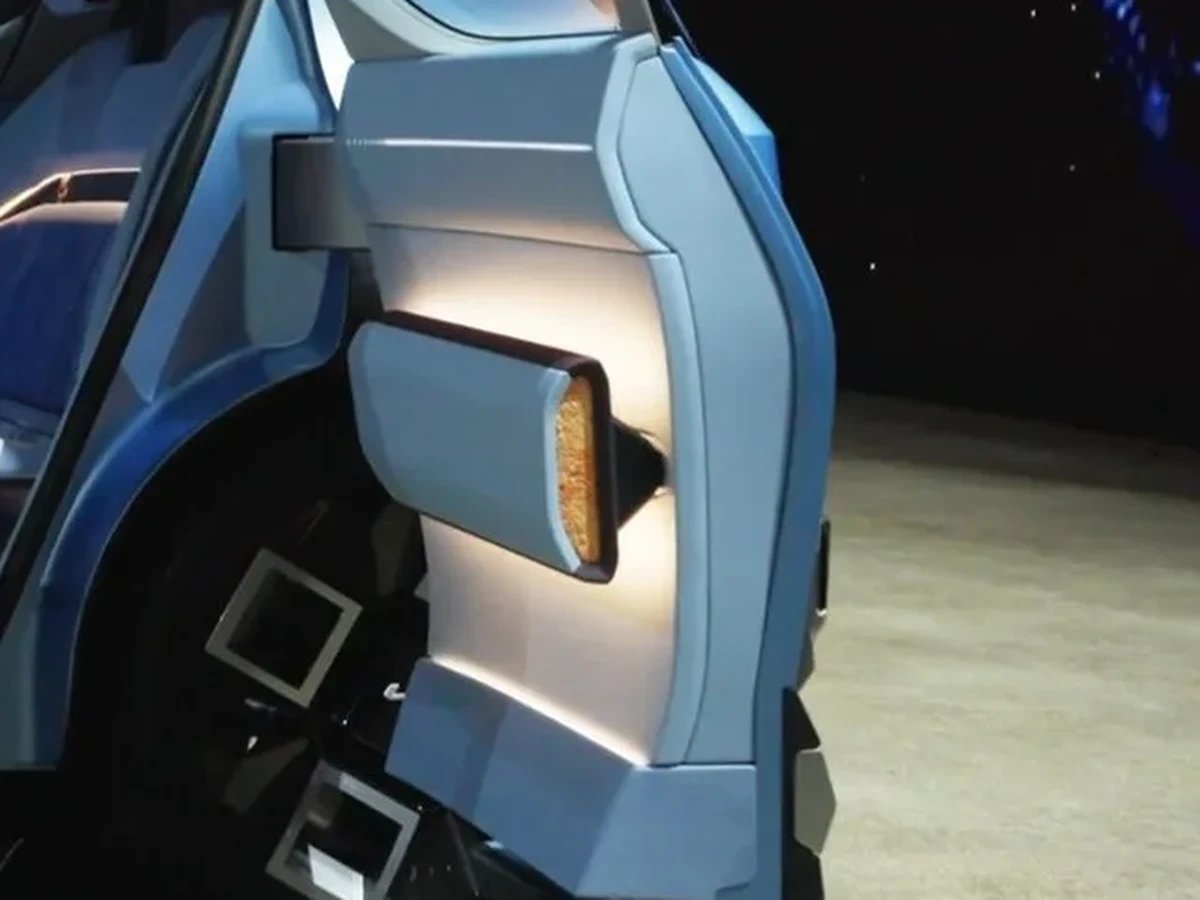
For the next show car Kia wanted mycelium in the doors, as insulation and as a design element you see every time a door opens, coloured to Kia's own colour target.
It looks simple. It is not.
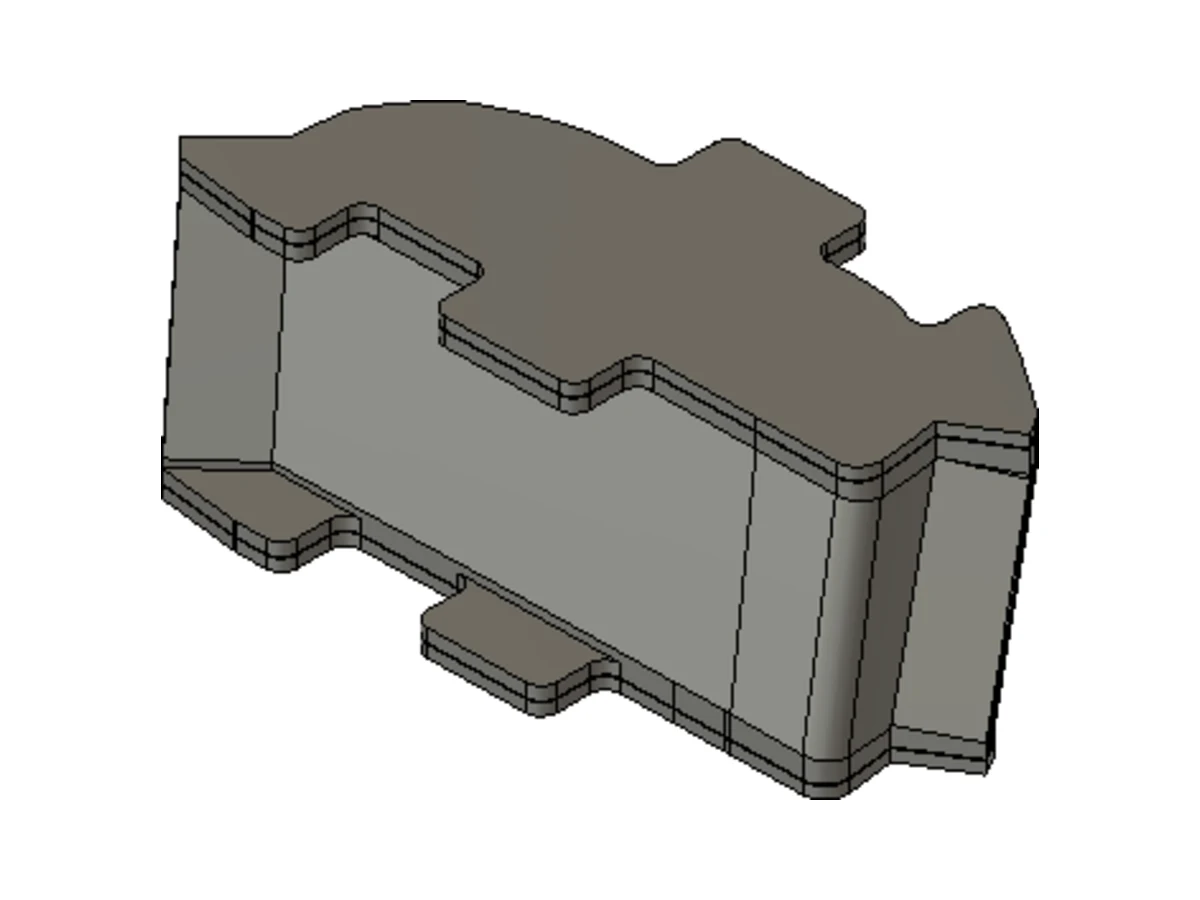
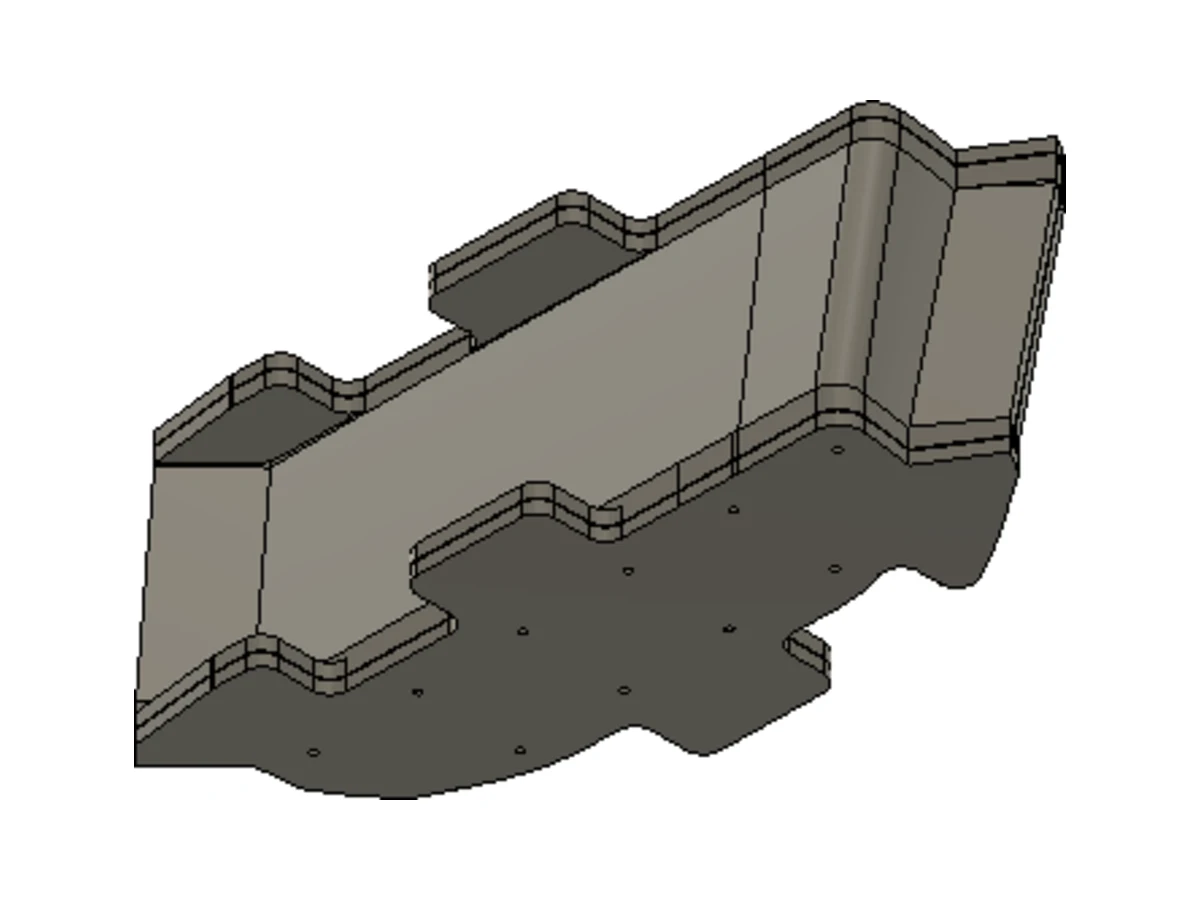
The part curves in two directions on every side, so it can follow the inside of the door. To sit flush with no gaps, every curve has to come out of the mould exactly as drawn, and stay that way while the part dries.
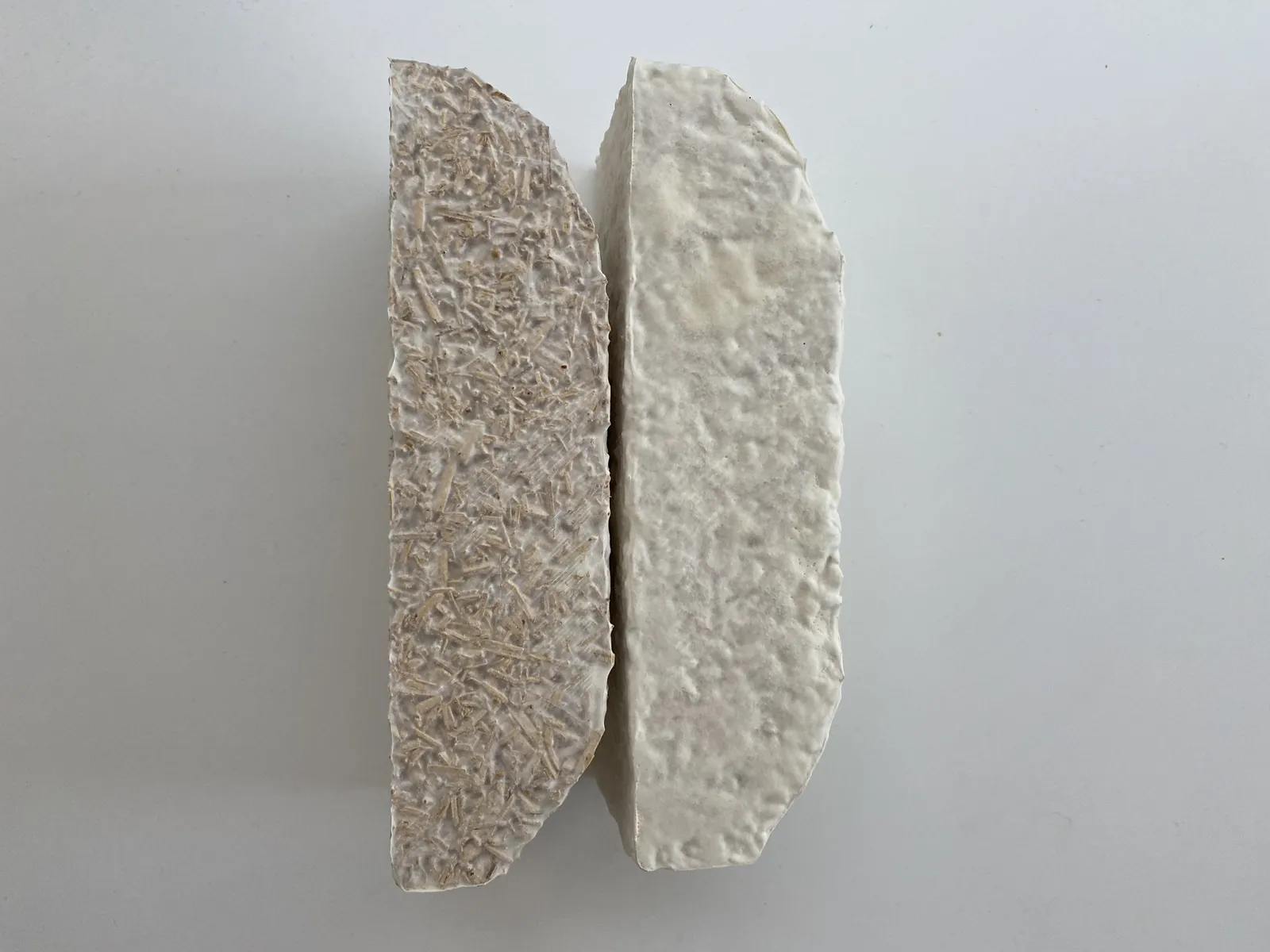
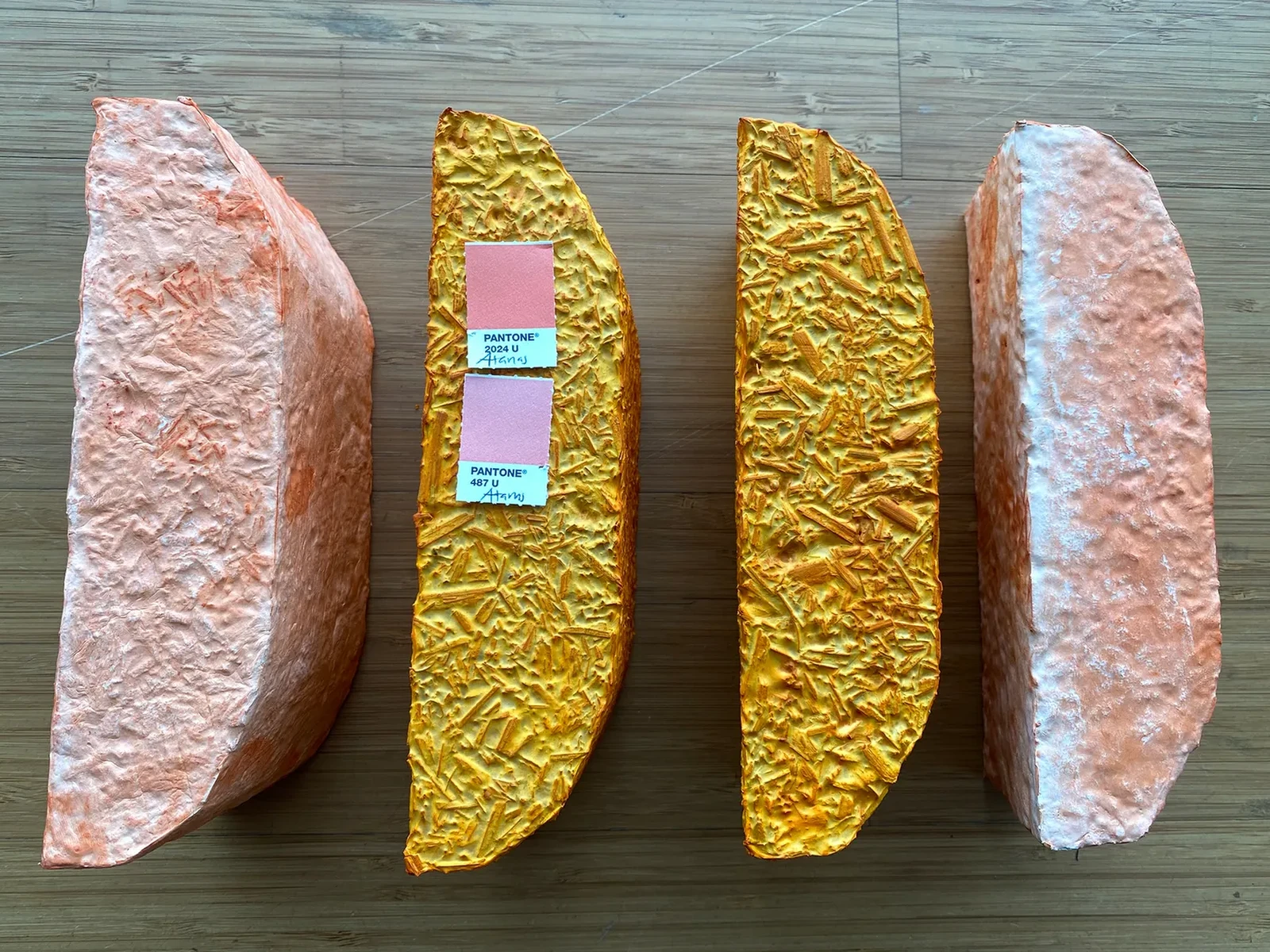
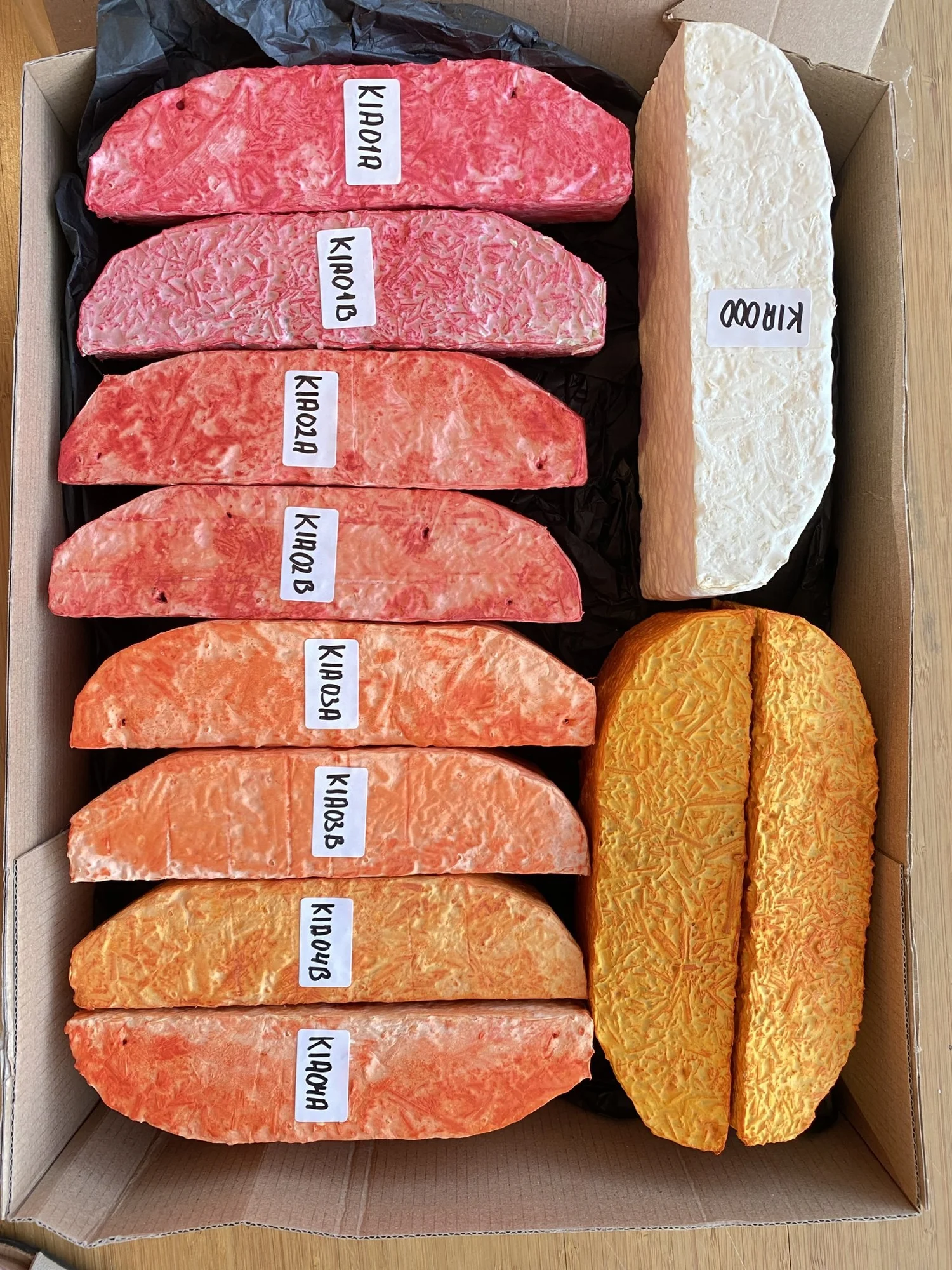
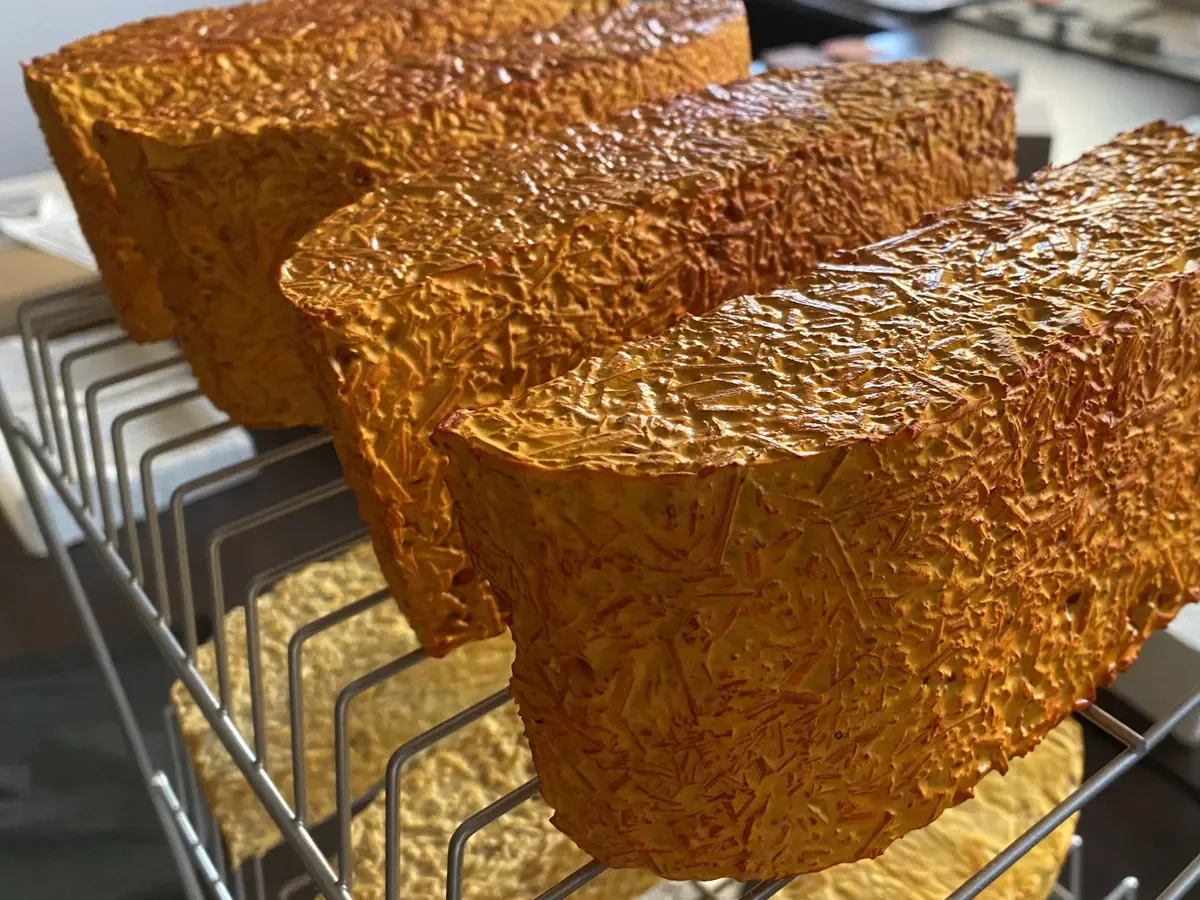
Colour on a living material moves. When the first final batch came out off target, we grew new sets, tested every colour against a control and delivered before the car's pre-assembly in September 2024.

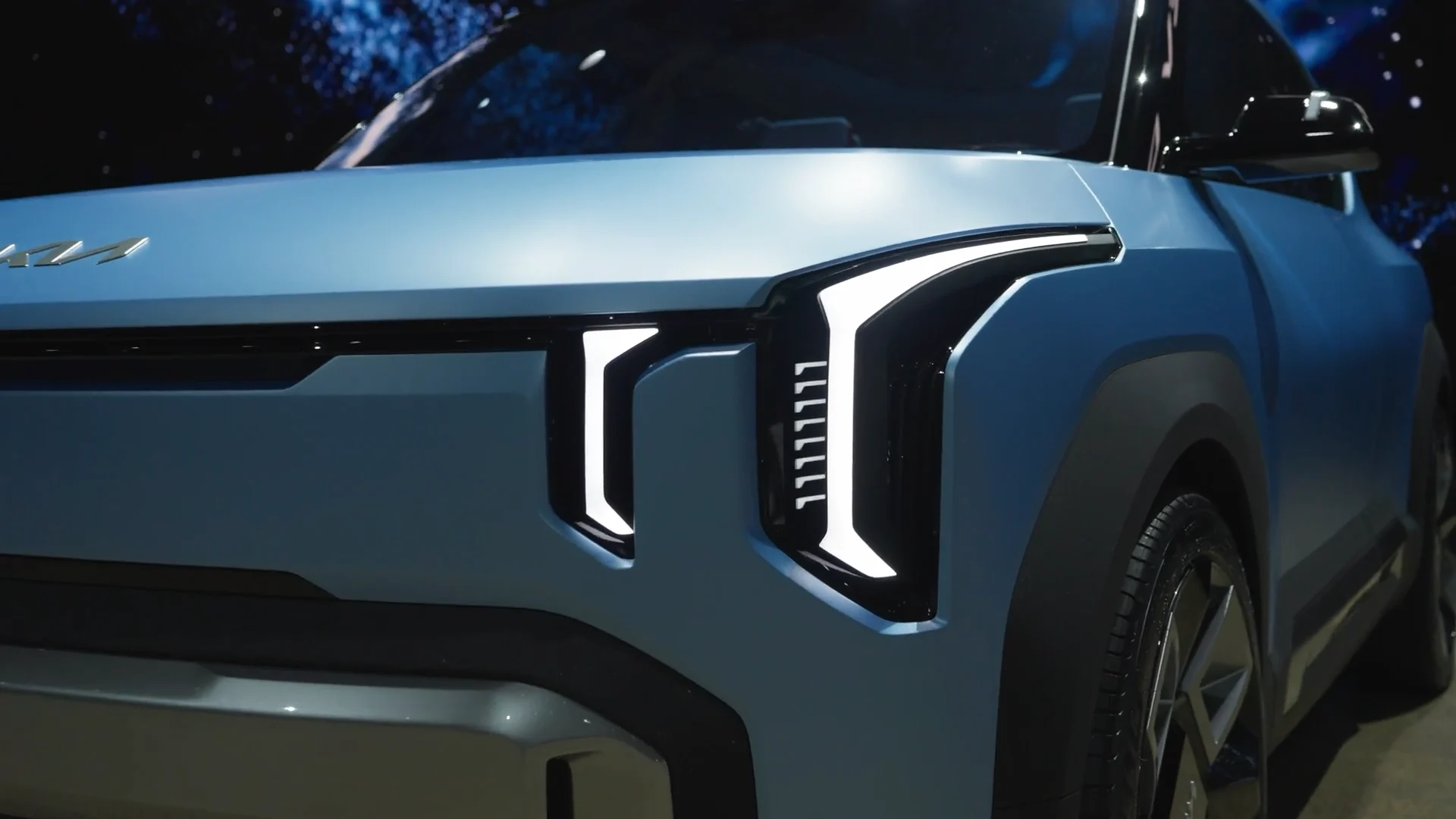
Kia revealed the Concept EV2 at Kia EV Day in Spain in February 2025 and showed it at Milan Design Week in April 2025. Kia's own press release named Biomyc as one of three material partners, with Bcomp and Simplifyber.