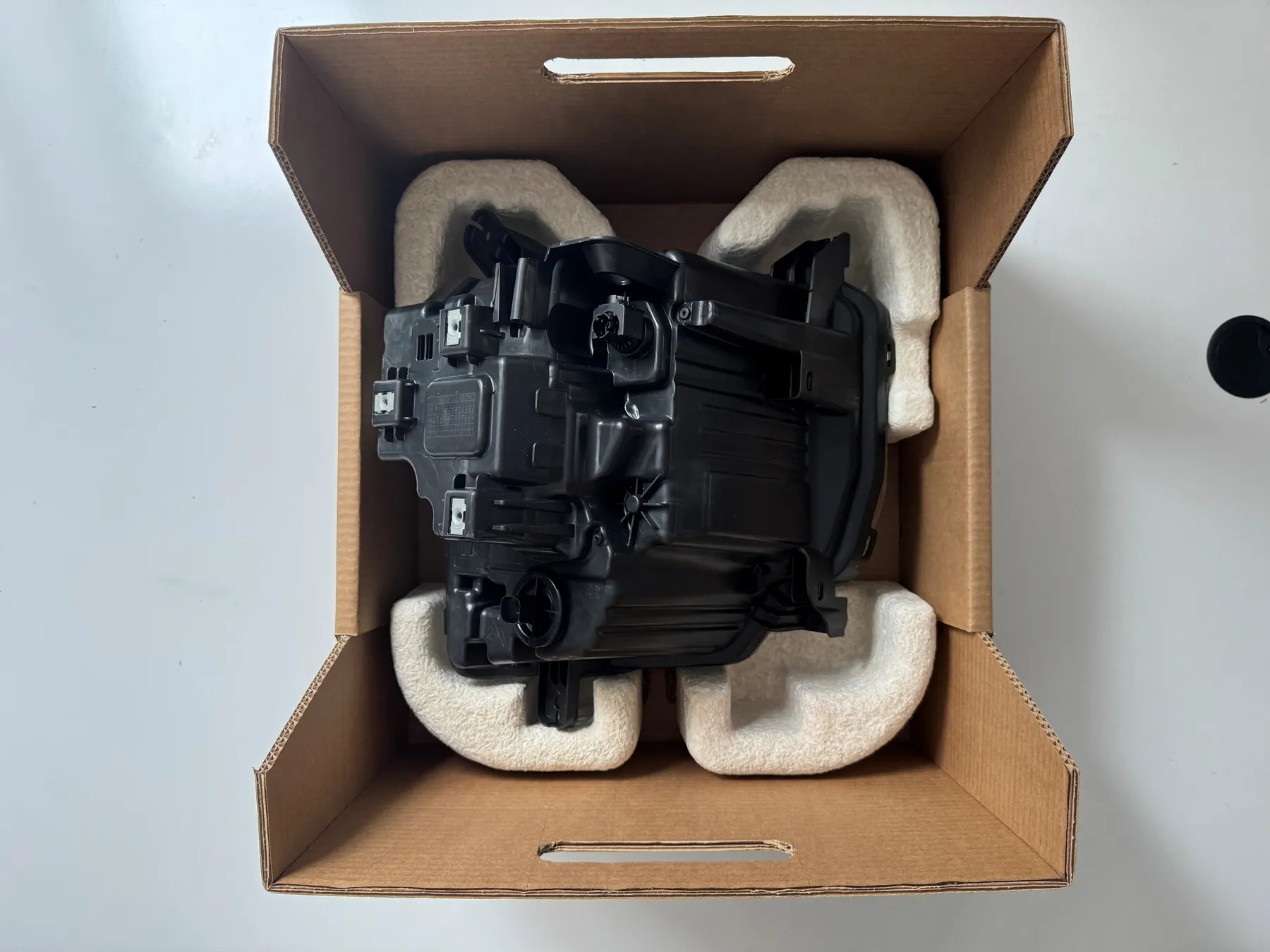
Replace the foam. Keep the lamp perfect.
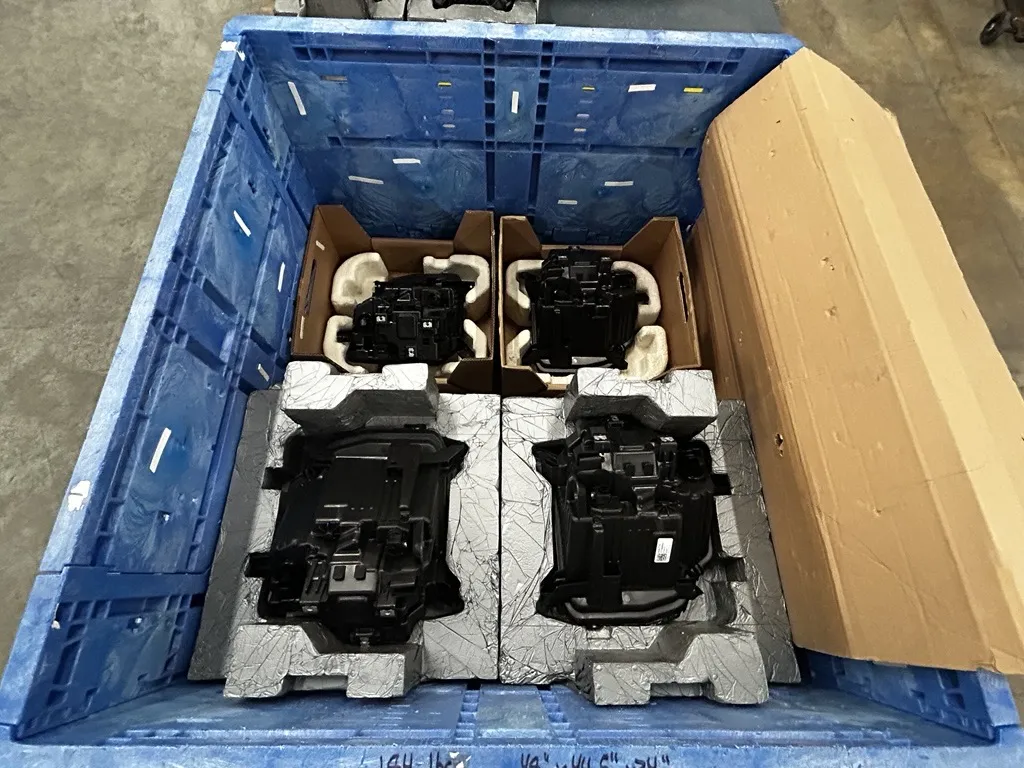
Magna ships replacement headlamps in moulded polyurethane foam wrapped in PE film, eight lamps to a returnable container. The foam is hard to recycle, and each base is half a metre square. Magna's Corporate R&D team asked us for a bio-based pack that does the same job.
19 samples before the first part
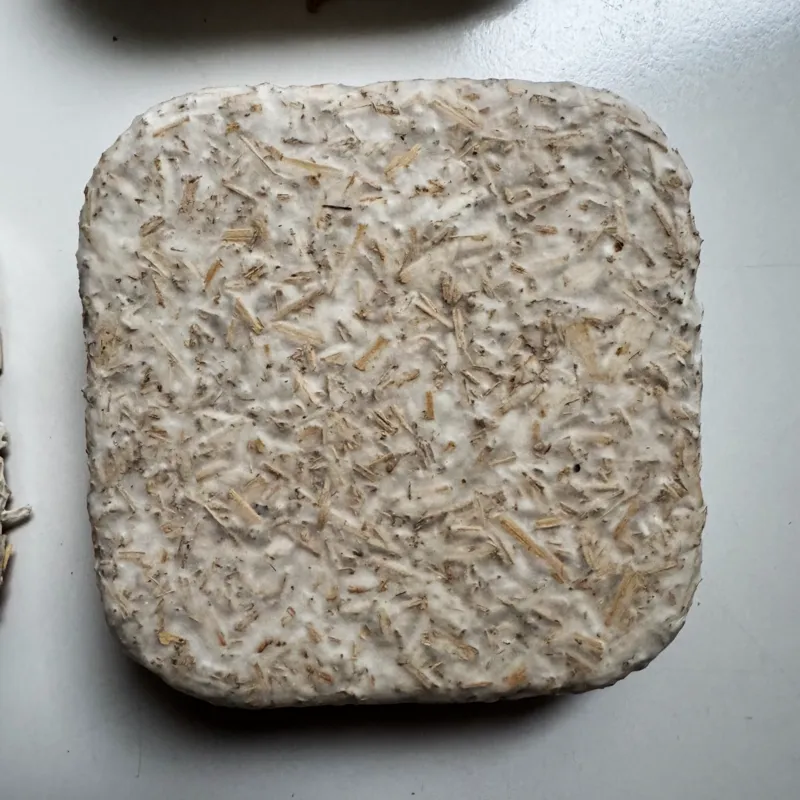
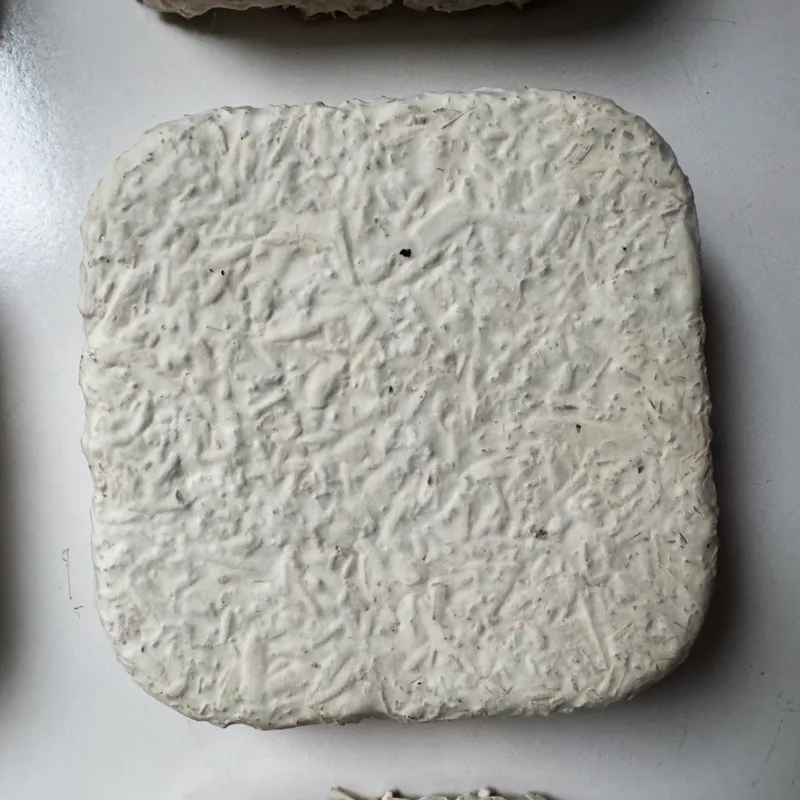
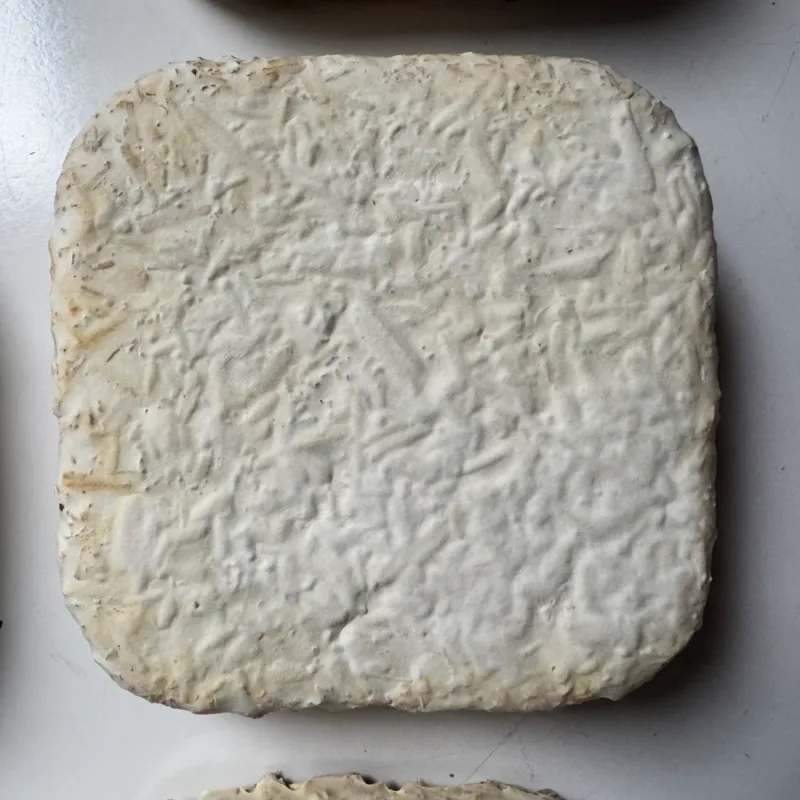
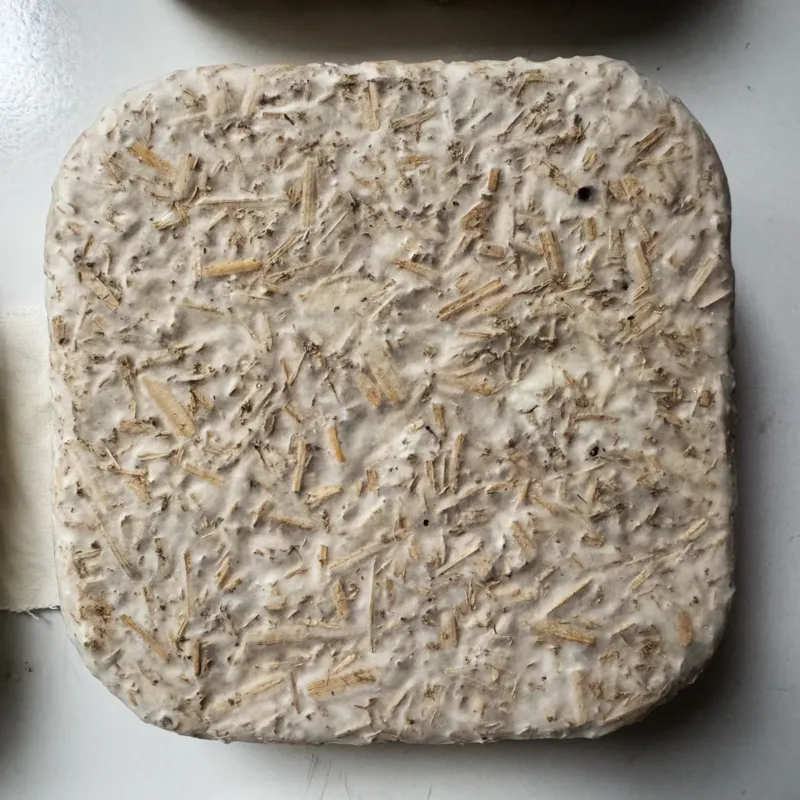
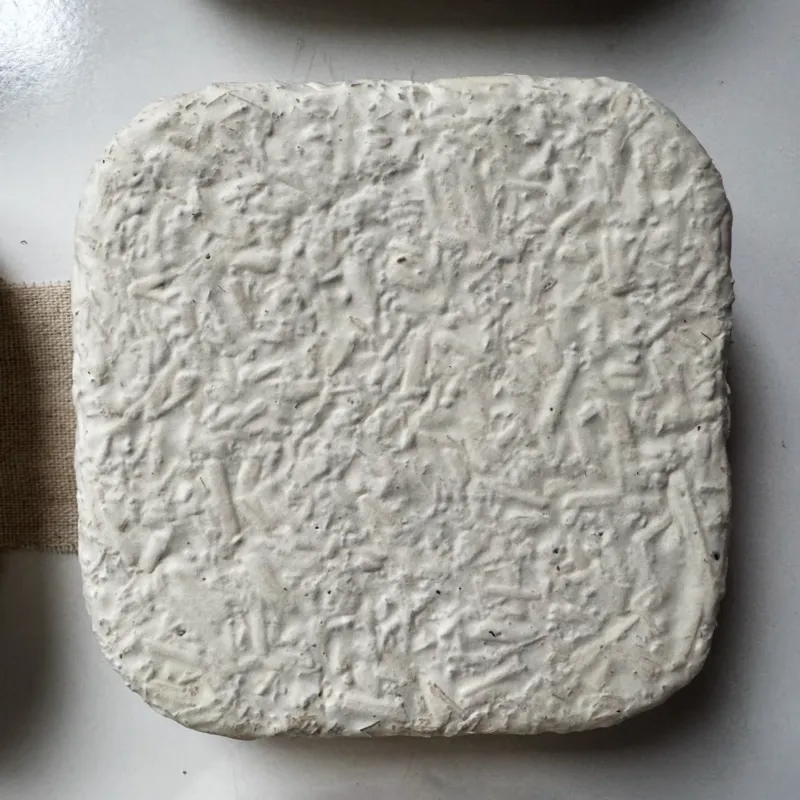
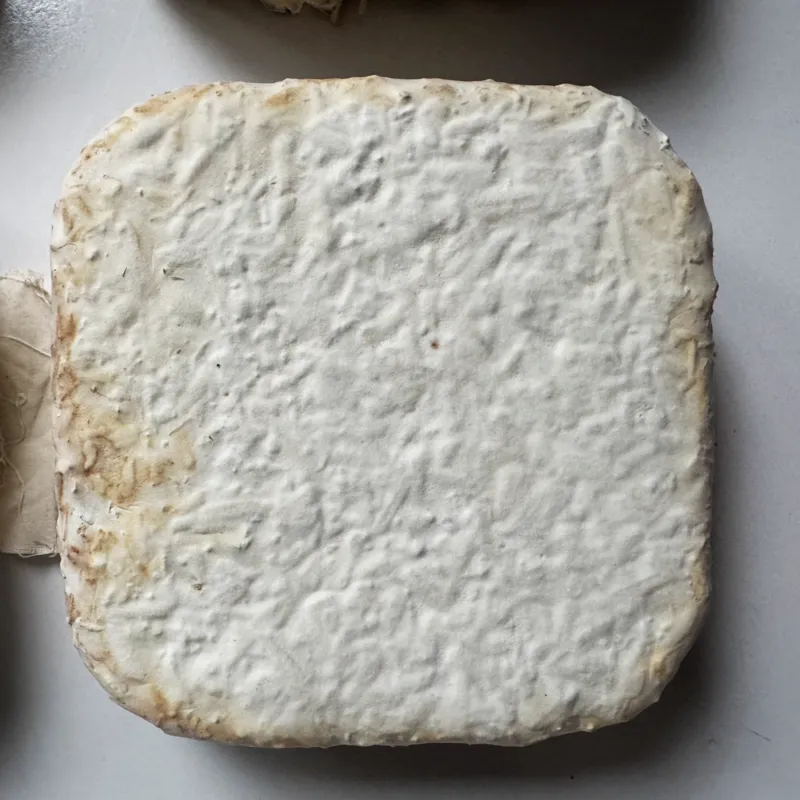
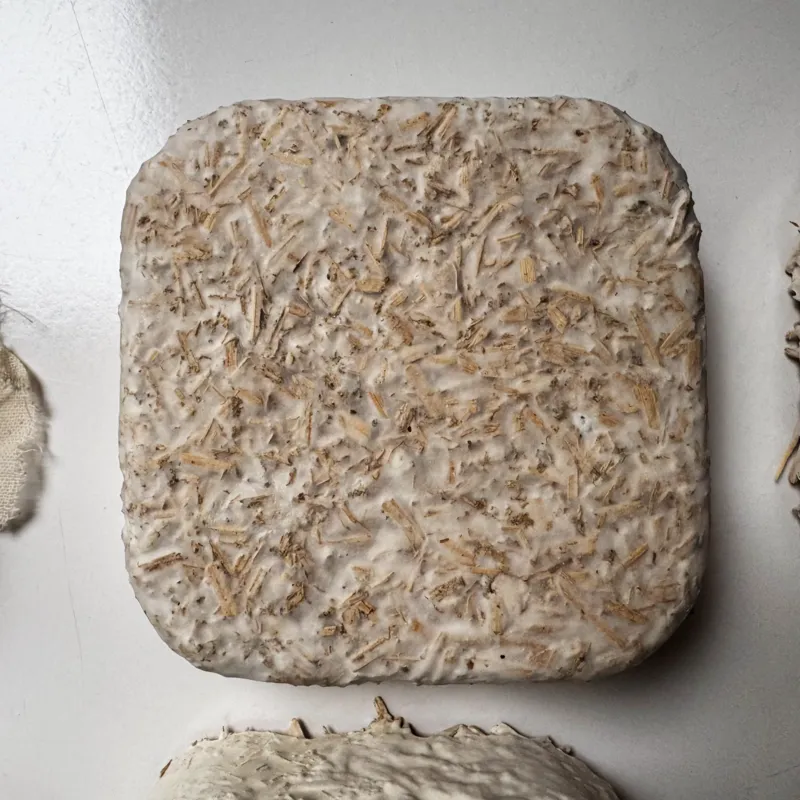
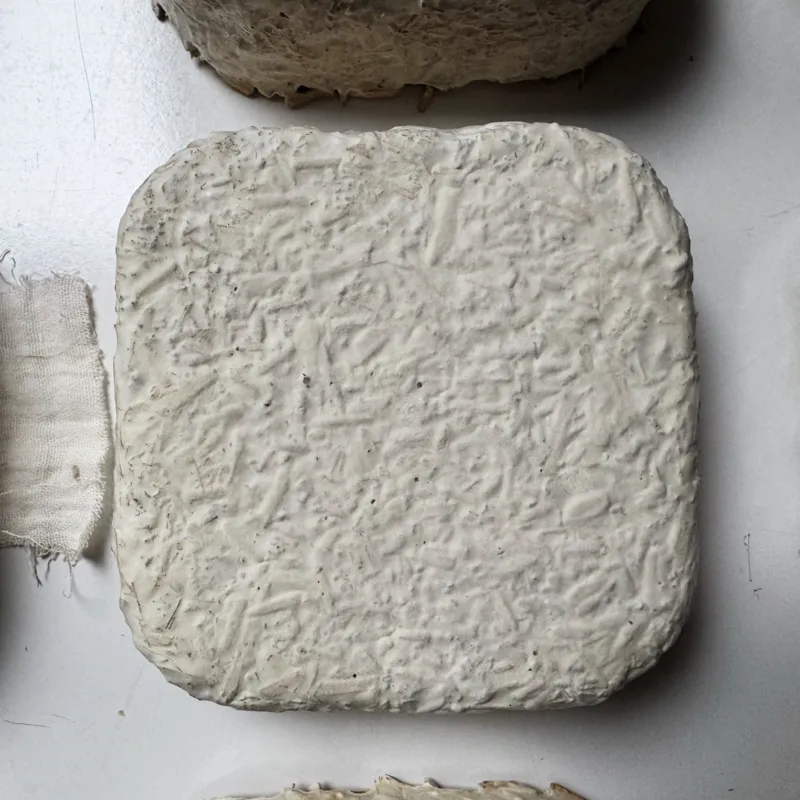
Standard mycelium composite protects well, but its rough hemp surface can shed particles, and on a Class A part that's a no-go. Over three weeks we grew 19 test samples of 10 × 10 × 3 cm in three groups and wrote up each one in an R&D report for Magna.
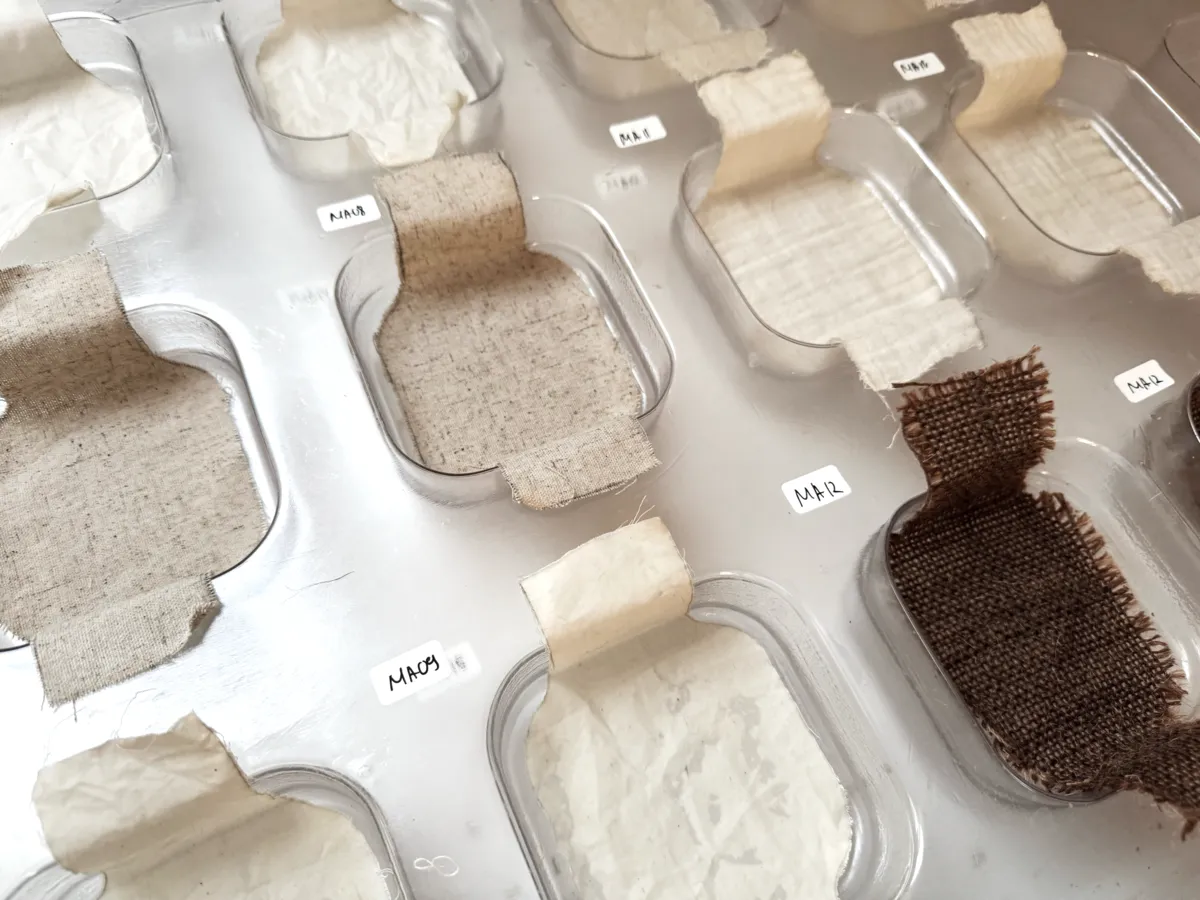
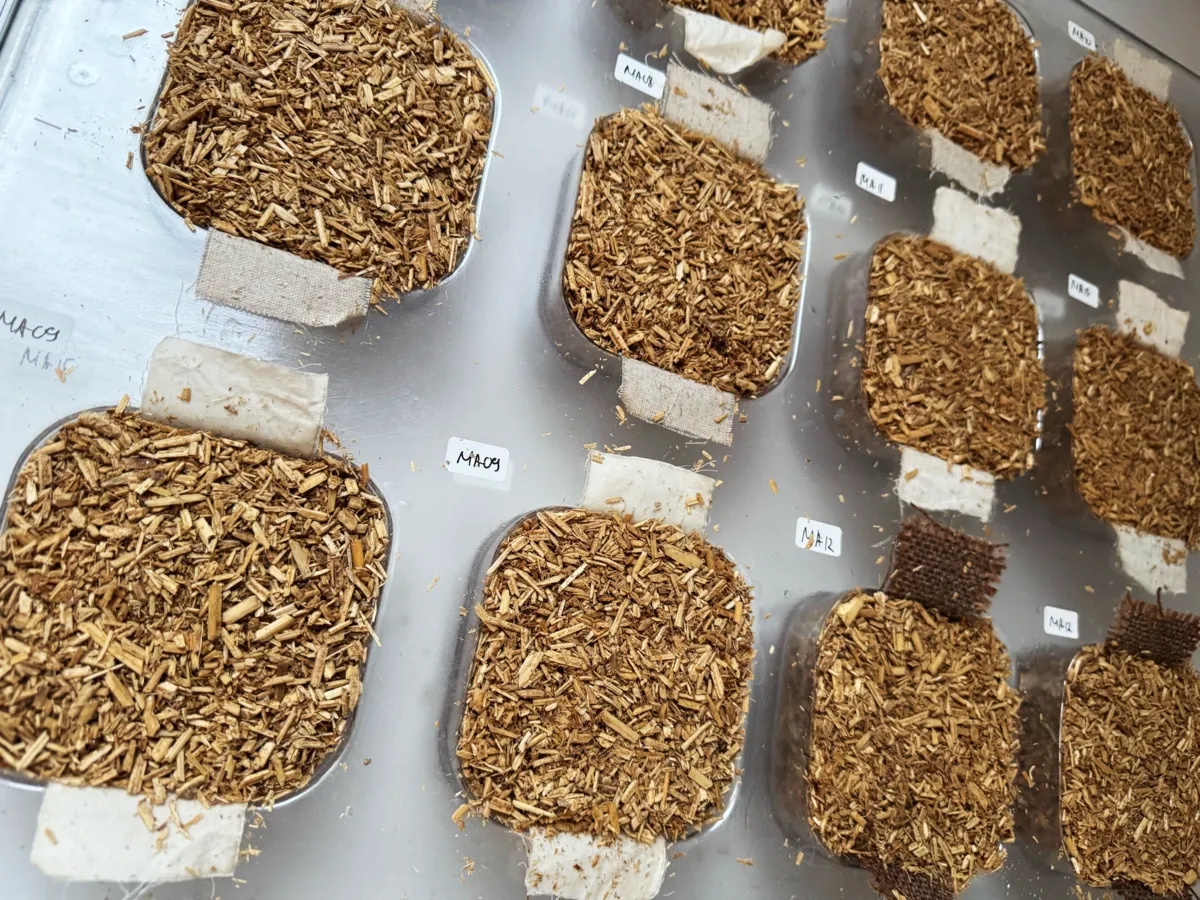
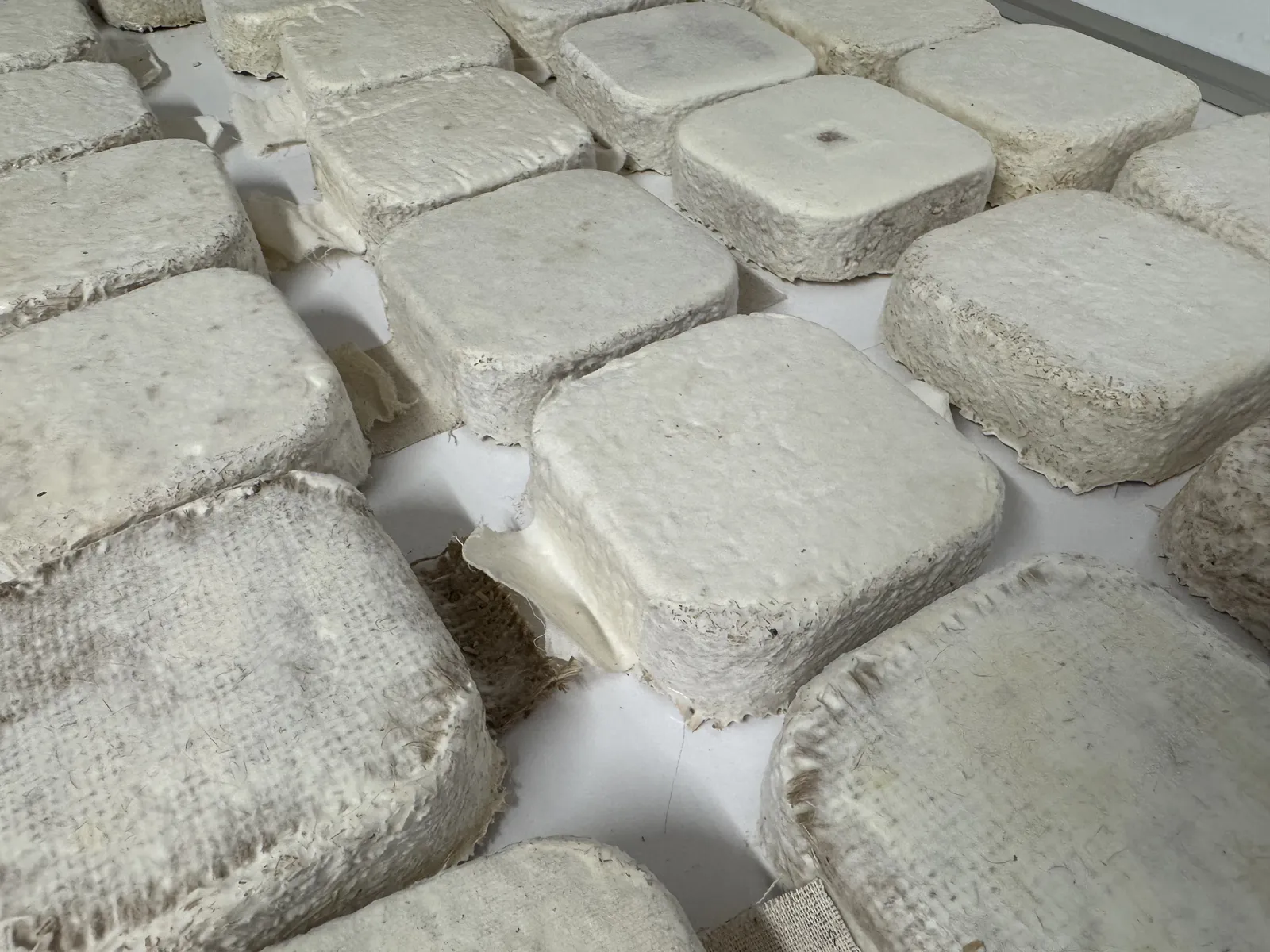
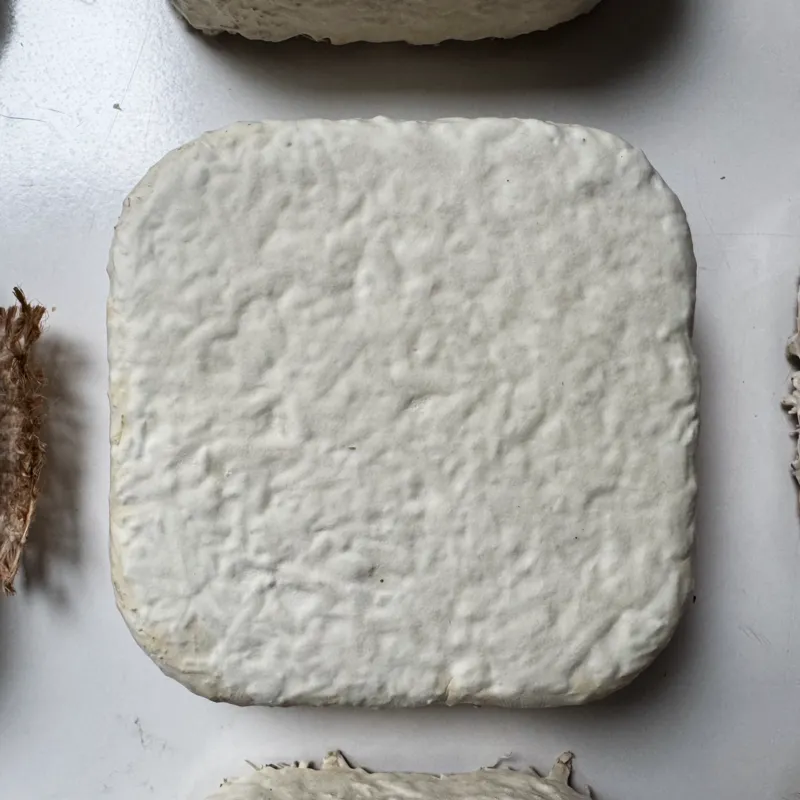
Group A · Density and surface study
Three densities, each with three surface finishes, from rough to soft.
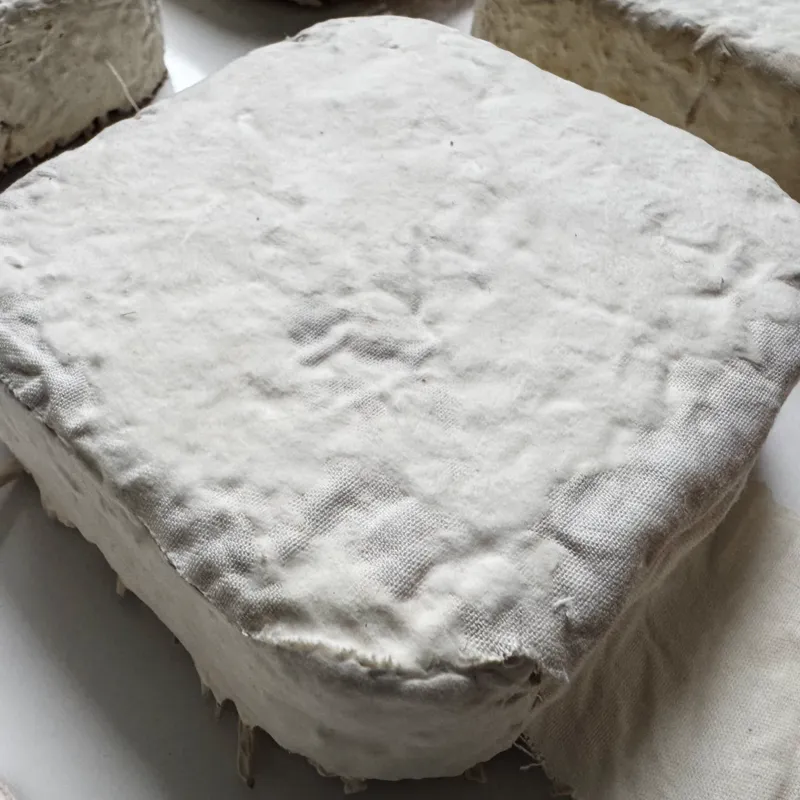
Group B · Natural fabrics
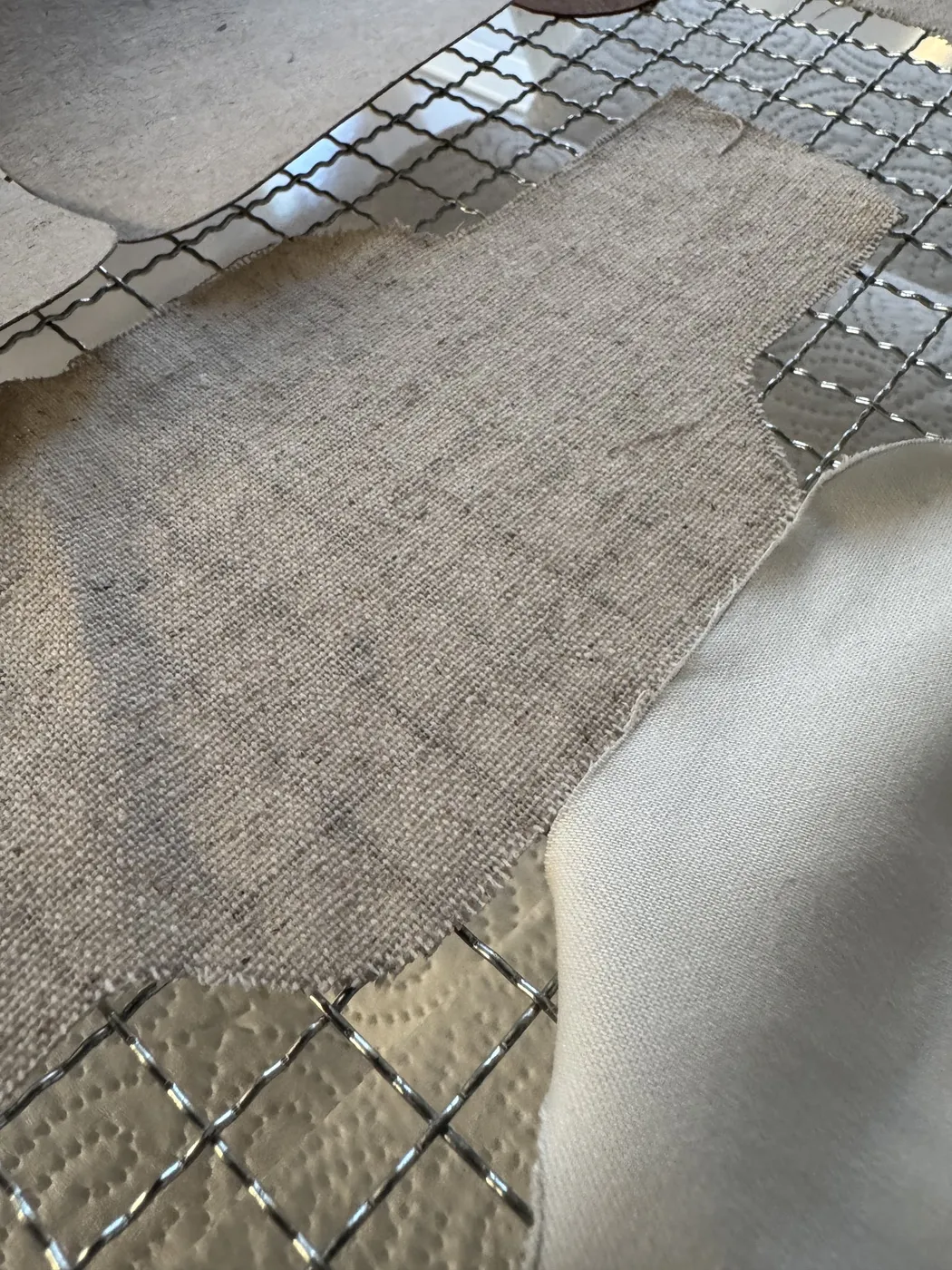
Six natural fabrics on the contact face, to make the surface scratch-safe and keep the particles in.
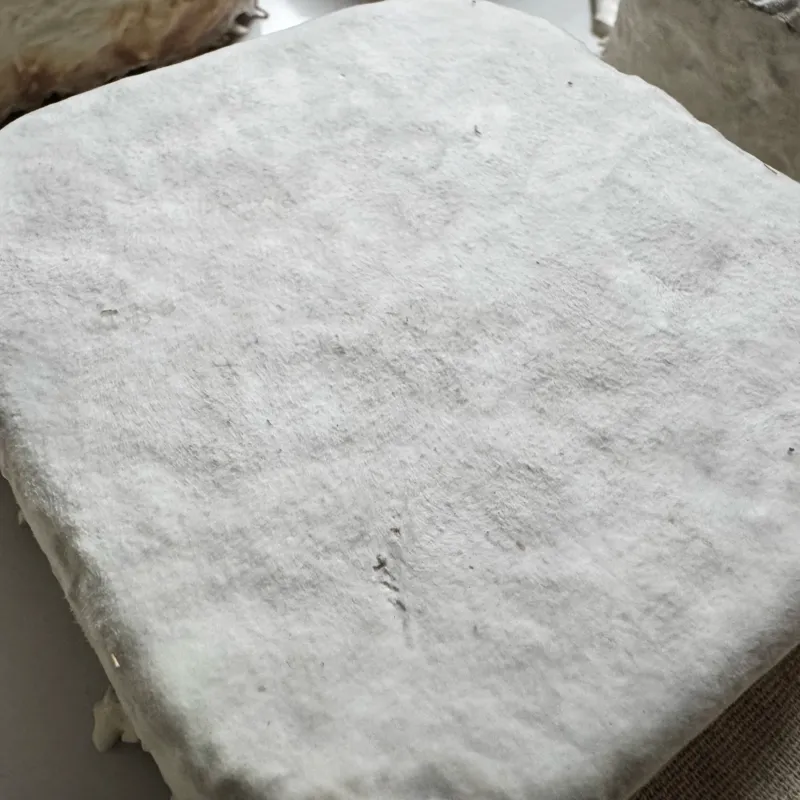
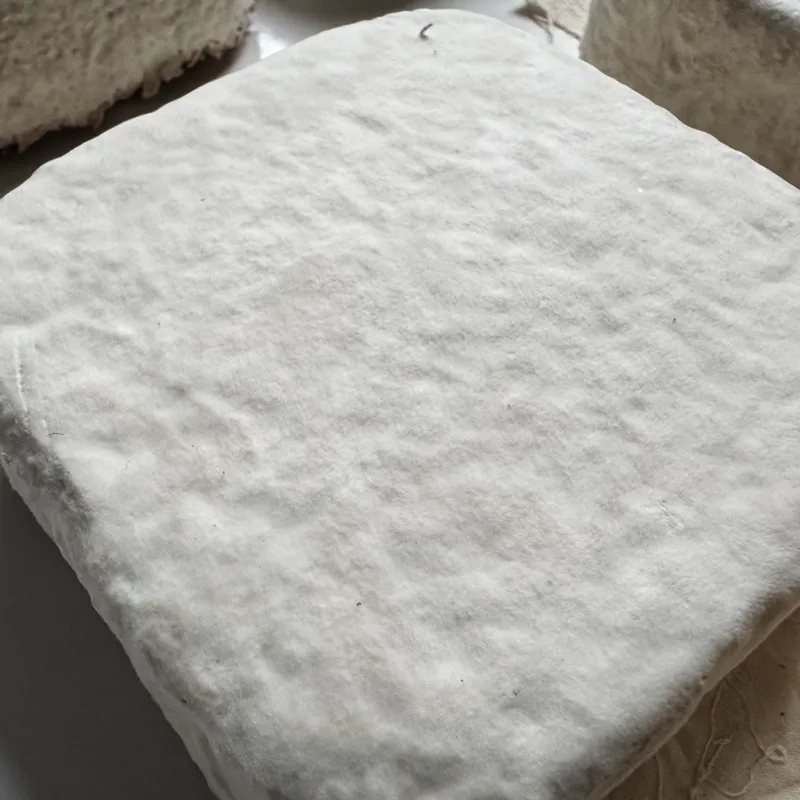
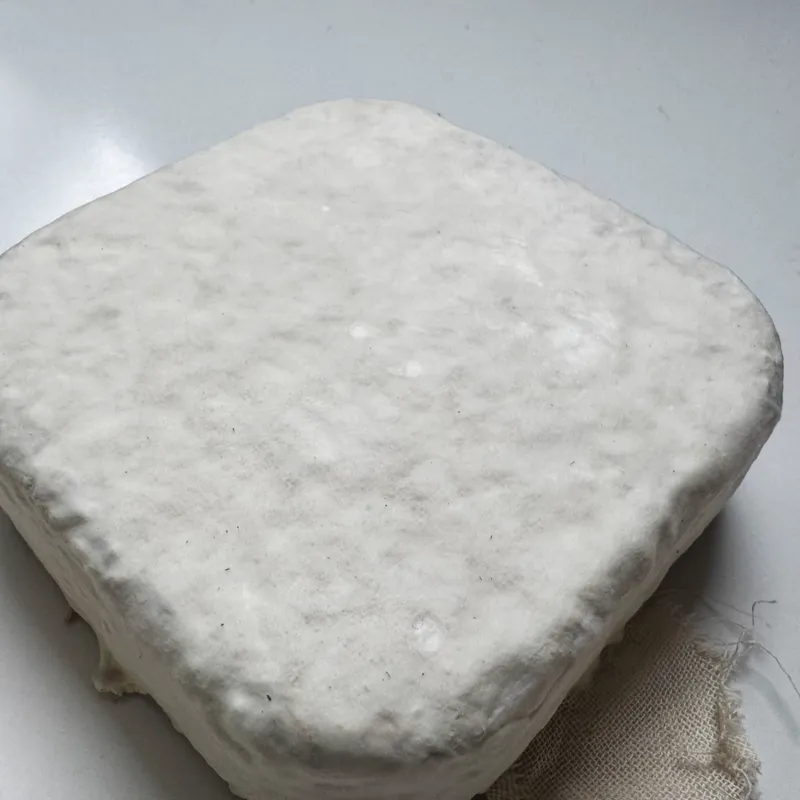
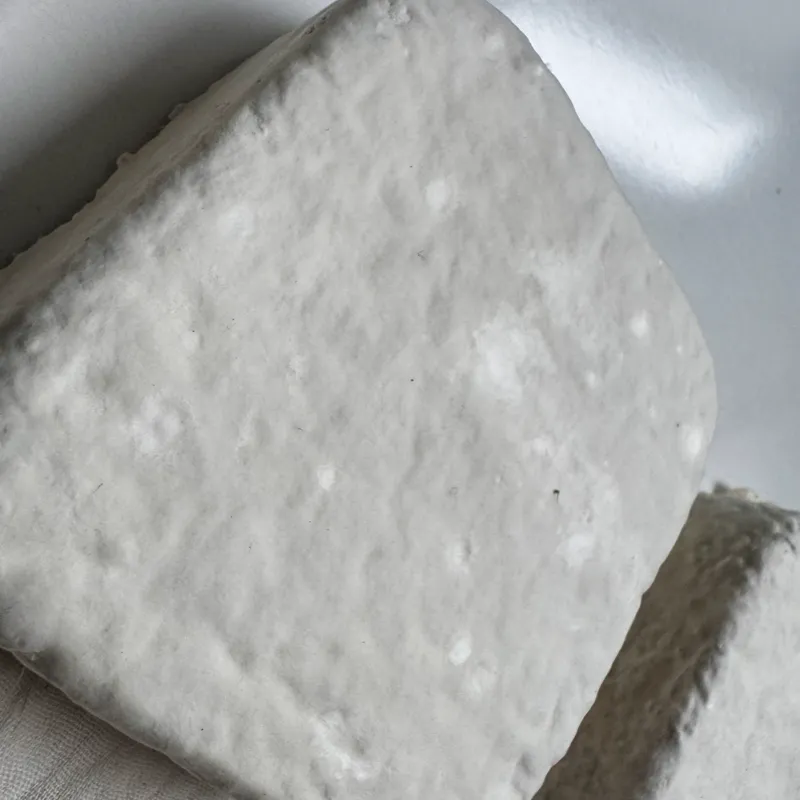
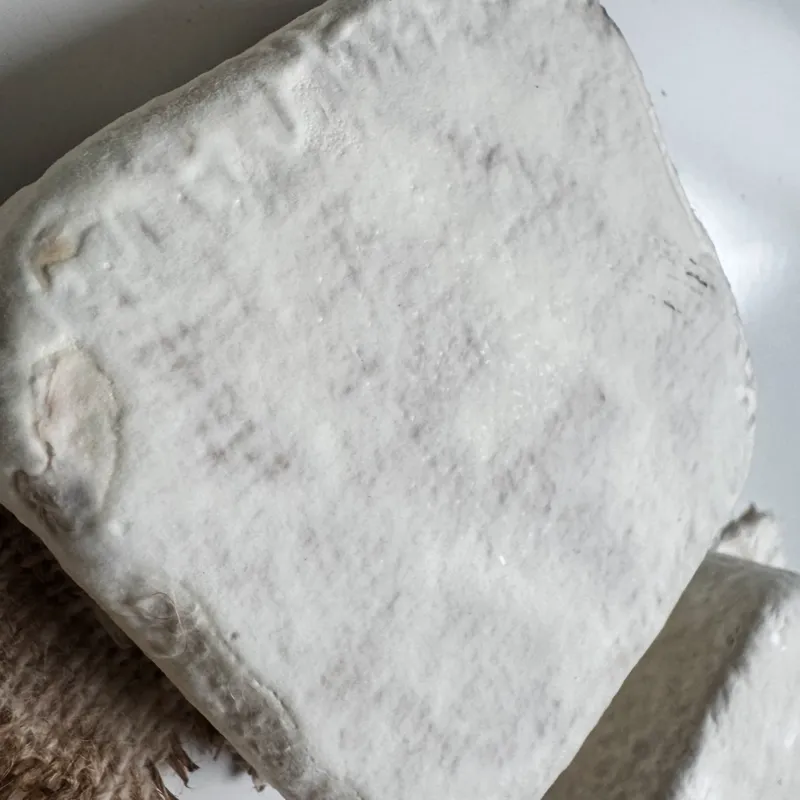
Group C · Other surface options
Two bio-based sheets, paperboard and a coating, as alternatives to fabric.
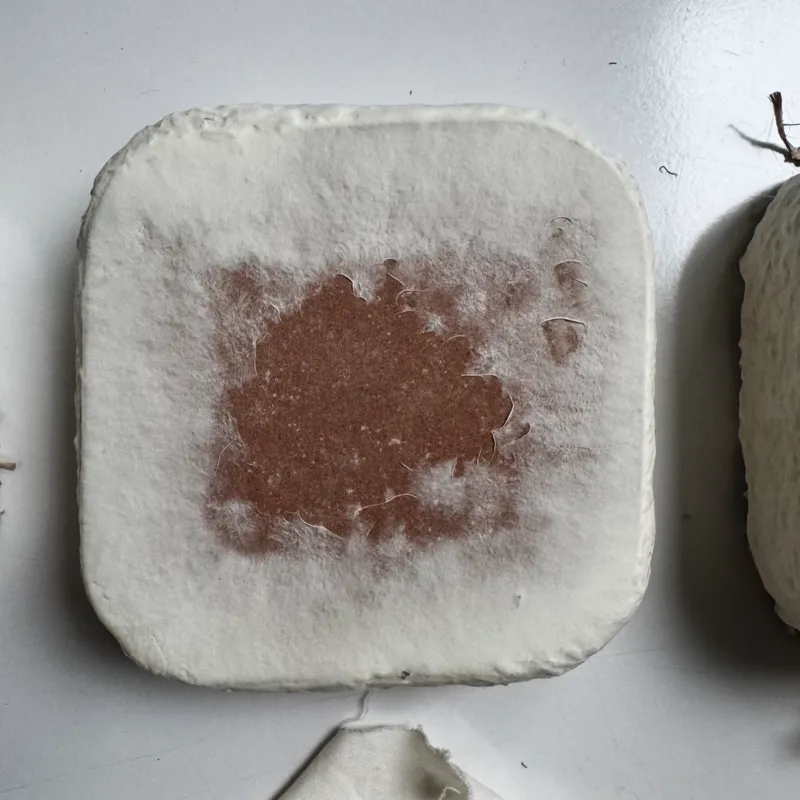
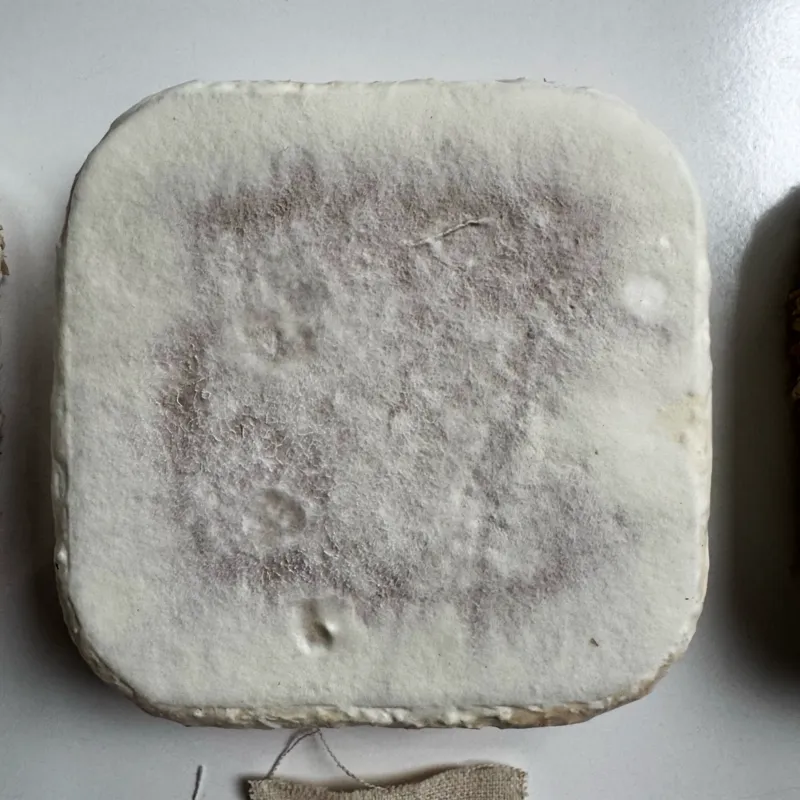
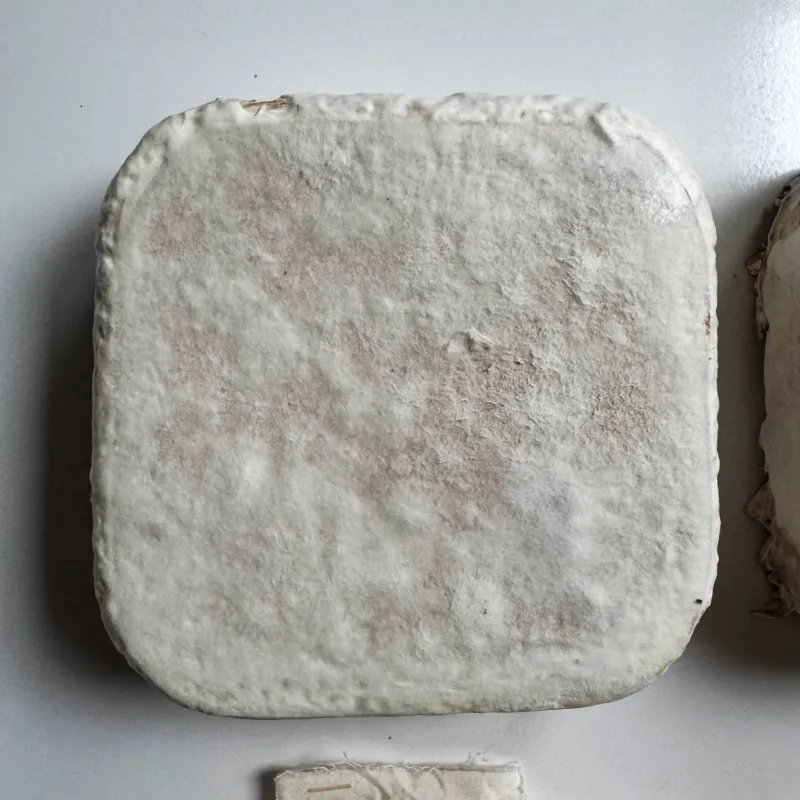
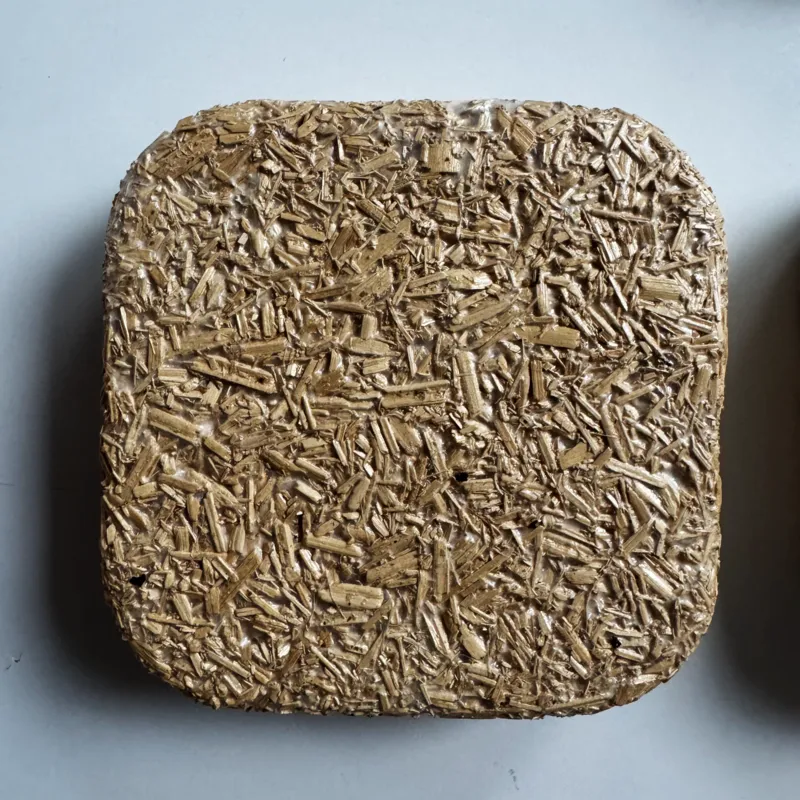
A fabric layer on the contact face reinforced the part and stopped flaking. The soft finish gave the best protection. That combination became the recipe for every surface that touches the lamp.
Five concepts, one clear winner
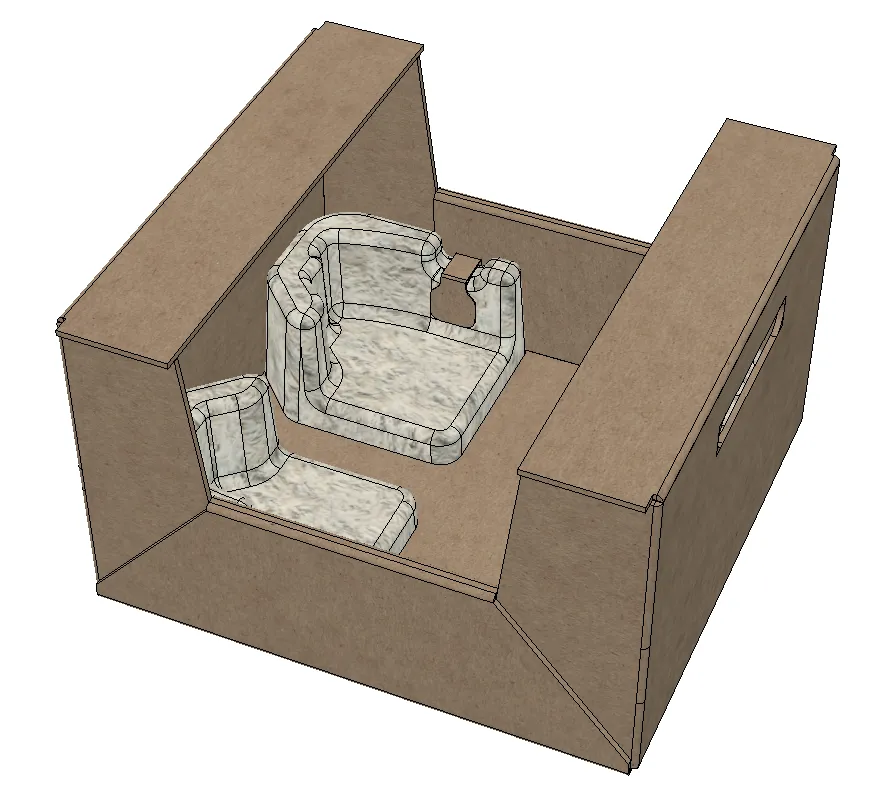
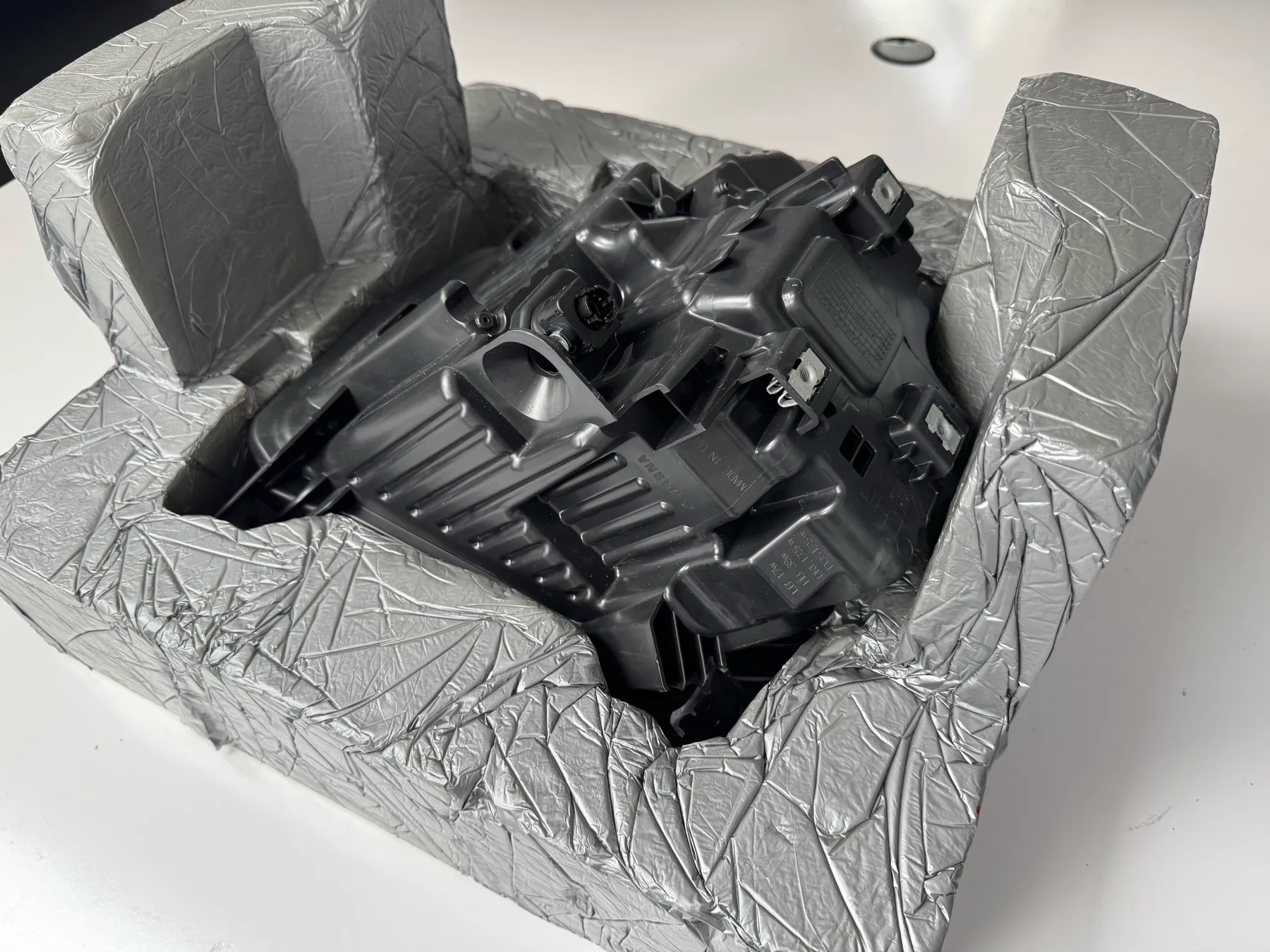
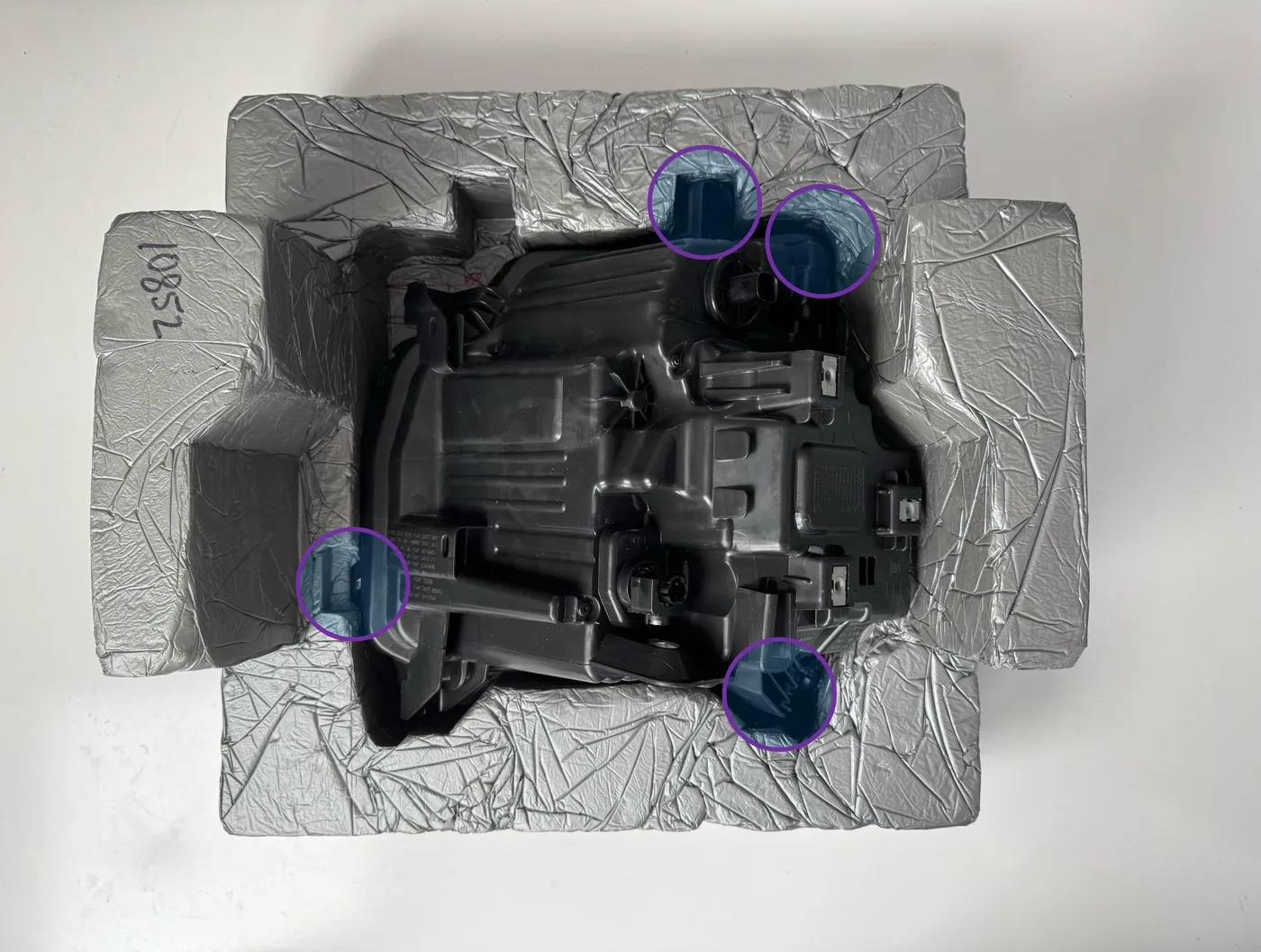
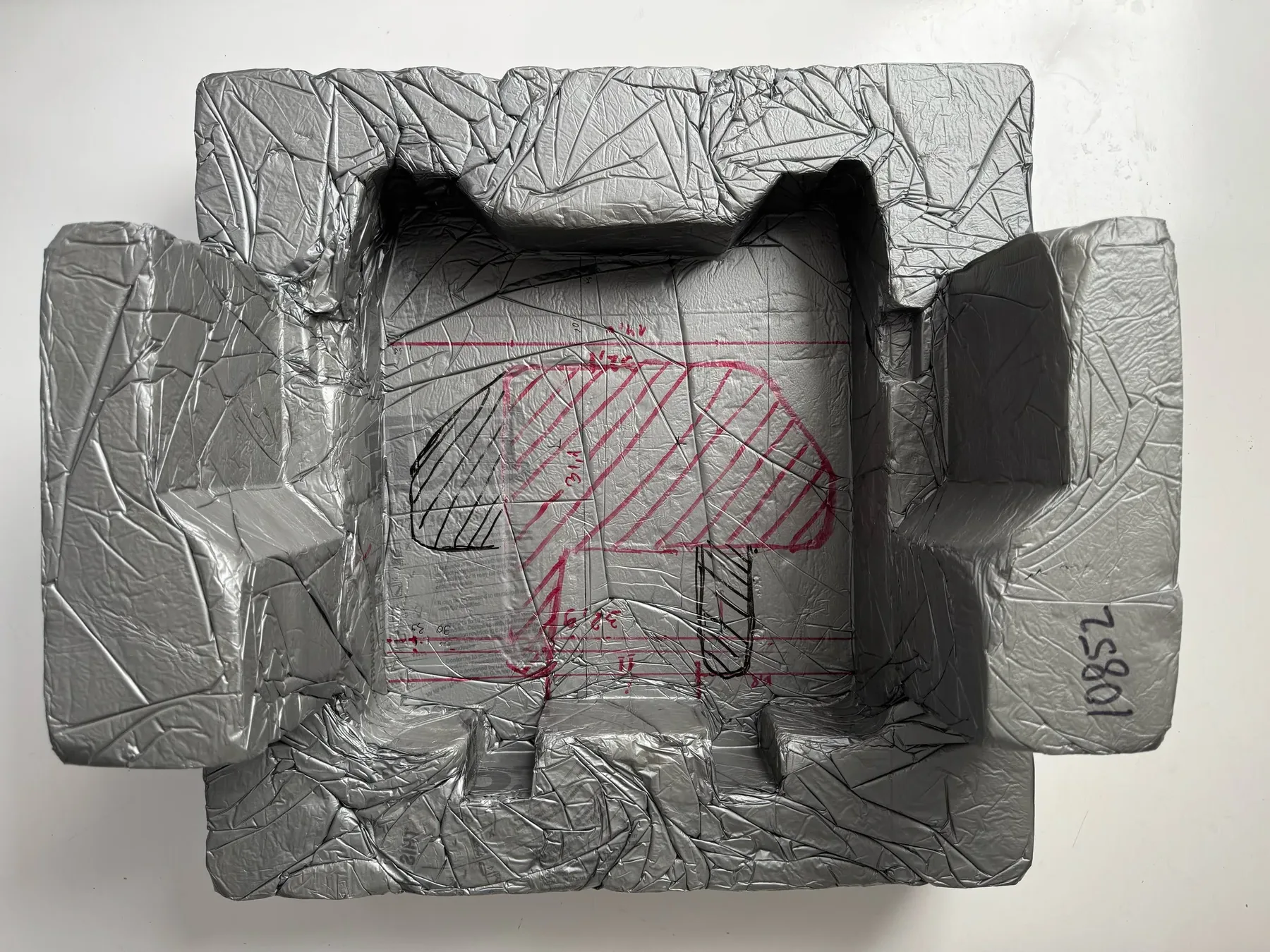
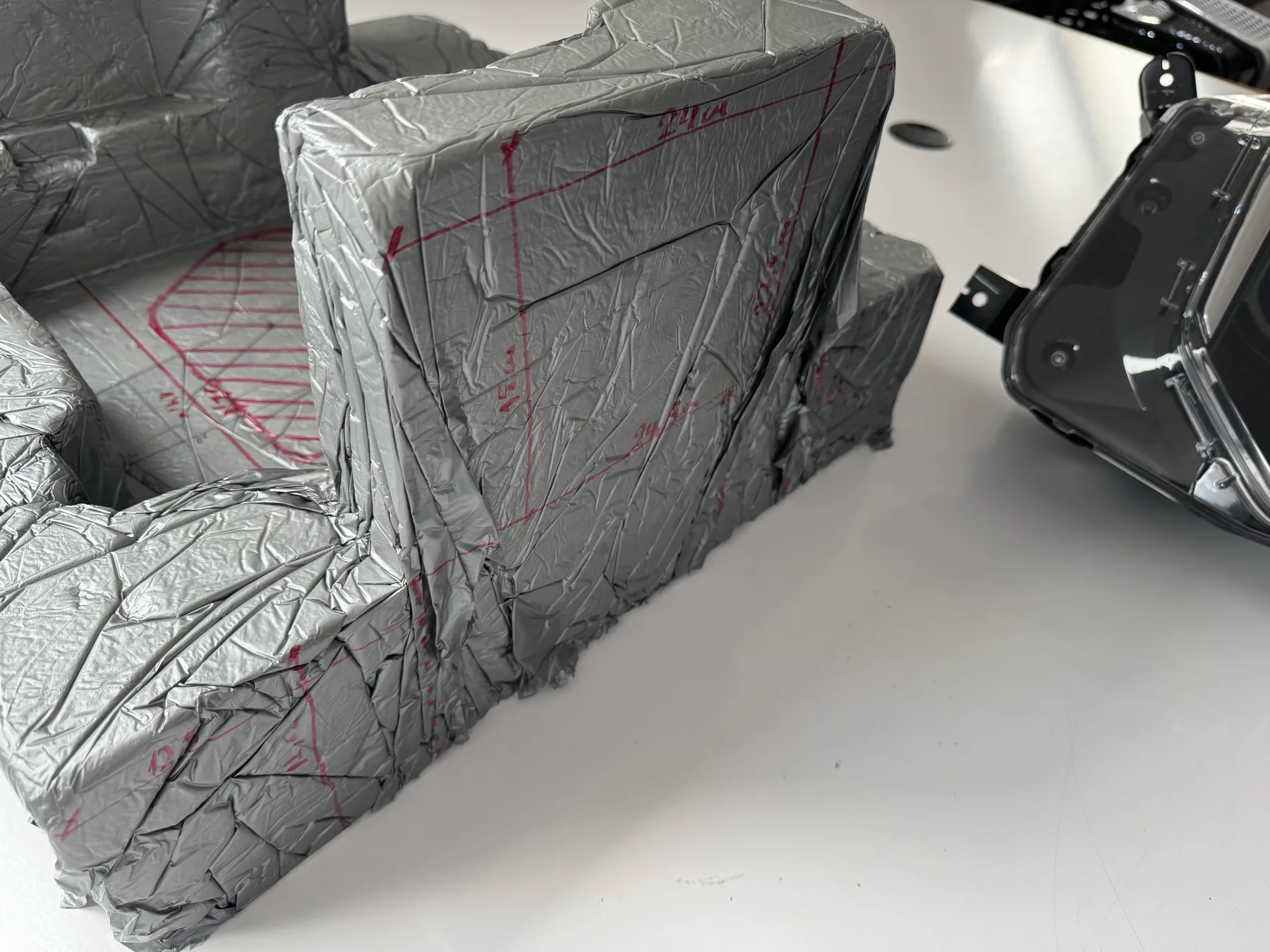
The carmaker had no CAD for its own pack, so Magna sent us a headlamp and the original foam base. We rebuilt both in 3D and designed five concepts. For each one we showed Magna the material volume, how easy it is to produce and what it would cost.
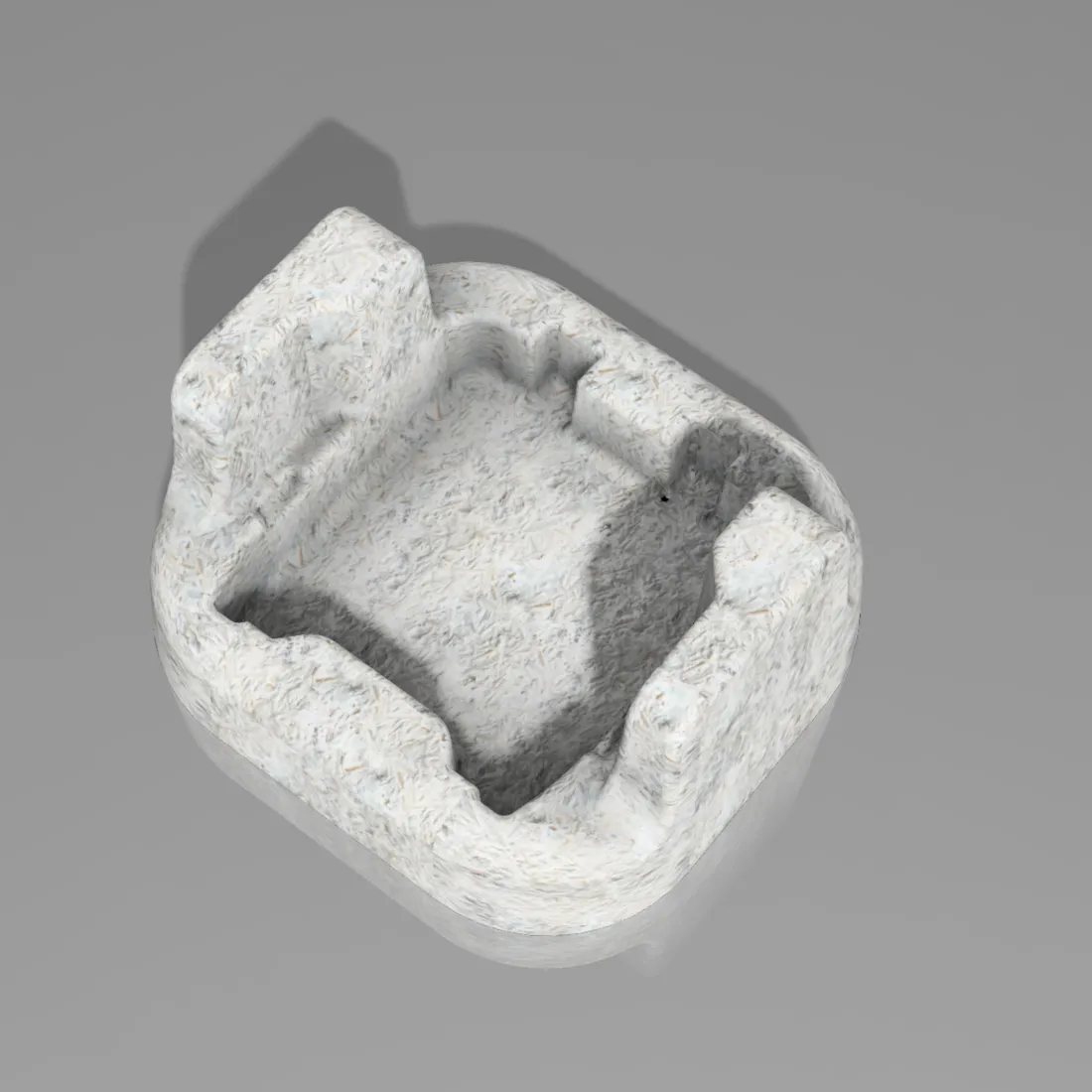
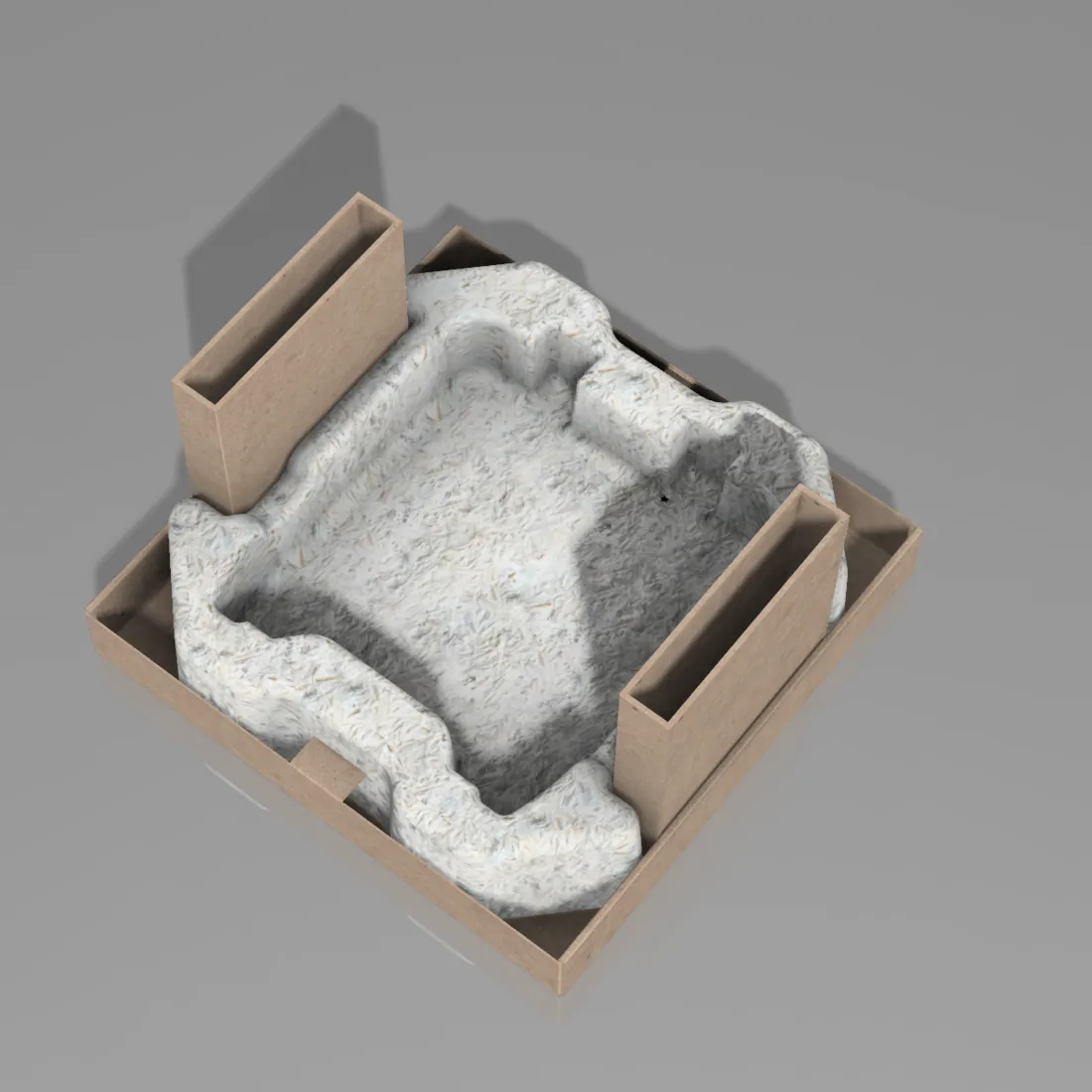
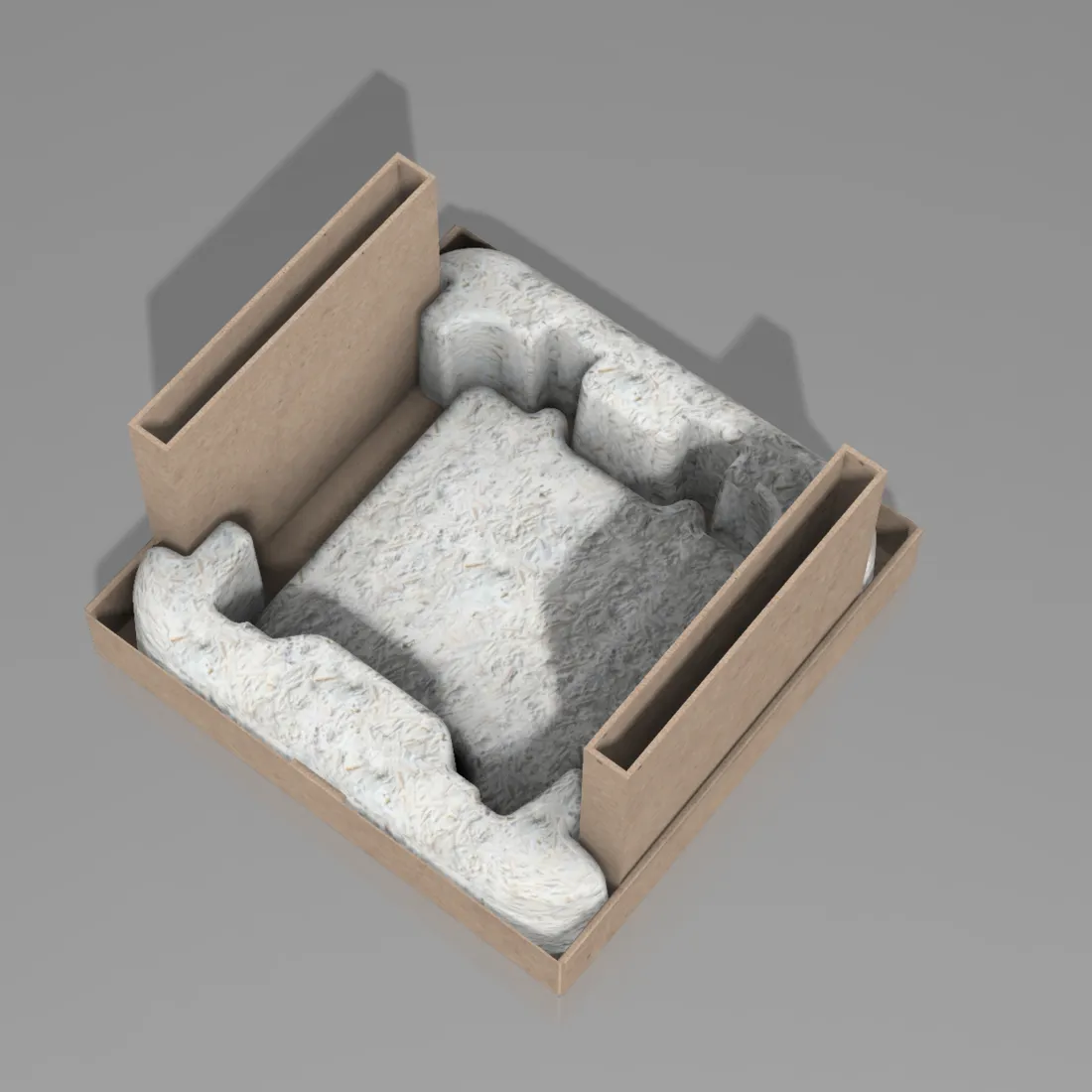
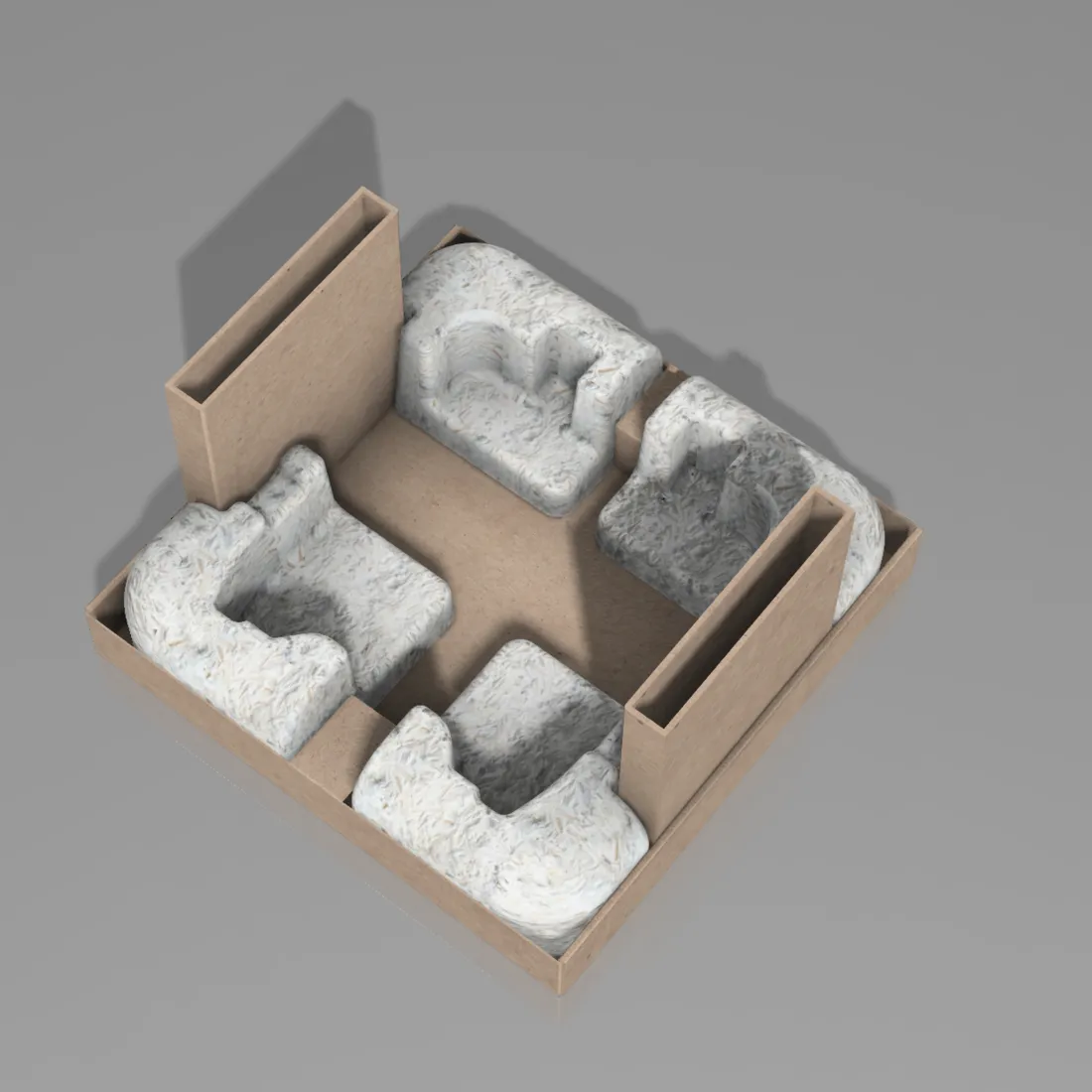
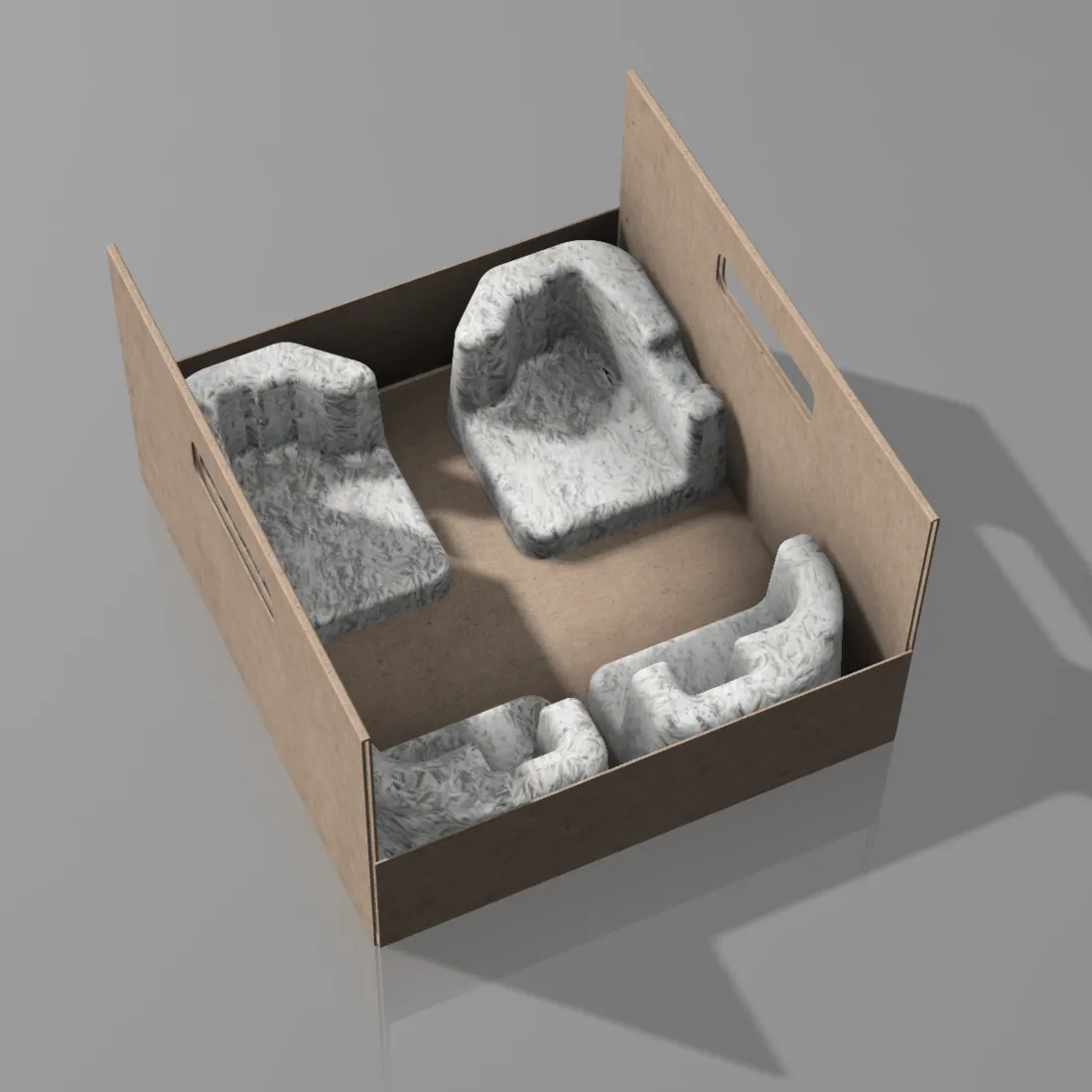
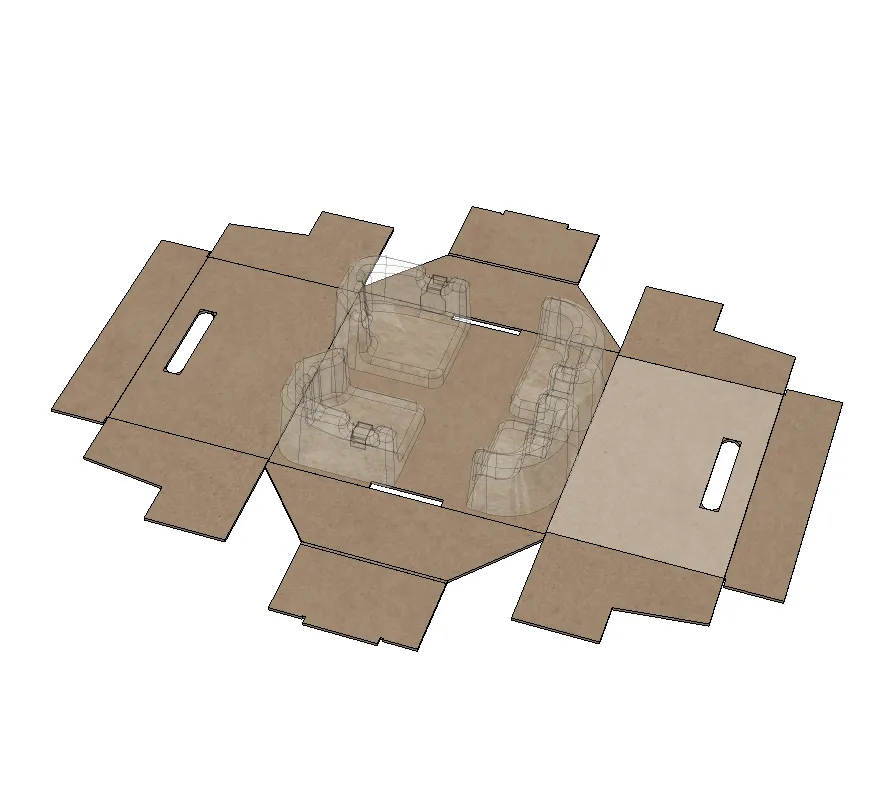
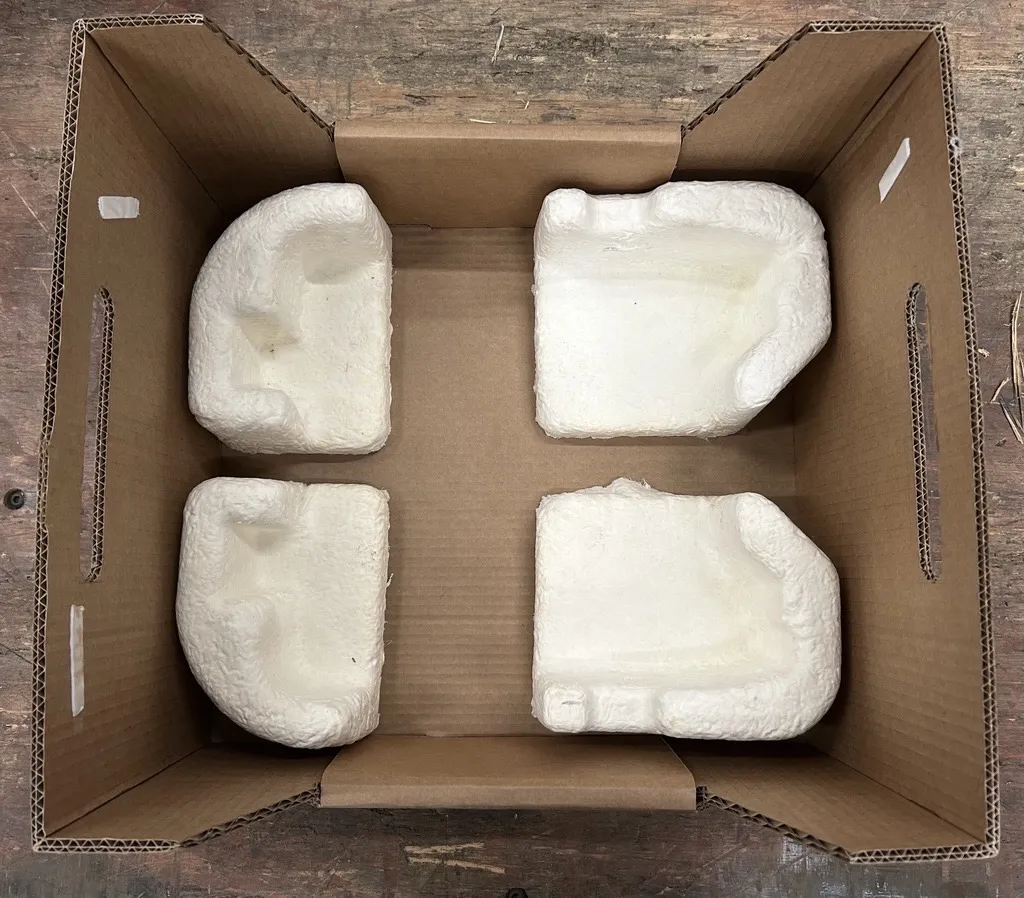
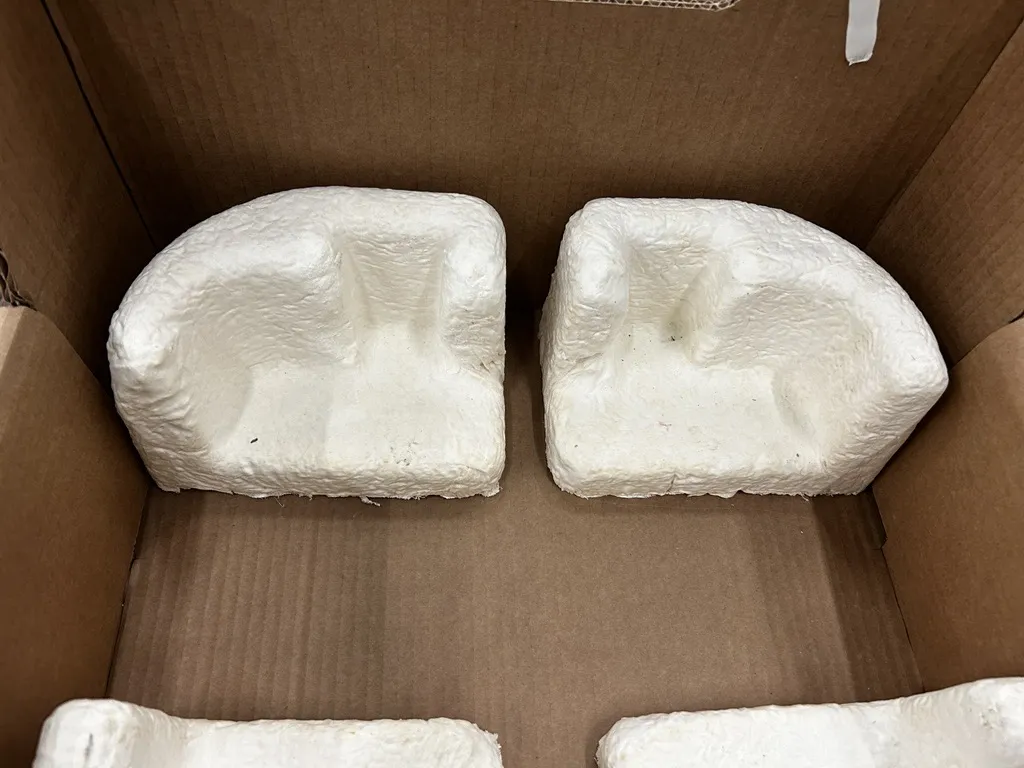
Concepts 4 and 5 went to prototyping. Small inserts grow faster, need smaller tools and pack flat for shipping.
Two prototypes, fit-tested on a real lamp
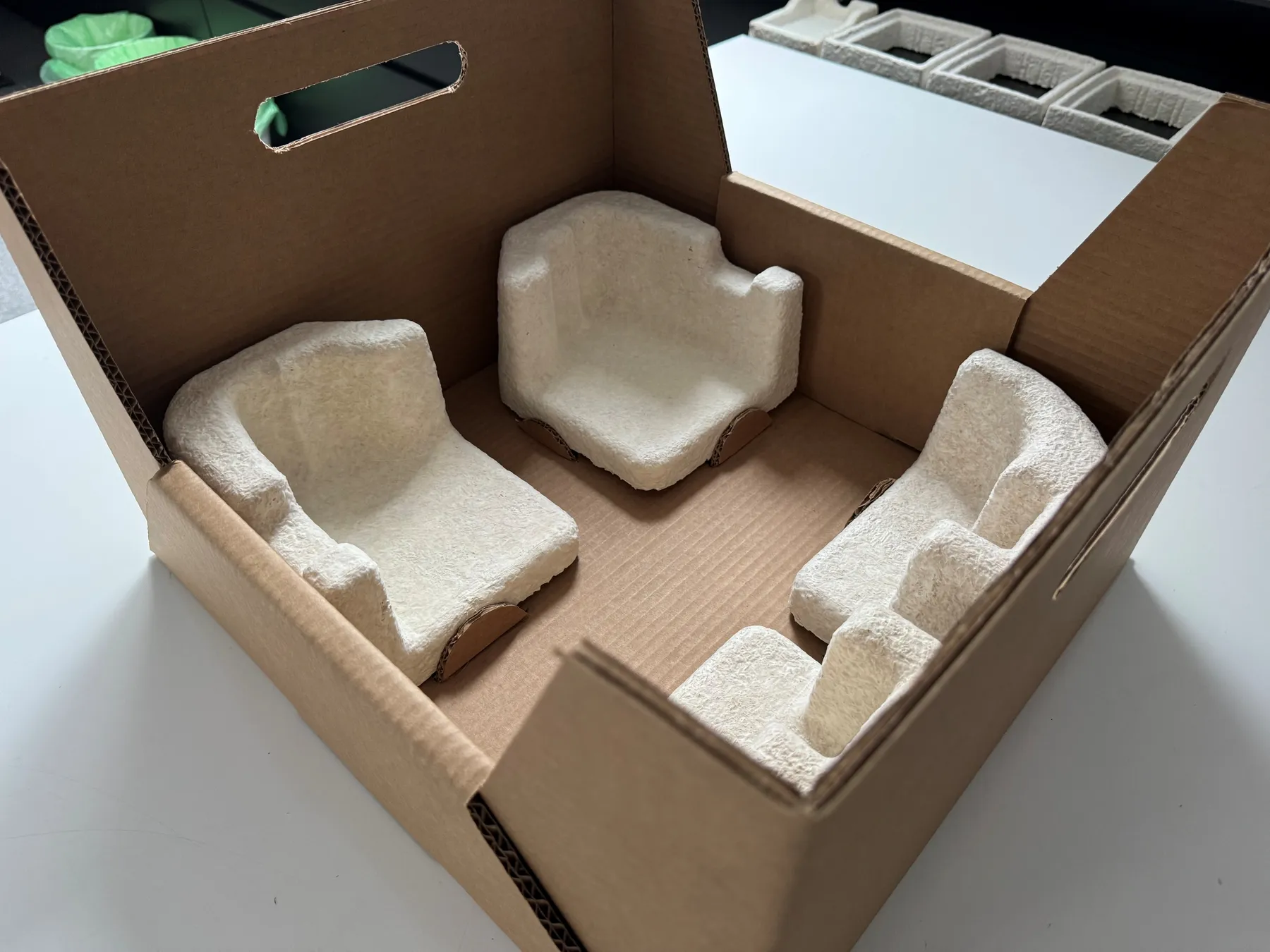
We grew both concepts in parallel, fit-tested them with the headlamp in our office and shipped them to Magna's lab in Michigan in October 2025, together with the test samples and the R&D report.
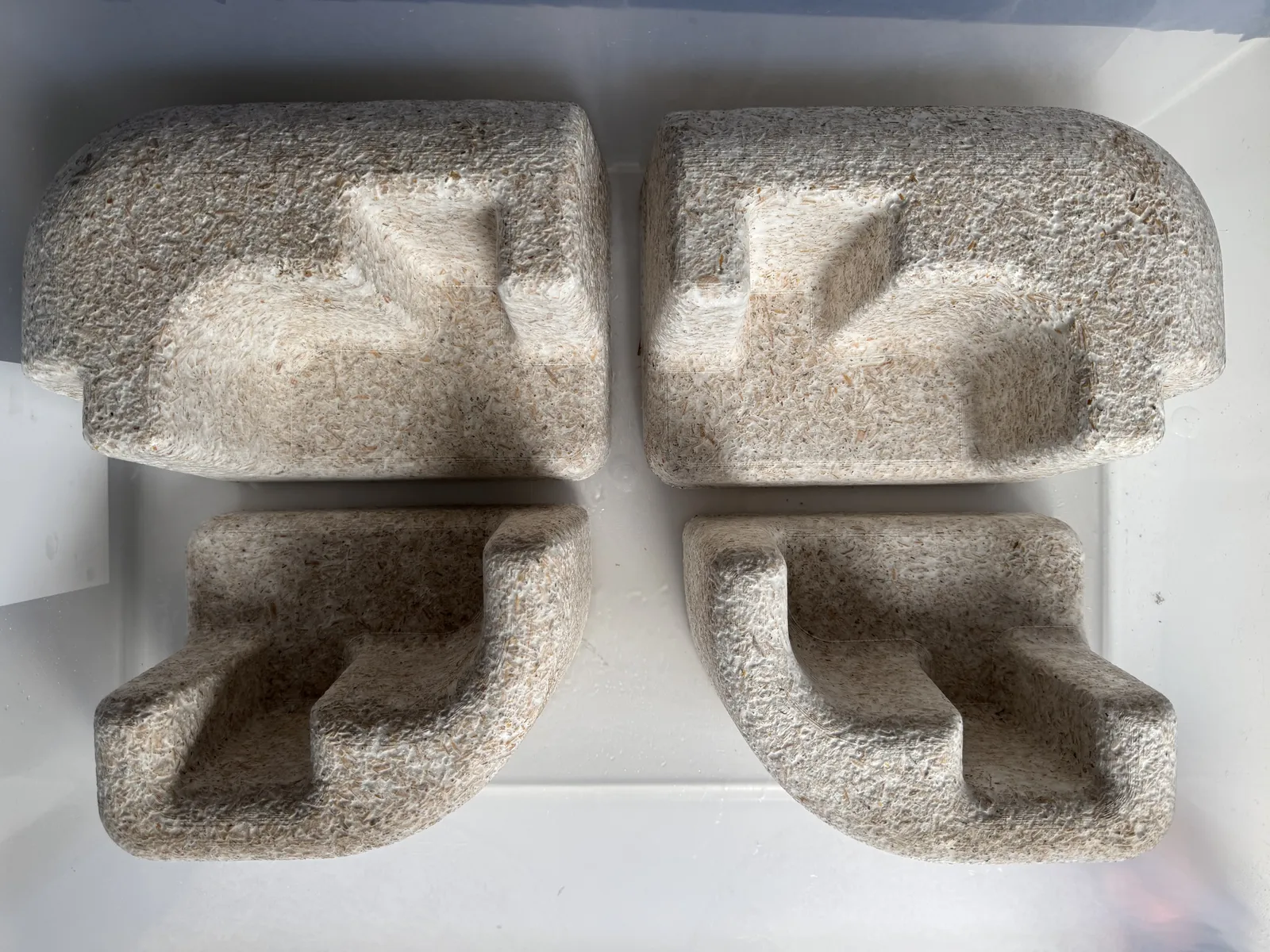
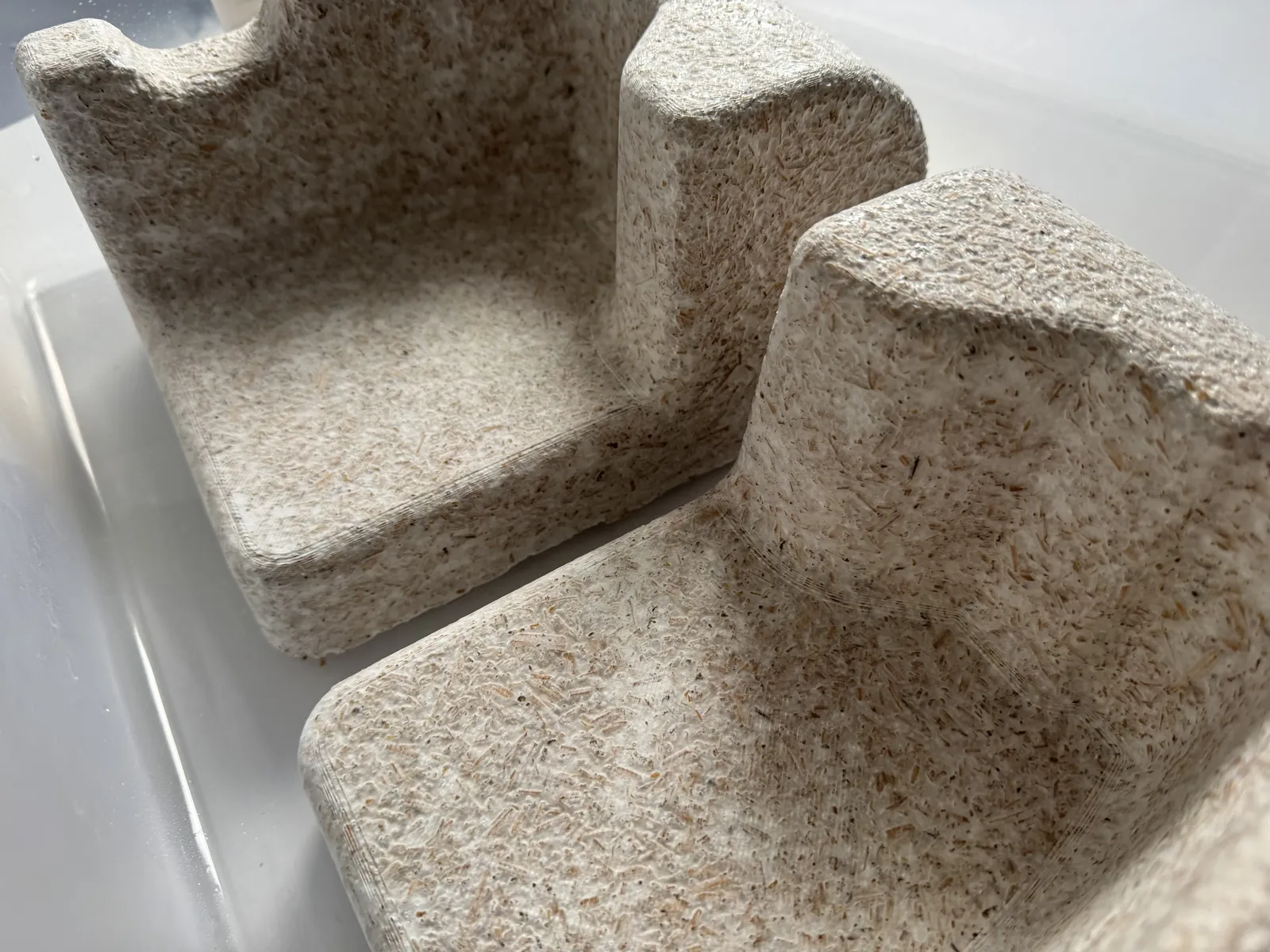
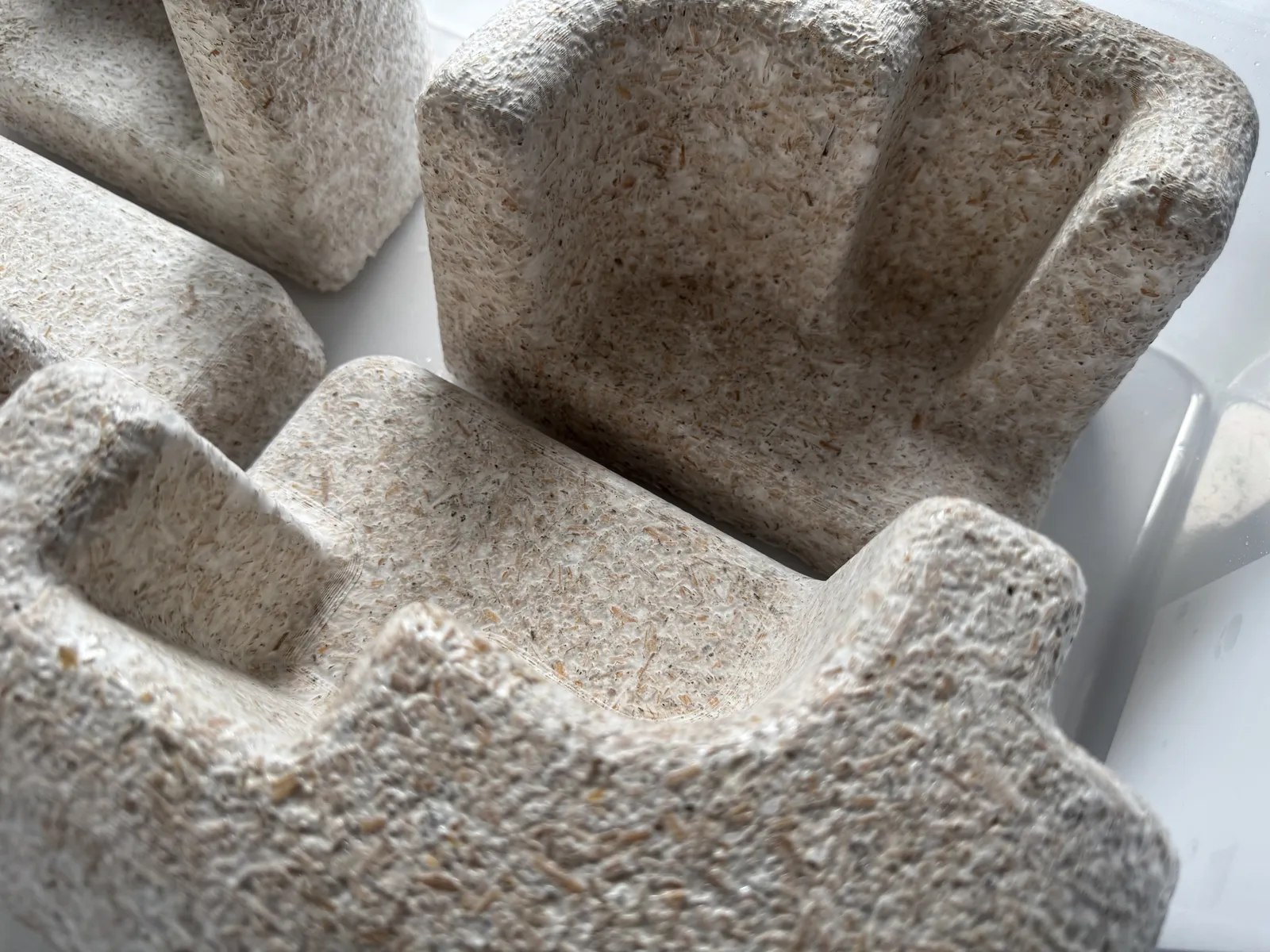
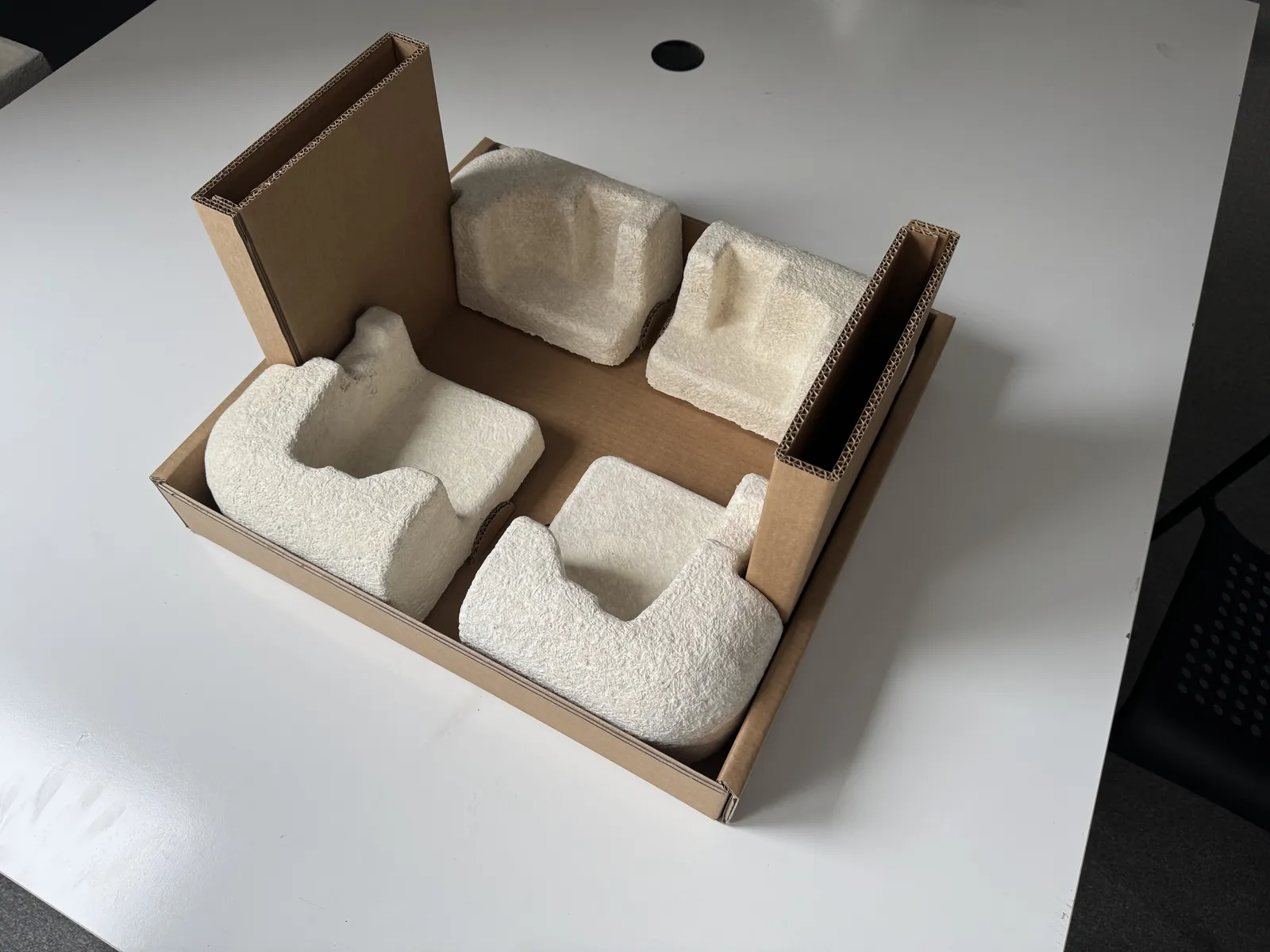
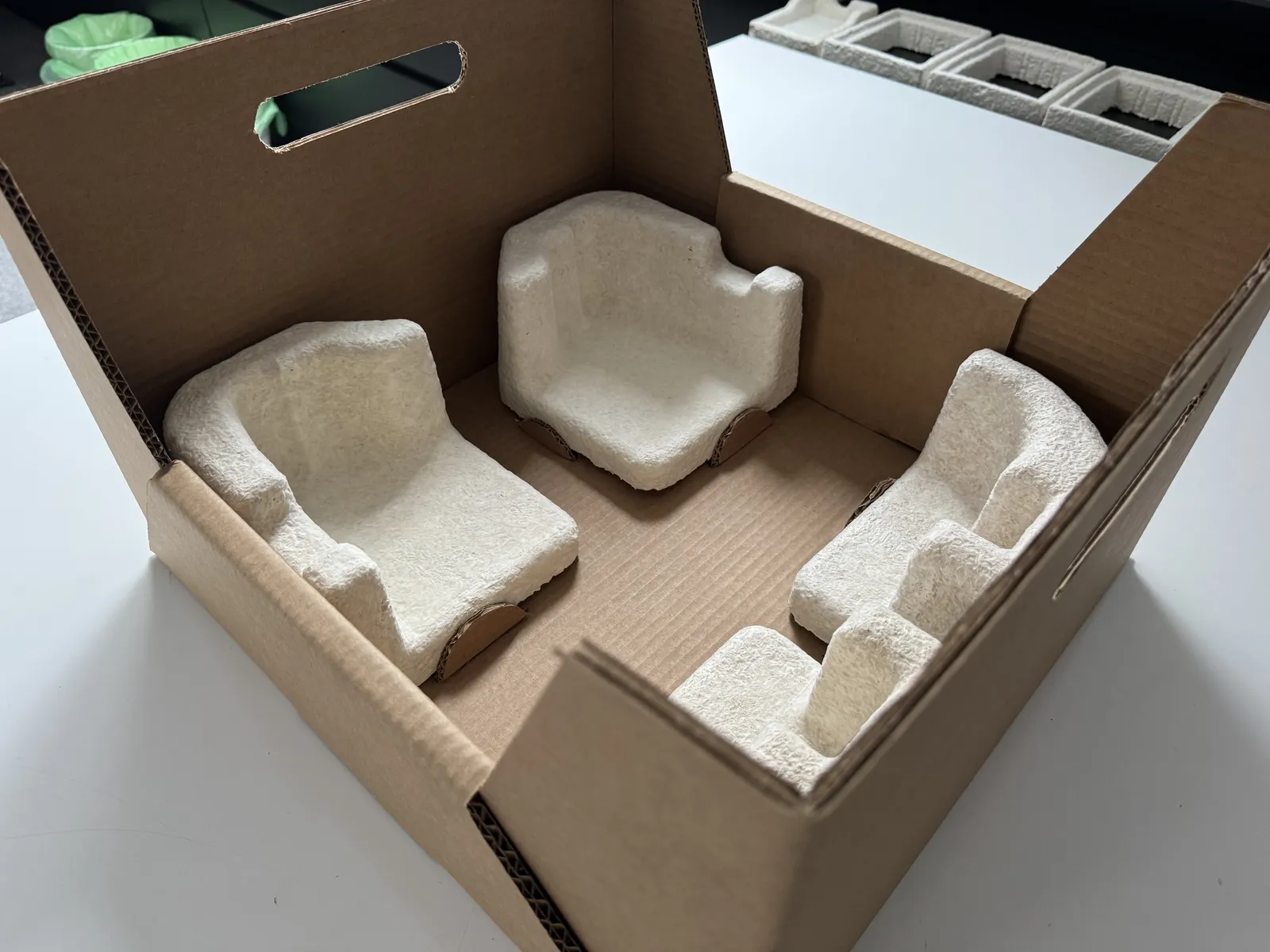
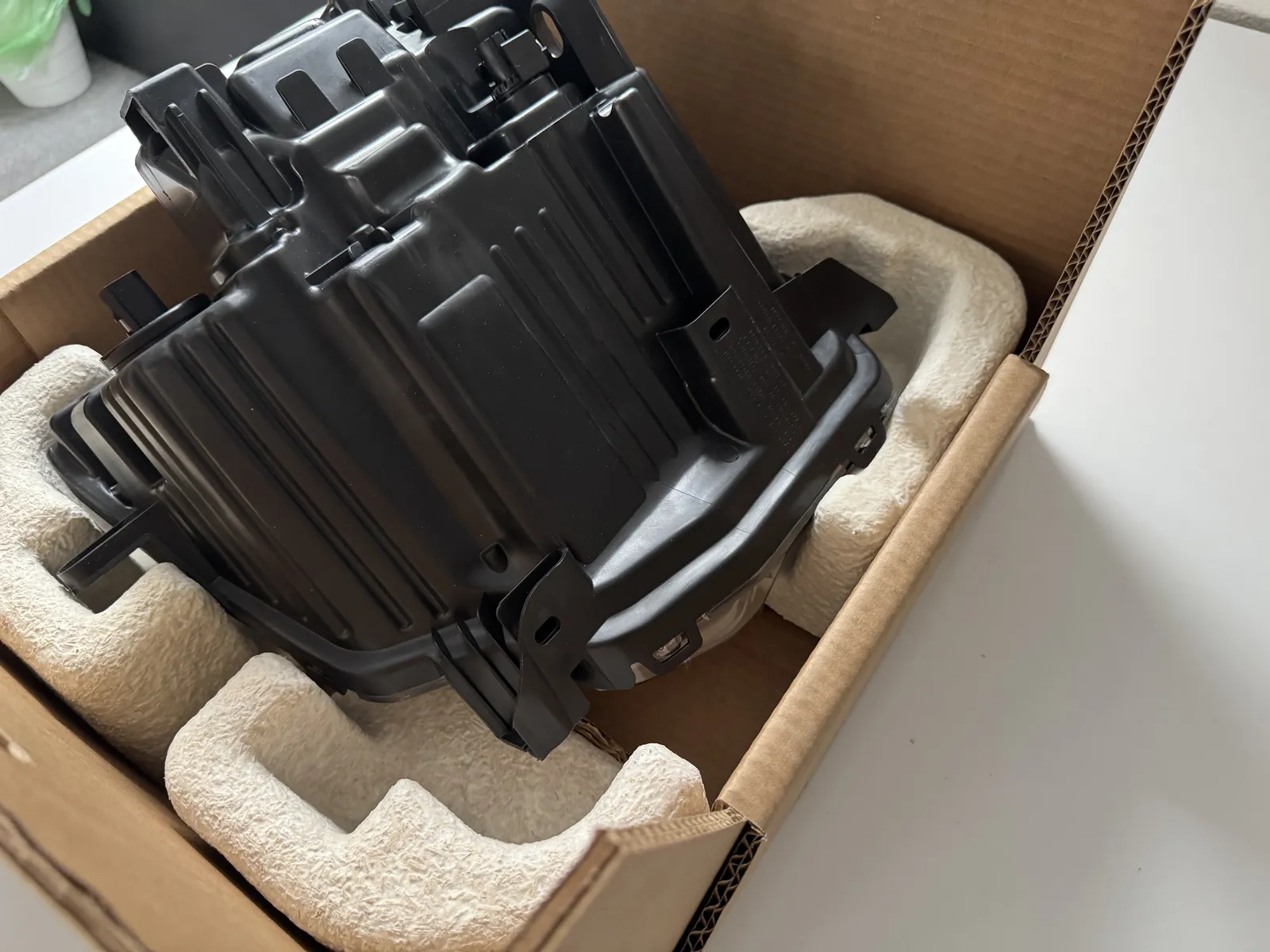
What Magna checked, and what we changed
Magna's R&D and packaging teams tested the prototypes and samples for smell, pests, fit and scratching.
| Check | Result |
|---|---|
| Smell | Odour neutral |
| Pests | Passed. Not eaten or damaged |
| Fit | Both prototypes fit the headlamp |
| Assembly | Placing inserts by hand was too slow for a plant line, so the box was redesigned to fold around them |
| Scratching | The plain surface could mark polycarbonate. Samples with the fabric layer did not |
Prototype 2 got the fabric layer on every surface that touches the lamp, plus the soft finish, in a conventional box layout that Magna's plants would accept.
A surface soft enough for Class A
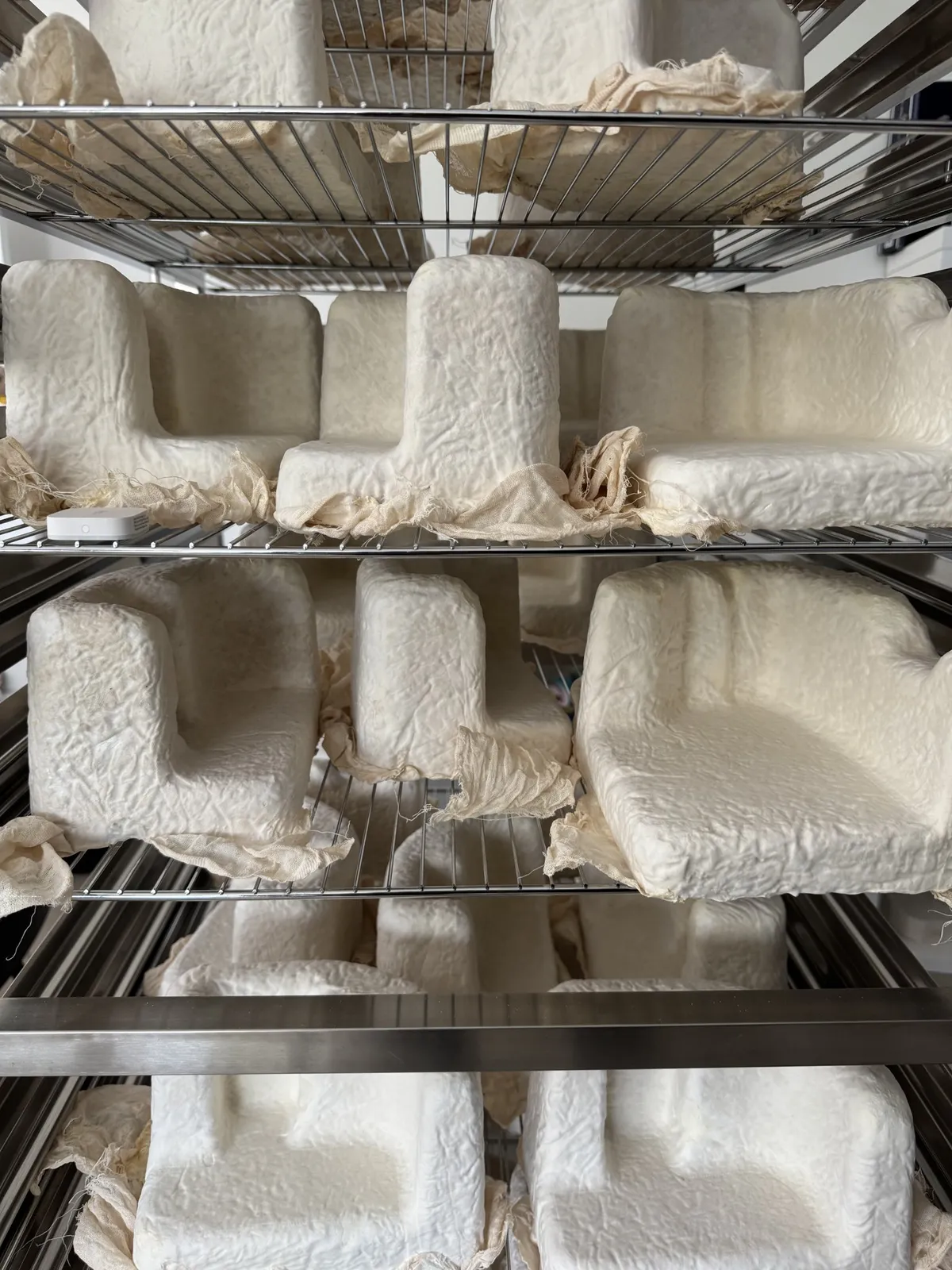
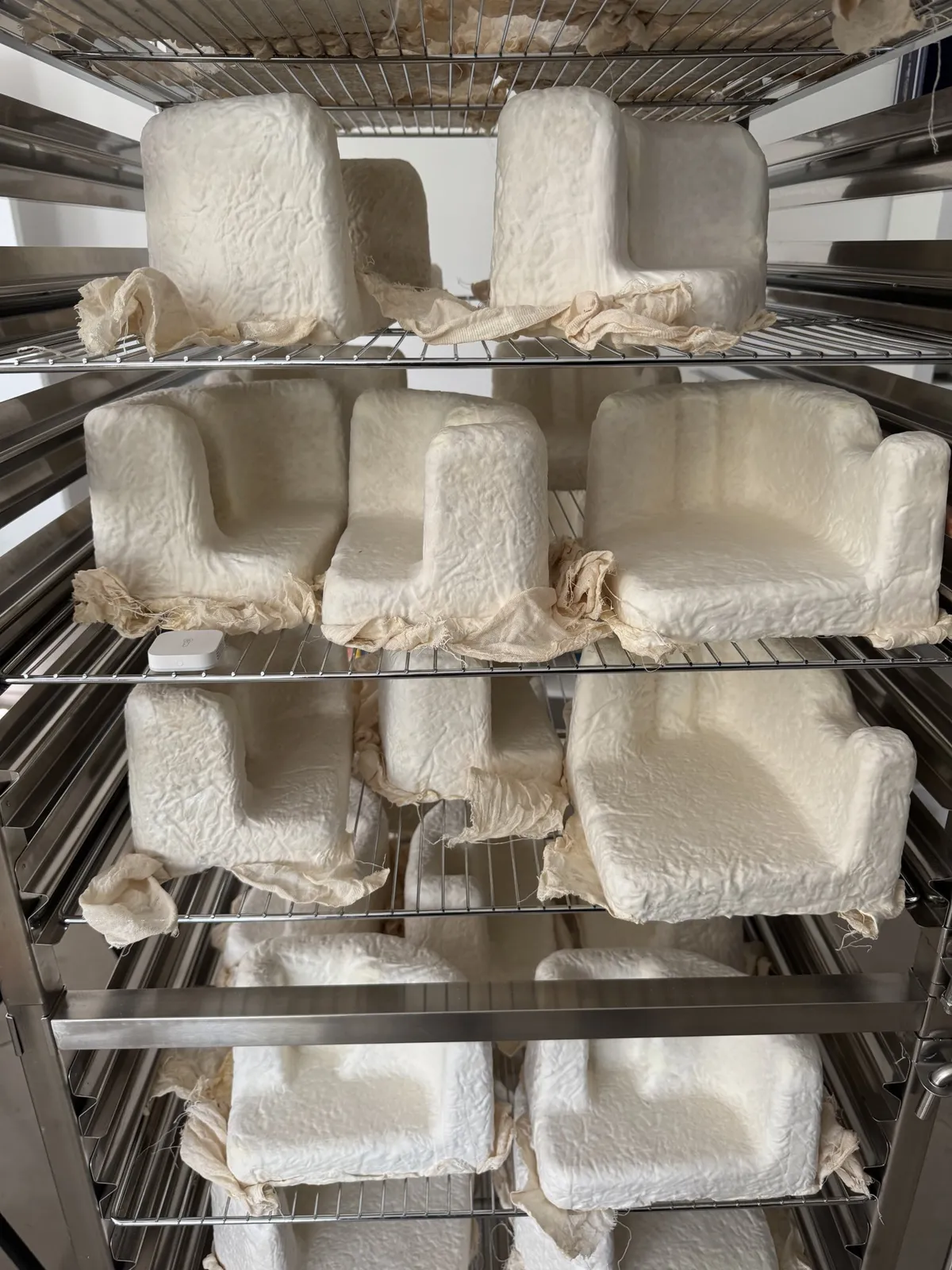
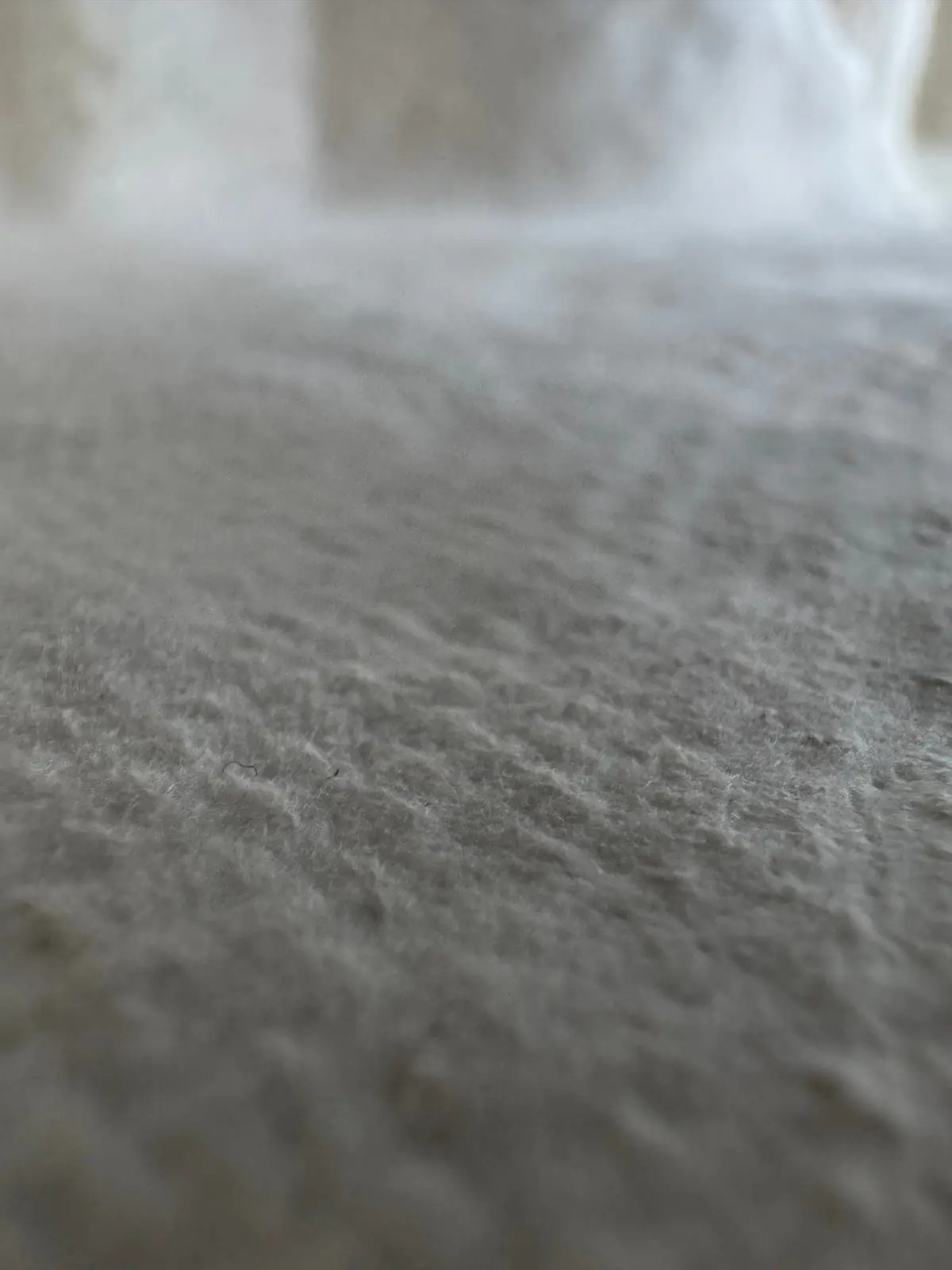
The fabric is laid into the mould and the mycelium grows through it, so the whole contact surface is covered. It holds the particles in place and feels like velvet.
Magna's packaging director liked the recipe and the design, and sent the pack straight to full ISTA 3E testing instead of a separate shake test.
500 miles in the lab
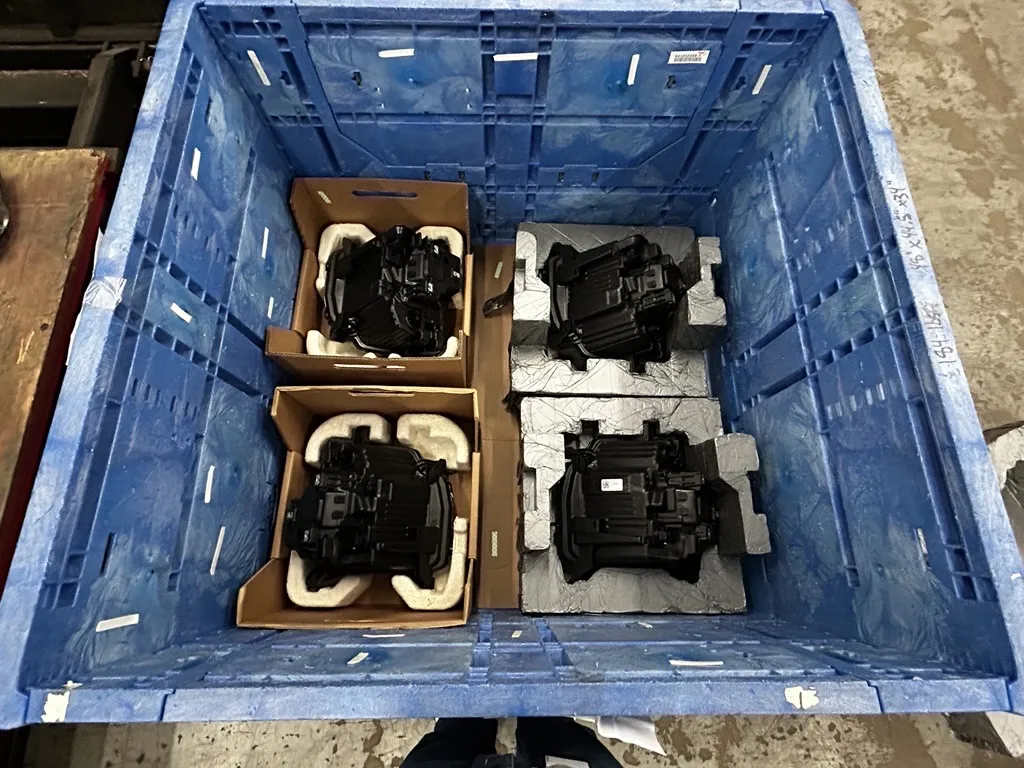
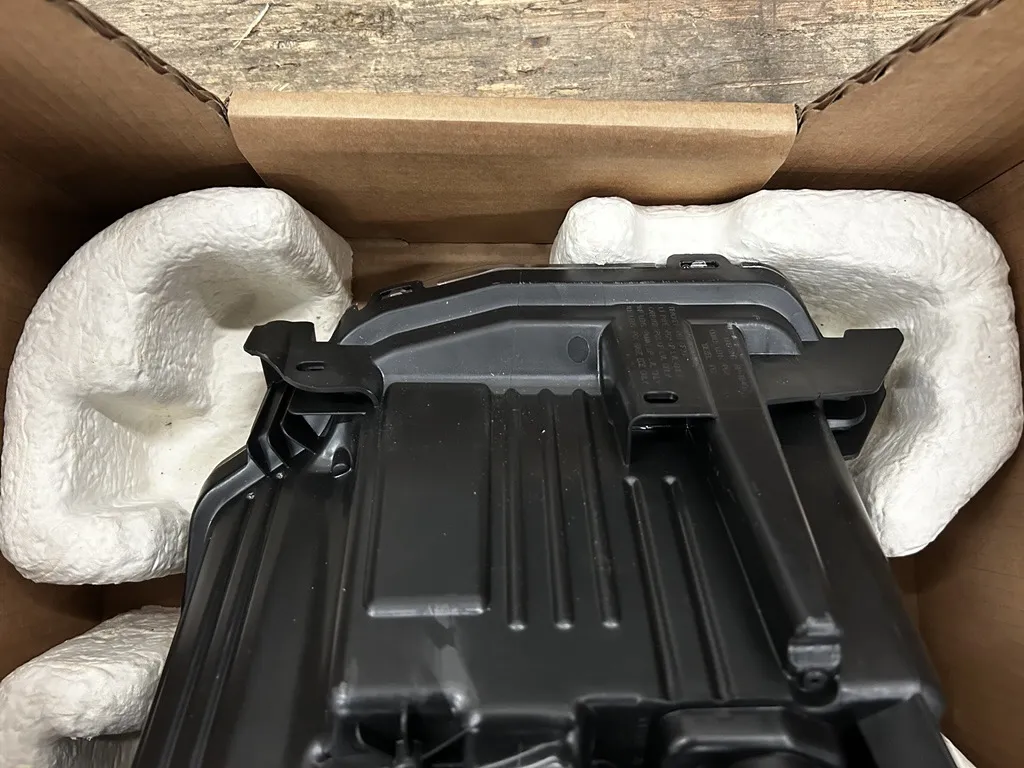
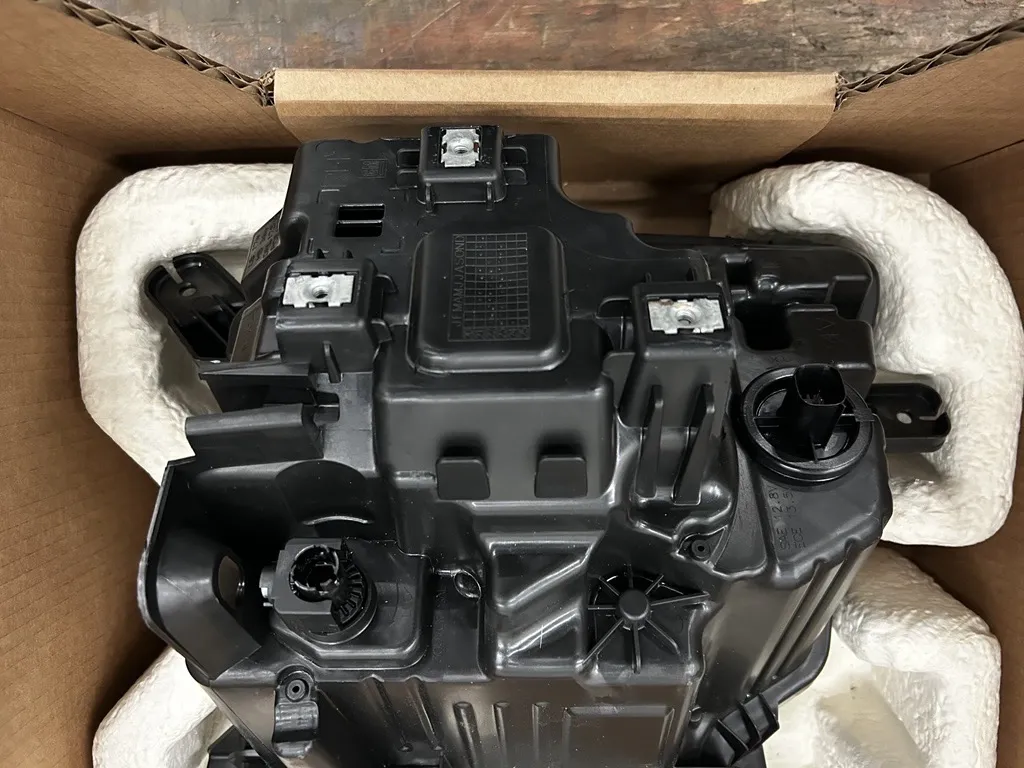
Magna built a full unit load of eight headlamps and put our packs in the bottom row, the hardest position, next to a baseline version without the fabric layer. The load then went through the full ISTA 3E sequence: incline impacts, drops, compression for a three-high warehouse stack and a vibration run.
Results
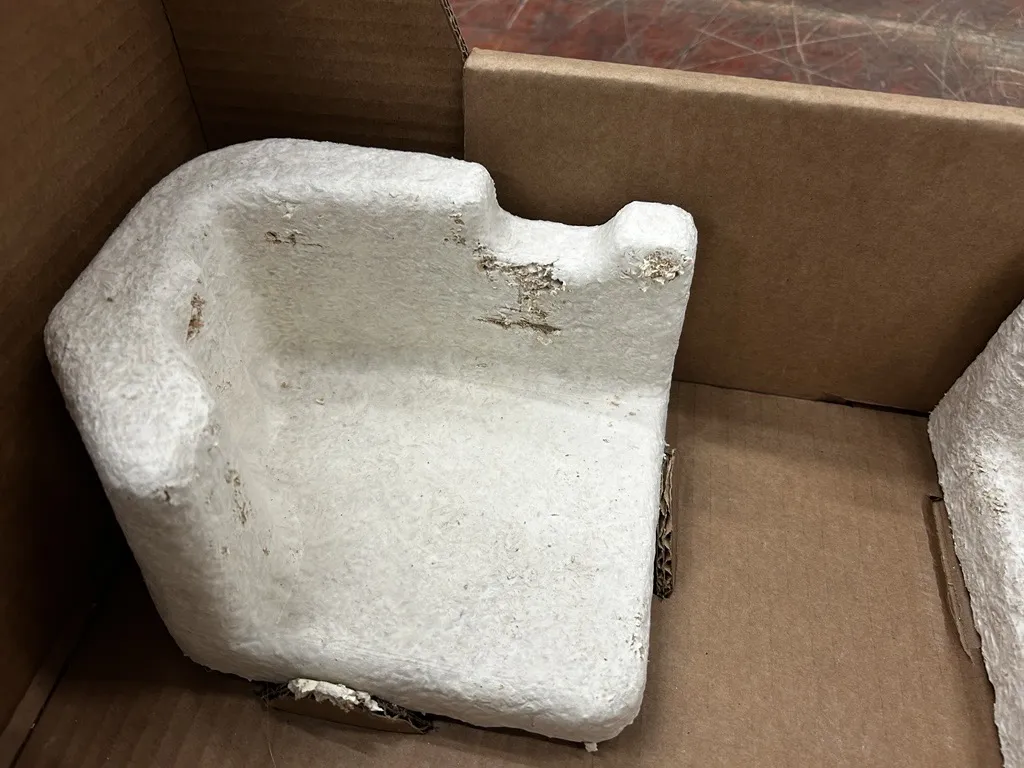
| Test | Target | Result |
|---|---|---|
| Form and fit | Holds the headlamp | Achieved |
| Vibration | ISTA 3E, about 500 miles | Achieved |
| Drop, incline impact, compression | ISTA 3E | Achieved |
| Surface | No scratches on Class A polycarbonate | Achieved |
| Smell | No foul smell | Achieved |
| Pests | Not eaten by rodents or insects | Achieved |
| Trial run | 100 miles on a leaf-spring truck, no scratches or damage | Achieved |
Results as reported by Magna.
One sharp tab on the lamp wore the surface at a single point during the vibration run. We added a small card guard at that spot for the pilot.
Grown, packed and shipped ready to use
We grew the pilot batch with the tested recipe and a more even surface, plus two backup variants in case the plant wanted options. Inserts and boxes shipped in May 2026.