Description

Magna & Biomyc: Mycelium packaging for Class A headlamps

Magna International is one of the world’s largest automotive suppliers. Its Corporate R&D team wanted a plastic-free alternative to the PU foam that protects scratch-sensitive headlamps in transit.

This is how we took it from proposal to material R&D, design, two prototype rounds, ISTA 3E testing and a pilot run in 14 months, step by step. Magna confirmed the pilot as successful.

Company:
Magna International
Project:
Protective packaging
Date:
April 2025 to June 2026
The challenge

Replace the foam. Keep the lamp perfect.

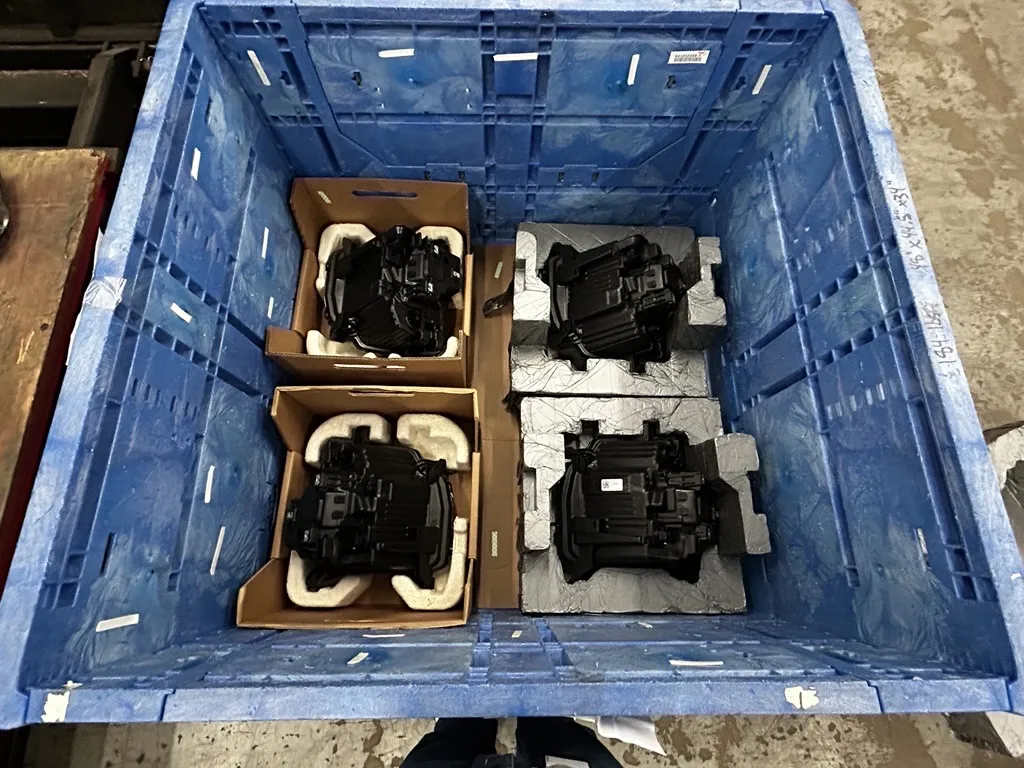
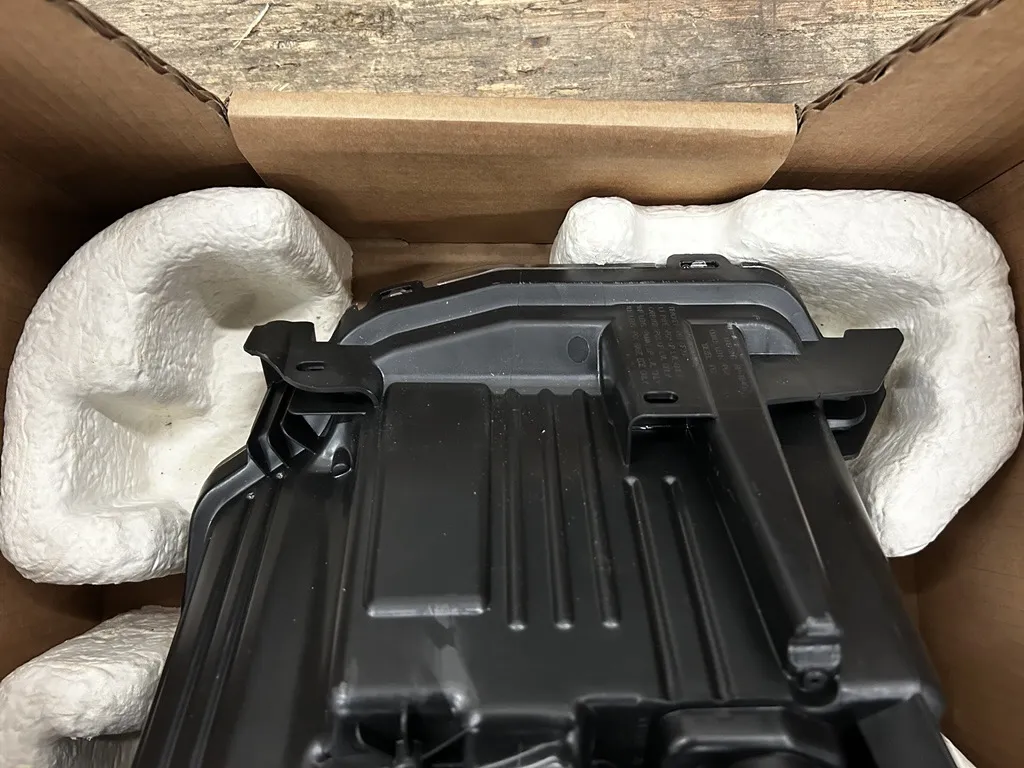
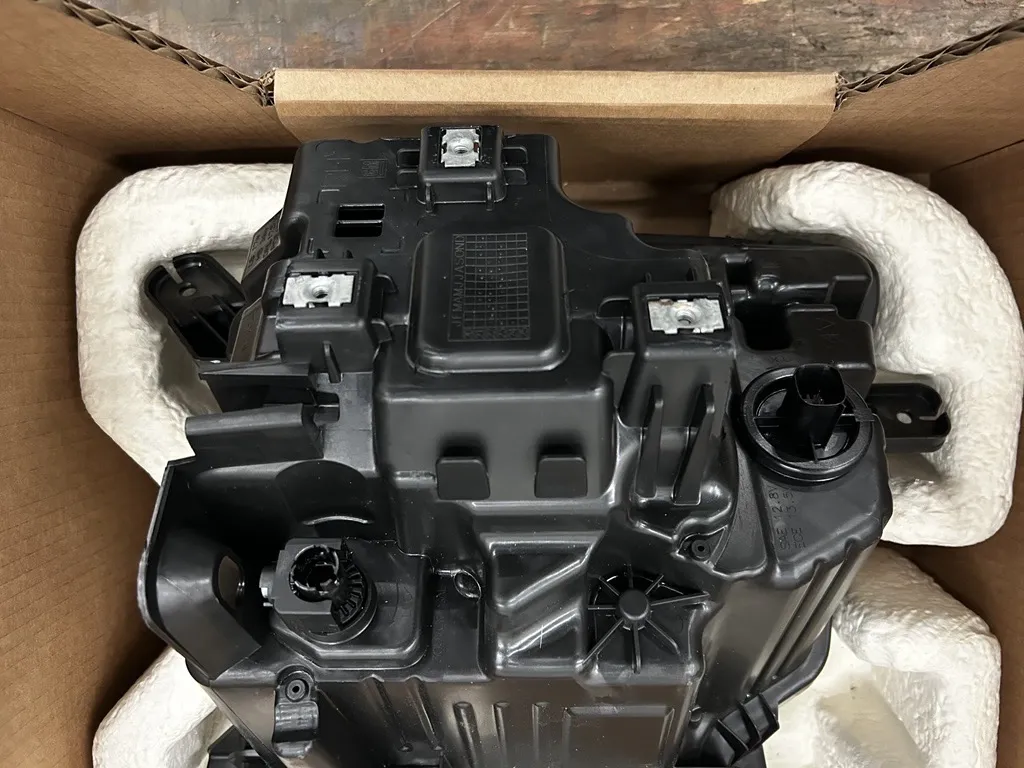
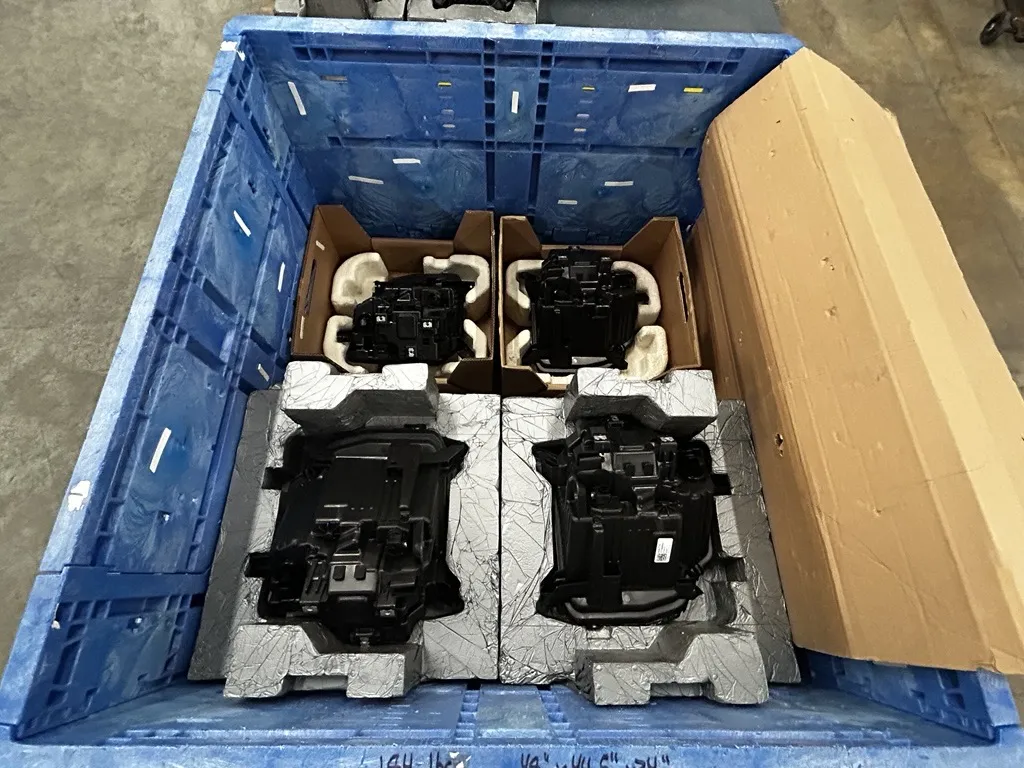
Magna ships replacement headlamps in moulded polyurethane foam wrapped in PE film, eight lamps to a returnable container. The foam is hard to recycle, and each base is half a metre square. Magna's Corporate R&D team asked us for a bio-based pack that does the same job.
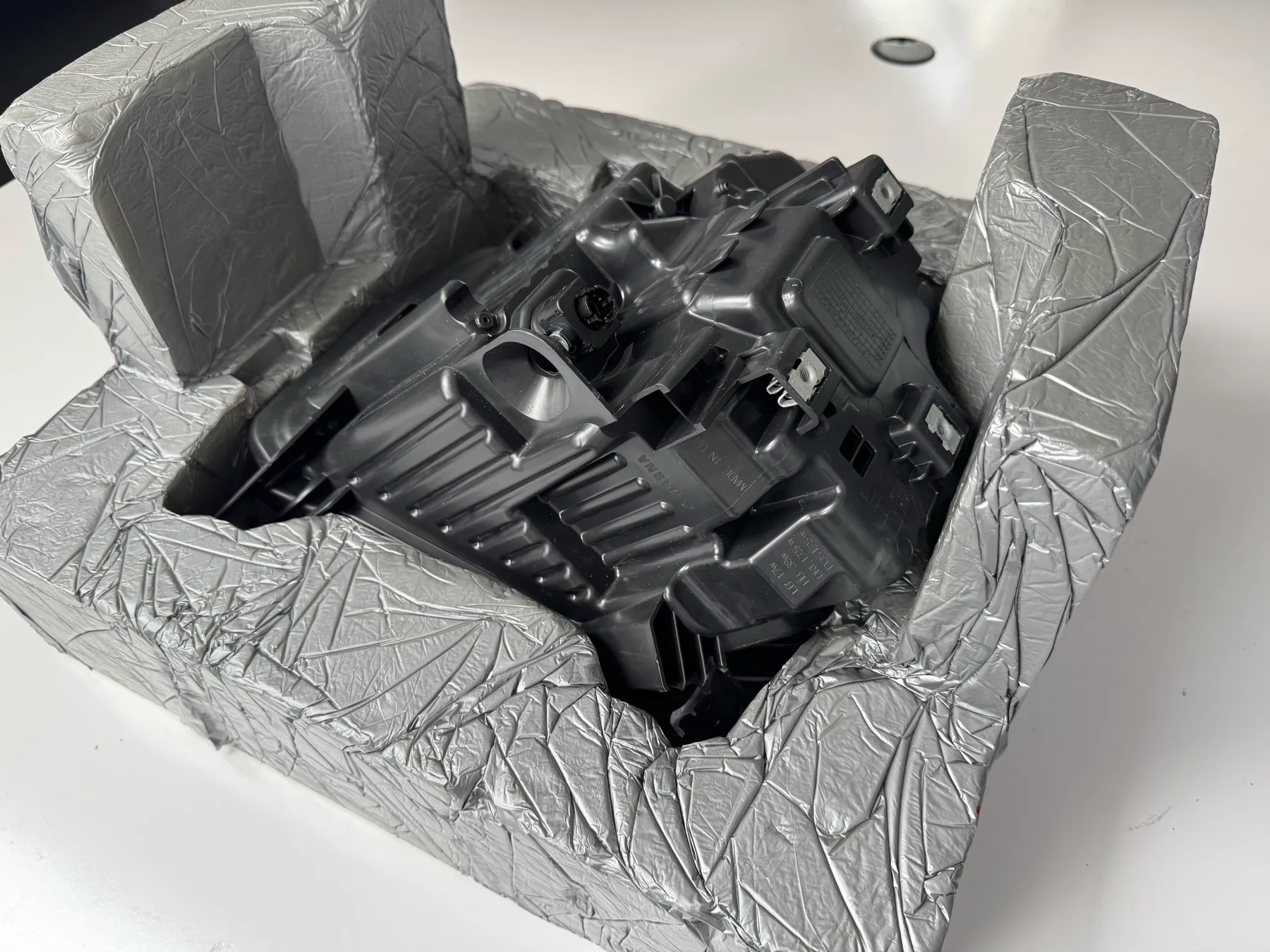
The pack we had to replace
The pack we had to replacePolyurethane foam base wrapped in PE film, with the headlamp in place.
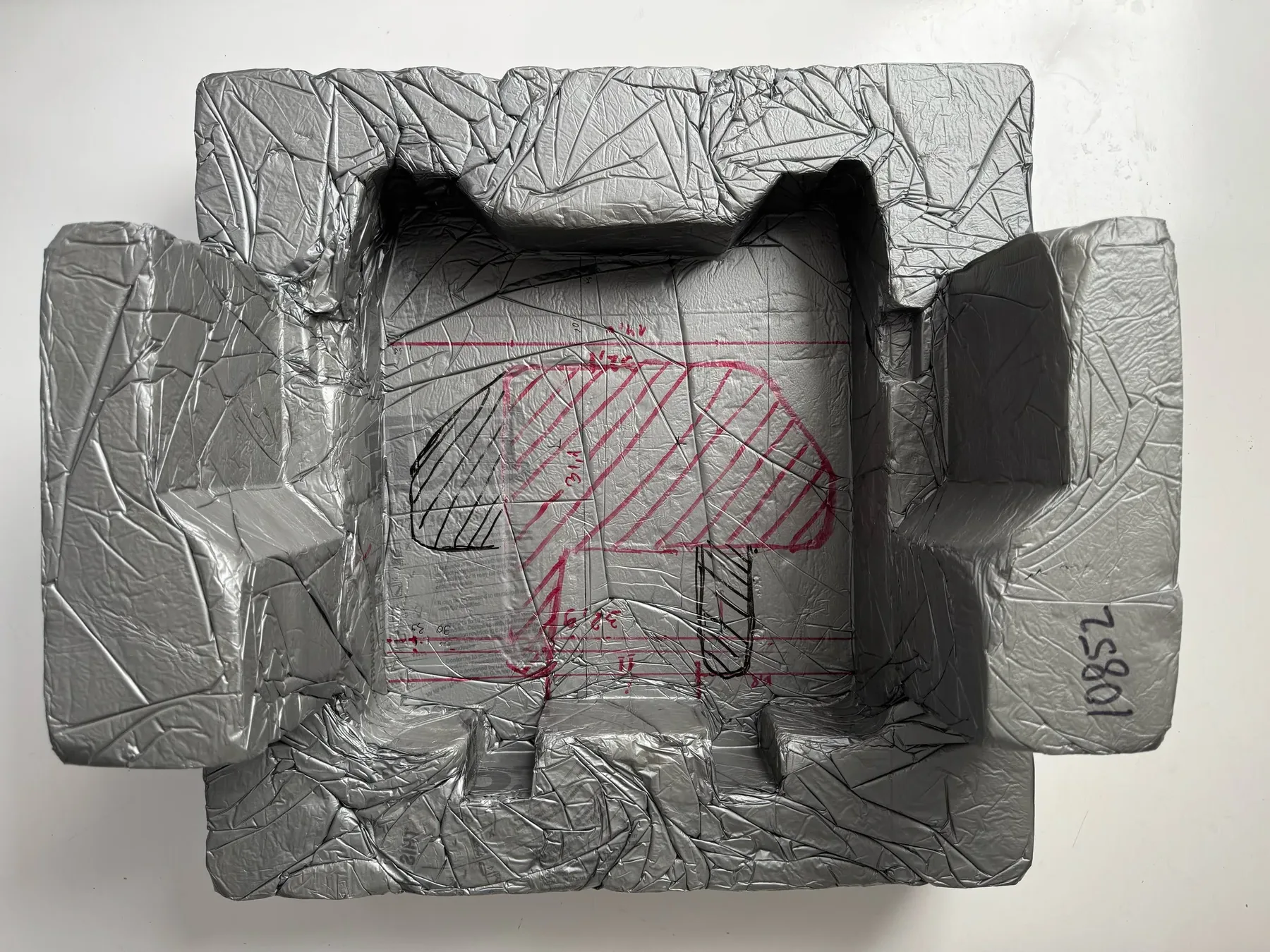
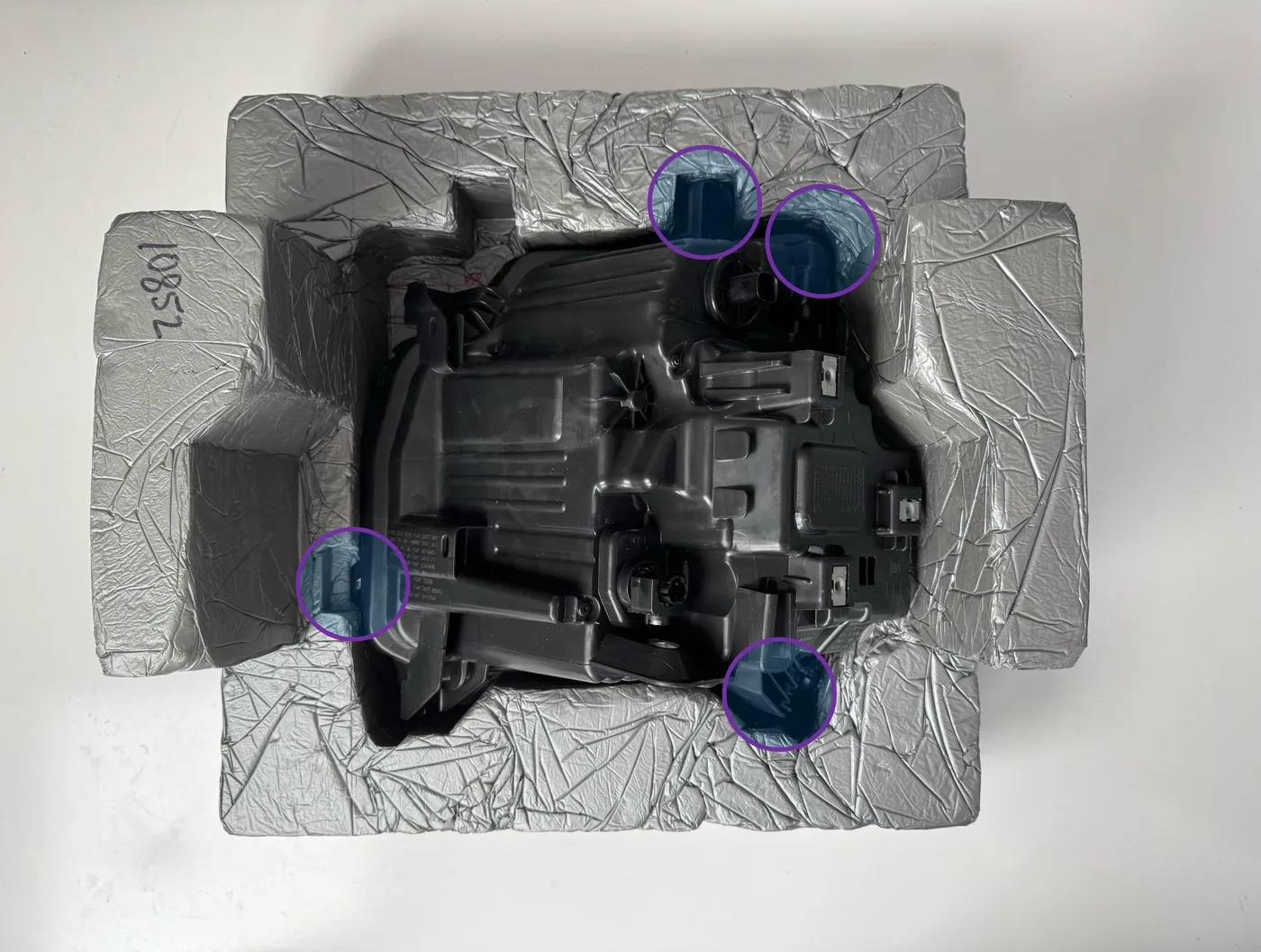
Where the lamp actually touches
Where the lamp actually touchesThe lamp rests on three points (marked). The rest of the foam is padding.
Contact area, top view
Contact area, top viewWhere the lamp rests on the foam (hatched), mapped before we removed any material.
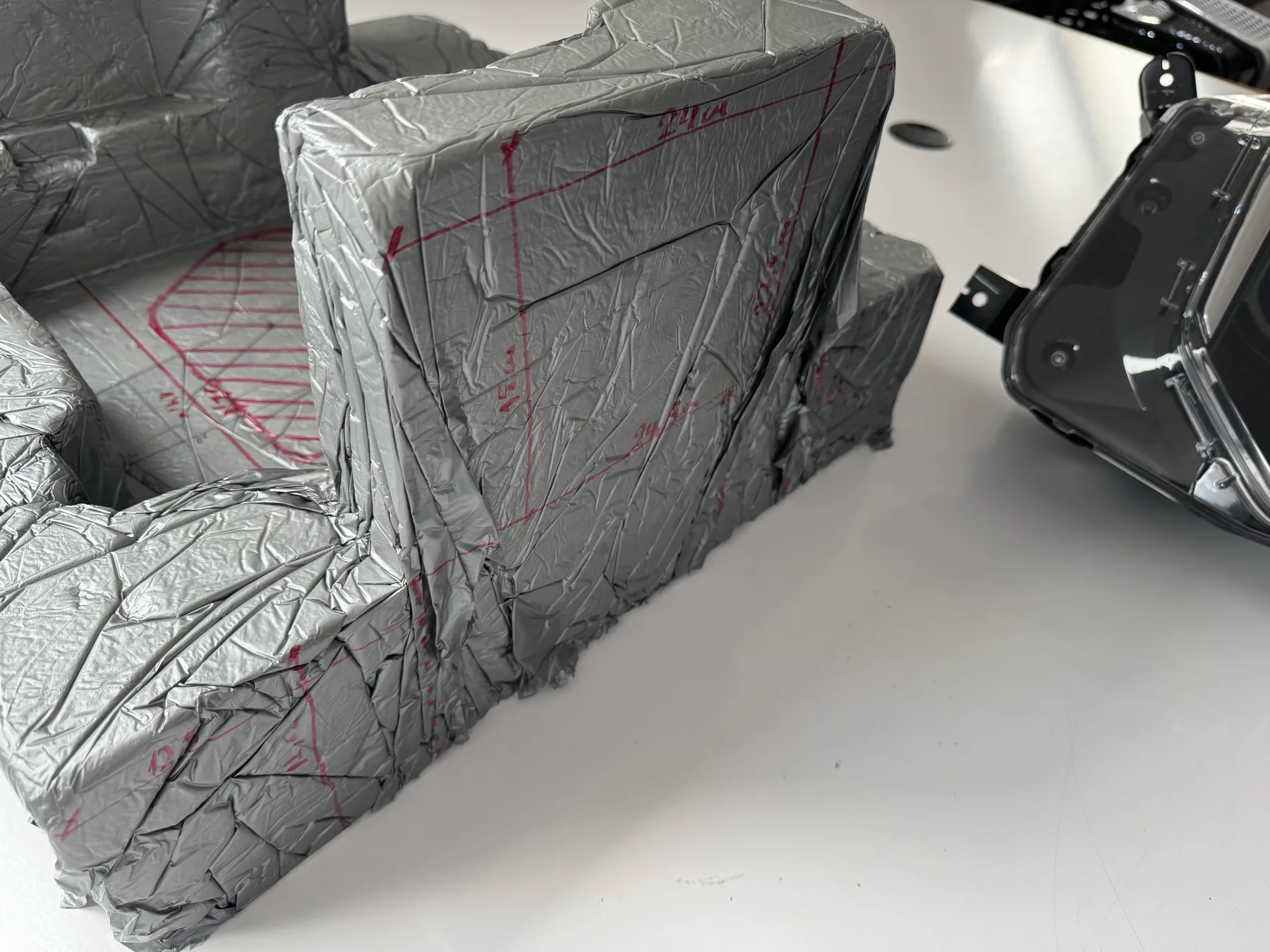
Wall dimensions
Wall dimensionsThe foam walls measured and marked, to decide how far each one could be thinned.
Class A surfacesNot a single micro-scratch on the polycarbonate
TransitMust pass ISTA 3E as a full unit load
StorageSpare parts can sit 3 to 4 years in a warehouse
HandlingNo smell, no mould, nothing pests want to eat
Step 01 · Proposal

A plan Magna could steer

In July 2025 we proposed a project in four stages, with an alignment call after each one so Magna could change direction at any point.

01 Material R&DSamples in different densities, surface finishes, fabrics and coatings
02 DesignA modular system that fits Magna’s returnable container
03 PrototypingPrototypes shipped to Magna for fit and surface checks
04 PilotA pilot batch tested in real transport
What Magna changed

Magna liked the plan and asked us to compress it from about 24 weeks to 9. The priorities became scratch protection first, then impact protection, then low weight. Returnable packaging was dropped, because the lamps travel to the dealer in the same pack.

Step 02 · Material R&D

19 samples before the first part

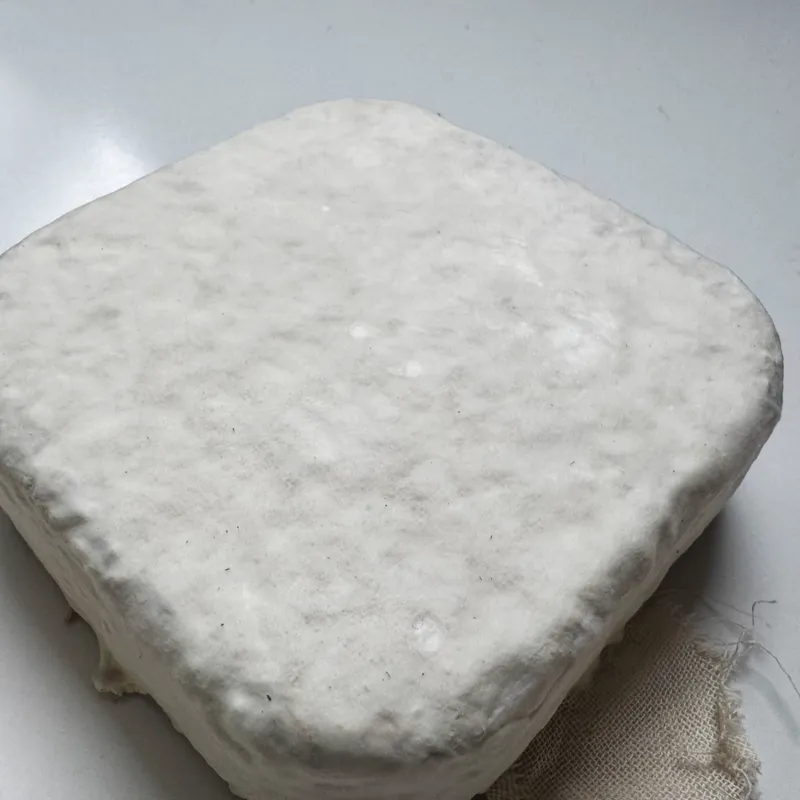
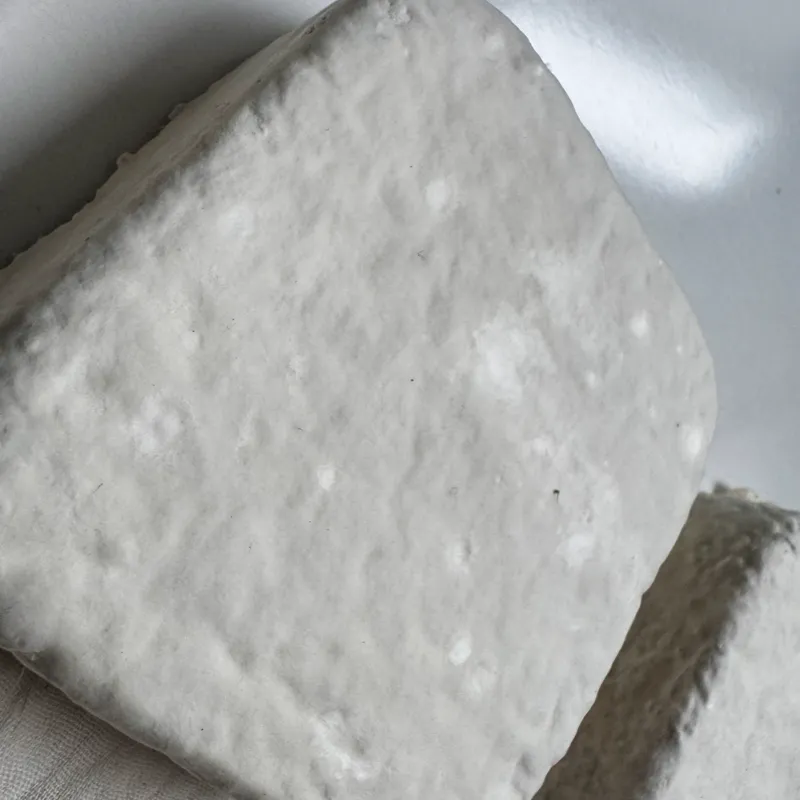
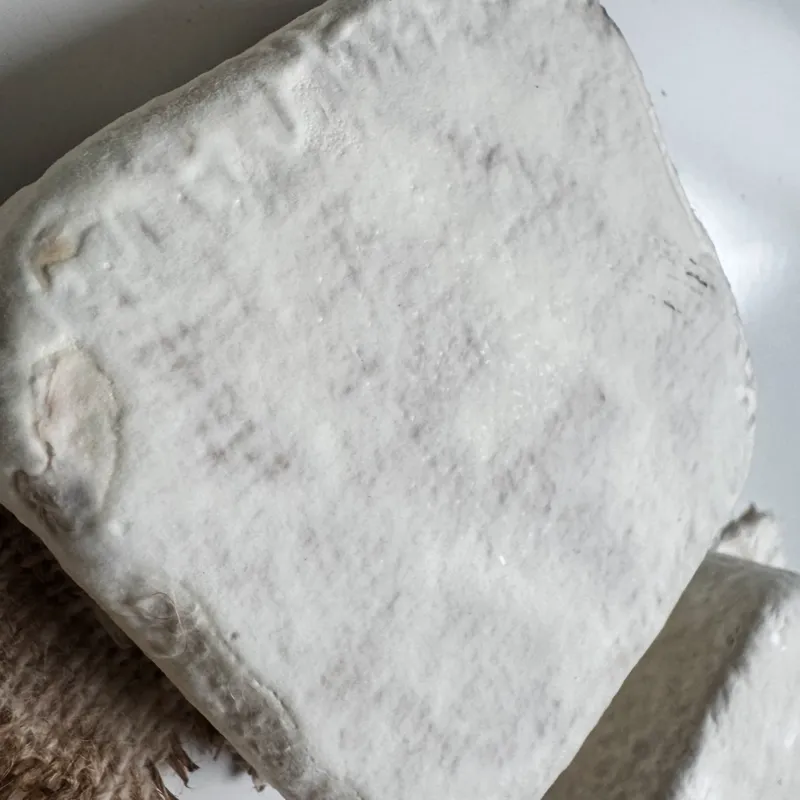
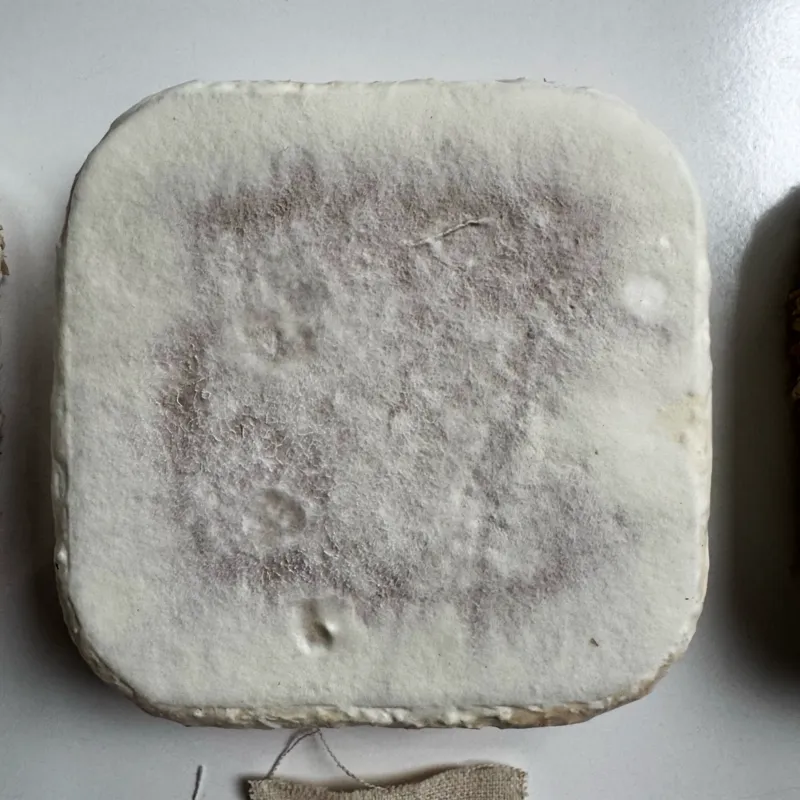
Standard mycelium composite protects well, but its rough hemp surface can shed particles, and on a Class A part that's a no-go. Over three weeks we grew 19 test samples of 10 × 10 × 3 cm in three groups and wrote up each one in an R&D report for Magna.
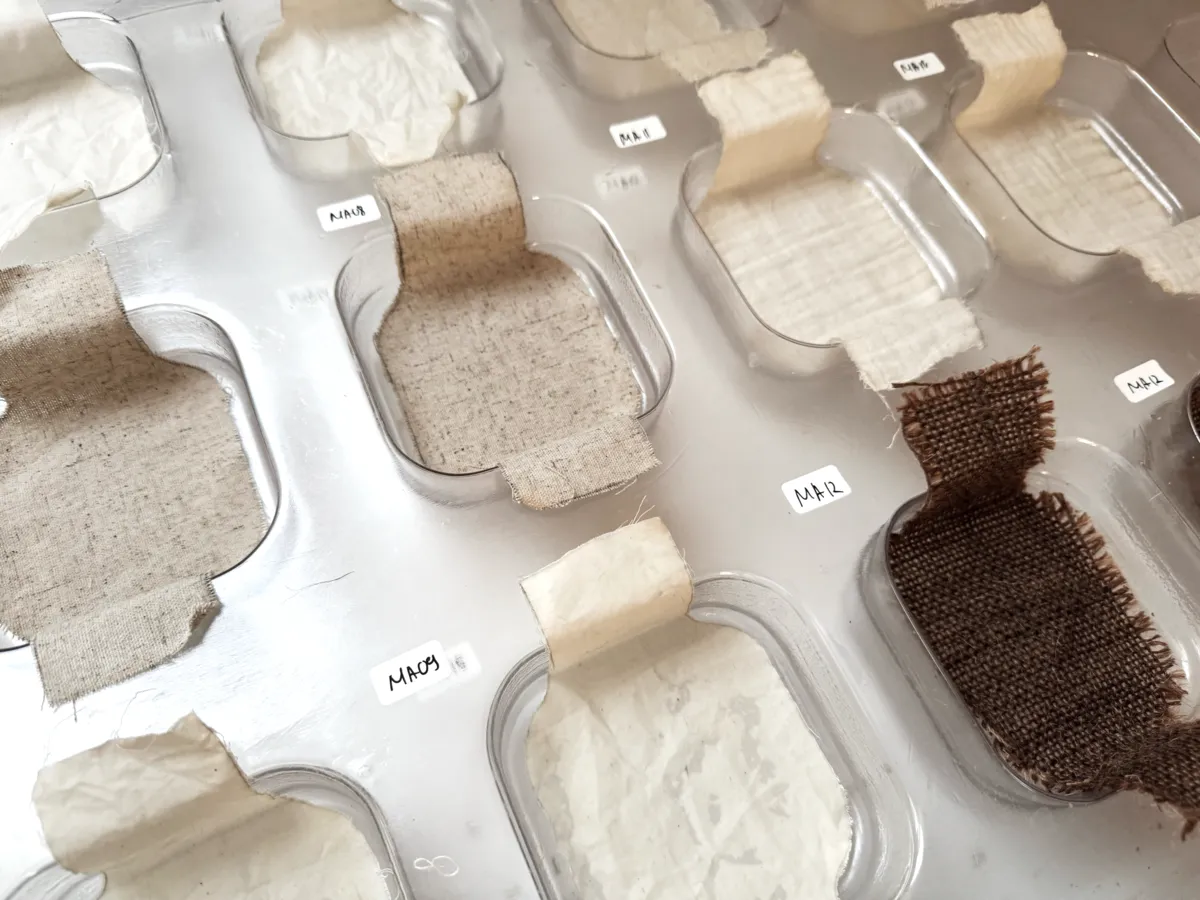
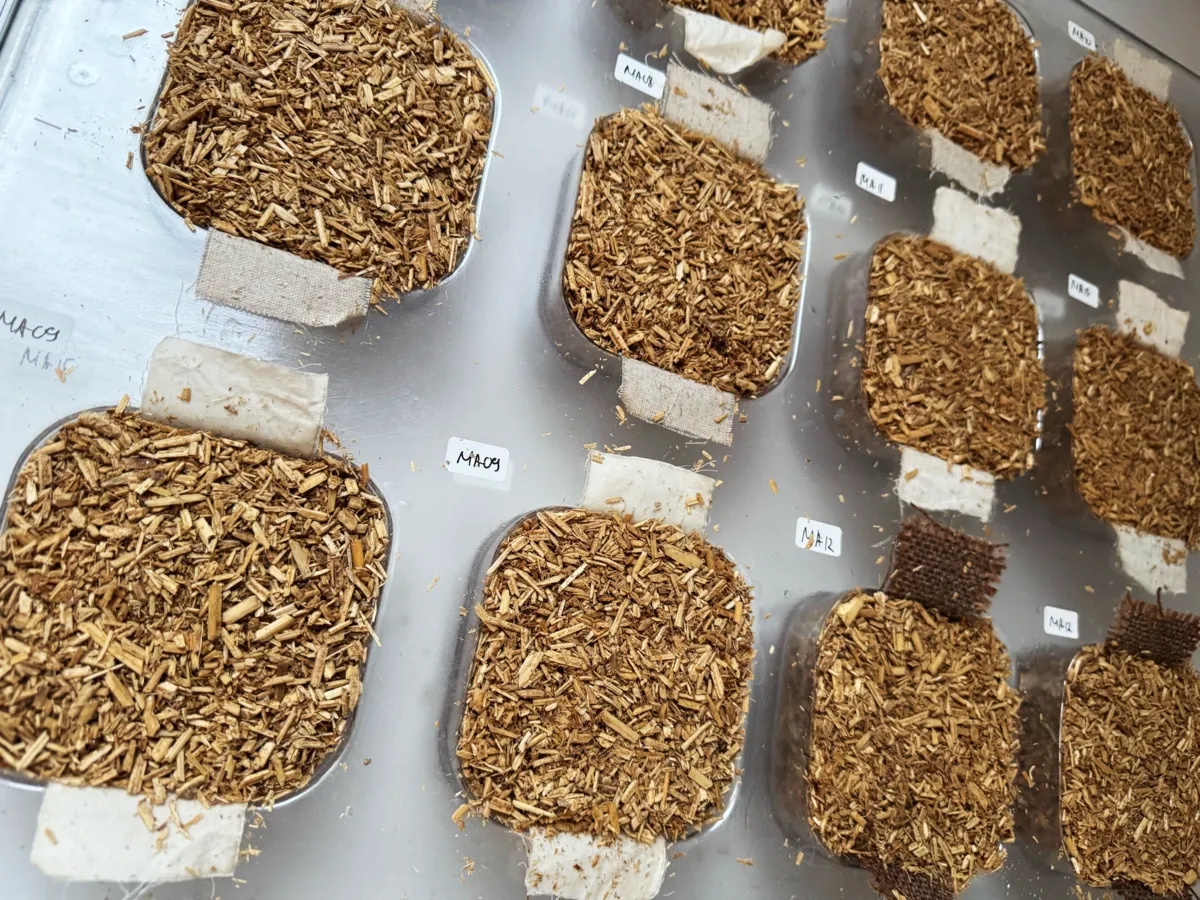
Preparing the samples
Preparing the samplesFabrics and material combinations laid into the sample moulds.
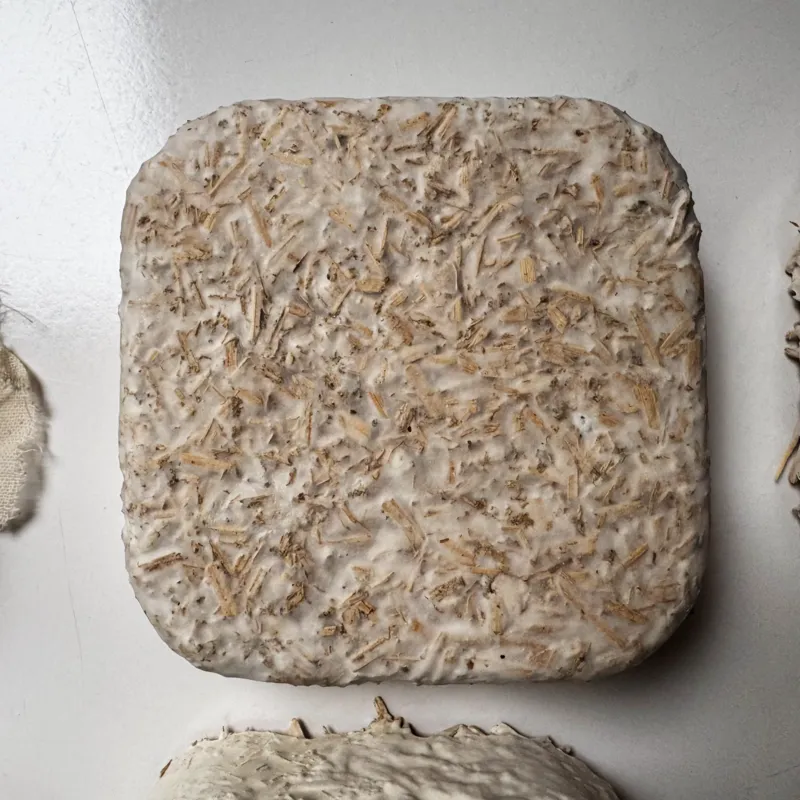
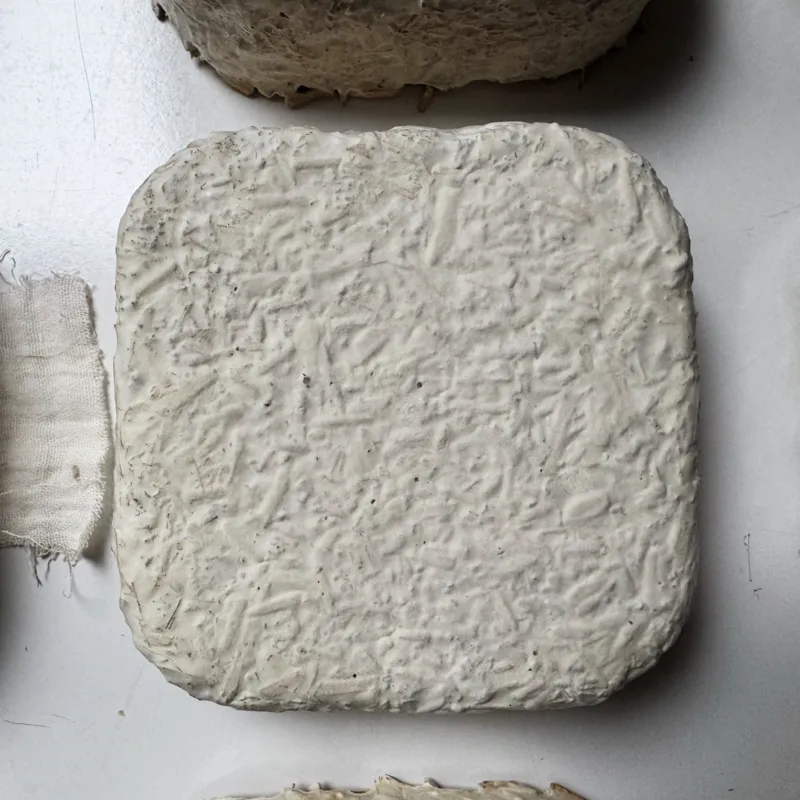
Three densities
Three densitiesThe same mould filled with three different amounts of material.
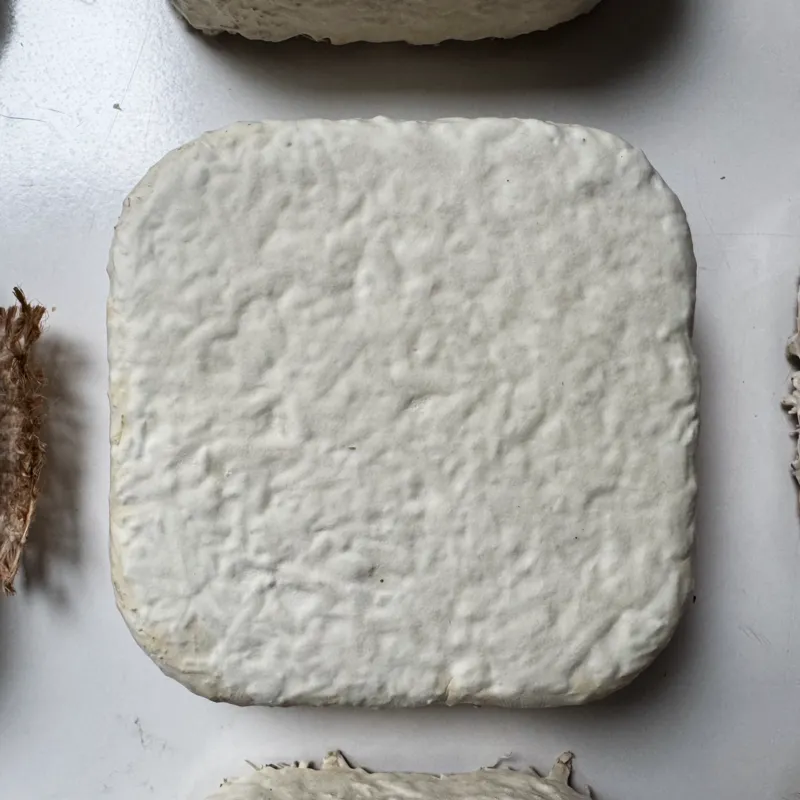
Grown and dried
Grown and driedSamples with a soft finish, ready for testing.

Group A · Density and surface study

Three densities, each with three surface finishes, from rough to soft.
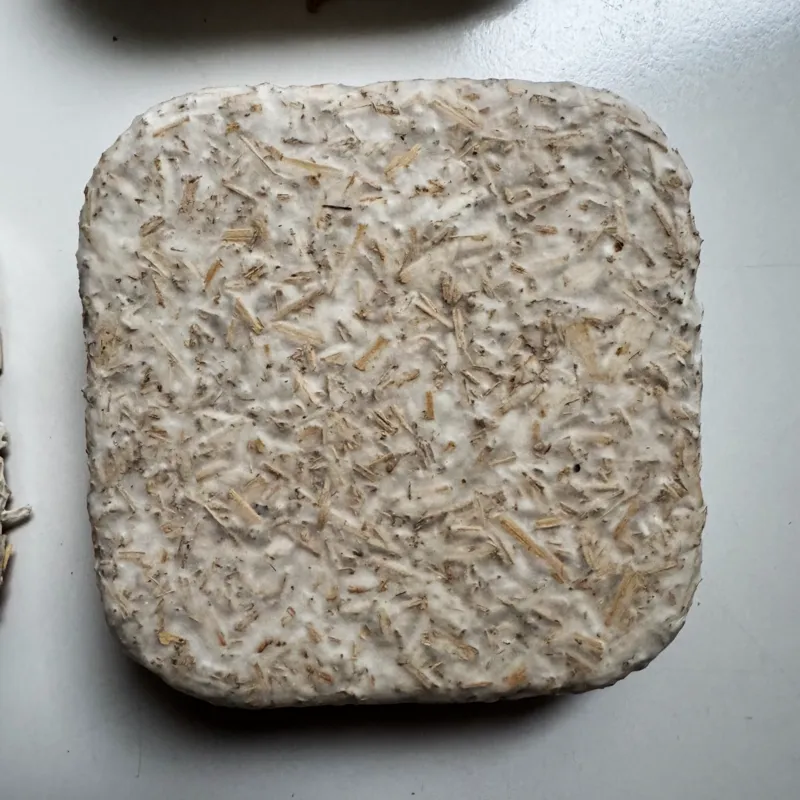
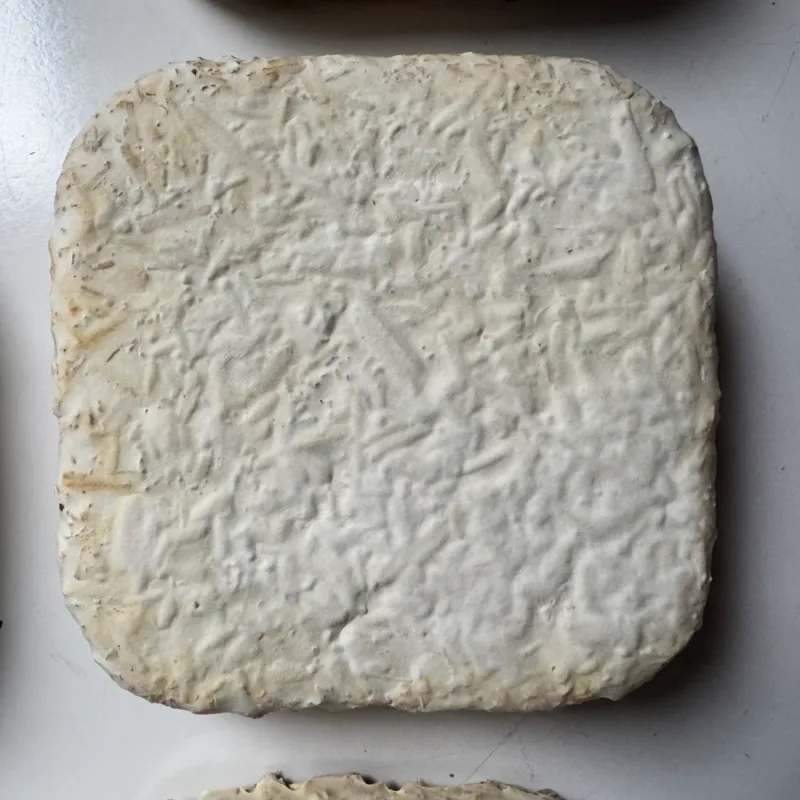
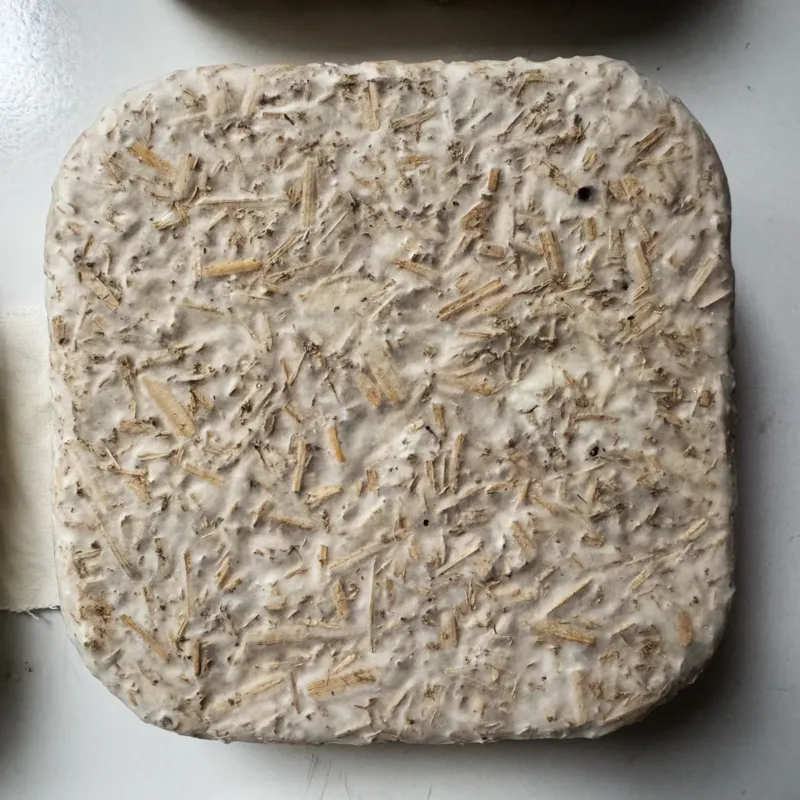
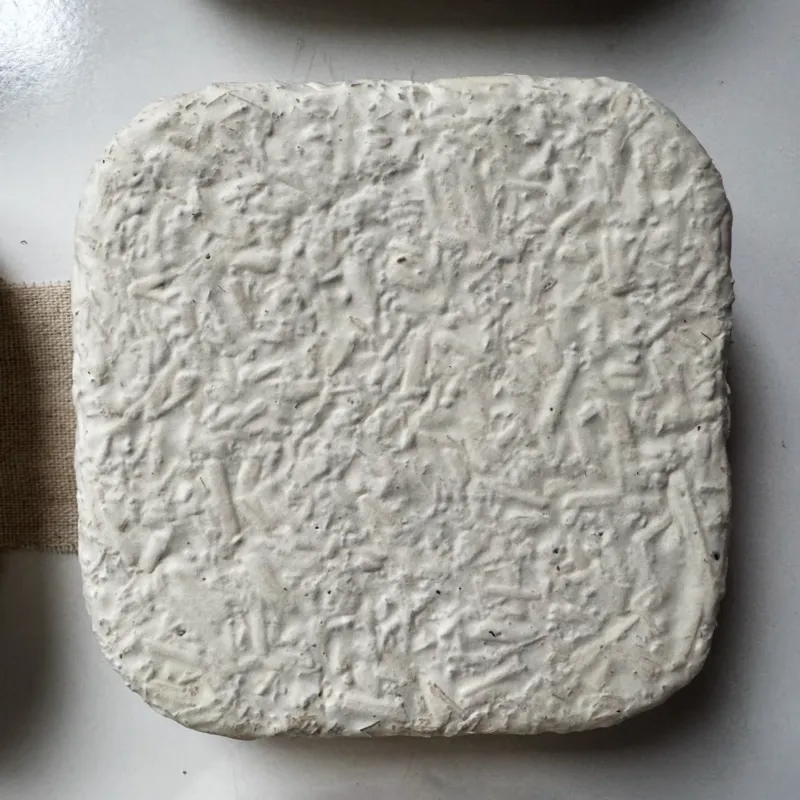
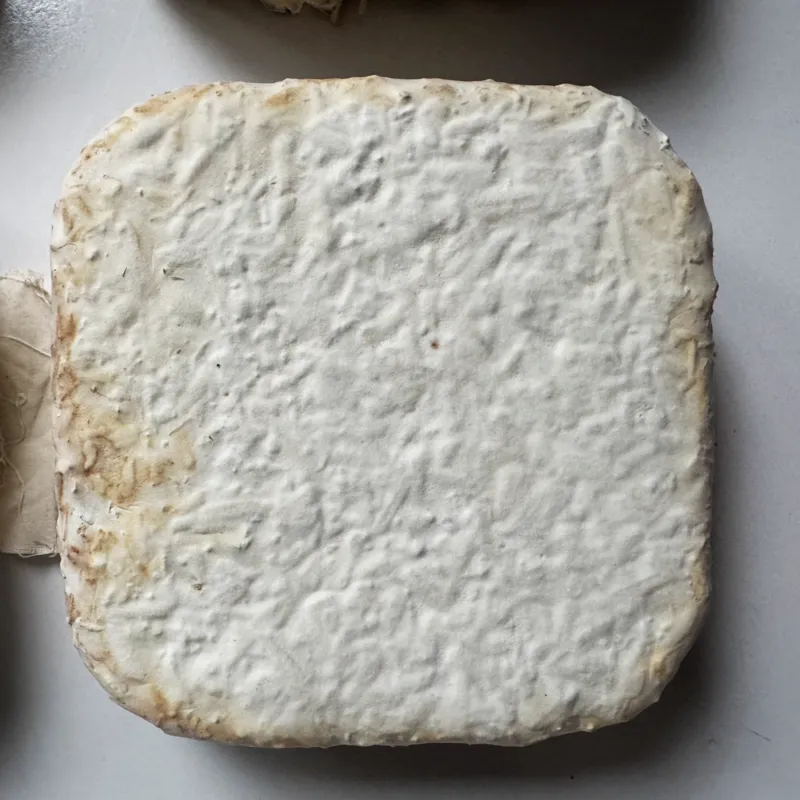
MA013 · Low density, rough finish
MA013 · Low density, rough finish134 kg/m³ dry. Rough surface, good for coating.
MA023 · Low density, medium finish
MA023 · Low density, medium finish143 kg/m³ dry.
MA033 · Low density, soft finish
MA033 · Low density, soft finish139 kg/m³ dry. Soft surface for sensitive parts.
MA043 · Medium density, rough finish
MA043 · Medium density, rough finish136 kg/m³ dry. Best shape accuracy after drying.
MA053 · Medium density, medium finish
MA053 · Medium density, medium finish132 kg/m³ dry. Good shape accuracy.
MA063 · Medium density, soft finish
MA063 · Medium density, soft finish132 kg/m³ dry. Soft surface, good shape accuracy.
MA073 · High density, rough finish
MA073 · High density, rough finish138 kg/m³ dry. Slight expansion from overfilling.
MA083 · High density, medium finish
MA083 · High density, medium finish145 kg/m³ dry.
MA093 · High density, soft finish
MA093 · High density, soft finish145 kg/m³ dry.

Group B · Natural fabrics

Six natural fabrics on the contact face, to make the surface scratch-safe and keep the particles in.
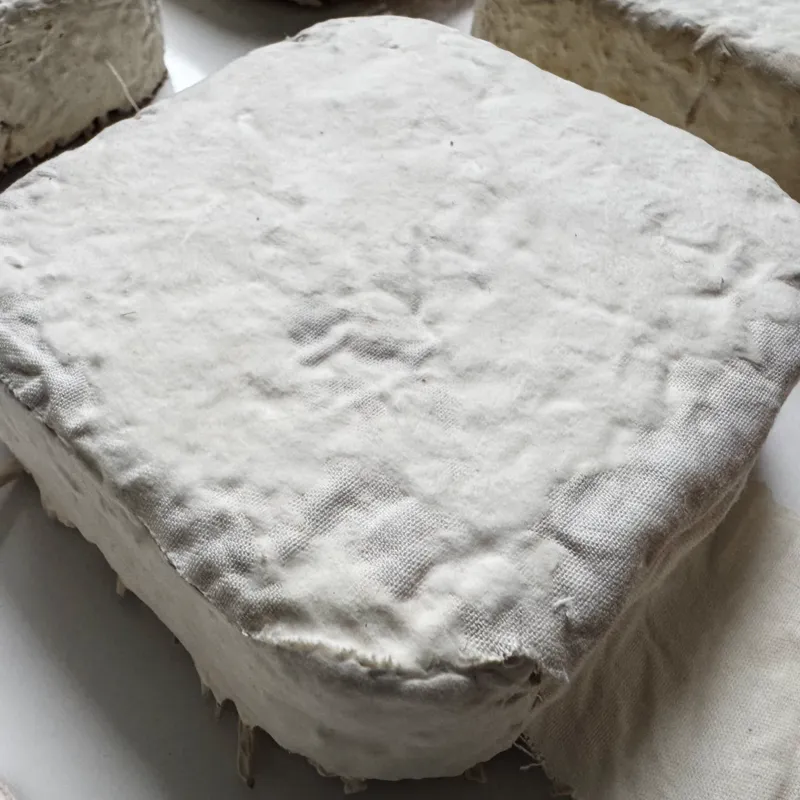
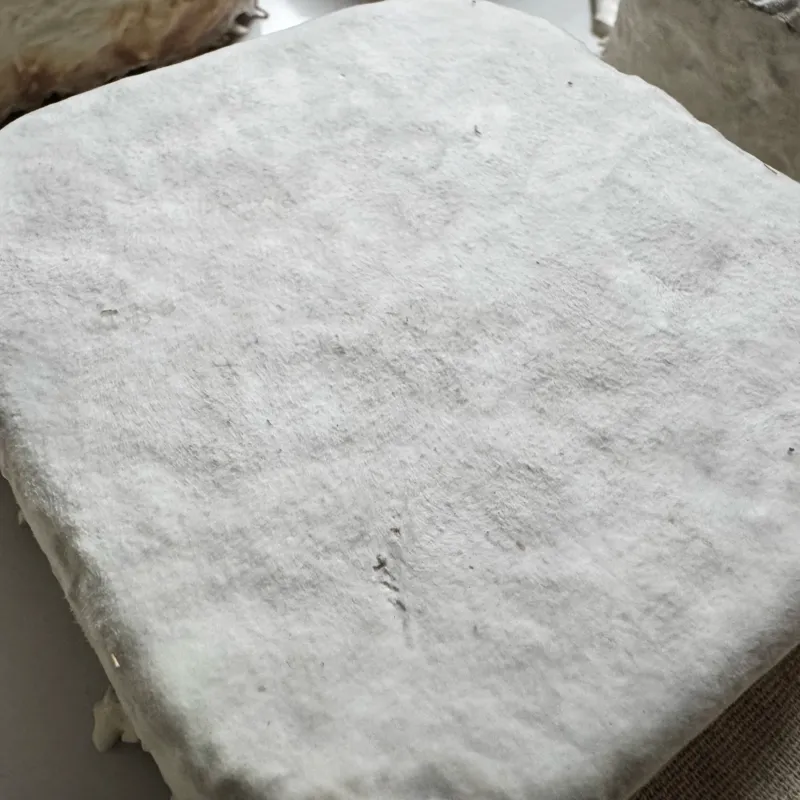
MA103 · Fabric 1
MA103 · Fabric 1Low adhesion, uneven surface.
MA113 · Fabric 2
MA113 · Fabric 2Good adhesion, even surface.
MA123 · Fabric 3
MA123 · Fabric 3Good adhesion, even surface.
MA133 · Fabric 4
MA133 · Fabric 4Excellent adhesion, even surface.
MA143 · Fabric 5
MA143 · Fabric 5Excellent adhesion, even surface.
MA153 · Fabric 6
MA153 · Fabric 6Very good adhesion, even surface.

Group C · Other surface options

Two bio-based sheets, paperboard and a coating, as alternatives to fabric.
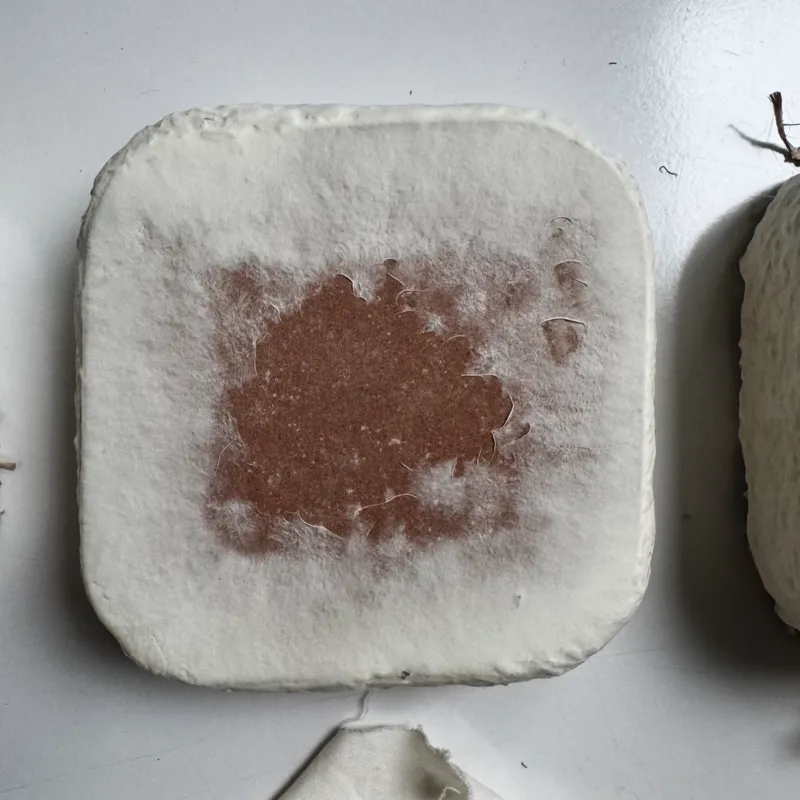
MA163 · Bio-based sheet A
MA163 · Bio-based sheet AAverage adhesion, uneven surface.
MA173 · Bio-based sheet B
MA173 · Bio-based sheet BGood adhesion, uneven surface.
MA183 · Paperboard
MA183 · PaperboardGood adhesion, uneven surface.
MA193 · Coating
MA193 · CoatingGood coverage, slightly sticky to the touch.
What we learned

A fabric layer on the contact face reinforced the part and stopped flaking. The soft finish gave the best protection. That combination became the recipe for every surface that touches the lamp.

Step 03 · Design

Five concepts, one clear winner

The carmaker had no CAD for its own pack, so Magna sent us a headlamp and the original foam base. We rebuilt both in 3D and designed five concepts. For each one we showed Magna the material volume, how easy it is to produce and what it would cost.
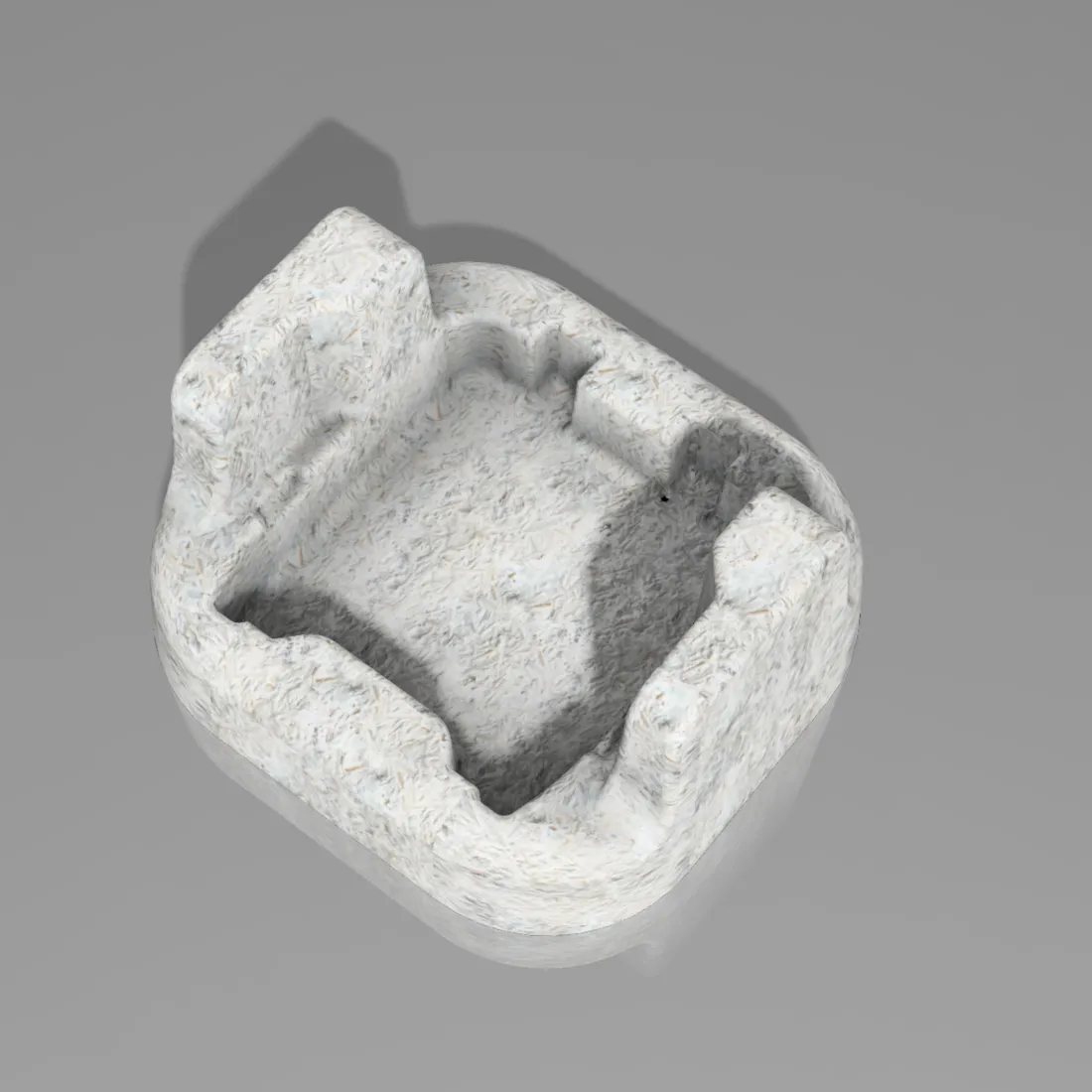
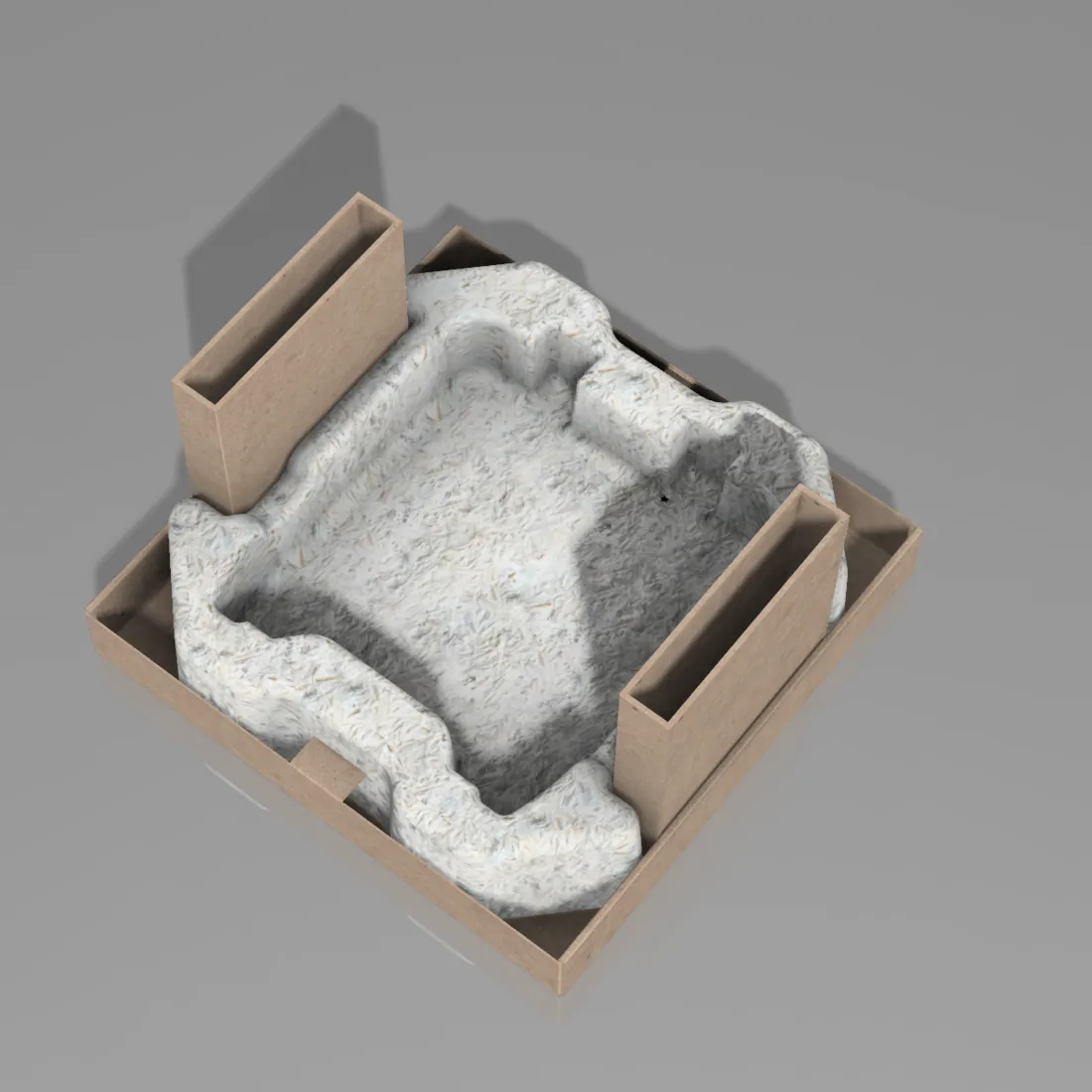
Concept 1 · One-piece copy of the foam
Concept 1 · One-piece copy of the foam25,881 cm³. 50 × 54.5 × 27.5 cm. Hard to produce, oversized tooling, risky demoulding. High cost.
Concept 2 · One tray in a box
Concept 2 · One tray in a box14,893 cm³. Medium to high producibility, but a large, expensive tool. Medium to high cost.
Concept 3 · Two halves in a box
Concept 3 · Two halves in a box13,168 cm³. Easy to produce. Medium cost.
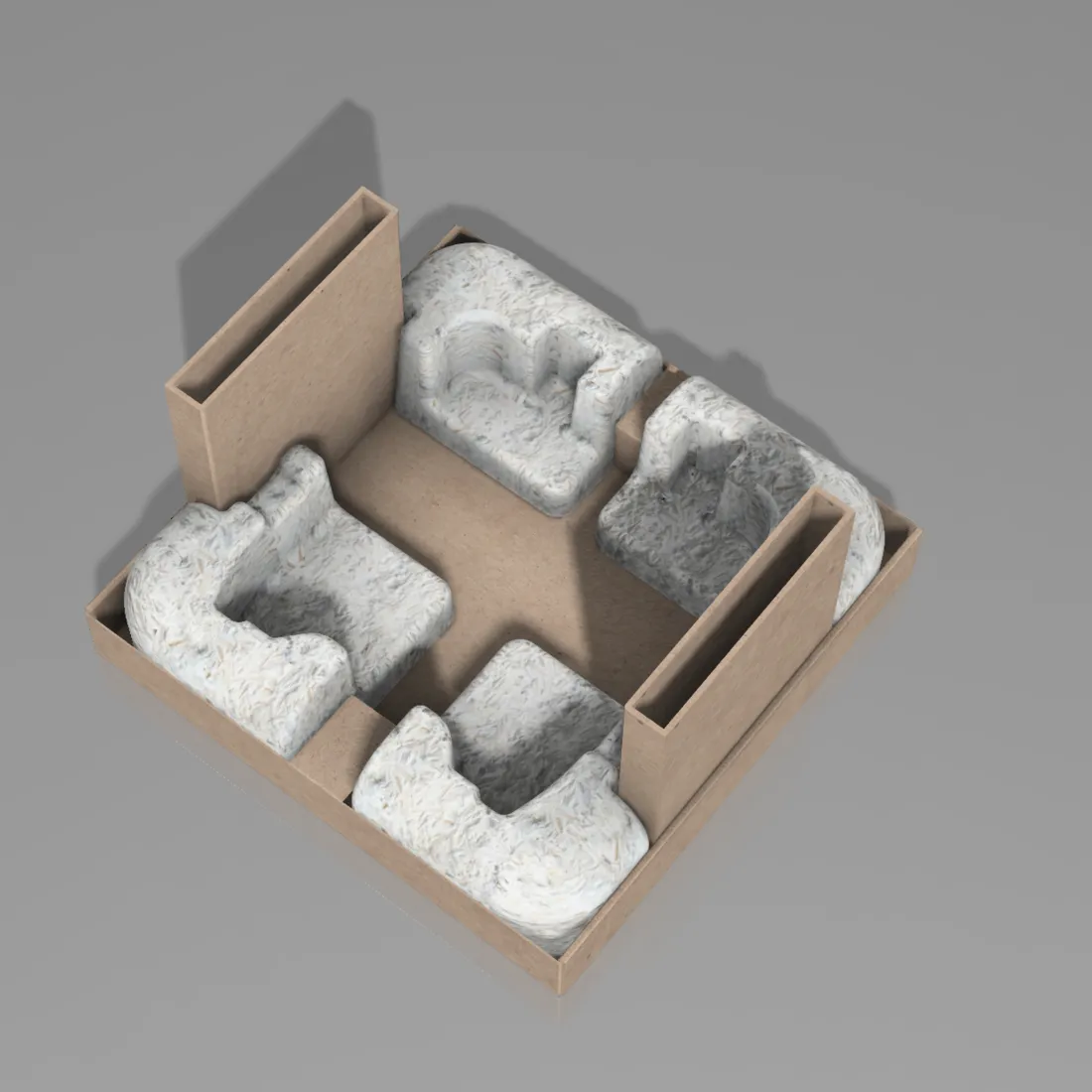
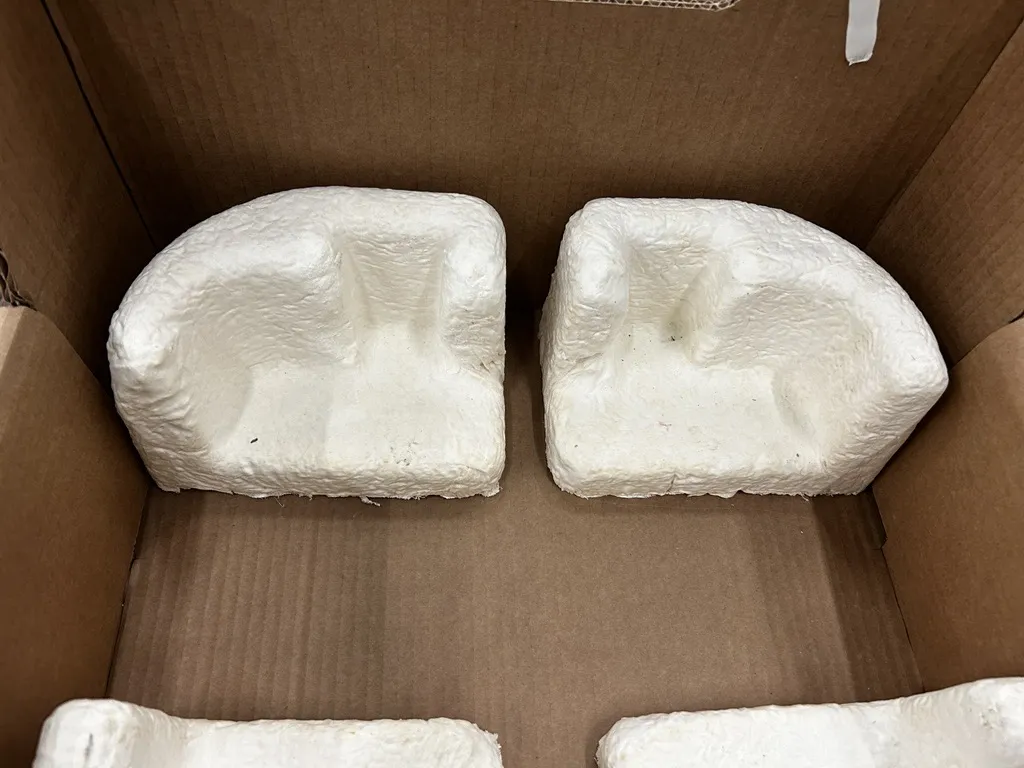
Concept 4 · Four corner pieces
Concept 4 · Four corner pieces13,176 cm³. Easy to produce. Medium cost.
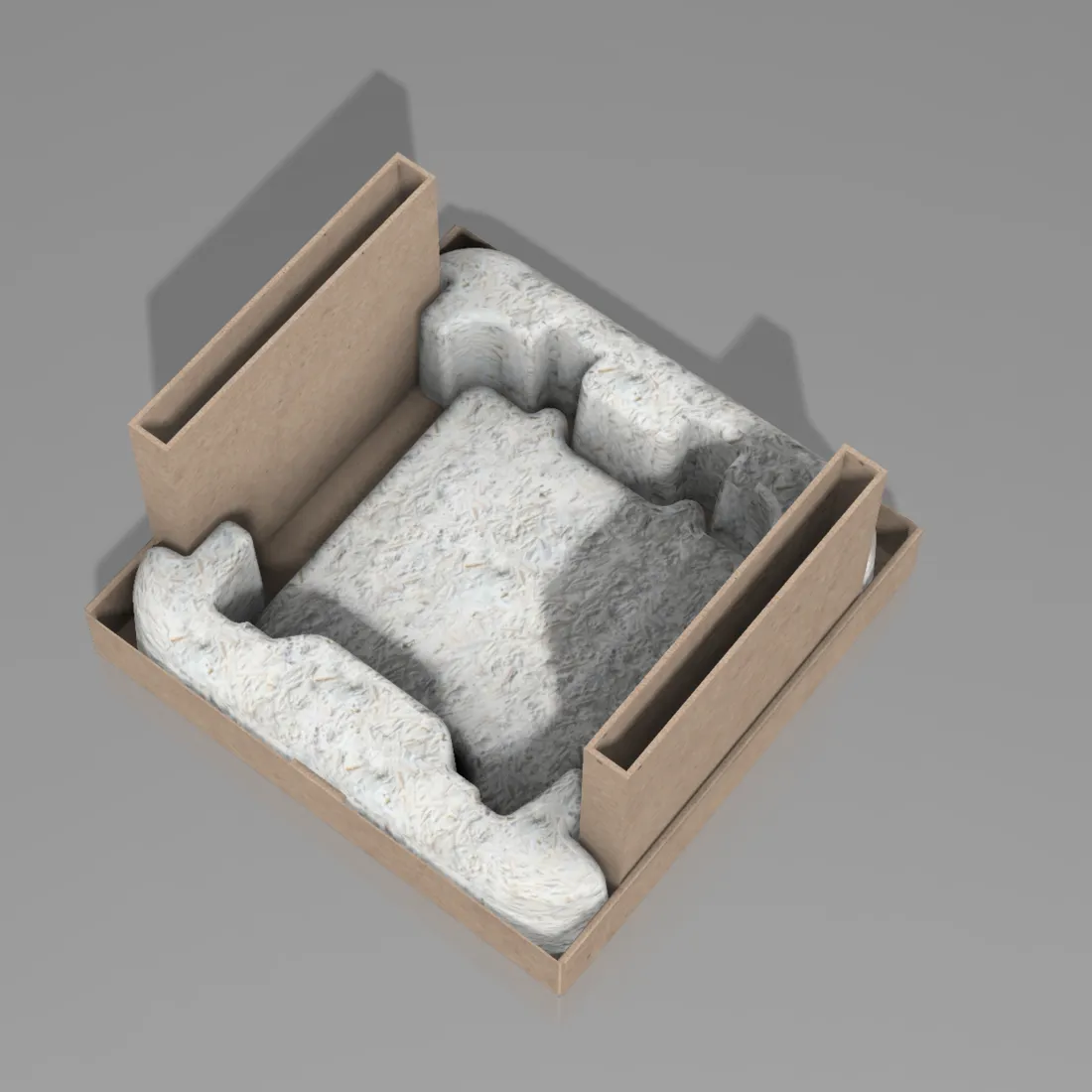
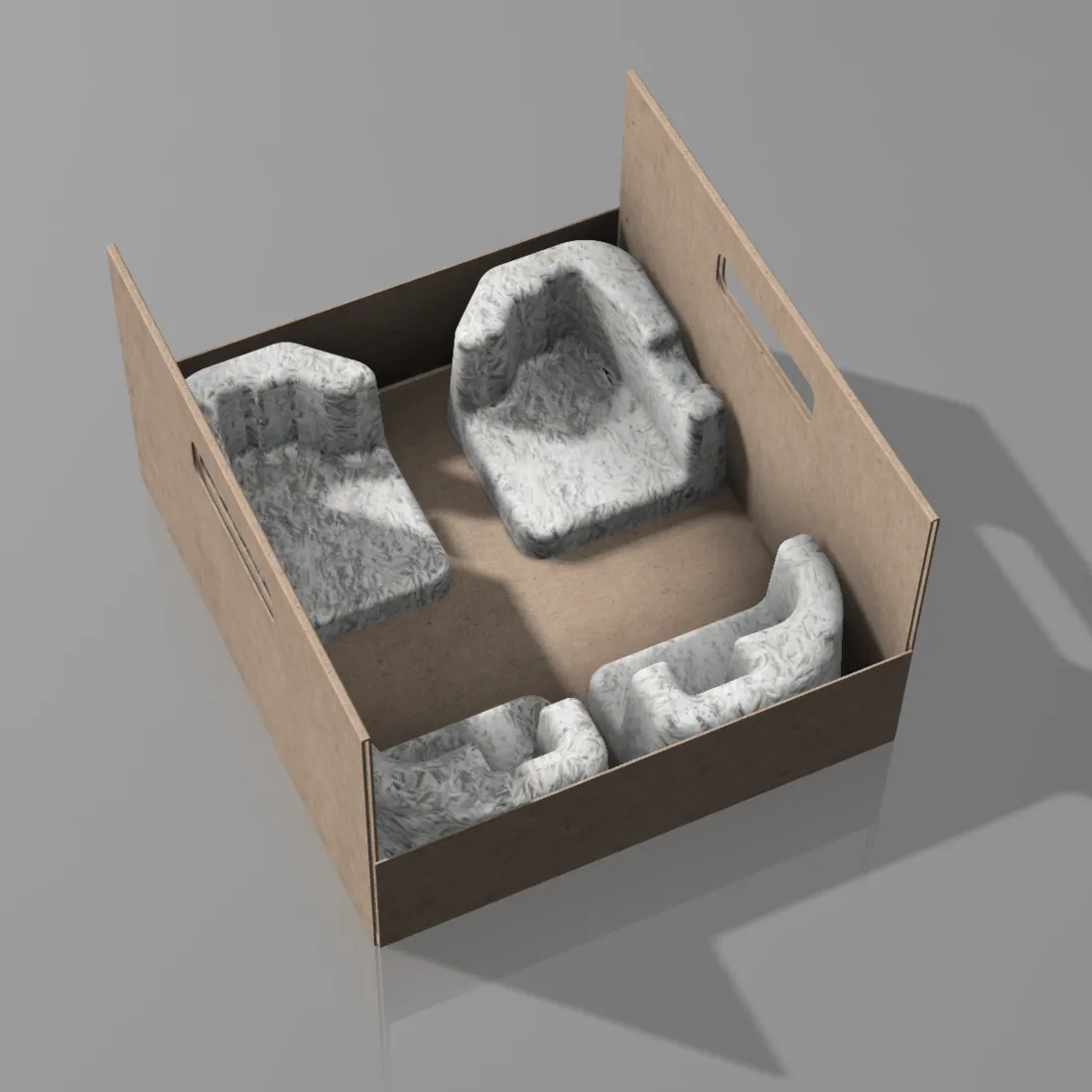
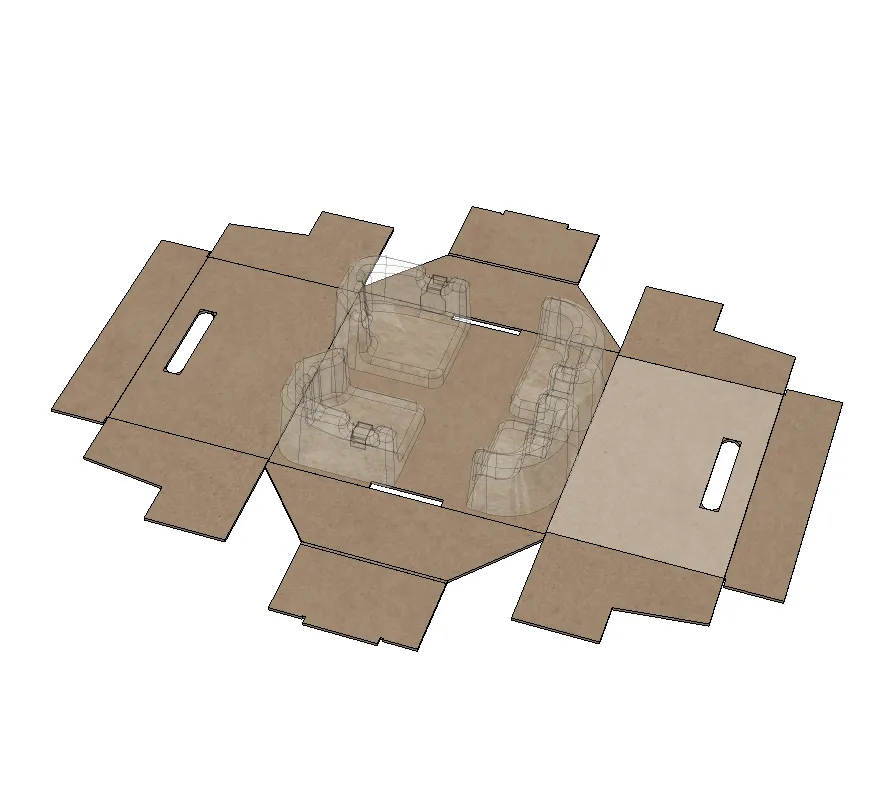
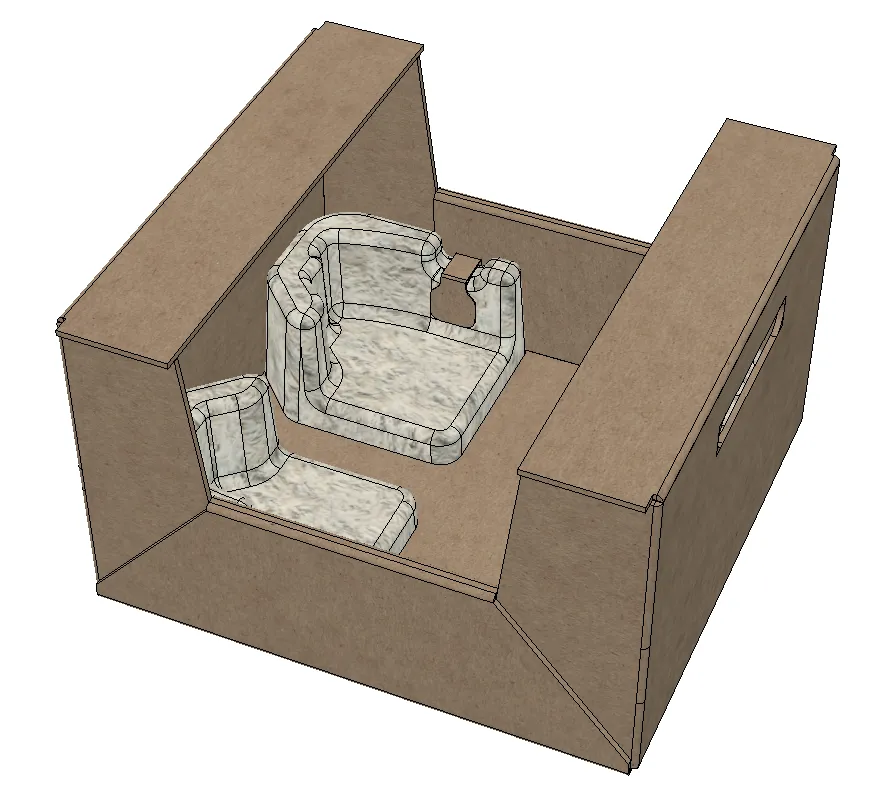
Concept 5 · Four inserts in a folding box
Concept 5 · Four inserts in a folding box7,230 cm³, less than a third of concept 1. 47.5 × 42.5 × 12.5 cm. Easy to produce. Medium to low cost.
The folding box
The folding boxOne flat sheet, folded around the inserts. No glue, no tape.
Decision

Concepts 4 and 5 went to prototyping. Small inserts grow faster, need smaller tools and pack flat for shipping.

Step 04 · Prototype 1

Two prototypes, fit-tested on a real lamp

We grew both concepts in parallel, fit-tested them with the headlamp in our office and shipped them to Magna's lab in Michigan in October 2025, together with the test samples and the R&D report.
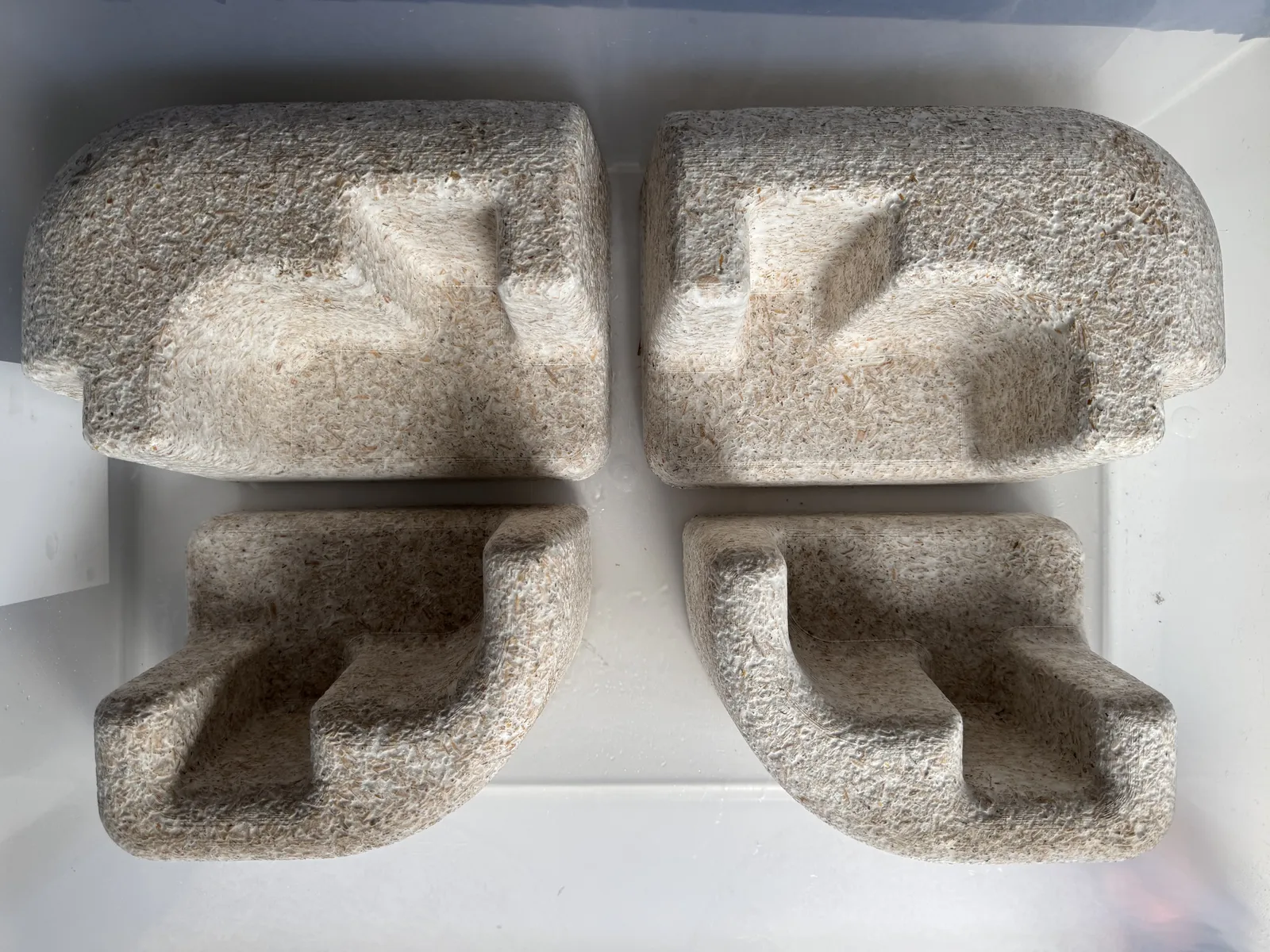
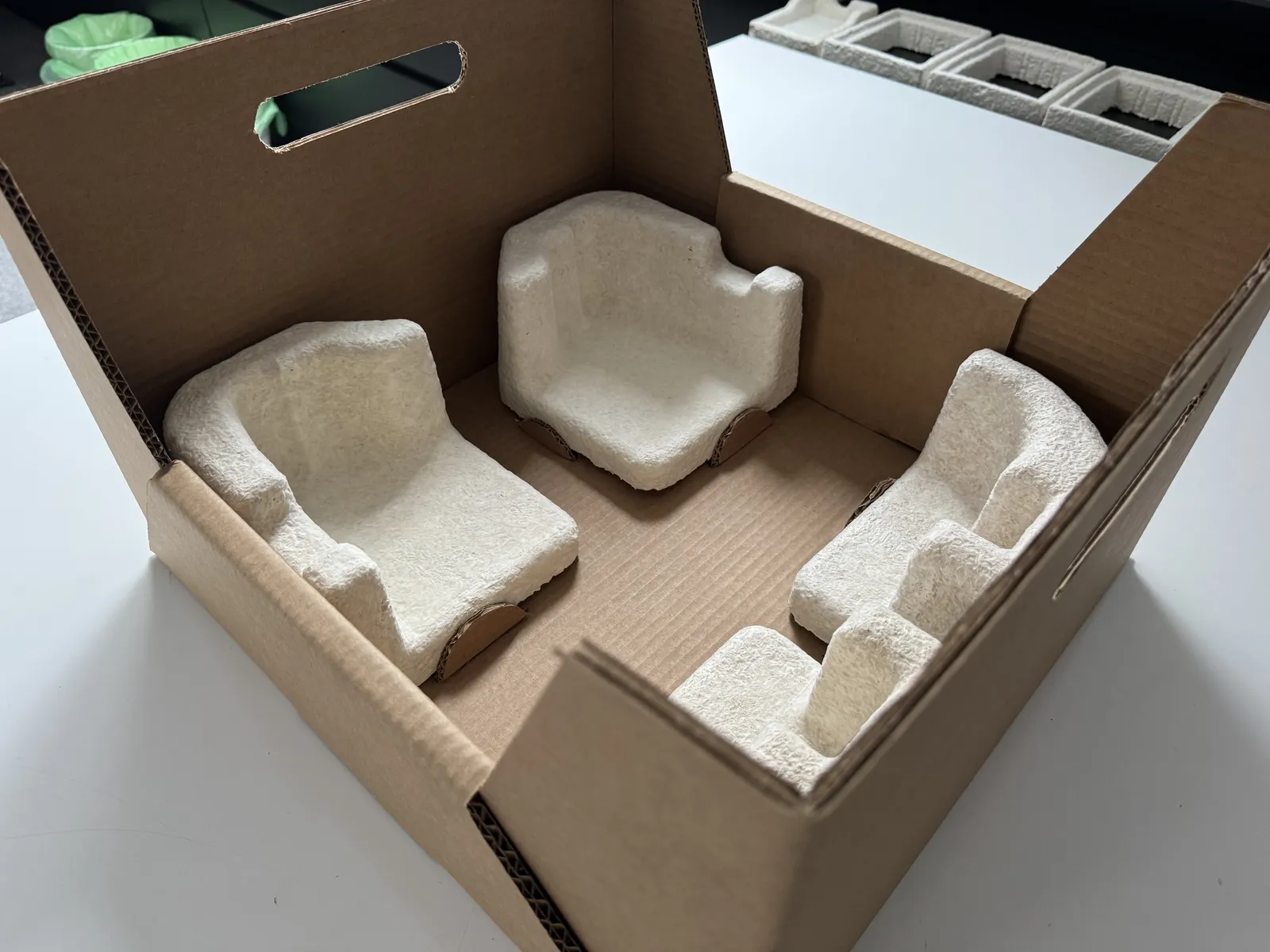
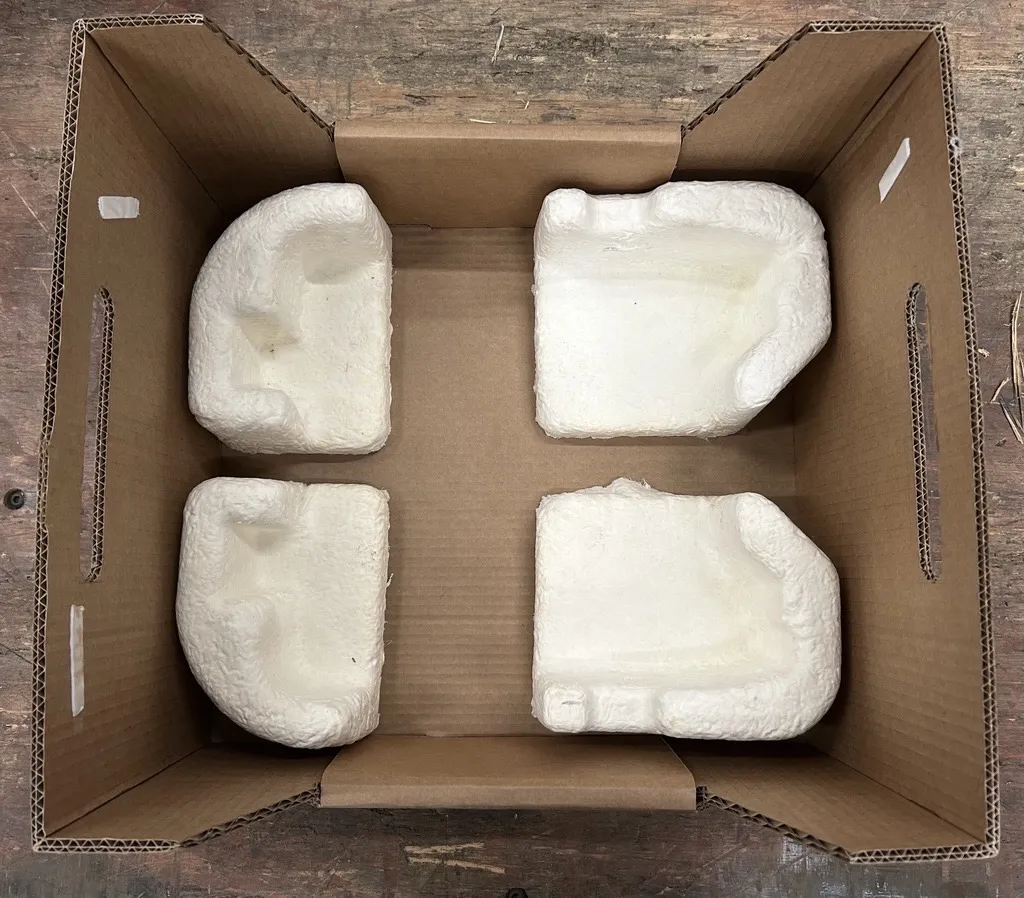
Prototype 2, top view
Prototype 2, top viewFour inserts that hold the lamp at its contact points.
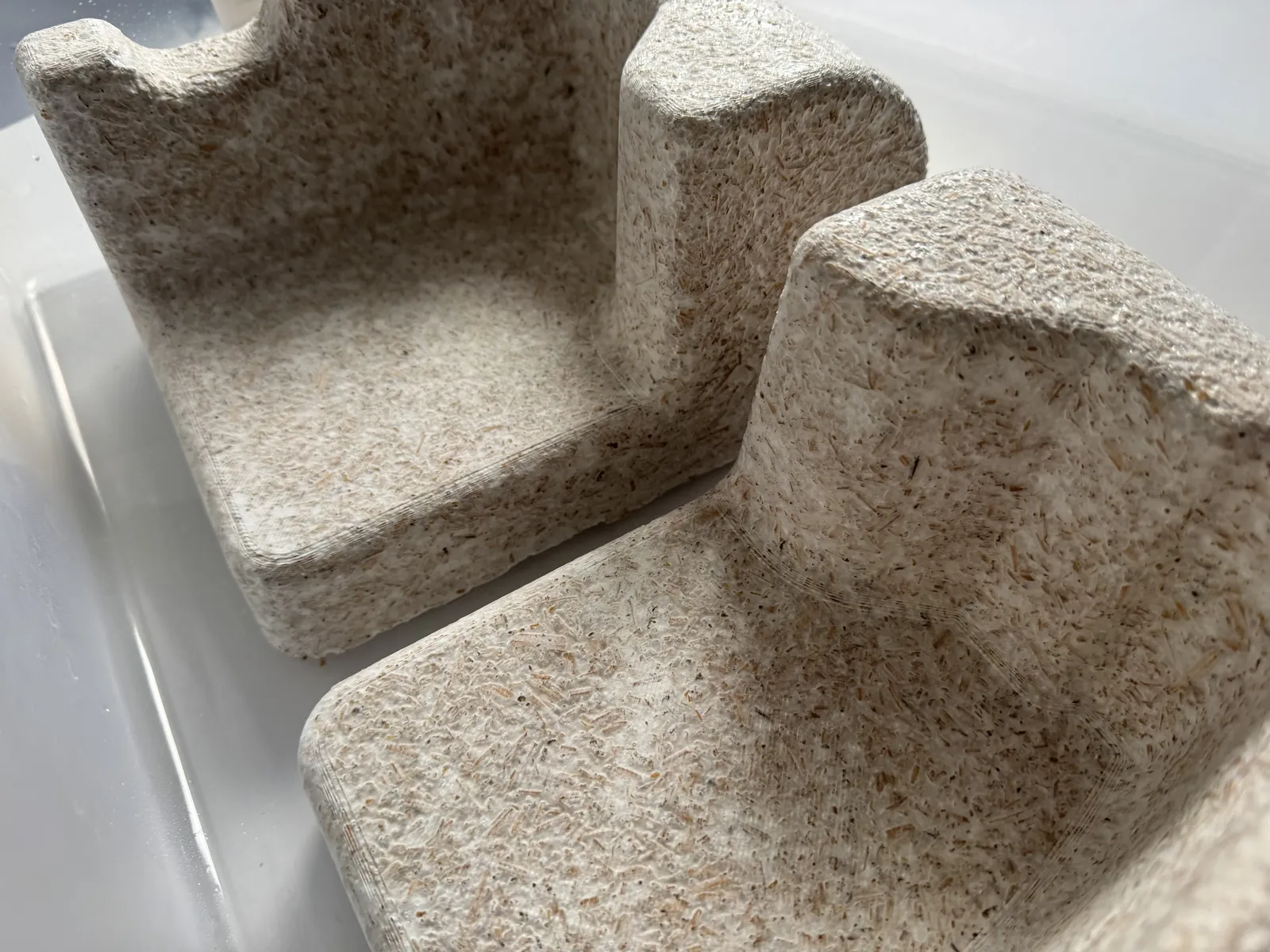
Grown to shape
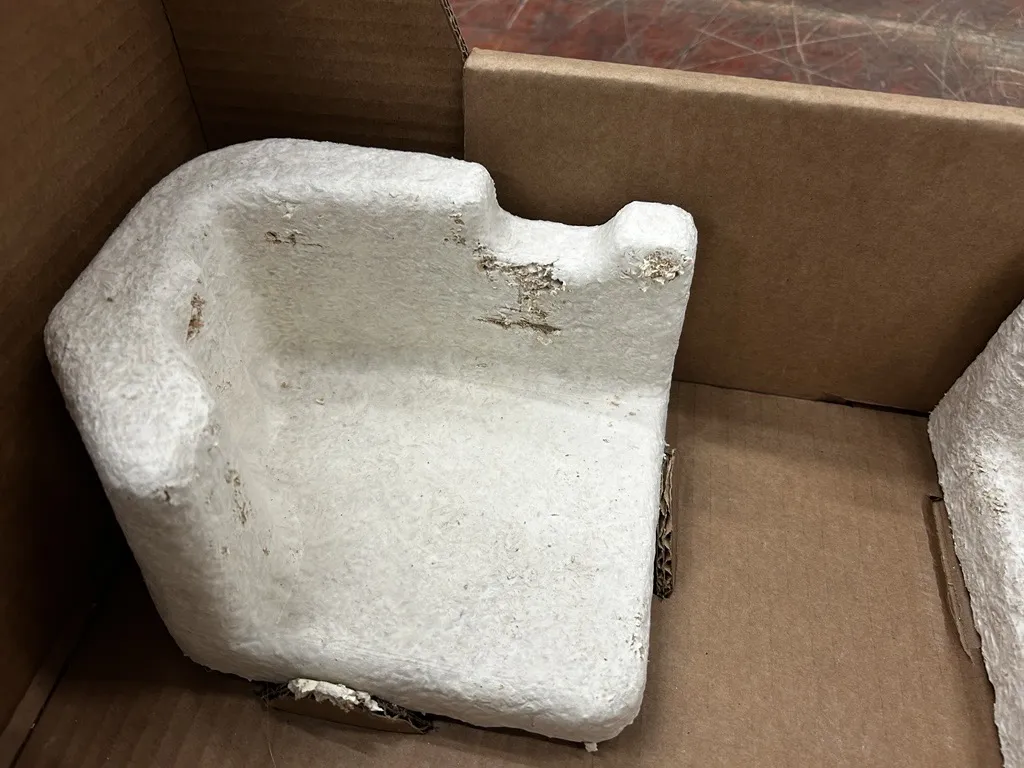
Grown to shapeInserts straight out of drying.
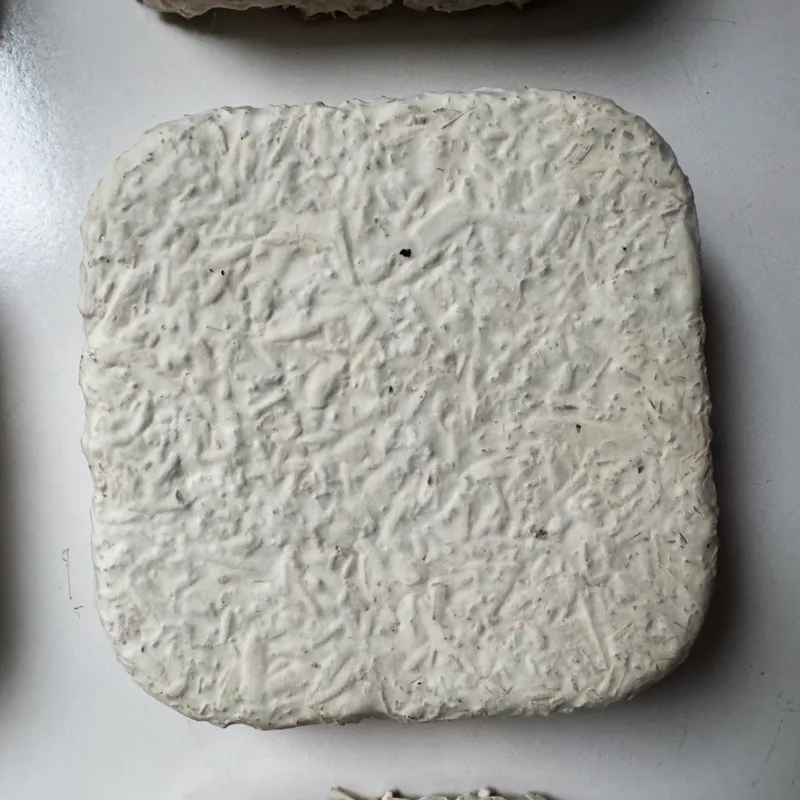
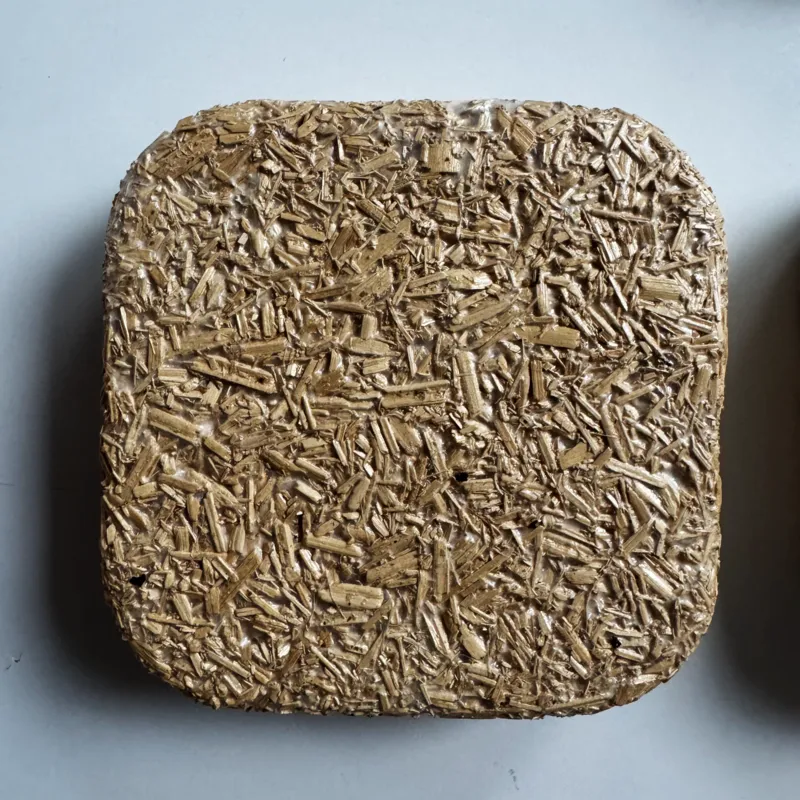
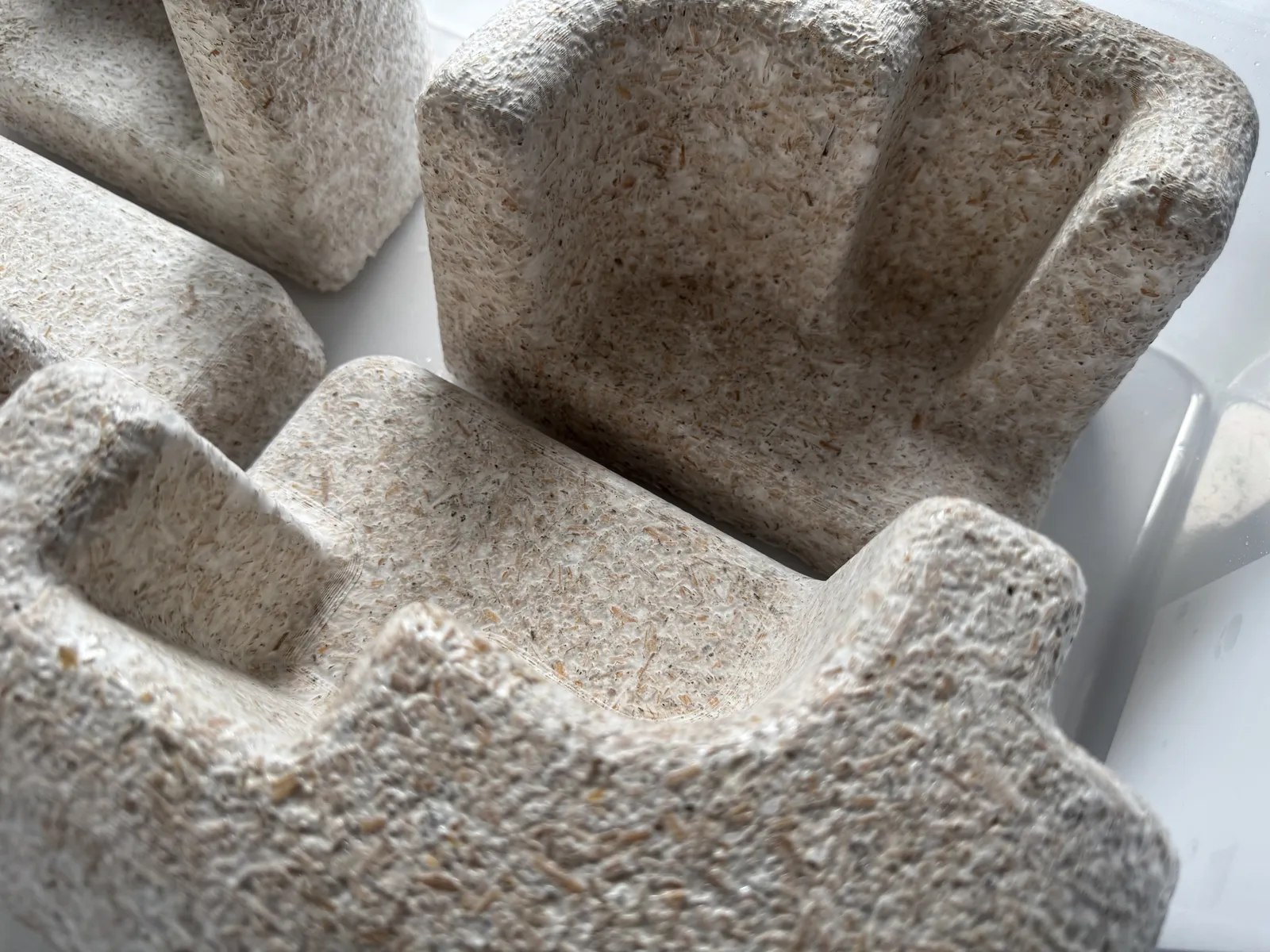
Close up
Close upThe standard surface, before the fabric layer.
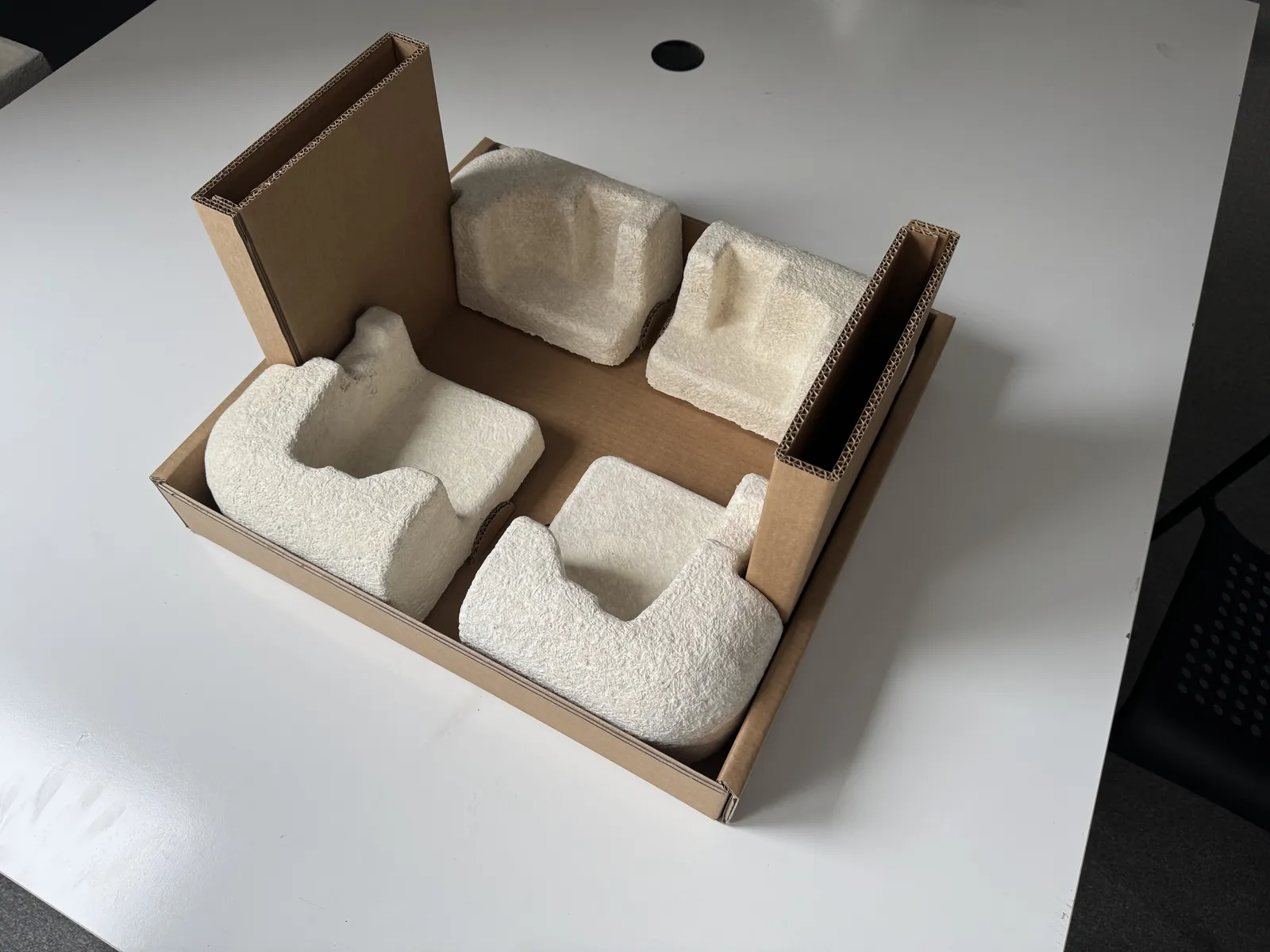
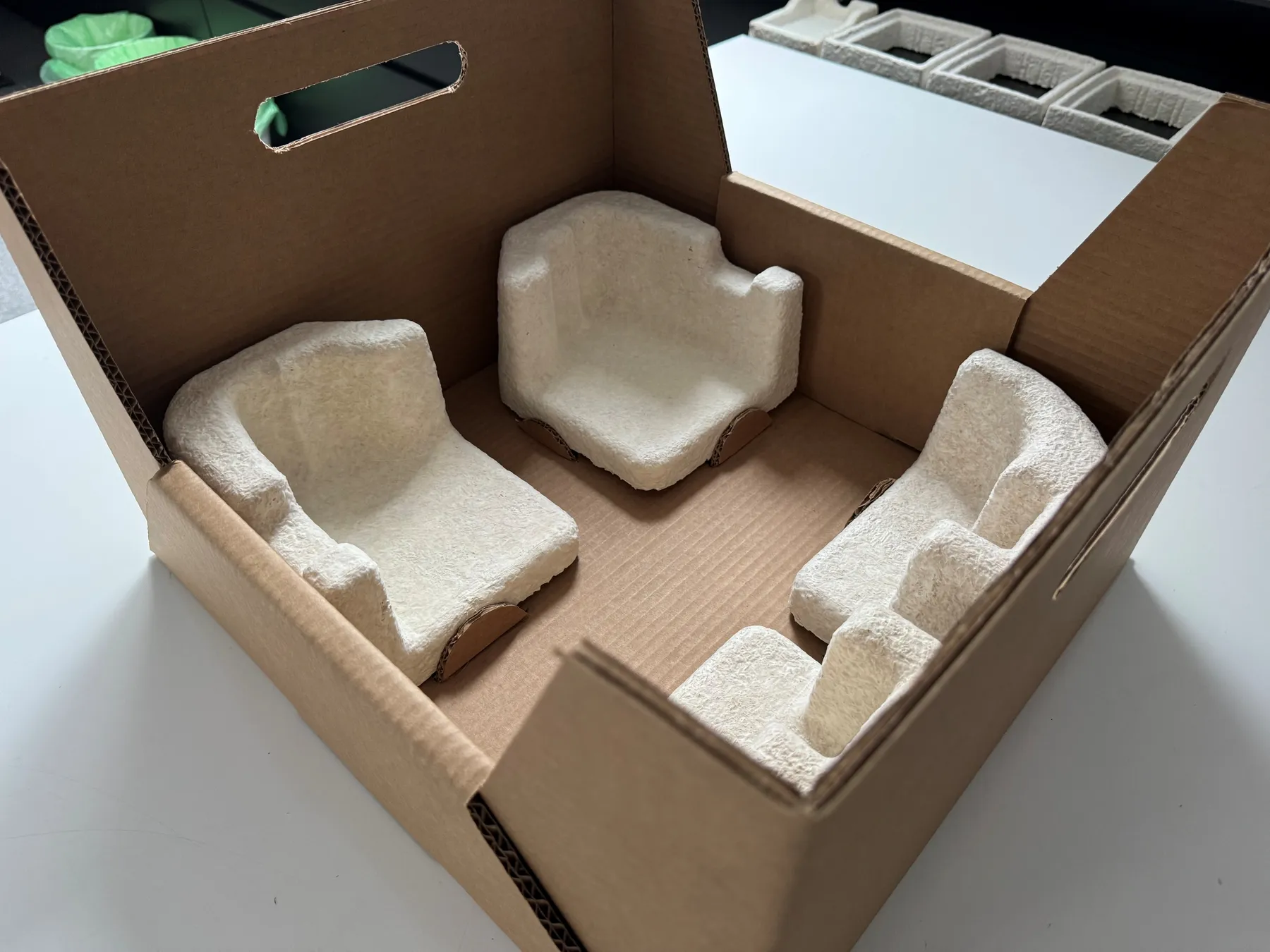
Inserts in the folding box
Inserts in the folding boxFlaps lock the inserts in place without glue.
Ready for the lamp
Ready for the lampThe box with handles and stacking columns.
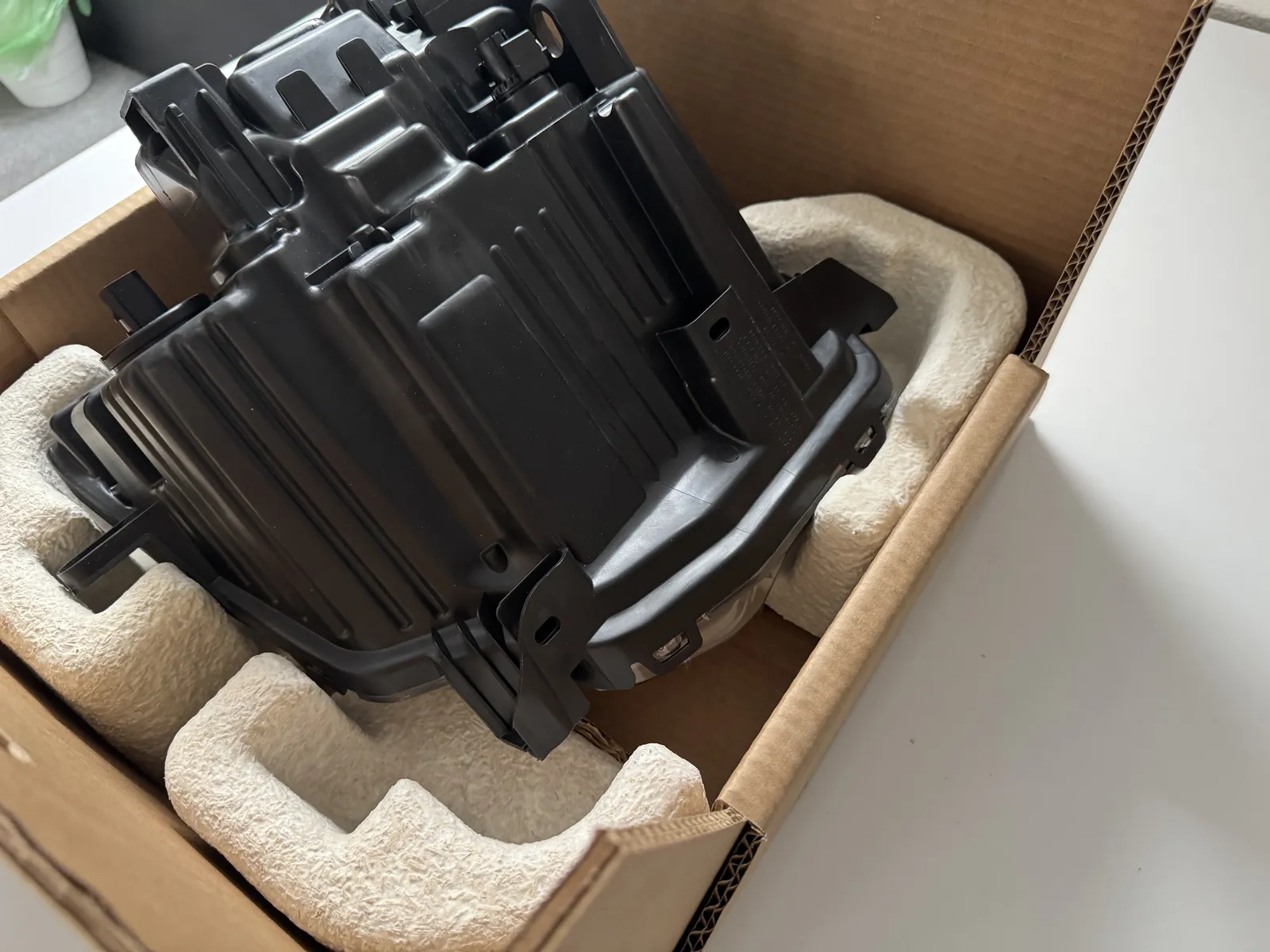
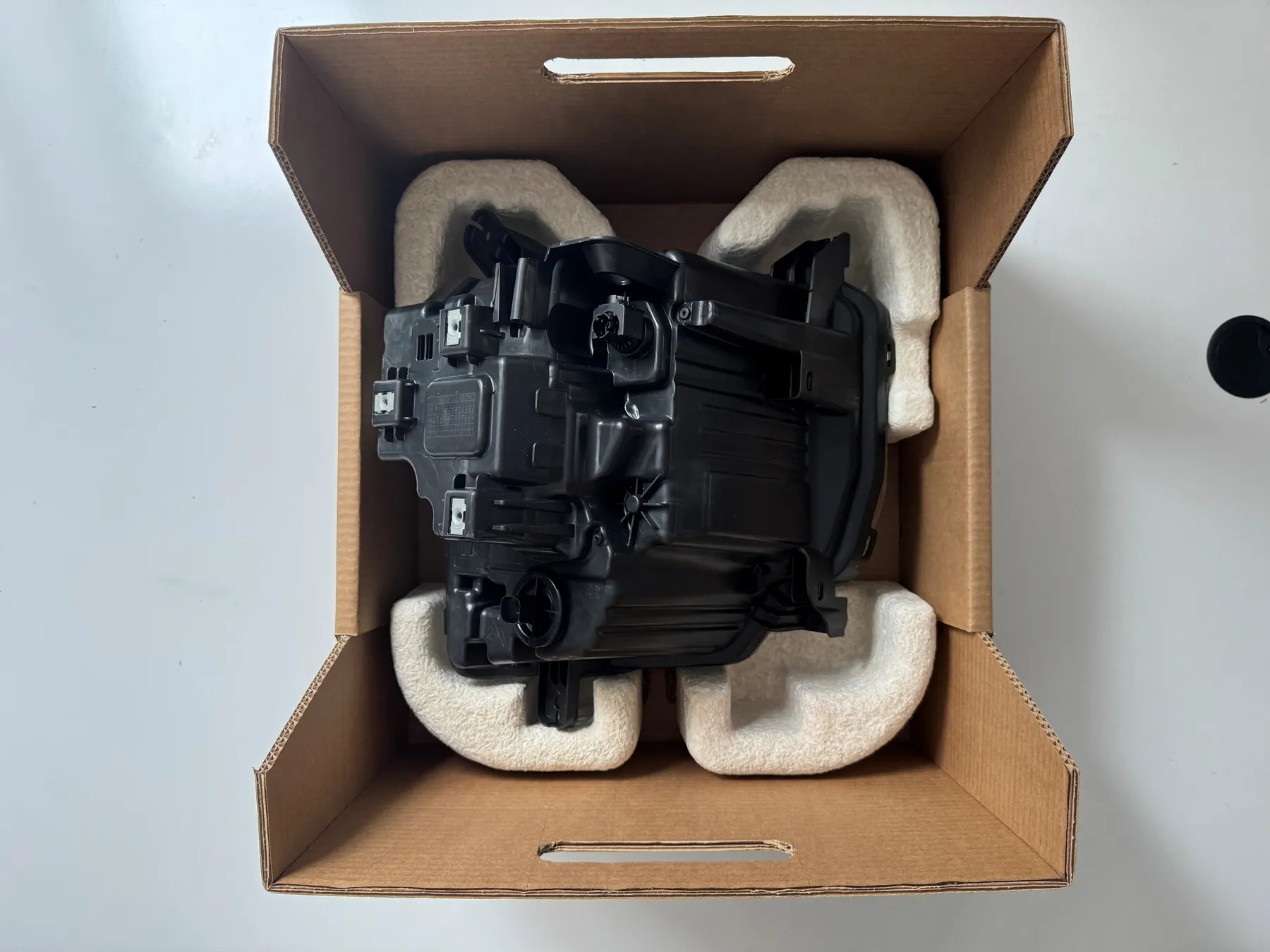
Fit test
Fit testThe headlamp seated in prototype 2.
Prototype 1Concept 4. Tight fit, follows the original foam.
Prototype 2Concept 5. About 40% less mass than prototype 1.
Folding boxNo glue, 31.7% less board, handles and stacking columns.
ShippedOctober 2025, with 19 samples and the R&D report.
Step 05 · Magna’s tests

What Magna checked, and what we changed

Magna's R&D and packaging teams tested the prototypes and samples for smell, pests, fit and scratching.
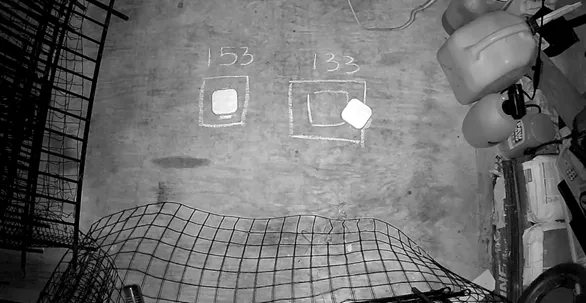
Pest test, night camera
Pest test, night cameraSamples left in a warehouse for a week, watched on camera. Nothing touched them: no damage, no mould, no smell.
Rub test on Class A surfacesThree surface finishes. Samples with the fabric layer and the soft finish left no scratches.
CheckResult
SmellOdour neutral
PestsPassed. Not eaten or damaged
FitBoth prototypes fit the headlamp
AssemblyPlacing inserts by hand was too slow for a plant line, so the box was redesigned to fold around them
ScratchingThe plain surface could mark polycarbonate. Samples with the fabric layer did not
What we changed

Prototype 2 got the fabric layer on every surface that touches the lamp, plus the soft finish, in a conventional box layout that Magna's plants would accept.

Step 06 · Prototype 2

A surface soft enough for Class A

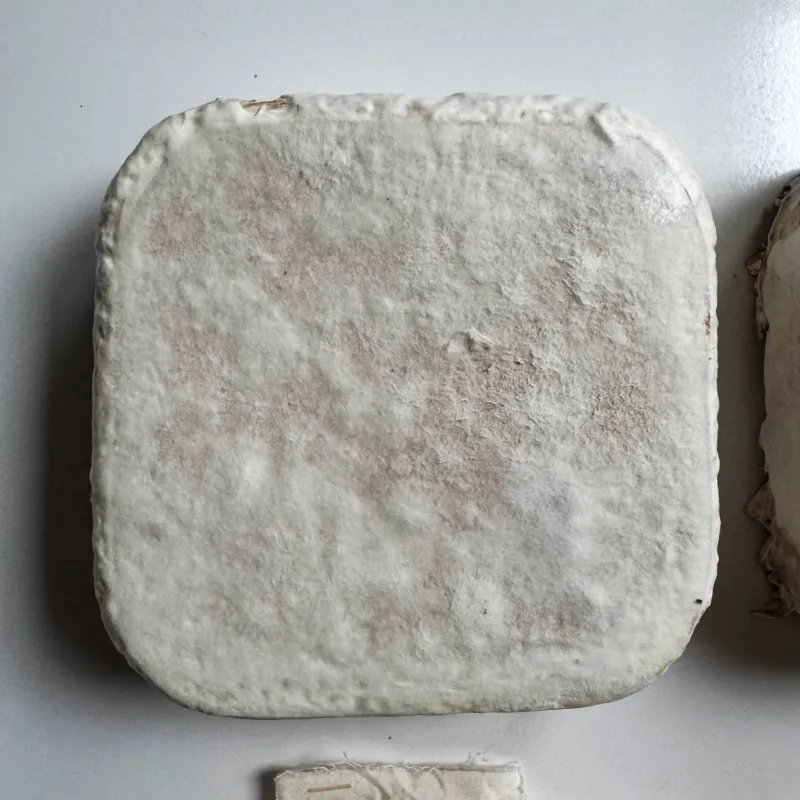
The fabric is laid into the mould and the mycelium grows through it, so the whole contact surface is covered. It holds the particles in place and feels like velvet.
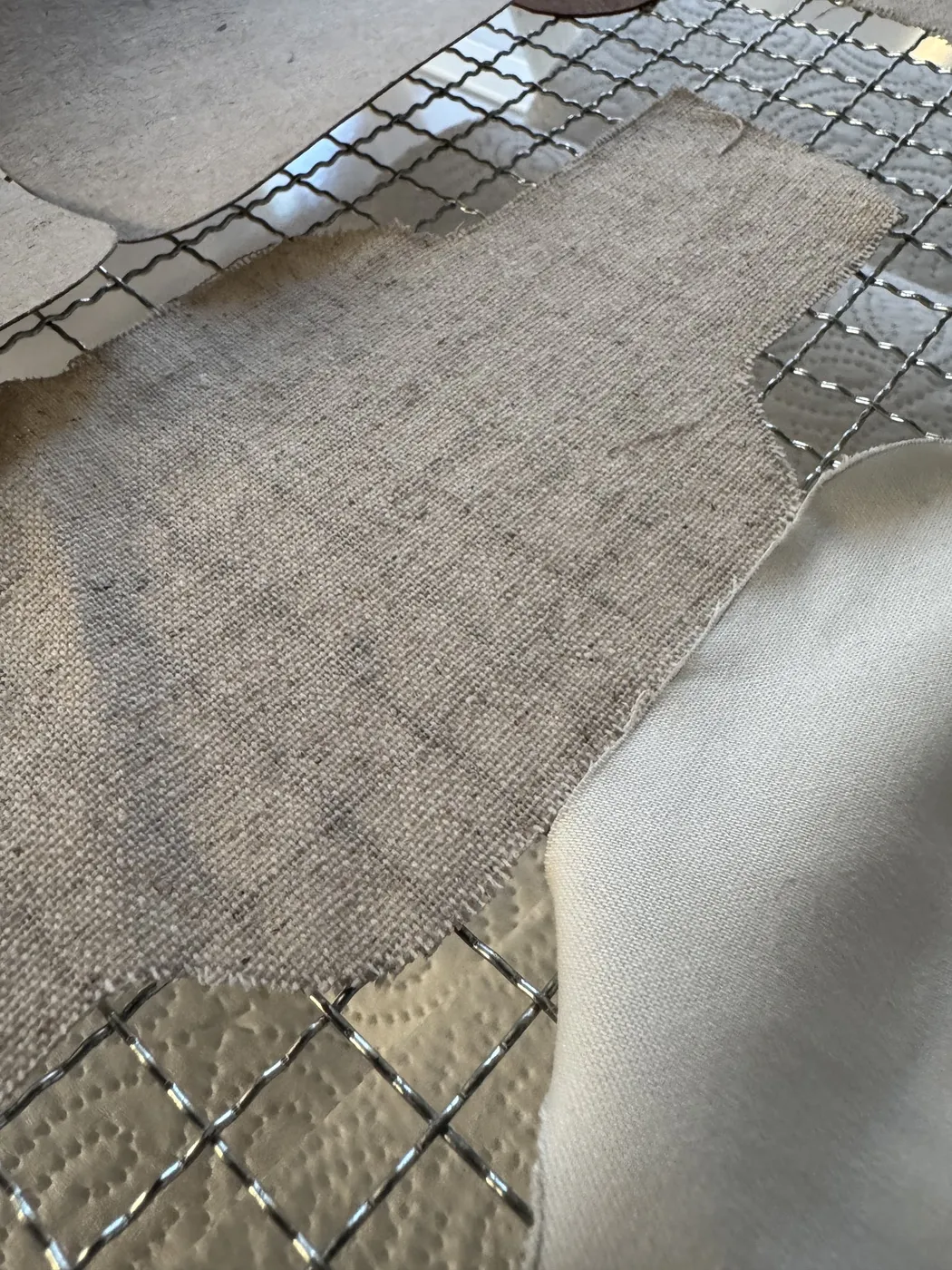
Grown through fabric
Grown through fabricThe fabric face, before trimming.
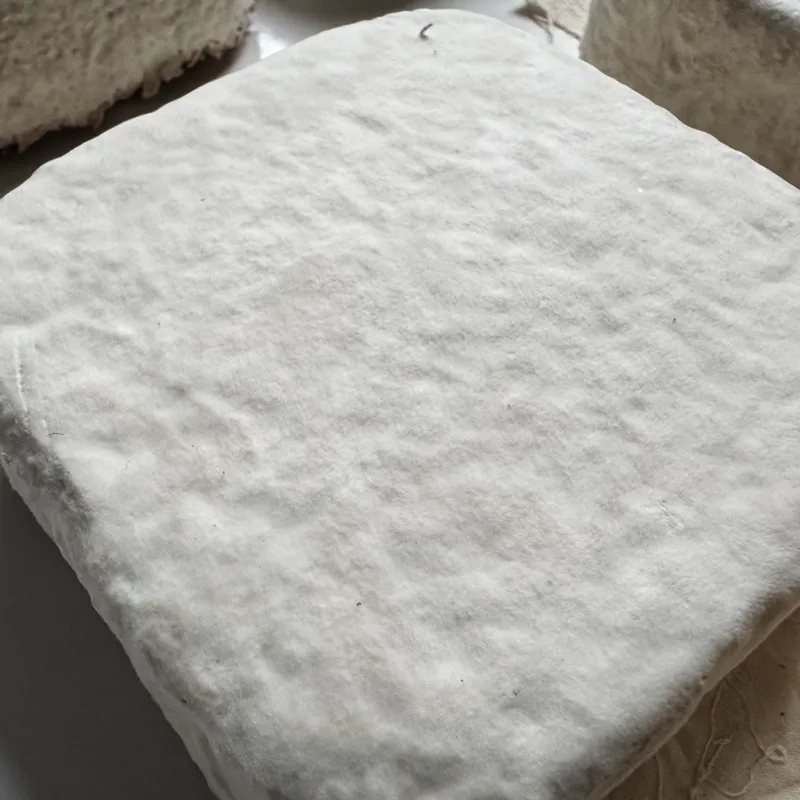
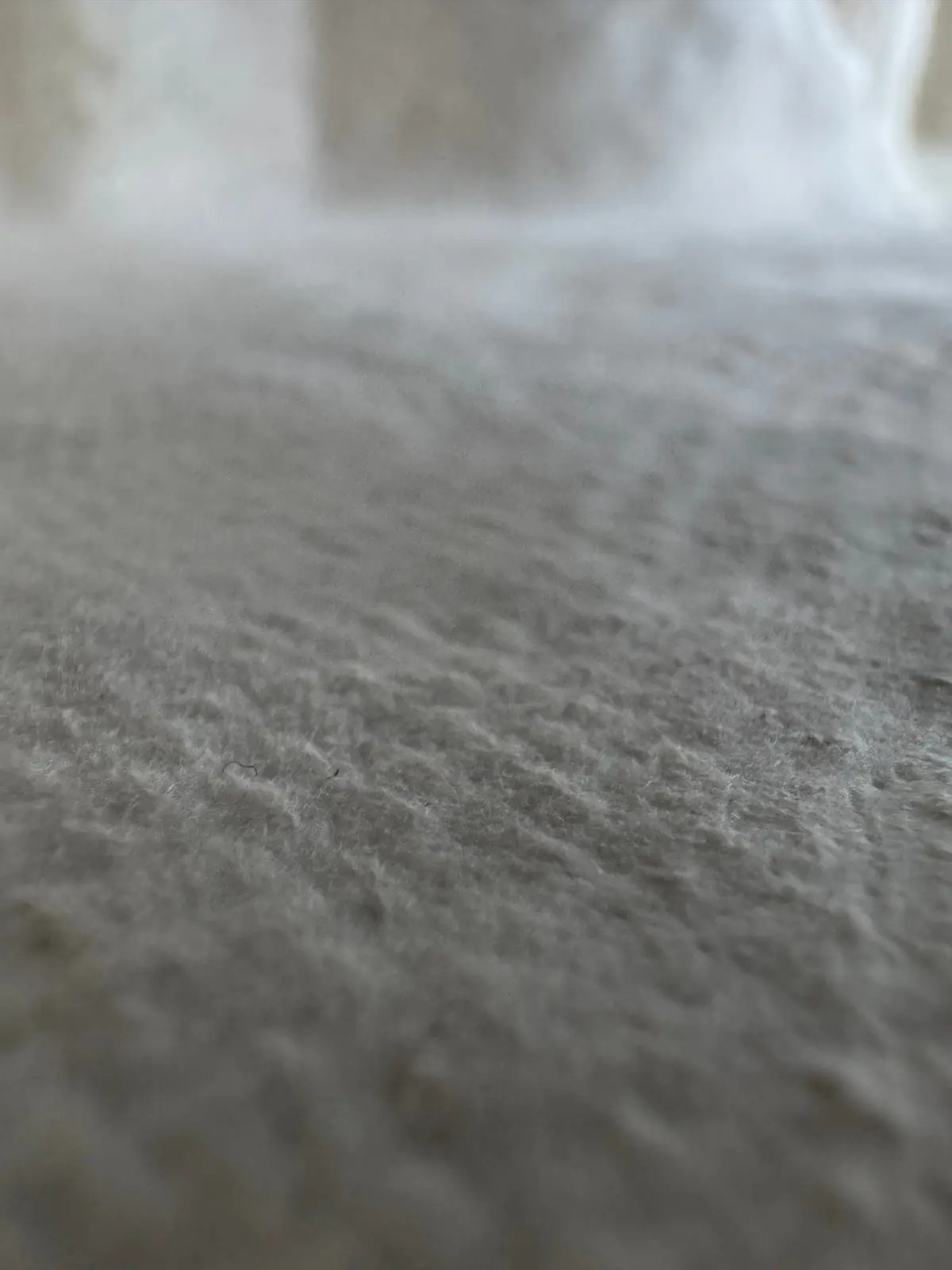
The surface up close
The surface up closeSoft to the touch, with the particles held in place.
Prototype 2 at Magna
Prototype 2 at MagnaFour fabric-faced inserts in the folding box.
Magna’s feedback

Magna's packaging director liked the recipe and the design, and sent the pack straight to full ISTA 3E testing instead of a separate shake test.

Step 07 · ISTA 3E

500 miles in the lab

Magna built a full unit load of eight headlamps and put our packs in the bottom row, the hardest position, next to a baseline version without the fabric layer. The load then went through the full ISTA 3E sequence: incline impacts, drops, compression for a three-high warehouse stack and a vibration run.

Incline impactOne impact on each side, four in total.
Incline impactThe sled hits the barrier at speed.
Drop test, before vibrationOne side lifted, then dropped. Four drops in total.
Drop test, after vibrationRepeated after the vibration run.
Vibration100 minutes of random vibration on a truck simulator, equal to about 500 miles.

Results

Unit load before testing
Unit load before testingMycelium packs in the bottom row.
After the test
After the testThe lamp still sits in place in the inserts.
No scratches or cracks
No scratches or cracksNo visible debris in the box.
Inserts after the test
Inserts after the testIntact, with slight wear at one point.
Unit load after testing
Unit load after testingNo damage to the container or packs, no lamp displaced.
Baseline insert without the fabric layer
Baseline insert without the fabric layerDamaged and shedding debris. The fabric layer is what made it work.
TestTargetResult
Form and fitHolds the headlampAchieved
VibrationISTA 3E, about 500 milesAchieved
Drop, incline impact, compressionISTA 3EAchieved
SurfaceNo scratches on Class A polycarbonateAchieved
SmellNo foul smellAchieved
PestsNot eaten by rodents or insectsAchieved
Trial run100 miles on a leaf-spring truck, no scratches or damageAchieved

Results as reported by Magna.

One fix before the pilot

One sharp tab on the lamp wore the surface at a single point during the vibration run. We added a small card guard at that spot for the pilot.

Step 08 · Pilot production

Grown, packed and shipped ready to use

We grew the pilot batch with the tested recipe and a more even surface, plus two backup variants in case the plant wanted options. Inserts and boxes shipped in May 2026.
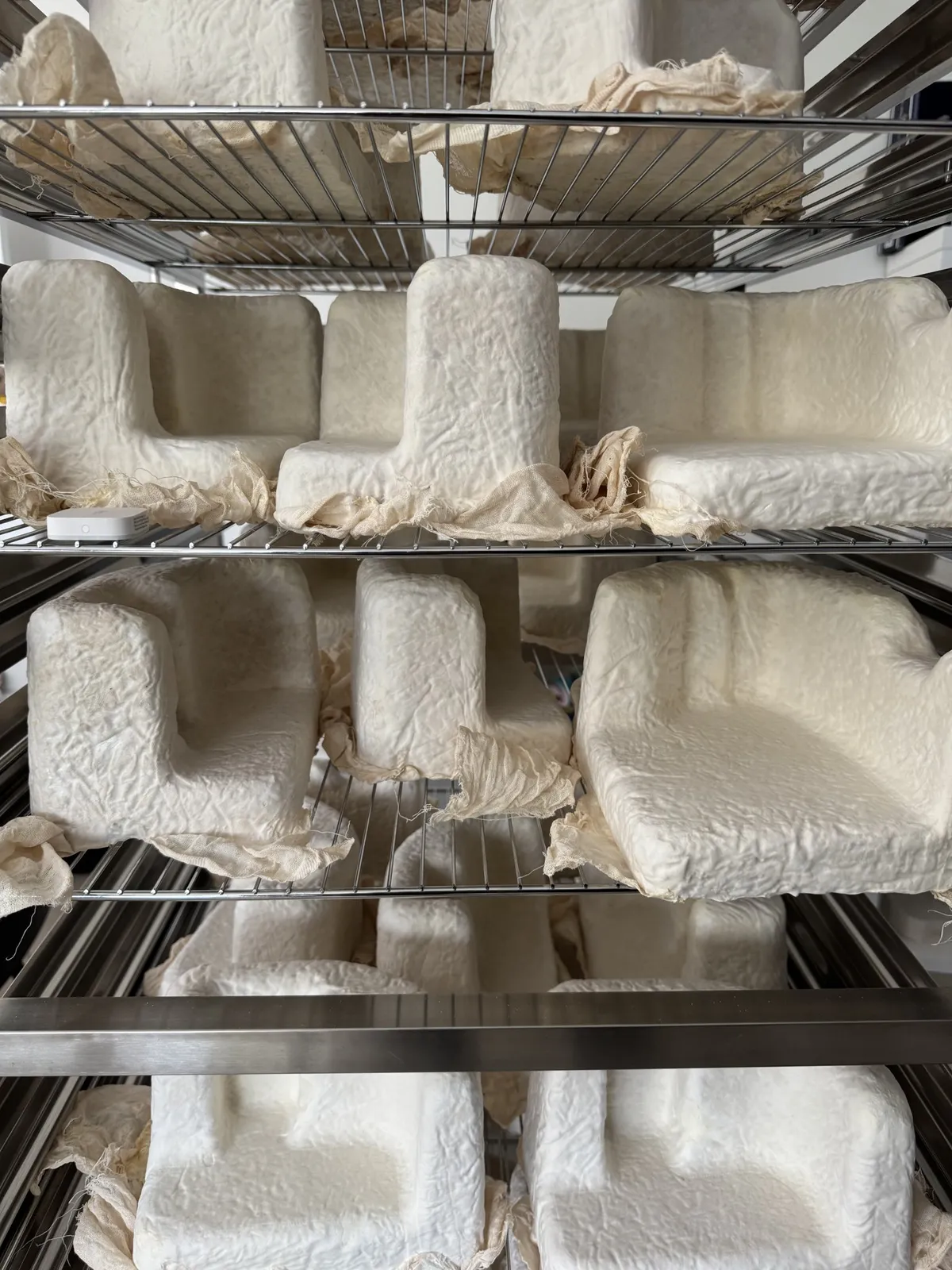
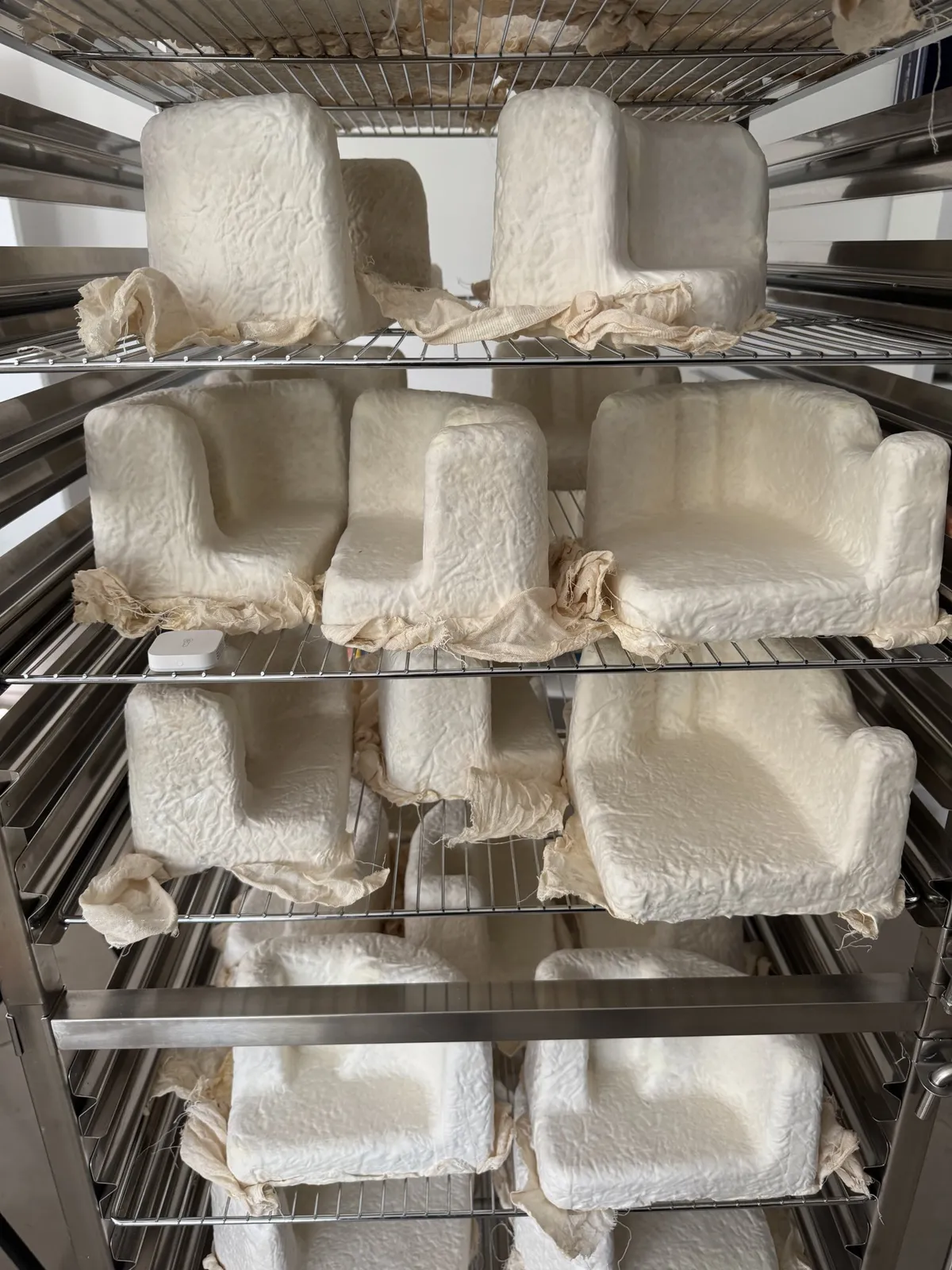
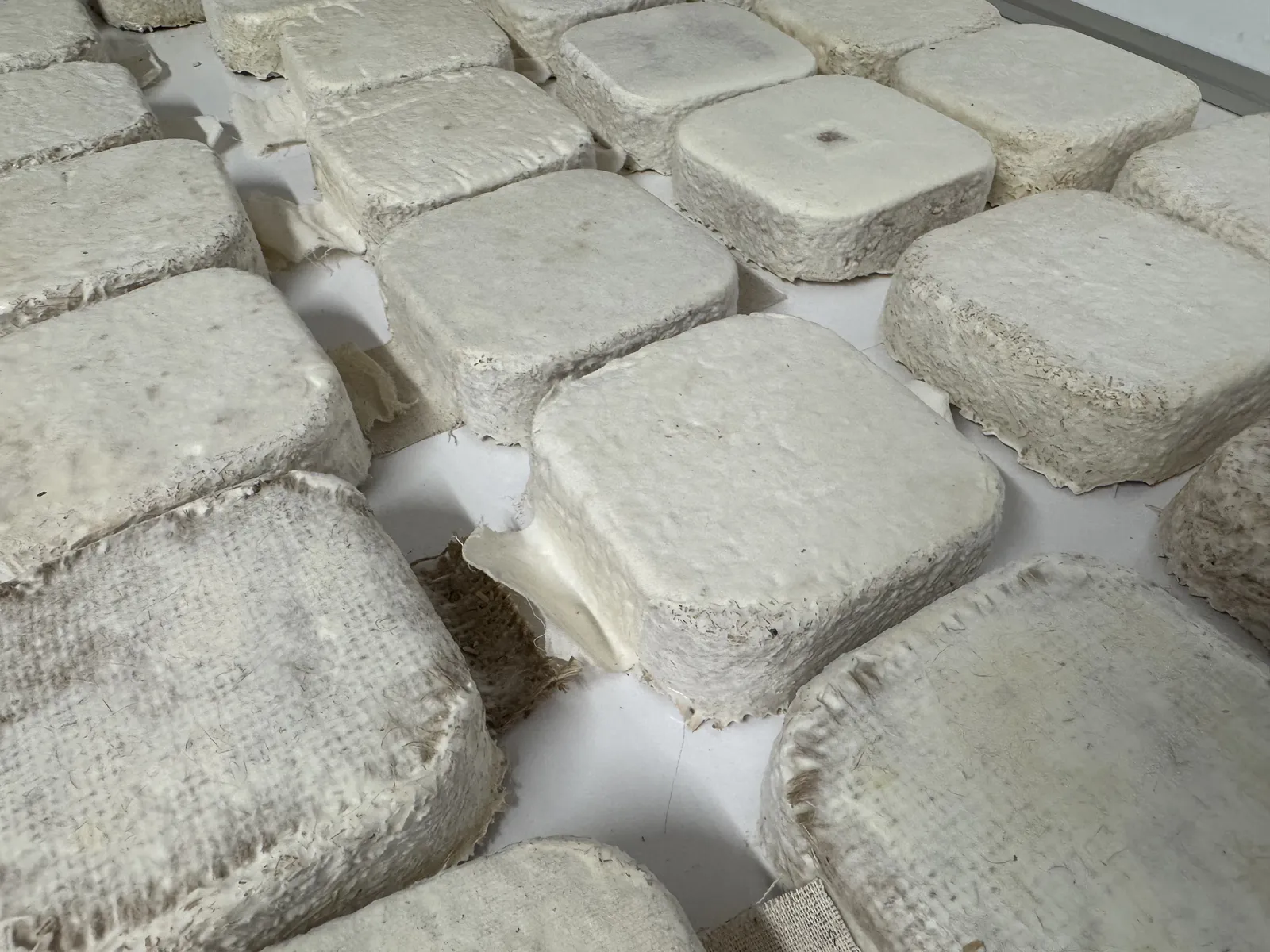
The pilot batch
The pilot batchInserts drying on the racks.
Even surface
Even surfaceEvery contact face covered.
Assembled
AssembledThe inserts locked into the folding box.
The final pack
The final packFour fabric-faced inserts in a fold-only box.
With the headlamp
With the headlampCardboard and mycelium come apart by hand for separate waste streams.
Step 09 · The pilot

100 miles on a real truck

Magna's own people packed the lamps, loaded them onto a leaf-spring truck for a 100-mile run, and unpacked and inspected them. In June 2026 Magna confirmed the pilot as successful.

500 miLab transit simulation
ISTA 3EFull unit-load test
100 miReal truck run, no scratches or damage

“ We did a very good project. It was well received by upper management. They saw it’s not an off-the-shelf material, we tuned it for automotive Class A surfaces. ”

Anirban Chakraborty
Research Engineer, Corporate R&D, Magna International

Have a part in mind?

Get in Touch

Prefer to talk

A short online call about your part, your requirements and your timeline. You leave knowing whether mycelium composite fits and what the next step would be.

Prefer to write

Answer a few short questions about your part and your project. We reply in writing with our view and the next steps.